

Native Mobile App vs. Responsive Web: Which Drives Higher Employee Daily Active Usage (DAU)?
In the dynamic landscape of corporate learning and development, the quest for higher employee engagement is relentless. For Vice Presidents, Directors, and Senior Managers in L&D across industries like Compliance, Sales, Banking, Finance, Insurance, Retail, Pharma, Health Care, Hospitality, Oil and Gas, and Mining, ensuring employees actively participate in training is paramount. The modern workforce is mobile-first, prompting a critical question: should your learning initiatives be delivered via a native mobile app or a responsive web experience? This isn't just a technical debate; it's a strategic decision that directly impacts Daily Active Usage (DAU) – the true measure of a learning program's resonance and effectiveness.
Understanding which platform truly drives higher DAU requires a deep dive into user experience, accessibility, functionality, and the overall strategic objectives of your enterprise learning management system. Both native apps and responsive web solutions offer distinct advantages, but their suitability for fostering consistent engagement varies significantly depending on your specific context and content delivery strategy.
The Compelling Case for Native Mobile Apps
Native mobile applications are built specifically for a particular operating system (iOS or Android), offering a highly optimized and integrated user experience. This specialized development often translates directly into superior performance and engagement metrics.
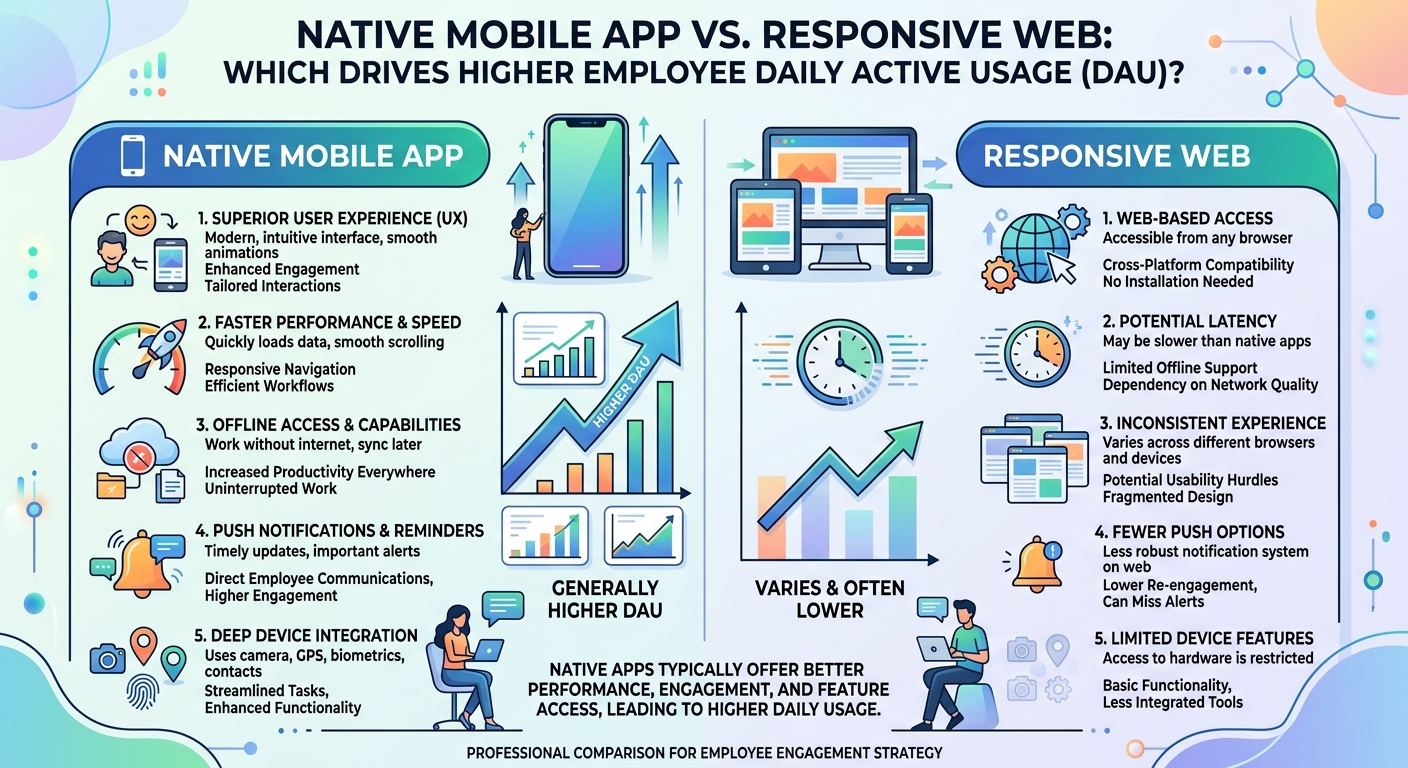
- Superior Performance and Speed: Native apps are typically faster and more responsive, leveraging device hardware directly. This seamless experience reduces friction, making learners more likely to return.
- Offline Access: For employees in remote locations, on the go, or facing connectivity issues (common in sectors like Oil & Gas, Mining, or field sales), offline content access is a game-changer. Learners can download modules and complete them without an internet connection, ensuring continuity in their learning journey.
- Push Notifications and Reminders: Native apps can send targeted push notifications directly to a user's device, acting as powerful nudges for course completion, new content alerts, or personalized reminders. This direct communication channel is invaluable for driving proactive engagement and DAU.
- Device Feature Integration: Access to device features like cameras, GPS, biometric authentication, and gyroscopes can create richer, more interactive, and immersive learning experiences. Imagine using a device's camera for a field assessment in Pharma or augmented reality scenarios for safety training in Mining.
- Enhanced Security: Often perceived as more secure, native apps can offer robust data encryption and compliance features crucial for industries like Banking, Finance, and Health Care.
How do smart learning platforms analyze user behavior to recommend the most relevant training modules, irrespective of device? For native apps, deeper integration allows for more granular data collection on user interaction with device features, aiding in highly personalized recommendations within a Microlearning LMS.
The Practical Strengths of Responsive Web Experiences
Responsive web design allows a single website to adapt its layout and content to fit various screen sizes and devices, from desktops to tablets and smartphones. This "build once, deploy everywhere" approach offers compelling benefits, particularly for accessibility and maintenance.
- Universal Accessibility: A responsive web solution is accessible from any device with a browser and internet connection. There's no need for app store downloads, updates, or specific operating system versions, lowering the barrier to entry for employees. This is especially beneficial for a diverse workforce using a mix of personal and company-issued devices.
- Easier and Faster Updates: Content and feature updates are deployed once to the web server and immediately available to all users. This agility is critical for industries like Compliance and Finance, where regulatory changes necessitate rapid content modifications.
- Lower Development and Maintenance Costs: Generally, developing and maintaining a single responsive website is less expensive than building and supporting separate native apps for iOS and Android, plus a desktop version. This cost efficiency can be a significant factor for budget-conscious L&D departments.
- Wider Reach and SEO Potential: While primarily for internal audiences, the underlying technology benefits from web standards, making it easier for learning content management system content to be indexed by search engines, potentially aiding discovery if some content is public-facing. For internal purposes, it means easier sharing of direct links to specific learning modules.
What are the optimal strategies for deploying accessible learning content to a globally dispersed workforce across diverse mobile devices? A responsive web approach, delivered via a robust learning management software, ensures that every employee, regardless of their device or location, can instantly access training simply by navigating to a URL. This broad reach drives initial uptake and reduces friction for a global enterprise learning management solution.
Diving Deeper into DAU Drivers: Beyond the Platform
While the platform choice is significant, true DAU is ultimately driven by the quality, relevance, and presentation of the learning experience itself. A sophisticated learning management system (LMS) can bridge gaps and amplify strengths, regardless of the chosen delivery method.
- Content Quality and Relevance: Irrespective of whether it's an app or a website, if the content is engaging, bite-sized, and directly applicable to the learner's role, DAU will naturally increase. Solutions like a Microlearning LMS excel here, offering easily digestible chunks of information.
- Personalization and Adaptive Learning: Modern learning management solutions should tailor the experience to individual needs. Adaptive Learning paths, guided by an intelligent system, ensure learners receive content most relevant to their skill gaps and career progression, significantly boosting engagement.
- Gamification and Interactivity: Incorporating game-like elements, badges, leaderboards, and interactive quizzes can transform learning into an enjoyable and competitive experience. A Gamified LMS is highly effective in driving repeated interactions and a sense of achievement.
- Ease of Authoring and Updates: The ability to quickly create and update content is crucial. An AI Powered Authoring Tool within a cloud based learning management system empowers L&D teams to rapidly generate and refine learning materials, ensuring content remains fresh and relevant.
How can predictive analytics within a learning content management system anticipate skill gaps and proactively suggest training paths? By analyzing learner performance data, time spent, and industry trends, a sophisticated MaxLearn LMS can identify future needs and push relevant content, whether through a native app's notifications or a responsive web portal's personalized dashboard, thus driving purposeful DAU.
Strategic Considerations for L&D Leaders
The "best" choice between a native mobile app and responsive web isn't universal. It hinges on your organization's specific needs, budget, and long-term strategy for talent development. Consider the following:
- Target Audience and Their Devices: Do your employees primarily use company-issued devices? Are they frequently in areas with poor internet connectivity? For field workers in Sales, Health Care, or Utilities, a native app with offline capabilities might be indispensable. For desk-bound staff in Finance or HR, a robust responsive web portal might suffice.
- Content Type and Interactivity Needs: If your training heavily relies on augmented reality, complex simulations, or device-specific sensors, a native app is the clear winner. For standard video, text, and quiz-based learning, a responsive web experience can deliver equally well.
- Budget and Resources: Native app development and ongoing maintenance for multiple platforms (iOS and Android) typically require a larger investment and specialized skills compared to a single responsive web platform. Evaluate if the potential DAU gains justify the increased expenditure.
- Security and Compliance: Industries such as Banking, Pharma, and Compliance have stringent security requirements. Both platforms can be secured, but native apps often offer deeper integration with device-level security features. For Risk-focused Training, ensuring secure delivery is paramount.
- Hybrid Approaches: Many organizations opt for a hybrid strategy, leveraging the strengths of both. This might involve a core responsive web platform for general access, complemented by a lightweight native app for specific, high-engagement modules requiring offline access or specialized device features.
What innovative methods do intelligent systems use to measure the return on investment of mobile learning initiatives and optimize engagement? A comprehensive learning management system like MaxLearn LMS tracks everything from course completion rates to performance improvements, allowing L&D leaders to compare engagement across platforms and continually refine their approach to maximize DAU and demonstrate tangible business impact.
Conclusion
Ultimately, driving higher employee Daily Active Usage (DAU) is about removing friction, providing relevant and engaging content, and making learning an integral, seamless part of the employee's day. While native mobile apps offer unparalleled performance, offline capabilities, and deep device integration, a well-executed responsive web experience provides broad accessibility, easier maintenance, and cost-effectiveness.
The decision isn't about one being inherently "better" than the other, but rather which platform, or combination of platforms, best serves your specific audience, content, and strategic goals for your enterprise learning management system. By focusing on learner needs, leveraging modern features like Microlearning LMS, Gamified LMS, and Adaptive Learning, and utilizing insights from an AI Powered Authoring Tool, L&D leaders can build a learning ecosystem that truly resonates and fosters sustained employee engagement, regardless of the chosen delivery mechanism. The goal remains: informed, skilled, and actively participating employees driving business success.


