

How AI-Powered Microlearning Platforms Predict Skill Gaps Before They Impact Performance
In today's rapidly evolving business landscape, the ability to maintain a highly skilled and adaptive workforce is paramount. For L&D Vice Presidents, Directors, and Managers, identifying skill gaps isn't just about reacting to current performance issues; it's about anticipating future challenges and proactively preparing your teams. Traditional methods often fall short, leaving organizations vulnerable to the costly repercussions of undetected deficiencies. This is where AI-powered Microlearning LMS platforms are revolutionizing corporate training, offering an unprecedented ability to predict and address skill gaps before they even begin to impact performance.
Imagine a system that not only delivers targeted training but also understands each employee's unique learning journey, foreseeing potential knowledge deficits based on their interactions, progress, and even industry trends. This isn't a futuristic fantasy; it's the present reality offered by advanced learning management solutions.
The Hidden Cost of Unforeseen Skill Gaps
Every industry, from Compliance to Healthcare, Sales to Oil and Gas, faces its own unique set of skill challenges. In Compliance, a lapse in understanding new regulations can lead to hefty fines. For Banking and Finance, a lack of updated product knowledge can result in missed sales opportunities and customer dissatisfaction. In Pharma and Healthcare, outdated information can compromise patient safety. Even in Retail and Hospitality, a workforce not fully up-to-date on best practices impacts customer experience and brand reputation.
Historically, identifying these gaps has been a reactive process, often triggered by performance reviews, customer complaints, or critical incidents. This reactive approach is inherently inefficient and expensive. It means problems have already manifested, leading to:
- Reduced productivity and operational inefficiencies.
- Increased errors and compliance risks.
- Higher employee turnover due to frustration or lack of growth opportunities.
- Lost revenue and diminished market competitiveness.
The goal for any forward-thinking enterprise learning management strategy must be to move beyond reaction to proactive prevention, and this is precisely where an intelligent Microlearning LMS excels.
AI: The Intelligence Behind Proactive Skill Development
Microlearning, characterized by its bite-sized, focused content, is already an effective way to deliver relevant training. When you integrate artificial intelligence, this approach transforms into a powerful predictive engine. An AI-powered learning management system doesn't just deliver content; it learns from every interaction, every assessment, and every learner's journey to identify potential weaknesses before they become critical.
How Does AI Predict Skill Gaps?
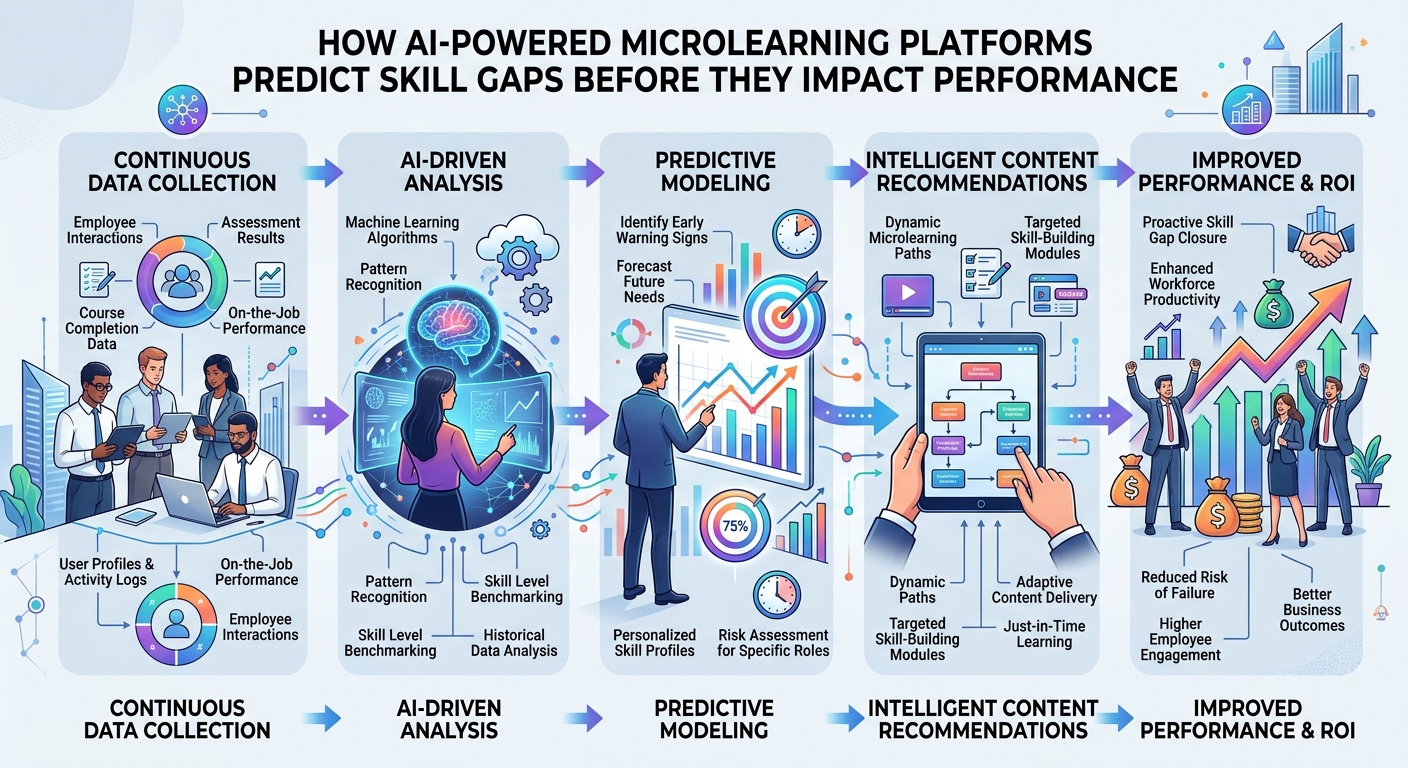
The predictive power of these platforms stems from sophisticated algorithms that analyze vast amounts of data. Here's how it works:
- Comprehensive Data Collection: The system continuously gathers data on learner engagement, performance on assessments, completion rates, time spent on modules, and even the types of questions learners struggle with. This data is aggregated from across the entire LMS.
- Pattern Recognition and Anomaly Detection: AI algorithms excel at finding patterns that human analysis might miss. It can detect subtle shifts in a learner's performance trajectory, compare it against peer groups, or benchmark it against ideal competency models. For instance, if an employee in Sales consistently struggles with modules on a new product feature, the AI flags this as a potential gap.
- Personalized Learning Paths: Based on identified patterns, the AI dynamically adjusts the learning experience. This is the essence of Adaptive Learning. If a gap is detected, the system immediately recommends targeted micro-lessons, quizzes, or resources designed to reinforce understanding in that specific area.
- Predictive Analytics: Beyond current performance, AI can project future skill requirements. By analyzing industry trends, upcoming product launches, or regulatory changes, the platform can anticipate new competencies needed and proactively suggest training to prepare the workforce. This foresight is invaluable for strategic L&D planning.
Key Features of a Predictive Microlearning Platform
To deliver on its promise, a state-of-the-art cloud based learning management system leverages several critical components:
- Intelligent Content Recommendation Engines: Much like your favorite streaming service, these engines suggest relevant learning modules based on individual performance, role requirements, and learning history.
- Real-time Analytics and Dashboards: L&D managers gain immediate visibility into individual and team-level skill gaps, allowing for timely interventions. This granular data empowers data-driven decision-making for your enterprise learning management strategy.
- Automated, AI-driven Skill Assessments: Assessments go beyond simple pass/fail. AI can analyze responses to identify specific areas of misunderstanding, providing qualitative insights into knowledge gaps.
- Gamified LMS Elements: To ensure high engagement, platforms often incorporate game-like features, leaderboards, and rewards, encouraging continuous learning and participation.
- AI Powered Authoring Tool: Rapidly create and update microlearning content to address emerging skill needs. This ensures your learning content management system is always current and relevant.
- Robust LCMS Capabilities: A comprehensive learning management software seamlessly integrates content creation, management, and delivery, ensuring that the right learning resources are always available.
Transforming Industries with Predictive Learning
The impact of an intelligent learning management system extends across diverse sectors:
- Compliance & Financial Services: Proactively identify knowledge gaps in new regulations, reducing audit risks and ensuring adherence. This forms the bedrock of effective Risk-focused Training.
- Sales & Retail: Predict product knowledge deficiencies or skill gaps in objection handling, delivering immediate training to boost sales performance.
- Healthcare & Pharma: Ensure medical professionals are always updated on the latest protocols, drug interactions, or patient care techniques, minimizing errors.
- Hospitality: Maintain consistent service standards by predicting and addressing gaps in customer service, operational procedures, or brand guidelines.
- Oil & Gas / Mining: Foresee potential safety knowledge gaps and provide targeted training to prevent accidents and ensure operational efficiency in high-risk environments.
AI-Related Questions & Answers for L&D Leaders
Q: How can technology help us anticipate employee training needs more effectively than traditional methods?
A: Advanced intelligent learning platforms utilize sophisticated algorithms to analyze a multitude of data points – from individual learning patterns and assessment scores to job roles and industry trends. This continuous analysis allows the system to identify potential knowledge weaknesses and emerging competency requirements long before they manifest as performance issues. It shifts your strategy from reactive problem-solving to proactive skill development, ensuring your workforce is always future-ready.
Q: What are the primary advantages of implementing intelligent learning solutions for our global workforce?
A: For global teams, intelligent learning systems offer unparalleled personalization and scalability. They can adapt content based on regional nuances, language preferences, and local regulatory requirements. By providing individualized, precise learning interventions, they ensure consistent skill levels across diverse geographic locations, reduce training costs, and foster a unified, high-performing culture, all managed efficiently through a centralized MaxLearn LMS.
Q: Where can we find the most effective intelligent solutions for developing essential skills and staying competitive?
A: To find the most effective solutions, L&D leaders should look for a comprehensive lms learning management system that integrates AI-driven analytics, adaptive content delivery, and robust content management features. Platforms designed specifically as a Microlearning LMS, like MaxLearn LMS, often provide the most agile and predictive capabilities, helping organizations not only develop current skills but also strategically prepare for future industry demands. Seek providers with proven track records in delivering impactful enterprise learning management solutions across your industry segment.
Conclusion
The era of reactive training is over. For L&D leaders striving to build resilient, high-performing teams, AI-powered microlearning platforms offer a strategic imperative. By leveraging the predictive capabilities of artificial intelligence, organizations can identify and address skill gaps proactively, ensuring that their workforce is always equipped with the knowledge and abilities required to succeed. This isn't just about training; it's about safeguarding performance, fostering innovation, and driving sustainable growth across every segment and industry.
Embrace the future of corporate learning with an intelligent learning management system that empowers you to predict, adapt, and lead.


