

How AI LMS Algorithms Detect Learner Strengths to Automatically Personalize Paths
In today's fast-evolving corporate landscape, the demand for highly skilled, adaptable, and compliant workforces has never been greater. For Vice Presidents, Directors, and Senior Managers of Learning & Development, the challenge lies in delivering training that is not only effective but also highly personalized and scalable. The traditional one-size-fits-all approach is no longer sufficient to meet the diverse needs of a modern enterprise, especially across sectors like Banking, Healthcare, Retail, and Pharma, where compliance and specific skill sets are paramount.
Enter the transformative power of Artificial Intelligence (AI) within a Microlearning LMS. AI-powered learning management system algorithms are revolutionizing how organizations identify individual learner strengths and automatically tailor educational journeys, leading to unprecedented engagement, retention, and demonstrable ROI.
The Imperative for Personalized Learning in Enterprise Training
Imagine a global financial institution where compliance training is mandatory, but individual employees have varying levels of prior knowledge and roles. Or a sales team where some excel at product knowledge, while others struggle with negotiation tactics. A generic training module often leads to disengagement for those who already know the material and frustration for those who need more support in specific areas. This is where an advanced LMS shines.
Effective training in industries such as Oil and Gas, Mining, or Hospitality requires not just content delivery but a deep understanding of each learner's current capabilities and future potential. A robust cloud based learning management system, particularly one enhanced with AI, moves beyond simple record-keeping to become a dynamic, intelligent learning content management system that actively shapes individual development.
How AI LMS Algorithms Detect Learner Strengths
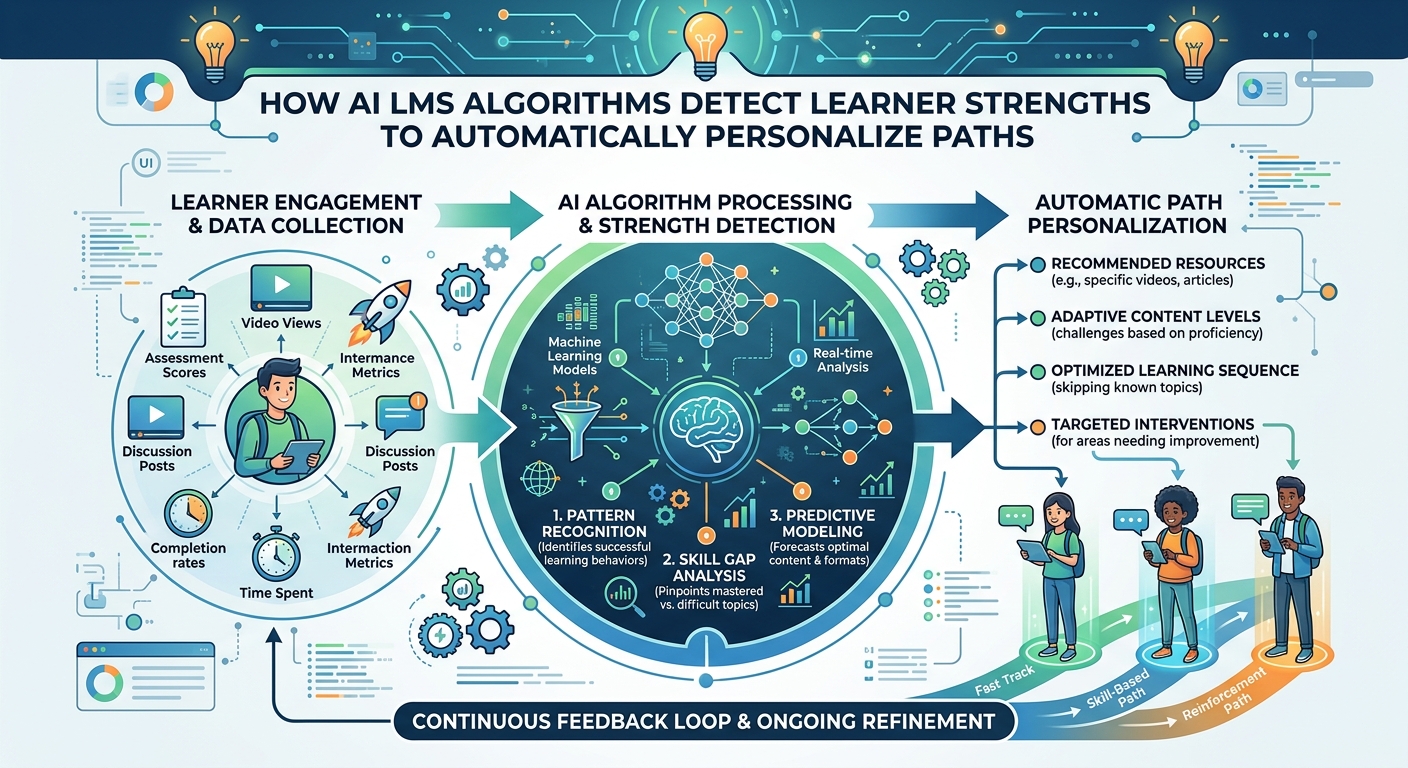
The magic begins with data. AI algorithms embedded within a modern learning management software continuously collect and analyze a rich tapestry of learner interactions and performance metrics. This process isn't just about identifying weaknesses; it's crucially about pinpointing and leveraging existing strengths.
1. Comprehensive Data Collection
- Interaction Patterns: How long a learner spends on a module, which sections they revisit, their navigation paths, and even their emotional responses (if facial recognition or sentiment analysis tools are integrated).
- Performance Metrics: Quiz scores, assessment results, simulation outcomes, project completions, and even real-world job performance data (when integrated with HR systems).
- Pre-assessments & Self-assessments: Initial evaluations that gauge baseline knowledge and learner preferences.
- Engagement Data: Participation in discussions, completion rates, frequency of login, and usage of additional resources.
2. Sophisticated Algorithmic Analysis
Once data is collected, AI algorithms get to work. These often employ a combination of machine learning (ML), natural language processing (NLP), and predictive analytics:
- Pattern Recognition: AI identifies recurring patterns in learner behavior. For example, consistently high scores in problem-solving scenarios might indicate strong analytical skills, while quick completion of theoretical modules could point to strong foundational knowledge.
- Skill Graphing: Algorithms build a detailed "skill graph" for each learner, mapping their proficiency across various competencies relevant to their role and career path. This graph dynamically updates as the learner progresses.
- Comparative Analysis: Learners' data can be compared against peer groups, role requirements, and established benchmarks to highlight areas of exceptional strength or potential.
- Predictive Modeling: AI can predict future performance based on current trends, allowing L&D managers to proactively address potential skill gaps or nurture emerging talents.
This deep analysis enables the enterprise learning management system to understand not just *what* a learner knows, but *how* they learn best and *where their innate talents lie*.
Automatically Personalizing Learning Paths
With a clear understanding of each learner's strengths, the AI-powered LCMS can then automatically, and dynamically, personalize their learning journey. This is the essence of true Adaptive Learning.
1. Dynamic Content Curation and Delivery
- Skipping Redundant Content: If a learner demonstrates mastery in a pre-assessment, the system can automatically skip them past introductory modules, allowing them to focus on new challenges.
- Recommending Advanced Material: For learners who quickly grasp concepts, the AI can suggest more advanced topics, supplemental resources, or even mentorship opportunities that align with their strengths.
- Varying Modalities: Recognizing a learner's preference for visual content over text, the system can prioritize video tutorials, infographics, or interactive simulations.
- Contextualized Learning: Content can be tailored to specific roles or industry segments. For example, a financial analyst in investment banking will receive different content nuances than one in retail banking, even if both are taking a "Risk Management" course.
2. Tailored Feedback and Support
AI doesn't just deliver content; it provides personalized feedback. If a learner excels in a particular area, the system can provide positive reinforcement and suggest opportunities to apply that strength. Conversely, if minor weaknesses are detected, the AI can recommend targeted remediation, additional practice, or alternative explanations.
3. Optimizing for Engagement with Gamified LMS Features
By understanding learner strengths and preferences, AI can intelligently integrate Gamified LMS elements. For a competitive learner, leaderboards and challenge-based content might be prioritized. For a collaborative learner, group projects or peer-to-peer learning opportunities could be emphasized.
Benefits for L&D Leaders Across Industries
The strategic implications of AI-driven personalized learning are profound for L&D professionals:
- Enhanced Engagement & Retention: Learners stay motivated when content is relevant and challenging, but not overwhelming. This is particularly crucial in sectors like Healthcare and Pharma, where ongoing training is vital for patient safety and regulatory compliance.
- Improved Efficiency & Time-to-Competency: By focusing on what's needed, learners achieve mastery faster, reducing training costs and increasing productivity. Imagine the impact in a fast-paced Sales environment or the high-stakes world of Banking.
- Measurable ROI: AI provides granular data on learning outcomes, allowing L&D leaders to demonstrate the direct impact of training on business metrics, from reduced compliance violations (essential for industries like Insurance and Compliance) to increased sales performance.
- Proactive Skill Development: By identifying strengths early, organizations can strategically invest in high-potential employees, fostering leadership pipelines and future-proofing their workforce in industries like Oil and Gas or Mining.
- Consistency and Compliance: Ensures every employee receives the most relevant and up-to-date training, especially critical for Risk-focused Training in highly regulated sectors.
Leveraging an lms learning management system with an integrated AI Powered Authoring Tool further empowers L&D teams to create and adapt content rapidly, ensuring that the personalized paths are always stocked with relevant, high-quality material.
Questions & Answers on AI in Learning
As L&D leaders consider integrating AI into their strategy, several common questions arise:
What does AI personalization mean for global training initiatives?
AI personalization allows for unprecedented scalability and localization of training. By understanding regional nuances and individual proficiencies, an AI-powered learning management solutions can automatically adjust content, language, and cultural references, ensuring relevance for a diverse, global workforce without massive manual effort. This is crucial for large enterprises operating across multiple geographies and regulatory environments.
How can AI enhance the impact of training on business outcomes?
AI enhances impact by directly linking individual learning paths to business objectives. By detecting learner strengths and targeting development, AI ensures that employees are acquiring the exact skills needed to drive sales, improve customer service, reduce operational risks, or innovate. This direct alignment translates into tangible improvements in KPIs, making the training function a true strategic partner rather than just a cost center. For example, in Retail, an AI LMS can quickly upskill staff on new product lines, directly impacting sales figures.
What is the future potential of AI in shaping individual career development?
The future potential is immense. AI can move beyond immediate training needs to become a dynamic career coach. By continuously analyzing an individual's strengths, learning trajectory, and organizational needs, AI can proactively recommend future roles, certifications, and development pathways that align with their talents and the company's strategic direction. This fosters long-term employee growth and retention, creating a highly skilled and motivated workforce that is prepared for future challenges.
Conclusion
The era of generic training is rapidly drawing to a close. For L&D Vice Presidents, Directors, and Managers, embracing AI-driven personalization within their MaxLearn LMS is not merely an upgrade; it's a strategic imperative. By harnessing the power of AI algorithms to detect learner strengths and automatically tailor educational paths, organizations can cultivate a workforce that is not only highly skilled and compliant but also deeply engaged and continuously evolving. This intelligent approach to learning is the key to unlocking unparalleled human potential and driving sustainable business growth across all industries.


