

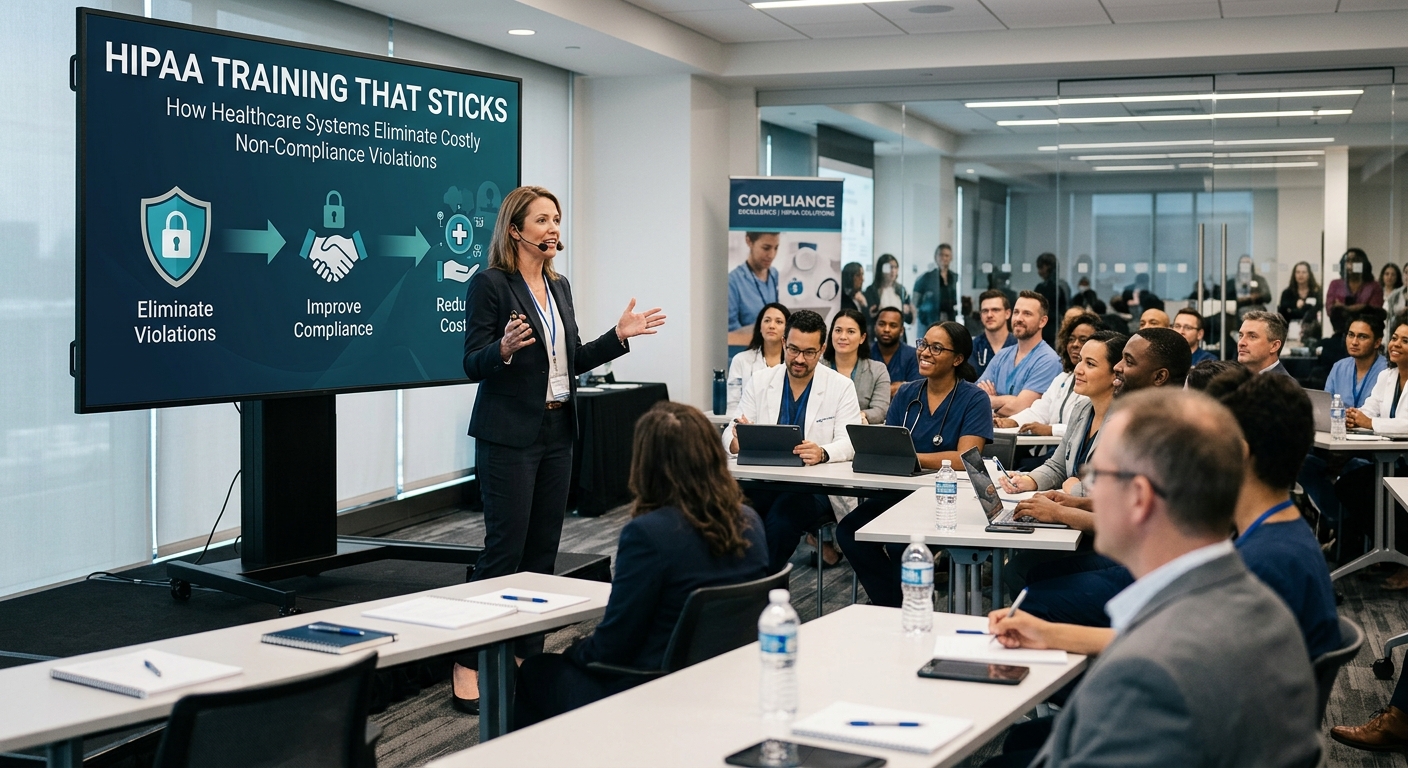
HIPAA Training That Sticks: How Healthcare Systems Eliminate Costly Non-Compliance Violations
For healthcare systems, compliance with the Health Insurance Portability and Accountability Act (HIPAA) isn't just a regulatory checkbox—it's the bedrock of patient trust, data security, and operational integrity. Yet, despite its critical importance, HIPAA violations continue to plague the industry, leading to astronomical fines, reputational damage, and a profound erosion of patient confidence. The root cause often lies not in a lack of training efforts, but in the effectiveness of the training itself. Traditional, often mundane, compliance modules fail to create HIPAA Training That Sticks. This article explores how L&D leaders can transform their approach, leveraging modern eLearning strategies to build a culture of genuine compliance and eliminate costly non-compliance violations.
The High Stakes of HIPAA Non-Compliance
The financial ramifications of HIPAA non-compliance are severe. Fines can range from $100 to $50,000 per violation, with an annual cap of $1.5 million for repeat violations of the same type. These penalties are imposed by the Office for Civil Rights (OCR) and state attorneys general. Beyond monetary penalties, healthcare organizations face:
- Reputational Damage: Data breaches and compliance failures are often public, leading to negative media attention, loss of public trust, and difficulty attracting new patients.
- Loss of Patient Trust: Patients entrust healthcare providers with their most sensitive personal health information (PHI). A breach of this trust can deter individuals from seeking necessary care or sharing crucial medical details.
- Operational Disruptions: Investigating breaches, implementing corrective actions, and managing public relations can divert significant resources, impacting core healthcare services.
- Legal Ramifications: Beyond federal fines, organizations can face class-action lawsuits from affected individuals, adding another layer of financial and legal burden.
Given these profound consequences, it's clear that the current standard of HIPAA training often falls short. Merely completing a course doesn't guarantee understanding, retention, or application of knowledge in real-world scenarios. The challenge for L&D professionals is to move beyond passive information delivery to active, engaging, and impactful learning experiences.
Beyond Checkbox Training: The Need for "Sticky" HIPAA Education
"Sticky" training is education that truly resonates with learners, ensuring that critical information is not only absorbed but also remembered and applied consistently over time. In the context of HIPAA, this means healthcare professionals instinctively make the right decisions regarding patient privacy and data security, even under pressure.
Traditional training often fails for several reasons:
- Information Overload: Dense, lengthy modules can overwhelm learners, leading to disengagement and poor retention.
- Irrelevance: Generic content may not directly relate to an individual's specific role or daily tasks, making it seem less important.
- Lack of Engagement: Passive learning formats, such as reading static slides or watching lengthy videos, do not foster active participation or critical thinking.
- Infrequent Reinforcement: Annual training sessions are often insufficient to cement complex regulatory knowledge, leading to rapid decay of learned material.
To overcome these hurdles, L&D leaders must embrace innovative eLearning methodologies that prioritize engagement, personalization, and continuous reinforcement.
Leveraging Modern eLearning for Unforgettable HIPAA Training
Microlearning for Retention
Healthcare professionals are time-strapped. Delivering information in short, focused bursts is key. A Microlearning LMS breaks down complex HIPAA regulations into bite-sized modules, typically 3-5 minutes long. These modules focus on a single learning objective, making them easy to digest during a coffee break or between patient appointments. This approach improves comprehension and retention by preventing cognitive overload and allowing for just-in-time learning.
Engage and Educate with Interactive Elements
Engagement is paramount for retention. A Gamified LMS transforms compliance training from a chore into an interactive experience. Incorporating elements like quizzes, scenarios, simulations, points, badges, and leaderboards can motivate learners. For HIPAA, this could mean interactive scenarios where employees identify violations, make real-time decisions, or role-play appropriate responses to data requests. This active participation reinforces learning and helps bridge the gap between knowledge and practical application.
Personalized Paths with Adaptive Learning
Not all employees have the same knowledge gaps or require the same level of detail. Adaptive Learning tailors the training content to each individual's needs. By assessing prior knowledge and learning progress, an adaptive system can skip already mastered topics, provide deeper dives into areas of weakness, and offer content relevant to specific roles (e.g., front desk staff vs. IT security). This personalized approach ensures training is efficient, relevant, and maximally impactful for every learner.
AI-Driven Content Creation and Insights
Creating dynamic and relevant training content can be resource-intensive. An AI Powered Authoring Tool can significantly streamline this process. AI can assist in generating scenarios, questions, and even entire modules based on existing regulations and real-world compliance incidents. Furthermore, AI-driven analytics within a learning management software can provide L&D leaders with invaluable insights into training effectiveness, identifying common areas of confusion or specific teams that might require additional support.
Risk-focused Training: Prioritizing Critical Areas
Not all HIPAA violations carry the same risk or frequency across different roles. Risk-focused training prioritizes the most critical and frequently encountered compliance challenges for specific employee groups. For example, a nurse might receive intensive training on proper disposal of PHI, while an administrative assistant might focus on secure email practices. This targeted approach, often guided by data from past incidents or audits, ensures that training resources are allocated efficiently to address the highest-risk areas, maximizing the impact on overall compliance posture.
AI-Enhanced Q&A for Deeper Understanding
Intelligent systems offer powerful capabilities for enhancing compliance training, anticipating knowledge gaps, and ensuring global consistency. Here are some common questions and insights:
- How can advanced analytics pinpoint compliance weak spots across an organization?
Intelligent analysis tools can process vast amounts of data, including past incident reports, audit findings, and training performance metrics. By identifying patterns and correlations, these systems can highlight specific departments, roles, or types of information that are prone to non-compliance, enabling L&D teams to implement targeted interventions before violations occur. - What impact does intelligent automation have on standardizing regulatory education globally?
Intelligent automation within a learning management system can ensure that compliance training is delivered uniformly across all locations, cultures, and languages. It automates content updates when regulations change, distributes new modules, and tracks completion, guaranteeing that every employee receives consistent, up-to-date information, thereby reducing regional discrepancies in understanding and application. - Can personalized training pathways, guided by artificial intelligence, truly reduce individual error rates?
Absolutely. Machine learning algorithms assess an individual's existing knowledge, learning style, and specific job functions to deliver highly relevant, targeted training modules. This personalized approach fills specific knowledge gaps, reinforces critical areas that are pertinent to their daily tasks, and significantly reduces the likelihood of errors stemming from a lack of understanding or misapplication of compliance rules.
Implementing a Robust Learning Management System
To effectively deploy these modern eLearning strategies, a comprehensive LMS is indispensable. A powerful learning management software goes beyond simple course delivery; it provides a centralized platform for managing all aspects of compliance training. When evaluating learning management solutions, healthcare systems should look for a cloud based learning management system that offers scalability, robust reporting, and seamless integration with existing HR systems. An enterprise learning management solution like MaxLearn LMS provides an integrated learning content management system (LCMS) for authoring, managing, and delivering diverse content formats, from microlearning modules to interactive simulations.
Choosing the right LMS, one that supports innovative methodologies, will empower L&D professionals to build truly effective, "sticky" HIPAA training programs. This investment is not just about avoiding penalties; it's about safeguarding patient data, upholding ethical standards, and protecting the long-term viability and reputation of the healthcare system.
In conclusion, the era of passive, forgettable HIPAA training must end. By embracing a modern LMS and leveraging strategies such as microlearning, gamification, adaptive learning, AI-powered tools, and risk-focused content, healthcare systems can create a compliance culture where adherence is second nature. This proactive approach not only eliminates costly non-compliance violations but also reinforces patient trust and strengthens the organization's foundation for secure and ethical healthcare delivery.


