

What Is Microlearning for Compliance Training? The Definitive Guide
In today's dynamic business landscape, regulatory frameworks are constantly evolving, placing immense pressure on organizations to ensure their workforce remains compliant. For Vice Presidents, Directors, and Managers in Learning & Development, the challenge isn't just delivering compliance training, but delivering it effectively—ensuring engagement, retention, and measurable impact, all while minimizing disruption to productivity. Traditional, lengthy compliance modules often fall short, leading to disengaged learners and forgotten information. This is where microlearning emerges as a powerful, transformative solution.
This definitive guide explores microlearning for compliance training, delving into its core principles, benefits, implementation strategies, and the pivotal role of advanced eLearning technologies, including AI, in revolutionizing how your organization manages its regulatory obligations.
What Exactly is Microlearning?
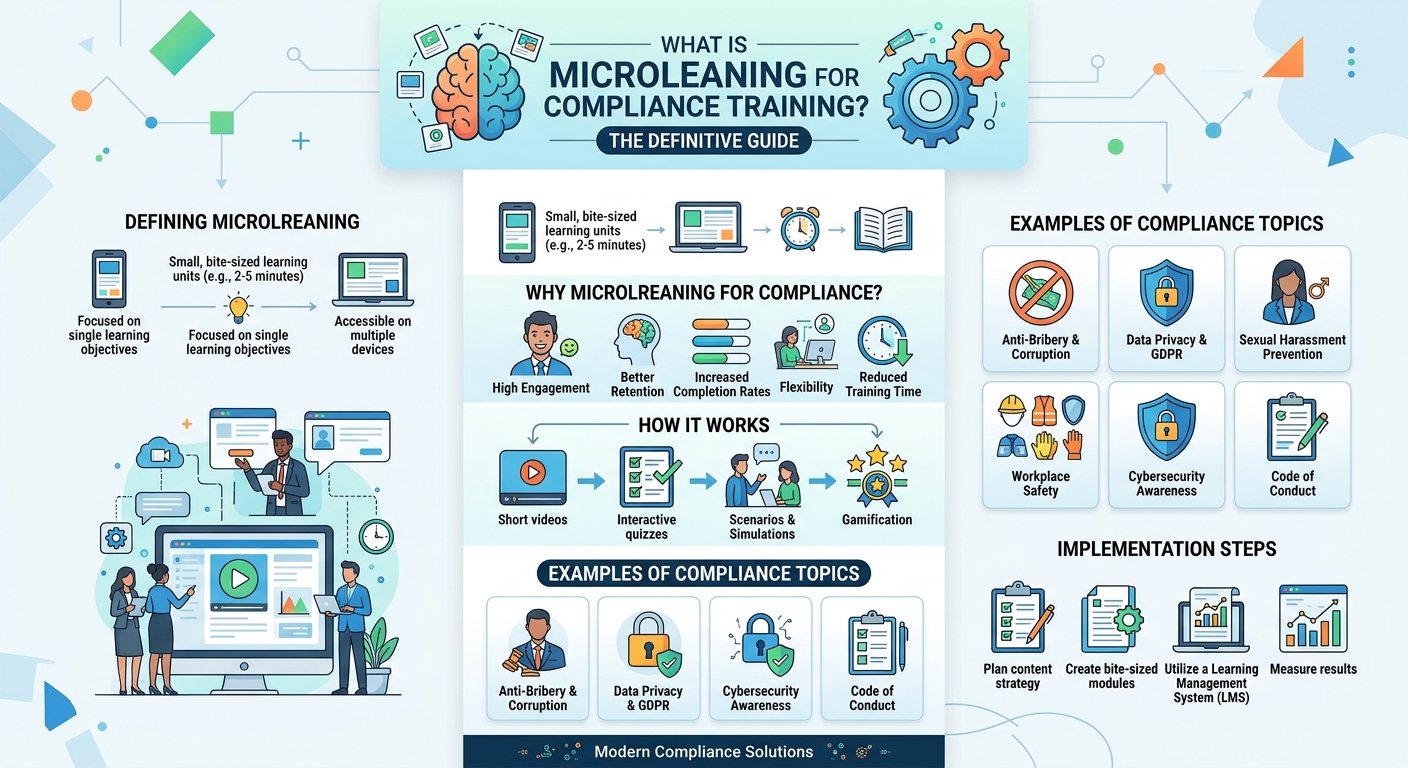
Microlearning is an approach to learning that delivers information in small, focused bursts, typically ranging from 2 to 10 minutes in duration. Unlike traditional long-form courses, microlearning modules are designed to achieve a single, specific learning objective. They are highly digestible, easily accessible, and can be consumed on demand, making them perfectly suited for busy professionals who need to absorb critical information quickly and efficiently.
Key characteristics of microlearning include:
- Brevity: Content is concise and to the point.
- Focus: Each module addresses a single learning goal or concept.
- Varied Formats: Utilizes diverse media like short videos, infographics, quizzes, interactive scenarios, and simulations.
- Accessibility: Available across multiple devices, allowing learning anytime, anywhere.
- Relevance: Directly applicable to a specific task, skill, or piece of knowledge.
Why Microlearning for Compliance Training? The Inherent Challenges
Compliance training often carries a reputation for being dull, mandatory, and forgettable. L&D leaders grapple with several persistent issues:
- Low Engagement: Long, text-heavy modules lead to learner fatigue and lack of interest.
- Poor Retention: Information overload makes it difficult for employees to remember key regulations and procedures when needed most.
- Time & Cost Intensive: Extensive training sessions pull employees away from their core duties, impacting productivity and increasing operational costs.
- Outdated Content: Rapid regulatory changes mean traditional courses quickly become obsolete, requiring frequent and costly updates.
- Difficulty in Measuring Impact: It's challenging to track if traditional training truly changes behavior or mitigates risk.
Microlearning directly addresses these pain points, offering a more effective and efficient pathway to compliance.
Key Benefits of Microlearning for Compliance
Enhanced Engagement & Retention
Short, targeted modules prevent cognitive overload, making learning more enjoyable and memorable. Learners are more likely to complete training when it's broken into manageable chunks. Incorporating interactive elements and the features of a Gamified LMS further boost motivation and information recall, transforming compliance from a chore into an engaging experience.
Improved Agility & Timeliness
Regulatory landscapes are constantly shifting. Microlearning modules are quicker to develop, update, and deploy. This agility ensures that your workforce is always trained on the most current regulations, reducing the risk of non-compliance. When new policies emerge, targeted microlearning can be rolled out instantly, keeping your organization ahead of the curve.
Reduced Training Time & Costs
By delivering precise information on demand, microlearning drastically cuts down the time employees spend on training. This efficiency translates into significant cost savings related to employee downtime and external training resources. Learners get exactly what they need, when they need it, optimizing their learning journey.
Personalized Learning Paths
Not all employees require the same compliance training or have the same knowledge gaps. Microlearning, especially when combined with Adaptive Learning technologies, allows for personalized learning paths. This means employees receive content tailored to their role, previous knowledge, and performance, making training far more relevant and impactful.
Better ROI & Measurable Impact
With focused modules, it's easier to track specific learning outcomes. L&D teams can clearly see completion rates, quiz scores, and comprehension levels for each micro-lesson, demonstrating a clear return on investment. This data-driven approach helps refine training programs continually.
How to Implement Microlearning for Compliance Training
Transitioning to a microlearning approach for compliance requires thoughtful planning:
- Audit Existing Content: Break down current lengthy courses into their core concepts and objectives. Identify opportunities for chunking.
- Define Learning Objectives: For each micro-module, clearly state what the learner should know or be able to do.
- Utilize Diverse Formats: Don't just chop up text. Convert content into engaging videos, interactive quizzes, scenarios, infographics, and quick reference guides.
- Leverage a Robust Learning Management System: A sophisticated Microlearning LMS is crucial for effective deployment and tracking. Look for a comprehensive learning content management system or learning management software that can handle a vast array of short, interactive modules. An ideal learning management system should function as a complete set of learning management solutions, providing a seamless experience. Consider an enterprise learning management system, particularly a cloud based learning management system like MaxLearn LMS, which also incorporates LCMS functionalities for efficient content creation and management.
- Integrate Assessments & Feedback: Short, frequent quizzes reinforce learning and provide immediate feedback, ensuring comprehension.
- Promote Continuous Learning: Use microlearning for regular refreshers and reinforcement throughout the year, not just as an annual event.
The Role of Artificial Intelligence in Supercharging Microlearning Compliance
Artificial Intelligence (AI) is rapidly transforming the eLearning landscape, offering unprecedented capabilities for L&D leaders seeking to optimize their compliance training. By integrating AI, organizations can make microlearning even more powerful and precise.
How can artificial intelligence enhance the relevance of my compliance training modules?
AI-driven platforms can analyze learner behavior, performance data, job roles, and even industry trends to automatically recommend or push the most relevant microlearning modules to individual employees. This ensures that training is highly contextual and personalized, focusing on specific knowledge gaps or areas of higher risk for each learner. For instance, an employee in the finance department might receive tailored modules on anti-money laundering regulations, while a retail associate receives training on data privacy specific to customer interactions. This targeted delivery significantly boosts engagement and effectiveness.
Can AI help us quickly create and update compliance microlearning content for global teams?
Absolutely. The speed at which regulations change, especially across different jurisdictions, can be a major hurdle. Modern AI Powered Authoring Tool can dramatically expedite the content creation and update process. These tools can assist in generating initial content drafts, converting long-form documents into microlearning scripts, identifying key learning points, and even localizing content for various languages and cultural nuances. This reduces development time and ensures that your compliance training is always current and globally applicable, without extensive manual effort.
How can AI assist in proactively addressing compliance risks through training?
AI algorithms excel at pattern recognition and predictive analysis. By analyzing internal incident reports, audit findings, regulatory updates, and even external news, AI can identify emerging compliance risks before they become critical issues. This allows L&D teams to implement Risk-focused Training modules precisely when and where they are needed. Instead of generic annual training, AI enables a proactive approach, delivering targeted micro-interventions that mitigate specific, identified risks, thereby strengthening your organization's overall compliance posture and reducing potential liabilities.
Conclusion
Microlearning is no longer a niche concept; it's a strategic imperative for modern compliance training. For L&D Vice Presidents, Directors, and Managers seeking to move beyond outdated, ineffective methods, microlearning offers a path to higher engagement, better retention, and measurable impact. When powered by a robust LMS and enhanced with cutting-edge AI capabilities, microlearning transforms compliance from a burdensome obligation into a continuous, dynamic, and genuinely effective learning journey. Embrace microlearning to build a more compliant, knowledgeable, and resilient workforce ready to navigate the complexities of today's regulatory environment.
.jpg)


