

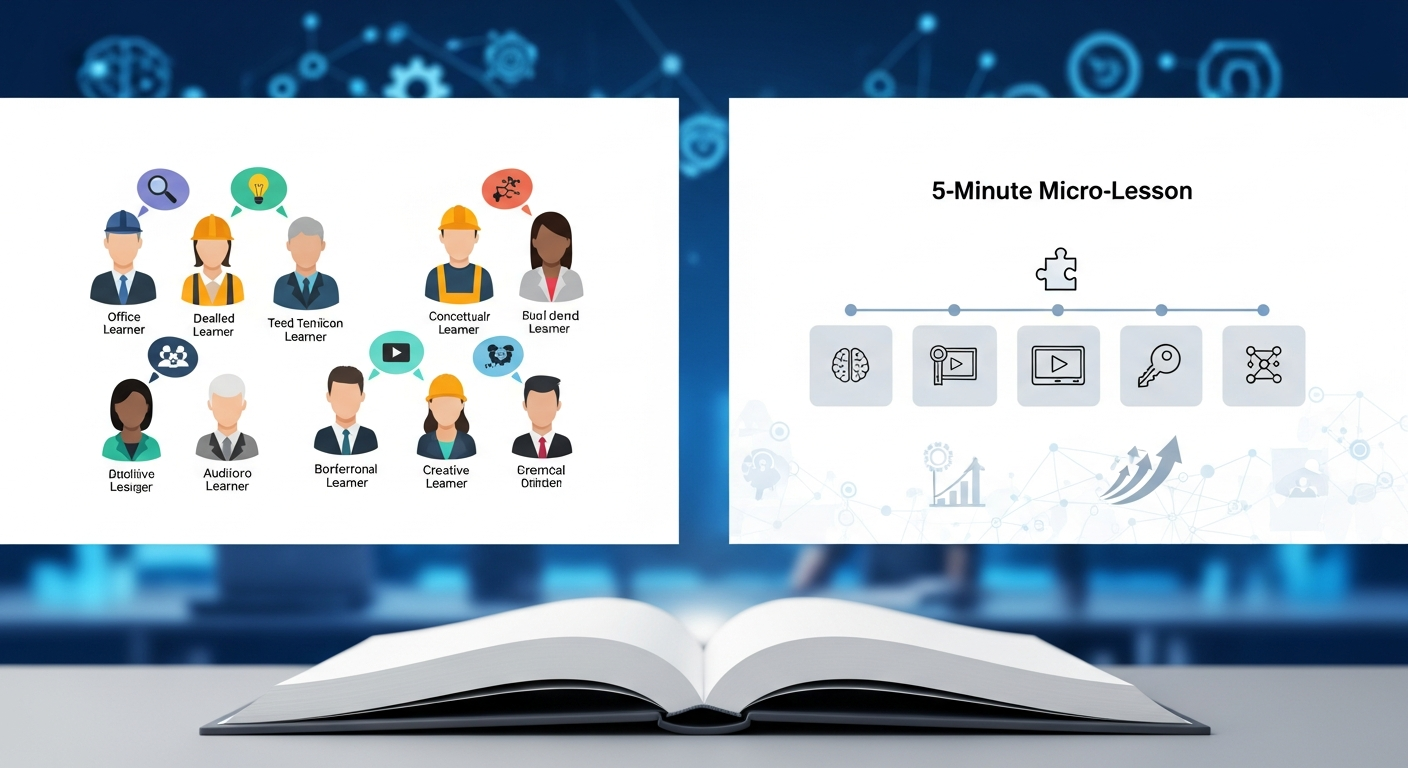
The Modern L&D Playbook: Tailoring 5-Minute Micro-Lessons to Diverse Workforces
In today's fast-evolving corporate landscape, the role of Learning and Development (L&D) has never been more critical, nor more complex. Organizations grapple with a dynamic workforce – a rich tapestry of generations, cultures, geographies, and learning styles. The traditional, lengthy training modules are increasingly proving ineffective against the backdrop of dwindling attention spans and the urgent need for just-in-time knowledge. This is where the modern L&D playbook shines, pivoting towards agile, impactful learning experiences. At its core lies the power of the 5-minute micro-lesson, meticulously tailored to resonate with every individual within a diverse workforce.
For L&D VPs, Directors, and Managers, the challenge is clear: how do we deliver high-quality, relevant training that sticks, across sectors like Compliance, Sales, Banking, Finance, Insurance, Retail, Pharma, Health care, Hospitality, Oil and Gas, and Mining, without overwhelming learners or the L&D team? The answer lies in precision, personalization, and portability – all hallmarks of well-crafted micro-lessons.
The Evolution of L&D: Why Micro-Lessons?
The contemporary workplace demands continuous skill development, often in short bursts. Employees are often time-poor, juggling multiple responsibilities, making it difficult to commit to extended training sessions. This shift has necessitated a move from event-based learning to a continuous learning culture, where knowledge acquisition is integrated seamlessly into the workflow.
- Combating Information Overload: Micro-lessons break down complex topics into digestible chunks, making learning less daunting and more achievable.
- Boosting Retention: Shorter, focused content prevents cognitive overload, improving comprehension and recall.
- Enhancing Engagement: Quick, relevant lessons keep learners motivated and interested, fostering a positive learning experience.
- On-Demand Access: Learning becomes accessible exactly when and where it's needed, supporting performance at the point of need.
Implementing an effective Microlearning LMS is crucial here. A robust learning management system allows L&D professionals to manage, deliver, and track these bite-sized learning modules efficiently, ensuring they reach the right audience at the right time.
Crafting the Perfect 5-Minute Micro-Lesson
The art of creating an effective 5-minute micro-lesson lies in its deliberate design and execution. It's not simply about shortening existing content; it's about strategic distillation.
Focus on Clarity and Conciseness
Each micro-lesson should ideally address a single learning objective. This laser focus ensures clarity and prevents learners from becoming sidetracked. Think of it as answering one specific question or teaching one particular skill. For instance, in banking, a lesson could cover "How to identify a specific type of fraud indicator," rather than "An overview of financial crime."
Engage with Variety
Repetitive formats can lead to disengagement. Incorporate a mix of media to keep learners interested:
- Short explainer videos (2-3 minutes)
- Interactive quizzes or polls
- Infographics or job aids
- Mini-simulations or scenario-based questions
- Audio snippets or podcasts
Leveraging a Gamified LMS can further boost engagement by integrating points, badges, and leaderboards, transforming learning into an enjoyable and competitive experience.
Leveraging Technology for Personalization
Technology is the backbone of modern microlearning. An advanced LMS acts as a central hub, allowing L&D teams to deploy and manage content effortlessly. Features like an enterprise learning management system or a cloud based learning management system facilitate seamless access and content delivery to global teams. Furthermore, Adaptive Learning paths, often powered by sophisticated algorithms, ensure that learners receive content tailored to their existing knowledge and learning pace.
Tailoring to Diverse Workforces: The Personalization Imperative
A "one-size-fits-all" approach to training is a relic of the past. Modern L&D must embrace hyper-personalization, recognizing the unique needs of each segment within the workforce.
Understanding Your Audience Segments
Different industries and departments have distinct training requirements. Compliance teams in finance need rigorous, regularly updated Risk-focused Training, while sales teams require modules on product knowledge and negotiation tactics. Healthcare professionals might need quick refreshers on new protocols, and retail staff on customer service best practices. A comprehensive learning content management system (LCMS) helps organize and customize this vast array of content.
Cultural Nuances and Linguistic Diversity
For global organizations, tailoring means more than just translation. It involves understanding cultural contexts, local regulations, and diverse communication styles. Micro-lessons can be localized for language and cultural relevance, ensuring that the message resonates effectively with employees in different regions.
Skill Gaps and Learning Styles
Identifying individual skill gaps through assessments and performance data allows L&D to prescribe targeted micro-lessons. Similarly, catering to varied learning styles – visual, auditory, kinesthetic – by offering diverse content formats ensures maximum engagement and effectiveness. A flexible lms learning management system facilitates this adaptability.
The AI Advantage: Enhancing Micro-Lessons for Impact
Artificial intelligence is transforming L&D, offering unprecedented capabilities for personalization and efficiency. By integrating intelligent systems, L&D professionals can elevate the impact of their micro-lessons.
How can artificial intelligence personalize learning pathways for individual employees?
AI algorithms can analyze a learner's past performance, preferences, job role, and even emotional responses to content. Based on this data, an Adaptive Learning system can dynamically recommend the most relevant micro-lessons, adjusting the learning path in real-time. This ensures that each employee receives a truly individualized experience, focusing on areas where they need improvement or advanced knowledge. Tools like an AI Powered Authoring Tool can even assist in generating tailored content faster, streamlining the creation process for L&D teams.
What role does data analytics play in optimizing training programs across different regions?
Advanced data analytics, often powered by intelligent insights, is indispensable for global L&D. By tracking engagement rates, completion times, assessment scores, and behavioral patterns across different geographical locations, organizations can gain deep insights into what works and what doesn't. This data enables L&D managers to identify regional specific challenges, optimize content for cultural relevance, and allocate resources more effectively. For instance, if data reveals lower engagement with certain topics in a particular country, L&D can adjust the micro-lesson format or content to better suit local preferences, all managed through a comprehensive learning management software.
Can intelligent systems help identify and mitigate compliance risks through targeted training?
Absolutely. For industries like finance, pharma, and healthcare, compliance is paramount. Intelligent systems can monitor changes in regulations, identify high-risk areas based on employee roles and past incidents, and automatically assign specific Risk-focused Training micro-lessons to relevant personnel. These systems can track completion and comprehension, flagging employees who may need further intervention. This proactive approach ensures regulatory adherence and significantly reduces an organization's exposure to compliance breaches, making a powerful argument for a smart learning management solution.
Implementing the Modern L&D Playbook
Adopting a micro-learning strategy for diverse workforces requires careful planning and the right technological infrastructure.
Choosing the Right Tools
The foundation of this playbook is a robust LMS. An ideal MaxLearn LMS should support microlearning formats, offer Gamified LMS features, facilitate Adaptive Learning, and ideally incorporate AI Powered Authoring Tool capabilities. Look for a solution that provides detailed analytics to track progress and measure impact.
Measuring Impact and ROI
Beyond completion rates, L&D professionals must focus on how micro-lessons translate into performance improvements and business outcomes. Track metrics such as skill proficiency gains, reduction in errors, compliance adherence rates, and improved customer satisfaction. This data-driven approach demonstrates the tangible ROI of a modern L&D strategy.
Conclusion
The modern L&D playbook is a strategic imperative for any organization aiming for sustained growth and competitive advantage in a complex global economy. By embracing 5-minute micro-lessons and tailoring them meticulously to the unique needs of a diverse workforce, L&D leaders can foster a culture of continuous learning that is engaging, effective, and profoundly impactful. Leveraging cutting-edge technology, particularly AI and comprehensive learning management system platforms, empowers L&D to deliver personalized, relevant training at scale, preparing employees for the challenges and opportunities of tomorrow.
.jpg)


