

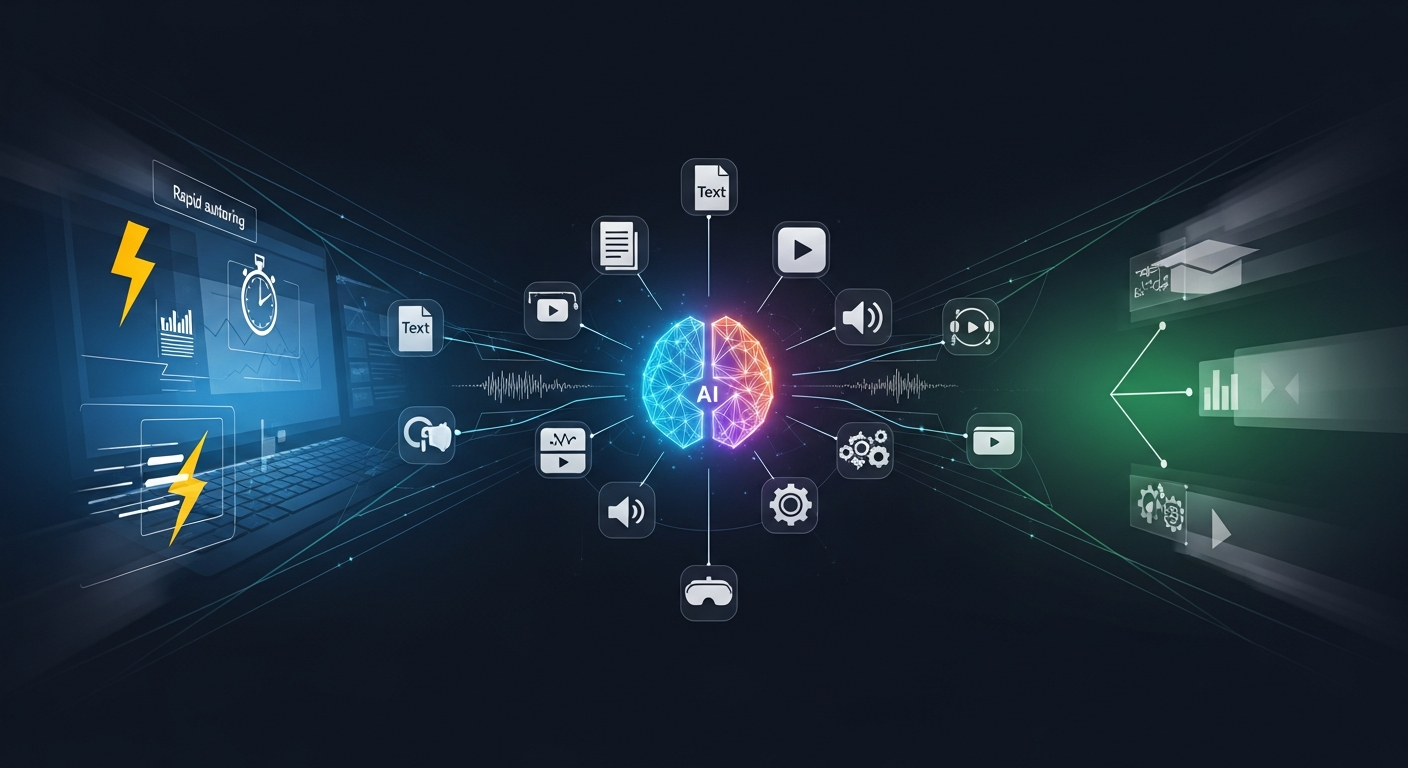
Streamlining L&D: Rapidly Authoring Multimodal Content with AI Assistants
In today's fast-paced corporate environment, the demand for timely, relevant, and engaging learning experiences has never been higher. L&D leaders across industries, from Compliance and Sales to Banking, Finance, Insurance, Retail, Pharma, Health care, Hospitality, Oil and Gas, and Mining, grapple with the challenge of delivering impactful training at scale. The traditional model of content creation often proves too slow and resource-intensive, struggling to keep up with evolving business needs and learner expectations. This is where the strategic integration of AI assistants for rapidly authoring multimodal content emerges as a game-changer.
For Vice Presidents, Directors, and Senior Managers of L&D, understanding how to leverage cutting-edge technology is paramount to maintaining a competitive edge. The question often arises: "How can we accelerate content development without compromising quality or engagement?" The answer lies in embracing intelligent automation, allowing L&D teams to move beyond manual bottlenecks and unlock unprecedented efficiency.
The Evolving L&D Landscape and the Multimodal Imperative
Modern learners demand flexibility and variety. They expect to consume content in formats that suit their preferences and contexts – whether a quick video explainer on a mobile device, an interactive simulation at a desktop, or an audio summary during a commute. This shift necessitates a multimodal approach to learning content, incorporating text, audio, video, interactive elements, and more.
What exactly is multimodal content, and why is it so crucial for contemporary learning strategies?
Multimodal content refers to learning materials that combine various media types to convey information and facilitate understanding. Its importance stems from several factors:
- Enhanced Engagement: Different modalities appeal to different learning styles and preferences, keeping learners more engaged.
- Improved Retention: Presenting information through multiple channels reinforces learning and aids recall.
- Accessibility: Offering diverse formats can cater to a broader range of accessibility needs and technological capabilities.
- Contextual Learning: Microlearning nuggets, often multimodal, can be delivered precisely when and where they are needed, supporting performance. For instance, a Microlearning LMS is designed to deliver bite-sized, contextually relevant learning experiences.
However, creating high-quality multimodal content manually for a comprehensive learning content management system is a significant undertaking. This is where AI assistants step in, transforming the authoring process.
The AI Assistant Revolution in Content Authoring
The advent of sophisticated AI assistants is revolutionizing how L&D departments approach content creation. These tools are no longer futuristic concepts; they are practical, readily available solutions that empower teams to author, adapt, and deploy learning materials at scale. They represent a significant leap forward for any learning management software looking to enhance its content capabilities.
How can intelligent assistants dramatically transform the content creation workflow for L&D professionals?
AI assistants act as force multipliers, augmenting human capabilities rather than replacing them. They can perform tedious, time-consuming tasks, freeing up L&D specialists to focus on strategy, instructional design, and human-centric elements of learning.
Consider the core benefits for an enterprise learning management system:
- Speed and Scalability: AI can generate initial drafts of text, create scripts for videos, and even produce voiceovers in minutes, drastically reducing the time it takes to go from concept to deliverable. This is crucial for industries like Compliance and Finance, where regulatory changes demand rapid updates to Risk-focused Training.
- Consistency and Quality: AI helps maintain brand voice, terminology, and instructional design principles across all content, ensuring a consistent learner experience within any learning management solutions ecosystem.
- Multimodal Generation: From converting text into engaging audio narratives to suggesting visual aids or even generating basic video storyboards, AI can produce content across various modalities, making true multimodal learning a reality.
- Personalization and Adaptive Learning: By analyzing learner data, AI can help tailor content pathways and suggestions, creating a more personalized and effective learning journey for each individual.
- Cost Efficiency: Reducing the reliance on external vendors or extensive internal resources for basic content creation can lead to significant cost savings.
Practical Applications Across Industries
The impact of AI-powered content authoring resonates deeply across the diverse industries L&D serves. For example:
- In Compliance and Banking, AI can rapidly update training modules to reflect new regulations, automatically generating summaries, quizzes, and even short video explanations for complex legal changes. This ensures that employees are always up-to-date, mitigating risks.
- For Sales and Retail, AI can quickly create product knowledge modules, sales script simulations, and customer service role-play scenarios, often incorporating elements of a Gamified LMS to boost engagement.
- In Pharma and Health Care, AI assists in developing training for new drug protocols, medical procedures, or patient care guidelines, ensuring accuracy and swift deployment to clinical staff.
- In Oil and Gas or Mining, where safety is paramount, AI can help in producing immersive VR/AR training scenarios or detailed operational procedure guides, translating complex technical documents into easily digestible multimodal formats.
This widespread utility makes an LCMS integrated with AI an indispensable tool for forward-thinking organizations.
Implementing AI for Rapid Multimodal Content
So, what does it take to effectively integrate AI into your L&D content workflow? The first step is often adopting a robust lms learning management system that supports AI integration or offers native AI capabilities. Solutions like MaxLearn LMS are designed with modern challenges in mind, providing a comprehensive platform for managing and delivering diverse learning experiences.
What key features should L&D leaders look for in an AI Powered Authoring Tool?
- Natural Language Processing (NLP): To generate text, scripts, and summaries from raw data or existing content.
- Text-to-Speech (TTS): For creating high-quality audio narrations in various voices and languages.
- Automated Content Curation and Recommendation: To suggest relevant resources and personalize learning paths.
- Visual Generation: Basic image and video generation or intelligent suggestions for visual assets.
- Integration Capabilities: Seamless integration with your existing learning management system and other business tools.
- Analytics and Feedback Loops: AI can help analyze learner engagement and performance data to continually refine content and delivery.
Choosing a cloud based learning management system that prioritizes these AI functionalities is crucial for long-term success. It allows L&D teams to focus on strategic instructional design and creative oversight, entrusting the repetitive and data-heavy tasks to their intelligent assistants.
The Future is Here: Empowering L&D with Intelligent Solutions
The era of rapid multimodal content authoring with AI assistants is not just a trend; it's a fundamental shift in how L&D departments operate. For senior L&D professionals, this means moving beyond the constraints of traditional content creation and embracing a future where learning is agile, personalized, and scalable. By strategically adopting AI, you can empower your teams to meet the complex demands of your organization, delivering exceptional learning experiences that drive business growth and employee performance.
Investing in the right technology, like an advanced LMS with integrated AI capabilities, is no longer an option but a strategic imperative for any organization aiming to lead in the digital age. The time to streamline your L&D content creation process is now.
.jpg)


