

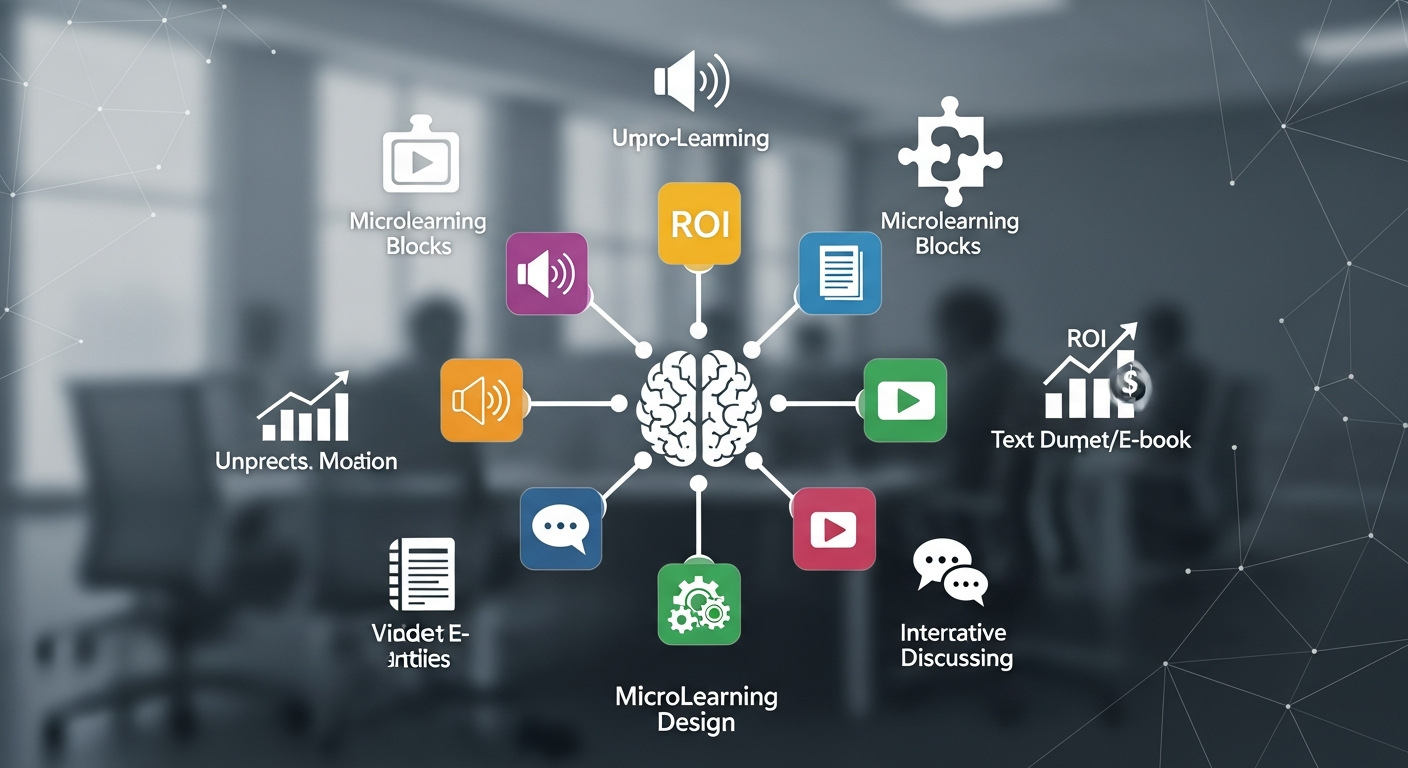
Maximizing Corporate Training ROI: A Multimodal Framework for Microlearning Design
In today's fast-paced corporate landscape, traditional, lengthy training programs often fall short. They consume valuable employee time, struggle with engagement, and frequently fail to deliver a tangible return on investment (ROI). For L&D Vice Presidents, Directors, and Senior Managers, the challenge is clear: how do we deliver impactful, effective learning that directly contributes to business objectives and demonstrates measurable value?
The answer lies in a strategic shift towards a multimodal framework for microlearning design. This approach leverages short, focused learning bursts delivered through diverse formats, perfectly aligning with modern attention spans and the demand for agile skill development. By embracing this methodology, organizations can significantly boost learning effectiveness, learner engagement, and ultimately, corporate training ROI.
The ROI Imperative in Corporate Training
Every dollar invested in corporate training must demonstrate a clear return. Whether it’s improving compliance rates, enhancing sales performance, reducing errors in manufacturing, or accelerating onboarding, L&D initiatives are increasingly scrutinized for their business impact. A robust learning management system (LMS) is crucial for tracking this, but the design of the learning content itself is paramount.
Traditional training models often suffer from high initial costs, low knowledge retention, and difficulty in measuring direct business outcomes. The goal is not just to "train" but to "transform" – to equip employees with practical, immediately applicable skills that drive performance and mitigate risk. This is where a strategic approach to microlearning, supported by a sophisticated enterprise learning management solution, becomes indispensable.
The Power of Microlearning
What is Microlearning?
Microlearning breaks down complex topics into bite-sized, digestible units that can be consumed quickly, typically within 2-10 minutes. These short modules are highly focused, addressing specific learning objectives or a single concept, skill, or task.
Why Microlearning Works
- Enhanced Retention: Smaller chunks of information are easier for the brain to process and remember.
- Increased Engagement: Short, relevant content prevents cognitive overload and maintains learner interest.
- Flexibility and Accessibility: Learners can access content anytime, anywhere, on any device, fitting learning into their workflow.
- Faster Skill Acquisition: Focus on practical, actionable skills leads to quicker application in real-world scenarios.
- Cost-Effectiveness: Easier to update and deploy, reducing development and delivery costs compared to extensive courses.
A Multimodal Framework for Microlearning Design
To truly maximize ROI, microlearning shouldn't be a one-size-fits-all solution. A multimodal framework combines various content formats and delivery methods, catering to diverse learning styles and specific performance needs.
Phase 1: Needs Assessment and Content Chunking
The foundation of any successful training program is a thorough needs analysis. Identify critical skill gaps, compliance requirements, and performance objectives. Once identified, break down larger topics into their smallest, most essential components. For instance, a comprehensive "Risk Management" course can be segmented into micro-modules on "Identifying Operational Risks," "Mitigating Financial Risks," or "Compliance Reporting Best Practices." This initial phase is crucial for effective learning content management system integration.
Phase 2: Diverse Delivery Modalities
A multimodal approach means using a variety of formats to deliver microlearning, ensuring the content is engaging and accessible. Consider:
- Short Videos: Explanations, demonstrations, case studies, or expert interviews.
- Infographics and Visual Guides: For presenting complex data or processes succinctly.
- Interactive Quizzes and Assessments: To reinforce learning and check comprehension.
- Podcasts or Audio Snippets: For on-the-go learning during commutes or breaks.
- Brief Articles or Job Aids: Quick reference guides or textual explanations.
- Simulations or Scenario-based Exercises: For practical application of skills in a safe environment.
Phase 3: Engagement and Gamification
Keeping learners engaged is paramount for retention and application. Incorporating elements of play can significantly boost motivation and participation. A Gamified LMS can transform mundane training into an enjoyable experience through points, badges, leaderboards, and challenges. This encourages healthy competition and provides instant feedback, making learning more dynamic and memorable. The MaxLearn LMS, for example, excels in this area, fostering a culture of continuous learning.
Phase 4: Adaptive Pathways and Personalization
Not all learners require the same training. An effective framework incorporates Adaptive Learning paths that adjust based on a learner's prior knowledge, performance, and role. This personalized approach ensures learners receive content most relevant to their needs, preventing boredom from redundant information and frustration from overly challenging material. By tailoring the journey, organizations optimize training time and resources, leading to a higher ROI.
Phase 5: AI-Driven Analytics and Iteration
The final, yet continuous, phase involves leveraging data and artificial intelligence to refine and optimize the training program. A sophisticated cloud based learning management system can collect vast amounts of data on learner performance, engagement, and content effectiveness.
Q: How can artificial intelligence enhance the effectiveness of corporate training?
A: Artificial intelligence can significantly enhance training effectiveness by personalizing learning paths, recommending relevant content, automating administrative tasks, and providing predictive analytics on learner performance. It allows for a more dynamic and responsive learning environment.
Q: What are the key considerations for organizations looking to implement advanced digital technologies in their learning and development initiatives?
A: Organizations must consider data privacy and security, seamless integration with existing HR and learning management software, the ethical implications of algorithmic bias, and the availability of skilled personnel to manage and interpret the data generated by these advanced digital technologies.
Q: How does leveraging advanced algorithms impact a global training strategy?
A: Leveraging advanced algorithms enables real-time localization of content, culturally relevant examples, and performance benchmarking across diverse regions. This ensures that a global workforce receives consistent yet contextually appropriate training, optimizing skill development worldwide.
An AI Powered Authoring Tool can even help in generating and curating microlearning content efficiently, making the entire process faster and more scalable. By analyzing patterns, AI can identify struggling learners, highlight underperforming content, and suggest improvements. This continuous feedback loop ensures the training remains relevant, impactful, and aligned with evolving business needs, driving superior ROI.
Implementing the Framework with the Right Tools
Success hinges on the right technology. A robust Microlearning LMS is essential to deliver, manage, and track this multimodal framework. Features to look for in an ideal learning management system or learning management software include:
- Support for various content formats.
- Advanced analytics and reporting capabilities.
- Mobile accessibility for learning on the go.
- Gamification features.
- Scalability for enterprise learning management.
- Integration with other HR and business systems.
- An intuitive interface for both learners and administrators.
Platforms like MaxLearn LMS provide a comprehensive learning management solution, supporting all facets of this framework, from content delivery to performance tracking, making it a powerful LCMS.
Industry-Specific Applications
This multimodal microlearning framework is highly adaptable across various sectors:
- Compliance: Risk-focused Training for compliance can deliver quick, mandatory updates on regulations (e.g., GDPR, HIPAA) through short videos or interactive quizzes, ensuring understanding and mitigating legal risks.
- Sales: Micro-modules can quickly refresh product knowledge, refine negotiation skills, or introduce new sales techniques, directly impacting revenue.
- Banking & Finance: Training on new financial products, regulatory changes, or fraud detection can be delivered in focused, digestible units.
- Healthcare: Nurses and doctors can receive critical updates on new medical procedures, drug protocols, or patient safety guidelines without disrupting busy schedules.
- Retail & Hospitality: Quick guides on customer service best practices, new POS systems, or seasonal promotions can be deployed rapidly to frontline staff.
- Pharma & Oil and Gas: Complex safety protocols, equipment operation, or R&D updates can be broken down into manageable, retainable modules, reducing incidents and improving efficiency.
Conclusion
Maximizing corporate training ROI is no longer a luxury but a strategic imperative. By adopting a multimodal framework for microlearning design, L&D leaders can transition from traditional, often inefficient, training methods to a dynamic, engaging, and measurable approach. This framework, underpinned by robust learning management solutions and leveraging the power of adaptive and AI-driven technologies, ensures that every learning intervention is precise, impactful, and directly contributes to organizational success. Embrace microlearning not just as a trend, but as the future of effective, results-driven corporate education.
.jpg)


