

How to Build an Adaptive Learning Path Using the 4 Sensory Modes of VARK
In today's fast-evolving corporate landscape, L&D leaders face the constant challenge of delivering impactful training that truly resonates with every employee. The "one-size-fits-all" approach is increasingly obsolete, leading to disengaged learners and suboptimal skill acquisition. Imagine a training environment where every learner receives content tailored precisely to their preferred method of learning – a dynamic, responsive journey that maximizes engagement and retention. This is the promise of Adaptive Learning, and by integrating the VARK model of sensory learning modes, L&D professionals can construct profoundly effective and personalized educational experiences. As you consider modernizing your training initiatives with an advanced Microlearning LMS, understanding and applying VARK is a critical step towards achieving unparalleled learning outcomes.
Understanding VARK: The Four Sensory Modes
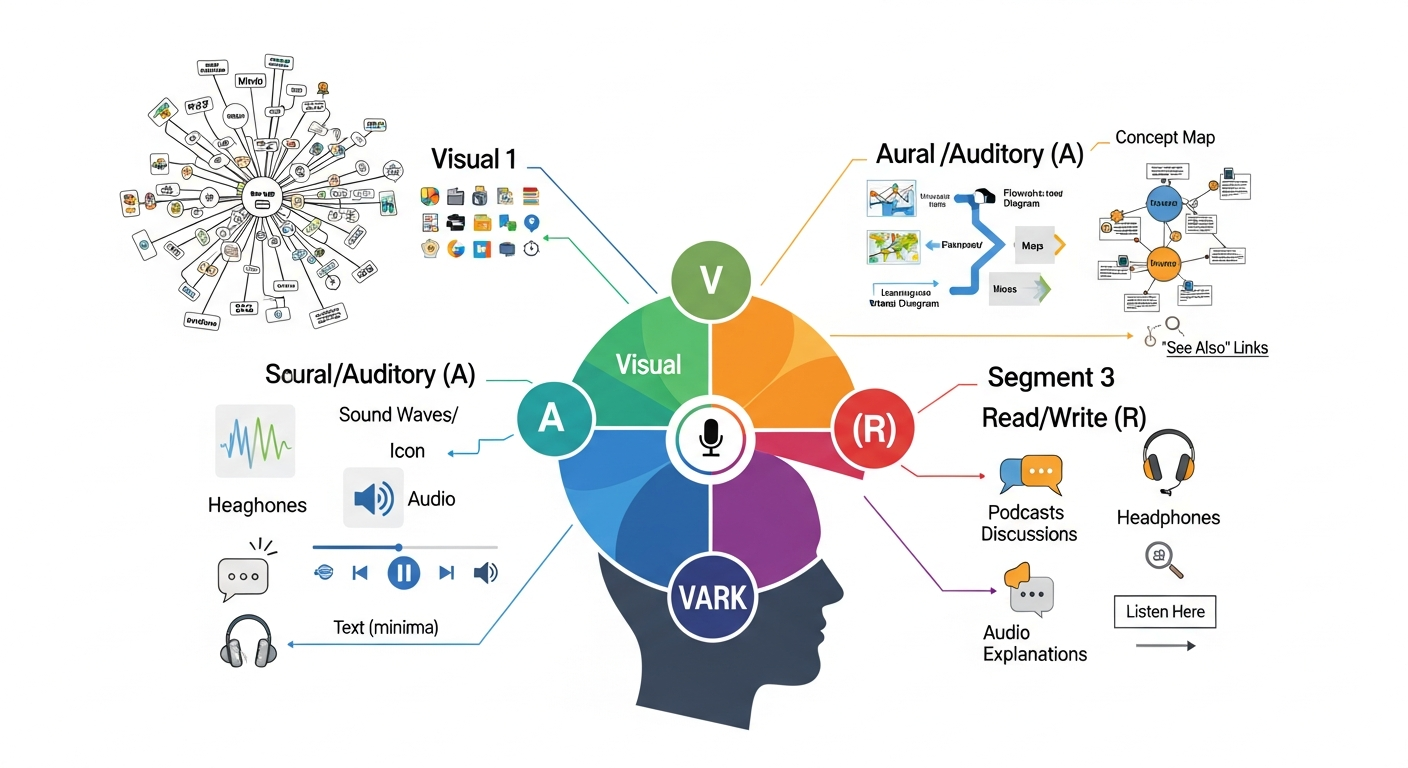
VARK is an acronym representing Visual, Aural, Read/Write, and Kinesthetic – four distinct sensory preferences that individuals use for processing information. Developed by Neil Fleming, this model helps educators and trainers understand how learners best absorb and retain knowledge. While most people exhibit a combination of these preferences (multimodal), identifying dominant modes can significantly inform instructional design.
Visual (V) Learners
Visual learners prefer to learn through seeing. They process information best when it's presented with charts, graphs, diagrams, infographics, videos, and spatial arrangements. They often benefit from watching demonstrations, observing processes, and using color coding to organize information effectively.
Aural (A) Learners
Aural learners learn best by hearing. They thrive in environments that include lectures, discussions, podcasts, audio recordings, and verbal instructions. They often benefit from explaining concepts aloud, engaging in debates, and listening to others articulate ideas to solidify their understanding.
Read/Write (R) Learners
Read/Write learners excel through text-based input and output. They prefer to learn by reading manuals, articles, textbooks, and taking extensive notes. They also learn by writing summaries, reports, essays, and translating diagrams into written statements, reinforcing their comprehension.
Kinesthetic (K) Learners
Kinesthetic learners learn by doing, experiencing, and moving. They prefer hands-on activities, simulations, role-playing, practical exercises, and field trips. They retain information better when they can physically interact with the subject matter or perform tasks related to the learning objective.
Why VARK Matters for Adaptive Learning
For L&D leaders, the VARK model provides a powerful framework for moving beyond generic training to truly personalized learning. When training is aligned with a learner's preferred sensory mode, engagement skyrockets. Learners feel understood, content becomes more accessible, and the cognitive load associated with processing information in an unfamiliar format is reduced. This direct alignment leads to:
- Enhanced Engagement: Learners are more likely to participate and stay focused when content is presented in a way that naturally appeals to them.
- Improved Retention: Information processed through preferred channels is more readily absorbed and remembered, leading to lasting knowledge.
- Faster Skill Acquisition: Efficient learning pathways mean employees reach competency quicker, leading to immediate application in their roles and better business outcomes.
- Higher Satisfaction: Employees appreciate personalized experiences, boosting morale and their perception of organizational investment in their development.
By leveraging a modern Gamified LMS, these adaptive paths can also be made more interactive and rewarding, further solidifying the learning experience and driving desired behaviors.
Building Your Adaptive Learning Path: A VARK-Centric Approach
Constructing an adaptive learning path based on VARK involves several strategic steps, all supported by robust learning technology and an effective learning content management system.
Step 1: Assess and Identify Preferences
The first step is to understand your learners. Utilize tools like the official VARK questionnaire or develop pre-assessment modules within your learning management system that subtly gauge preferences. For example, presenting a concept in multiple formats and observing which format learners engage with most can provide valuable data. This data forms the foundation for personalization, allowing the LMS to guide learners towards their optimal pathways.
Step 2: Curate Multi-Modal Content
Develop or curate a rich library of content that caters to each VARK mode. This is where an AI Powered Authoring Tool can be invaluable, helping to quickly transform existing materials or generate new content in diverse formats:
- Visual: Create compelling infographics, short explainer videos, animated simulations, and interactive charts.
- Aural: Record concise audio lectures, develop engaging podcasts, or facilitate live/recorded virtual discussions.
- Read/Write: Provide detailed articles, downloadable e-books, printable guides, and interactive quizzes requiring written responses.
- Kinesthetic: Design branching simulations, virtual reality (VR) scenarios, hands-on exercises, practice labs, or collaborative projects.
The goal is to have multiple representations of the same core learning objective, allowing the system to serve the most appropriate one based on individual preferences.
Step 3: Design Dynamic Pathways
This is where the true power of an adaptive learning management software comes into play. Based on the identified VARK preferences, the system dynamically routes learners through the most effective sequence of content. For instance:
- A Visual learner might primarily see video modules, followed by an infographic summary and a diagram-based quiz.
- An Aural learner might listen to a podcast, participate in a virtual discussion, and then complete an audio-based assessment.
- A Read/Write learner could be directed to a comprehensive article, asked to summarize key points, and then answer written questions.
- A Kinesthetic learner would engage with a simulation, perform a role-play, and then apply their knowledge in a case study.
A sophisticated cloud based learning management system allows for intricate branching logic, ensuring each learner's journey is unique and optimized. This approach ensures that every employee, whether in compliance, sales, banking, healthcare, or any other industry, receives training designed for their success.
Step 4: Implement and Iterate
Launch your adaptive pathways with pilot groups to gather initial feedback. Leverage the analytics capabilities of your MaxLearn LMS or any enterprise learning management solution to track engagement, completion rates, and performance across different VARK-aligned paths. Continuous iteration is key. Adjust content, refine pathways, and update assessments based on real-world data to continuously improve the effectiveness of your training. This is particularly crucial for areas like Risk-focused Training, where precision and effectiveness are paramount.
AI Integration for Enhanced Adaptive Learning
The convergence of VARK-based design and artificial intelligence takes adaptive learning to the next level, offering unparalleled precision and efficiency for L&D initiatives.
How can technology personalize learning paths based on individual needs?
Intelligent algorithms within a robust learning management solutions analyze vast amounts of learner data – including VARK preferences, performance on assessments, completion rates, and content engagement. They identify patterns and individual strengths and weaknesses, then dynamically recommend the most suitable content, learning activities, and sequence for each learner. This system continuously optimizes the learner's journey in real-time, ensuring content matches not only their preferred style but also their current understanding and progress.
What role does machine intelligence play in optimizing training programs across different locations and industries?
Machine intelligence is adept at processing and synthesizing data from diverse groups. It can analyze performance metrics and learning outcomes across various regions and industries – from compliance in banking to sales techniques in retail, or safety protocols in oil and gas. By doing so, it identifies global skill gaps, highlights successful learning strategies that transcend cultural boundaries, and even automatically suggests content localization or translation. This ensures training is consistently effective and culturally relevant, no matter where the learners are or which industry they belong to.
How do advanced algorithms improve the effectiveness of corporate training?
Advanced algorithms significantly enhance corporate training effectiveness by facilitating real-time performance tracking and proactive intervention. They can pinpoint knowledge gaps as soon as they emerge, delivering just-in-time support or remedial content. Furthermore, these algorithms can predict future training needs by analyzing industry trends, job role evolution, and individual career trajectories. This makes corporate education more predictive, proactive, and precise, transforming it from a reactive measure into a strategic driver of organizational growth and talent development. A sophisticated LCMS powered by these algorithms becomes an indispensable tool for forward-thinking L&D teams.
Benefits for L&D Leaders
Adopting a VARK-centric adaptive learning strategy, powered by an effective enterprise learning management system, offers tangible benefits for L&D leaders:
- Higher Completion Rates: Engaged learners are more likely to finish their assigned training modules.
- Improved ROI: More effective training translates directly into better job performance, higher productivity, and stronger business outcomes.
- Enhanced Employee Satisfaction: Personalized learning fosters a positive learning culture, boosts morale, and reinforces employees' value.
- Superior Skill Acquisition: Learners gain and apply critical skills more efficiently, closing competency gaps faster.
- Competitive Advantage: An agile, highly skilled workforce positions your organization ahead of the curve in any segment, from pharma to hospitality.
Conclusion
The journey to truly effective corporate training lies in personalization. By embracing the VARK model and integrating it with an intelligent MaxLearn LMS, L&D leaders can move beyond generic courses to deliver adaptive learning paths that cater to the unique needs of every individual. This approach not only elevates engagement and retention but also drives measurable improvements in performance across all industries, from healthcare to mining. It's time to empower your workforce with a learning experience designed for their success. Explore how modern lms learning management system solutions can transform your training paradigm today.
.jpg)


