

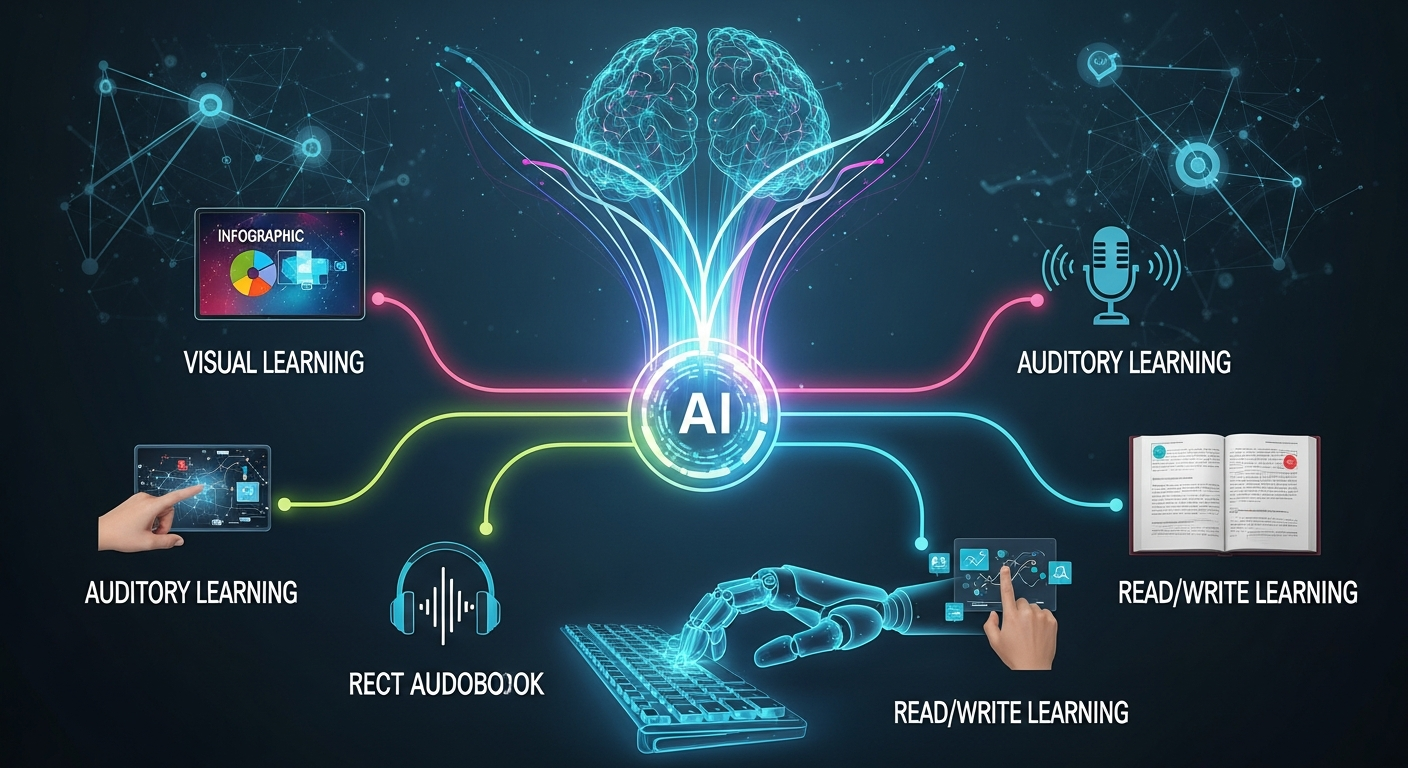
High-Impact Content Creation: Utilizing AI Authors to Target Diverse Learning Styles
In the dynamic world of corporate learning and development, the quest for highly impactful training content is ceaseless. L&D leaders – from Vice Presidents to Managers – are continually challenged to create engaging, effective, and scalable learning experiences that resonate with a diverse workforce. The traditional "one-size-fits-all" approach is rapidly becoming obsolete, replaced by a demand for personalized learning journeys. This is where the power of Artificial Intelligence, specifically AI authors, emerges as a transformative force, enabling organizations to craft content tailored to various learning styles with unprecedented efficiency and precision.
The Undeniable Power of Diverse Learning Styles in L&D
Every learner is unique. Some absorb information best visually, through infographics, videos, or demonstrations. Others thrive on auditory input, preferring podcasts, lectures, or discussions. Kinesthetic learners grasp concepts through hands-on activities, simulations, and interactive exercises, while reading/writing learners prefer detailed texts, case studies, and opportunities for written reflection. The challenge for L&D professionals has always been how to cater to these distinct preferences at scale, especially within large organizations spanning multiple industries such as Compliance, Sales, Banking, Finance, Insurance, Retail, Pharma, Healthcare, Hospitality, Oil and Gas, and Mining.
Failing to address these diverse learning styles can lead to significant issues:
- Reduced learner engagement and motivation.
- Lower knowledge retention and skill transfer.
- Ineffective training outcomes and poor ROI.
- Increased training costs due to repeated or ineffective programs.
The goal is to move beyond mere information delivery to true knowledge acquisition and behavioral change. This requires content that not only educates but also captivates and adapts to the individual learner.
Enter AI Authors: Revolutionizing Content Creation
The advent of AI-powered content generation tools marks a pivotal moment for L&D. AI authors are sophisticated algorithms capable of generating text, scripts, scenarios, quizzes, and even multimedia outlines based on input prompts and data. Imagine the ability to take a single core concept – say, a new compliance regulation in banking – and instantly generate multiple versions of learning content: a video script, an interactive module, a detailed PDF, and a series of flashcards. This is the promise of AI in content creation.
An AI Powered Authoring Tool doesn't replace human instructional designers but augments their capabilities, freeing them from repetitive tasks and allowing them to focus on strategy, empathy, and high-level design. It enables the rapid development of high-quality, relevant content that would otherwise take teams of designers weeks or months to produce.
AI's Role in Personalizing Learning Experiences
Let's explore how AI authors can specifically cater to the four primary learning styles:
Visual Learners
For those who learn by seeing, AI can:
- Generate detailed infographics and data visualizations from raw data.
- Create storyboards and scripts for animated videos or instructional films.
- Design interactive simulations and virtual tours, particularly useful for complex processes in Pharma or Oil and Gas.
- Develop compelling presentations with relevant imagery and diagrams.
Auditory Learners
Learners who benefit from hearing can leverage AI-generated content like:
- Podcast scripts and voiceover narrations for existing text.
- Audio summaries of longer documents, perfect for on-the-go learning.
- Interactive dialogue scenarios for role-playing, crucial for Sales and Hospitality training.
- "Explain Like I'm 5" summaries of complex topics, simplifying intricate financial regulations or healthcare protocols.
Kinesthetic Learners
For hands-on engagement, AI can assist in creating:
- Scenario-based training modules that require learners to make decisions.
- Interactive quizzes and branching narratives that adapt based on learner choices.
- Concepts for Gamified LMS elements, turning learning into a more interactive and rewarding experience.
- Virtual lab exercises or procedural walkthroughs for practical application, relevant in industries like Pharma and Manufacturing.
Reading/Writing Learners
Those who prefer to absorb information through text and express understanding through writing can benefit from AI-generated:
- Detailed articles, reports, and whitepapers on specific topics.
- Case studies and analytical prompts that encourage written responses.
- Summaries, key takeaways, and comprehensive glossaries for complex terms.
- Interactive journaling prompts to reinforce learning and encourage reflection.
Benefits Beyond Personalization: The Strategic Edge
The strategic advantages of integrating AI authors into your L&D ecosystem extend far beyond merely addressing learning styles:
- Efficiency and Speed: Drastically reduce content creation timelines, allowing L&D teams to be more agile and responsive to business needs. This speed is critical for compliance updates or new product launches.
- Consistency and Quality: Ensure a consistent brand voice, factual accuracy, and high quality across all training materials, regardless of format or creator.
- Scalability: Produce a vast volume of customized content at scale, enabling global rollouts and catering to thousands of employees across diverse business units without a proportional increase in human resources.
- Cost-Effectiveness: Lower the overall cost of content development by automating repetitive tasks and maximizing the output of instructional design teams.
- Data-Driven Insights: When integrated with a robust learning management system, AI can analyze which content formats perform best, informing future content strategy and driving Adaptive Learning paths.
Implementing AI Authors in Your Learning Strategy
For L&D leaders considering this powerful shift, implementation involves strategic planning:
- Start Small: Begin with pilot projects, perhaps for a specific department or a particularly challenging topic, to understand AI's capabilities and limitations within your context.
- Integrate with Your LMS: Seamless integration with your existing Microlearning LMS or Learning content management system is crucial for content delivery, tracking, and analysis. MaxLearn LMS, for example, is designed to support such modern approaches.
- Focus on Strategic Value: Use AI to automate the creation of foundational content, freeing human experts to focus on complex, nuanced, or highly interactive elements that require a human touch.
- Address Risk-focused Training: For industries like Finance, Healthcare, and Oil & Gas, AI can be invaluable in generating precise and up-to-date compliance training and risk mitigation scenarios.
Addressing Key Questions for L&D Leaders
As L&D professionals explore this evolving landscape, several questions frequently arise regarding the practical application and impact of AI:
How can advanced digital tools ensure content resonates with a global workforce, respecting diverse cultural norms?
Modern AI tools are trained on vast datasets encompassing various languages and cultural contexts. They can be instructed to tailor language, examples, and even imagery to specific regions, ensuring that learning content is not only translated but localized effectively. This allows global corporations to deploy consistent yet culturally sensitive training across their entire operations, enhancing relevance and engagement for every learner, regardless of their geographic location.
What's the most effective strategy for organizations to begin leveraging AI for their training material development?
The most effective strategy often involves a phased approach. Start by identifying areas where content creation is repetitive, time-consuming, or requires frequent updates, such as basic compliance modules or product knowledge refreshers. Implementing an enterprise learning management solution with built-in AI authoring capabilities can provide a solid foundation. Begin with a specific content type or a small group of learners, gather feedback, and iteratively expand. Focusing on a cloud based learning management system can also streamline initial deployment and scalability.
Can AI genuinely assist in creating high-stakes, nuanced compliance training for highly regulated industries like banking or healthcare?
Absolutely. AI excels at processing and synthesizing large volumes of complex information, which is precisely what compliance training often entails. For industries like Banking, Finance, Pharma, and Healthcare, AI can generate precise, scenario-based Risk-focused Training modules, ensuring regulatory adherence. It can create varied content formats (e.g., interactive quizzes for kinesthetic learners, detailed summaries for reading learners) from a single source document, making complex legal or medical topics more accessible and engaging, thereby improving comprehension and retention of critical information.
Conclusion: The Future of High-Impact Learning is Here
The integration of AI authors into content creation is not just an incremental improvement; it's a paradigm shift for L&D. By embracing this technology, L&D leaders can transcend the limitations of traditional content development, delivering truly personalized, high-impact learning experiences that cater to every learning style. This leads to increased engagement, superior knowledge retention, and ultimately, a more skilled and adaptive workforce.
As you navigate the complexities of modern corporate training, consider the strategic advantage of an LMS that empowers you with AI-driven content creation. Explore how advanced learning management software and learning management solutions can transform your training initiatives, ensuring your organization remains competitive and compliant in an ever-evolving landscape. The future of learning is personalized, efficient, and powered by intelligent tools – are you ready to lead the charge?
.jpg)


