

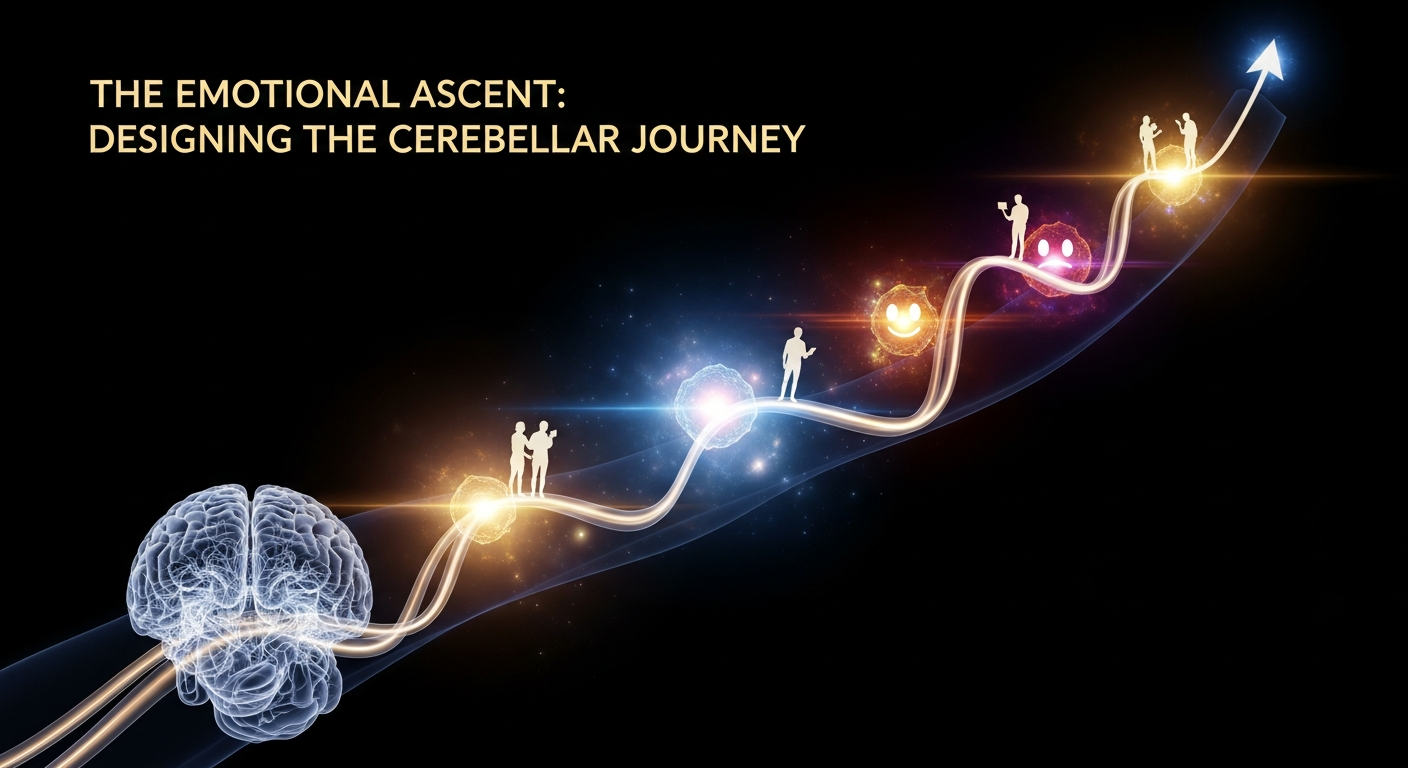
As L&D leaders, you navigate a complex landscape of regulations, skill gaps, and evolving learner expectations across diverse industries—from Compliance and Sales to Banking, Healthcare, and Oil & Gas. The common thread? The need for training that not only imparts knowledge but fundamentally shifts behavior and embeds lasting understanding. This is where the concept of "emotional resonance" becomes paramount, guiding learners on what we call the "Cerebellar Journey"—a path to deep, intuitive, and almost automatic proficiency.
Traditional training often focuses on the cerebral cortex, aiming for cognitive understanding through facts and figures. But true mastery, the kind that endures under pressure and translates into consistent performance, resides deeper. It's akin to the cerebellum's role in motor skills: not just knowing *how* to ride a bike, but *feeling* the balance, *instinctively* reacting. For L&D, this means designing experiences that move beyond mere information transfer to foster emotional connection, leading to profound behavioral change and retention. A modern LMS is no longer just a repository; it's a launchpad for this transformative journey.
The Imperative of Emotional Engagement in Modern Learning
In today's fast-paced corporate environment, learners are bombarded with information. Their attention is a precious commodity. Purely didactic training, no matter how well-structured, struggles to compete. Emotional resonance, however, acts as a powerful amplifier for learning, especially in high-stakes fields like Finance, Pharma, and Retail, where the consequences of misunderstanding can be severe.
- Increased Retention: Emotions create stronger memories. When learning is tied to feeling—curiosity, challenge, satisfaction, even discomfort—it's more likely to stick.
- Enhanced Engagement: Emotionally rich content captures and holds attention far better than dry facts, leading to higher completion rates and active participation.
- Improved Application: When learners emotionally connect with the "why" behind the training, they're more motivated to apply what they've learned in real-world scenarios.
- Deeper Understanding: Emotional context helps learners grasp nuances, empathize with customer needs (critical in Sales and Hospitality), and understand the human impact of policies (vital in Compliance and Healthcare).
The "Cerebellar Journey" metaphor extends beyond simple skill acquisition to encompass the development of habits, attitudes, and intuitive decision-making. It’s about building a subconscious framework that guides effective action, a capability that distinguishes true experts. Leveraging a robust Learning content management system allows for the strategic deployment of content designed to evoke these deeper responses.
Architecting Emotional Pathways: Key Design Principles
So, how do L&D professionals intentionally infuse emotional resonance into their programs? It's about a shift from content delivery to experience design, facilitated by sophisticated learning management software and platforms.
Storytelling and Narrative Immersion
Humans are hardwired for stories. Narratives create empathy, allowing learners to step into the shoes of others, experience consequences virtually, and internalize lessons. For instance, a compliance module built around a realistic ethical dilemma, rather than just a list of rules, creates an emotional connection to the outcomes. In Sales, customer success stories or challenge scenarios can evoke triumph or problem-solving satisfaction. An enterprise learning management system can host rich multimedia stories.
Challenge, Mastery, and Gamification
The human desire for progress and achievement is a powerful emotional driver. Well-designed challenges, spaced learning, and opportunities for mastery—often enhanced through Gamified LMS features—tap into this. The satisfaction of overcoming an obstacle or mastering a complex skill is profoundly engaging. This is particularly effective in technical training for industries like Oil & Gas or Pharma, where practical application is key.
Authenticity and Relevance
Learning resonates when it feels real and relevant to the learner's world. Using authentic scenarios, relatable characters, and real-world data (suitably anonymized) creates an emotional bridge between the training environment and daily work. This is crucial for sectors like Banking and Insurance, where decision-making directly impacts clients and employees. A cloud based learning management system can deliver this personalized relevance on demand.
Social Connection and Collaborative Learning
Learning is often a social activity. Collaborative projects, peer feedback, and discussion forums foster a sense of belonging and shared purpose. The emotional satisfaction of contributing to a team, helping a colleague, or receiving constructive input strengthens learning pathways. This is valuable across all industries, enhancing team cohesion and knowledge sharing.
Question: How can intelligent systems help craft more impactful learning experiences that resonate deeply with individual learners?
Answer: By leveraging data analytics to identify learner preferences, performance patterns, and even emotional responses to content, advanced platforms can dynamically tailor narratives, challenges, and feedback, ensuring optimal engagement for each person.
Leveraging Advanced Technology for Deeper Impact
Modern e-learning platforms provide an unparalleled toolkit for designing emotionally resonant training. The right learning management system is no longer just a delivery mechanism; it’s a strategic partner in this endeavor.
- Microlearning LMS: Short, focused bursts of content can be intensely emotional, delivering a quick "aha!" moment or a powerful narrative fragment that sticks. This format is perfect for embedding practical skills and critical information where quick recall is essential, such as in Healthcare or Retail sales.
- Adaptive Learning: Personalizing the learning journey based on individual progress and emotional response keeps learners challenged but not overwhelmed, fostering a continuous sense of achievement and preventing frustration. This ensures optimal engagement for every learner within your MaxLearn LMS.
- AI Powered Authoring Tool: These tools can assist in generating dynamic scenarios, character dialogue, and even branching narratives that adapt to learner choices, creating highly personalized and emotionally impactful experiences at scale. This allows L&D teams to focus on strategic design rather than manual content creation for every variant.
- Risk-focused Training: By simulating high-stakes situations in a safe environment, learners can experience the emotional weight of decisions without real-world repercussions. This type of training, especially for areas like Compliance, reinforces correct procedures and ethical behavior through visceral experience.
Question: In what ways can advanced algorithms enhance the global reach and cultural relevance of emotionally resonant training initiatives?
Answer: By intelligently analyzing demographic data and cultural nuances, algorithms can suggest or even auto-generate localized content, adapt storytelling conventions, and recommend culturally appropriate scenarios, ensuring emotional resonance transcends geographical boundaries.
Practical Steps for L&D Leaders
To lead this shift toward emotionally resonant training, consider these actionable strategies:
- Empathize with Your Learners: Go beyond surveys. Conduct interviews, observe work behaviors, and understand the emotional drivers and pain points of your target audience. What truly motivates them? What challenges do they face that training can alleviate?
- Prioritize Experience Design: Think of your training as an immersive experience, not just a series of modules. Map out the emotional arc you want learners to traverse. What feelings should they experience at each stage? How does this culminate in a sense of mastery or understanding?
- Leverage Your lms learning management system Strategically: Explore the full capabilities of your platform. Does it support interactive simulations, branching scenarios, social learning features, or gamification? Maximize these tools to build engaging content.
- Iterate and Refine: Emotional impact is often subjective. Pilot programs, gather feedback not just on comprehension but on feeling and perceived relevance. Be prepared to adjust and refine your content based on these insights.
- Measure Beyond Knowledge: While knowledge checks are important, also seek to measure behavioral change, attitude shifts, and sustained engagement. Metrics like application rates, error reductions, or even employee sentiment can indicate the success of your Cerebellar Journey.
Question: How can intelligent platforms optimize individual learning paths to foster deeper emotional connection and lasting skill acquisition?
Answer: By continuously assessing an individual's engagement levels, cognitive load, and progress, these platforms can dynamically adjust the pace, content difficulty, and even the emotional tone of lessons, ensuring an optimal, personalized learning journey that keeps the learner consistently challenged and motivated.
Conclusion: The Future is Felt Learning
Creating emotional resonance in training is not merely a "nice-to-have"; it is a strategic imperative for L&D leaders. It's about moving beyond superficial understanding to cultivate a "Cerebellar Journey" that embeds knowledge and skills so deeply they become intuitive, automatic, and resilient. By embracing principles of emotional design and leveraging advanced e-learning technologies, including a powerful LCMS, you can transform your training programs into powerful engines for genuine behavioral change and sustained organizational success across every sector. The future of learning isn't just known; it's felt, and it's designed.
.jpg)


