

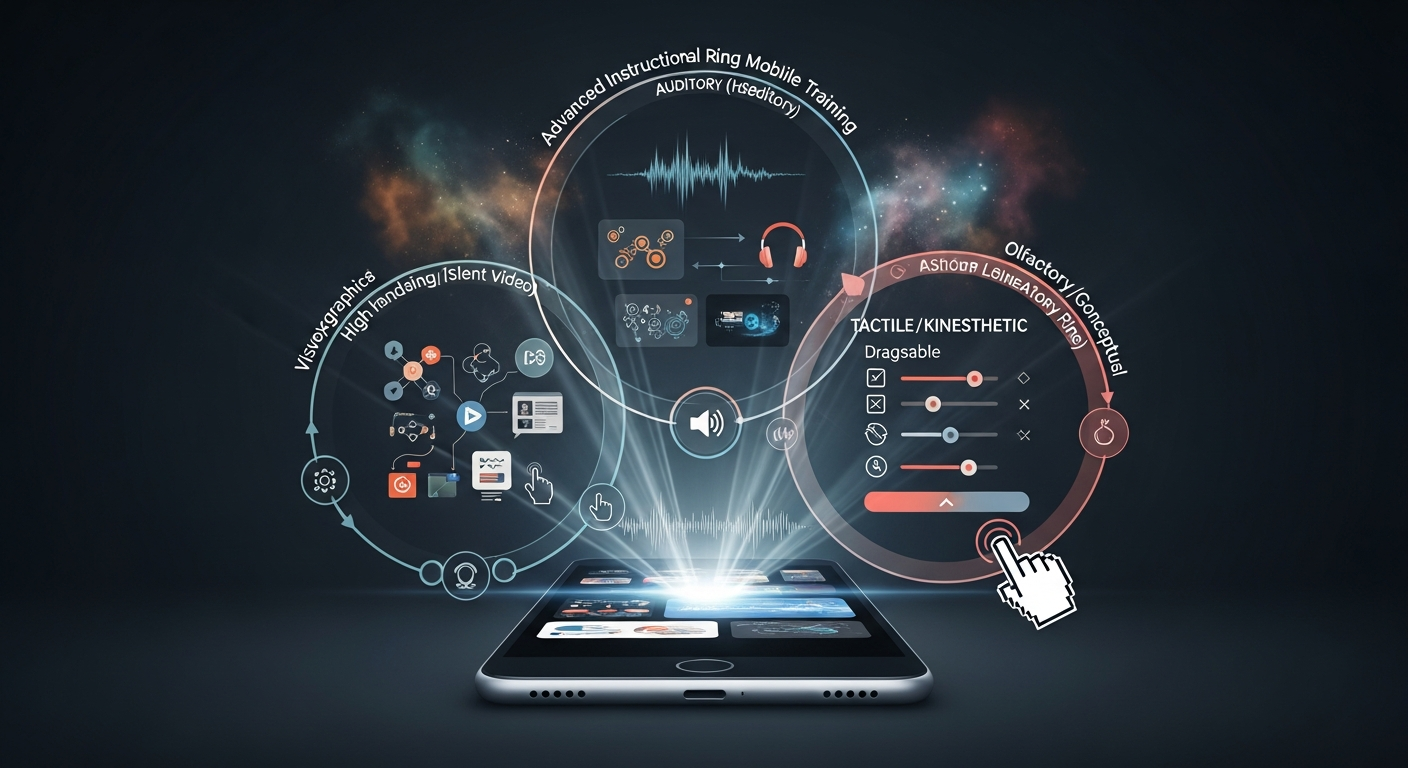
Advanced Instructional Design: Tailoring Mobile Training to Four Sensory Modalities
In today's fast-paced corporate environment, effective learning and development are no longer a luxury but a strategic imperative. As L&D Vice Presidents, Directors, and Managers, you face the constant challenge of delivering impactful training that resonates with a diverse workforce, often on the go. Mobile learning has emerged as a powerful solution, offering unparalleled flexibility. However, true impact comes not just from accessibility, but from the sophistication of its design. This article delves into advanced instructional design, specifically how tailoring mobile training to four key sensory modalities can revolutionize engagement, retention, and ultimately, business outcomes across critical sectors like Compliance, Sales, Banking, and Healthcare.
The Imperative for Intelligent Mobile Learning
The modern learner is a complex individual, bombarded with information and accustomed to instant gratification. Passive, text-heavy training modules no longer suffice. For industries demanding precision and continuous skill uplift, such as Finance, Insurance, Retail, Pharma, Hospitality, Oil and Gas, and Mining, the need for an advanced Microlearning LMS that deeply engages learners is paramount. The goal is to create an immersive, intuitive experience that caters to individual learning styles, transforming mundane tasks into meaningful knowledge acquisition. A robust learning content management system is the foundation for such an initiative.
Understanding Sensory Modalities in Learning
Learning is a multi-faceted process, often tapping into our senses. By intentionally designing mobile content to activate different sensory pathways, we can create richer, more memorable learning experiences. We're focusing on four primary modalities:
Visual Learning
This modality leverages what learners see. In mobile training, this means incorporating high-quality graphics, instructional videos, animated explainers, infographics, interactive simulations, and visually guided exercises. Visuals are particularly effective for demonstrating complex processes, data visualization, or showing "how-to" scenarios that are common in enterprise learning management programs.
Auditory Learning
Auditory learners process information best when they hear it. For mobile, this translates to clear narrations, podcasts, expert interviews, sound effects that provide feedback, and audio-guided instructions. This modality is excellent for conveying nuanced information, storytelling, or allowing learners to consume content during commutes or when visual attention is elsewhere.
Kinesthetic Learning
The "doing" modality, kinesthetic learning involves active participation and hands-on experience. Mobile training can simulate this through interactive quizzes, drag-and-drop activities, virtual reality (VR) or augmented reality (AR) experiences, scenario-based branching simulations, and Gamified LMS elements. This approach is invaluable for skill-based training, procedural knowledge, and reinforcing concepts through practice.
Reading/Writing Learning
While often seen as traditional, the reading/writing modality remains crucial. For mobile, this includes concise text summaries, interactive articles, digital workbooks, reflective journaling prompts, and open-ended questions that require textual responses. Well-structured, digestible text complements other modalities and is essential for detailed policy understanding or complex instructions inherent in many lms learning management system programs.
The Power of Tailored Mobile Training
Integrating these sensory modalities into mobile learning offers profound benefits for L&D leaders:
- Enhanced Engagement: By presenting information through multiple senses, training becomes more dynamic and holds the learner's attention longer. This significantly reduces dropout rates and improves completion in critical areas like Risk-focused Training.
- Improved Retention: When content is absorbed through various pathways, it creates stronger neural connections, leading to better long-term memory recall. This is crucial for compliance training or retaining complex sales methodologies.
- Personalized Learning Paths: An advanced learning management system allows for a more personalized approach. Through Adaptive Learning, content can be presented in the preferred modalities of individual learners, optimizing their unique learning journey.
Leveraging Technology: The Role of AI in Sensory Design
The vision of multi-sensory mobile learning is made practical and scalable through the strategic application of artificial intelligence. AI can transform the way content is created, analyzed, and delivered:
Q: How can artificial intelligence assist in generating diverse learning content for mobile platforms?
A: Modern AI-powered tools can revolutionize content creation. They can rapidly convert raw text into engaging visual summaries, generate natural-sounding voice-overs for auditory learners, or even suggest interactive elements for kinesthetic engagement. An AI Powered Authoring Tool within a robust learning management software significantly reduces development time and ensures content is rich across modalities.
Q: What insights can advanced computational intelligence provide into individual learner preferences for sensory input?
A: Sophisticated algorithms within a cloud based learning management system can analyze vast amounts of data—interaction patterns, quiz results, time spent on different content types, and even explicit feedback. This analysis reveals individual learner preferences, allowing the system to intelligently recommend or adapt content presentation to align with their strongest sensory modalities. This creates a truly personalized experience, making the MaxLearn LMS a powerful solution.
Q: How do intelligent systems adapt training content delivery based on a learner's immediate environment or device?
A: Dynamic learning platforms utilize contextual awareness to optimize delivery. For instance, if a learner is on a slow connection, the system might prioritize audio over high-resolution video. If they are in a noisy environment, it might suggest text-based summaries or interactive visuals. Such systems can even detect device types (phone vs. tablet) to adjust screen layout and interaction methods, ensuring an optimal sensory experience regardless of the circumstances.
Implementing a Multi-Sensory Mobile Learning Strategy
For L&D leaders looking to deploy such an advanced strategy, consider these steps:
- Comprehensive Content Strategy: Diversify your content library to include videos, interactive simulations, podcasts, and concise written materials. Leverage an LCMS to manage this effectively.
- Choose the Right Platform: Invest in a modern LMS or learning management solutions that supports multi-modal content, adaptive learning, and robust analytics.
- Pilot Programs: Test your new approach with smaller groups, gathering feedback and refining the content and delivery mechanisms.
- Continuous Iteration: Use the data from your lms learning management system to continually optimize content and delivery, ensuring it remains engaging and effective.
Tangible Benefits for L&D Leaders
Embracing advanced instructional design with a focus on sensory modalities translates into significant advantages for your organization:
- Higher ROI on Training: More engaged learners mean better knowledge application, leading to measurable improvements in performance and productivity across all industries, from Sales to Pharma.
- Improved Compliance and Reduced Risk: For sectors like Banking, Finance, and Compliance, better retention of critical information directly translates to reduced errors and improved adherence to regulations.
- Future-Proofing Training Initiatives: By leveraging AI and adaptive learning within a modern MaxLearn LMS, your organization stays ahead of the curve in learning technology.
- Increased Employee Satisfaction: Personalized and engaging training experiences foster a positive learning culture, enhancing employee morale and retention.
Conclusion
The future of corporate learning is mobile, intelligent, and deeply human-centric. By thoughtfully designing mobile training that caters to visual, auditory, kinesthetic, and reading/writing modalities, supported by the power of AI, L&D leaders can unlock unprecedented levels of engagement and effectiveness. This advanced approach ensures that your workforce, regardless of industry or learning style, is not just consuming information but truly mastering it. Elevate your training strategy today by exploring advanced learning management system solutions that empower multi-sensory, adaptive learning.
.jpg)


