

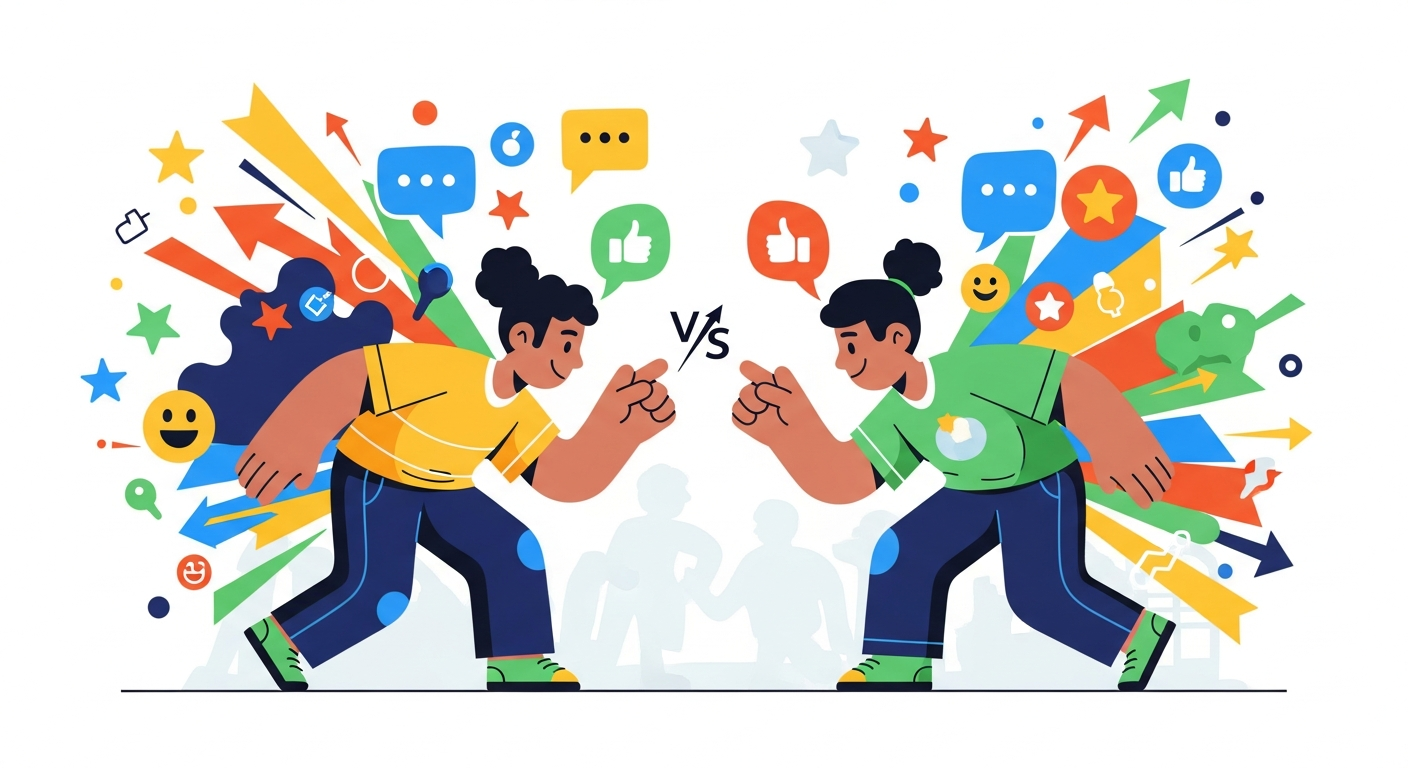
Peer-to-Peer Challenges: Igniting Engagement with People Fun
In the dynamic landscape of corporate learning and development, the quest for genuine learner engagement is a perpetual challenge. As L&D leaders, Vice Presidents, Directors, and Managers across industries like Compliance, Sales, Banking, Finance, Insurance, Retail, Pharma, Health care, Hospitality, Oil and Gas, and Mining, you understand that effective training goes beyond mere content delivery. It's about fostering an environment where learning is not just a requirement, but an experience eagerly embraced. This is where peer-to-peer challenges, infused with the power of 'people fun,' emerge as a game-changer.
Traditional training methods often struggle to capture the imagination of a modern workforce. Passive consumption of information leads to low retention and minimal application. The solution lies in shifting from a 'push' model to an interactive, collaborative 'pull' model, where learners are not just participants, but active contributors and motivators for each other. Peer-to-peer challenges leverage inherent human traits – competitiveness, curiosity, and the desire for social interaction – to transform learning into an exciting, memorable journey.
The Engagement Gap in Corporate Learning
Despite significant investments in learning management software and sophisticated content, many organizations face an engagement crisis. Learners feel disconnected, see training as a chore, and quickly forget what they've learned. This isn't just a productivity issue; it impacts compliance adherence, sales performance, risk mitigation, and overall employee development. A robust learning management system should not only deliver content but also ignite a passion for continuous learning.
What Are Peer-to-Peer Challenges?
Peer-to-peer challenges are structured learning activities where individuals or small teams compete or collaborate to achieve specific learning objectives. These challenges can range from quizzes and simulations to scenario-based problem-solving and project work, all designed to be completed and evaluated by, or in direct interaction with, fellow learners. They move beyond individual, isolated learning by creating a communal, often competitive, experience. Imagine your sales team challenging each other to master product features, or compliance officers collaboratively solving ethical dilemmas within a simulated environment.
The Power of "People Fun"
The secret sauce in peer-to-peer challenges is the 'people fun' element. This isn't about trivial games; it's about harnessing psychological drivers that make learning inherently enjoyable and impactful:
- Healthy Competition: A natural human instinct, competition, when managed correctly, can be a powerful motivator, driving learners to master content and outperform peers.
- Collaborative Learning: Working together on a shared goal fosters teamwork, communication, and allows for knowledge sharing that often surpasses formal instruction.
- Social Interaction: Learning alongside and from peers builds relationships, creates a sense of community, and combats feelings of isolation that can accompany self-paced learning.
- Intrinsic Motivation: The desire to win, to help a teammate, or simply to understand a complex topic better becomes the primary driver, rather than external mandates.
- Immediate Feedback: Peers can offer quick, relevant, and often less intimidating feedback than managers or instructors, accelerating the learning cycle.
Benefits of Peer-to-Peer Challenges
Implementing peer-to-peer challenges within your LMS framework offers a multitude of benefits for your organization:
Enhanced Knowledge Retention
Active participation, discussion, and practical application inherent in challenges significantly boost memory retention. When learners explain concepts to peers or apply them in a competitive scenario, the information is processed at a deeper level.
Fostering a Culture of Continuous Learning
By making learning a social and rewarding activity, organizations can cultivate an environment where employees are eager to continuously update their skills and knowledge. This is crucial for industries constantly evolving, like Pharma or Finance.
Building Team Cohesion and Morale
Collaborative challenges break down silos, encourage cross-functional communication, and build stronger team bonds. Shared successes and challenges improve morale and create a more supportive workplace culture.
Driving Performance and Skill Development
Targeted challenges directly address skill gaps and reinforce critical competencies. For sales teams, this could mean better negotiation skills; for healthcare, improved patient safety protocols; or for banking, enhanced risk assessment capabilities. A Gamified LMS is particularly effective here.
Making Learning Enjoyable
Ultimately, when learning is fun, engaging, and relevant, employees are more likely to participate enthusiastically, complete training, and apply their new skills effectively. This transforms a potentially dreaded task into an anticipated activity.
Implementing Peer-to-Peer Challenges Effectively
To maximize the impact of peer-to-peer challenges, consider these strategic steps:
- Define Clear Objectives: Align challenges with specific business goals, whether it's improving compliance rates, boosting sales figures, or enhancing product knowledge.
- Leverage Technology: Utilize a robust cloud based learning management system or a dedicated LCMS that supports interactive elements, leaderboards, and collaborative tools. Modern platforms can transform the logistics of managing these challenges.
- Start Small, Scale Up: Begin with pilot programs within smaller teams or specific departments, gather feedback, and then scale successful models across the organization.
- Incentivize and Recognize: While intrinsic motivation is key, tangible recognition (badges, leaderboards, small rewards) can further boost engagement. Public acknowledgment of effort and achievement is invaluable.
- Gather Feedback and Iterate: Continuously collect input from participants to refine challenges, ensuring they remain relevant, fair, and engaging.
The Role of AI in Supercharging Peer Challenges
The integration of advanced technology, particularly artificial intelligence, elevates peer-to-peer challenges to new heights. AI can personalize the experience, optimize content, and provide invaluable insights for L&D professionals using a modern lms learning management system.
Question: How can smart technology personalize learning pathways for peer challenges?
Answer: Intelligent algorithms within a Microlearning LMS can analyze individual learner performance data, identify specific knowledge gaps, and then recommend tailored challenge content or ideal peer groups. This ensures that each participant receives content and interacts with peers most conducive to their unique development needs, maximizing their engagement and learning outcomes. For instance, an AI might suggest a sales representative join a challenge focused on closing techniques if their CRM data indicates a struggle in that area, pairing them with top performers.
Question: How does advanced analytics help bridge learning gaps across diverse teams globally?
Answer: AI-driven analytics can quickly identify patterns and trends in challenge performance across different departments, regions, or even countries. For an enterprise learning management system, this means pinpointing common compliance misunderstandings in a specific region or a particular sales technique weakness across an entire business unit. These insights allow L&D to create localized content, adjust challenge parameters, or design targeted follow-up training to efficiently address these learning discrepancies and foster consistent development.
Question: What's the secret to making learning experiences continuously adaptive and engaging for each individual?
Answer: The key lies in Adaptive Learning powered by AI. This technology continuously assesses a learner's progress, understanding, and even their engagement levels within peer challenges. If a learner quickly masters a topic, the AI might present a more complex challenge. If they struggle, it can offer remedial content or suggest a collaborative challenge with a more experienced peer. Tools like an AI Powered Authoring Tool can then dynamically generate or recommend relevant challenge content on the fly, keeping the learning experience fresh, challenging, and personally rewarding. This ensures that the 'fun' factor is always optimized for individual needs.
Real-World Impact Across Industries
The applications for peer-to-peer challenges are vast. In Compliance, they can simulate ethical dilemmas, reinforce policy understanding, and drive Risk-focused Training. In Pharma and Healthcare, they can ensure adherence to complex protocols. For Retail and Hospitality, role-playing challenges can hone customer service skills. Banking and Finance can utilize them for critical thinking in market analysis or regulatory changes. Every industry benefits from a highly engaged, well-trained workforce. A comprehensive learning content management system like MaxLearn LMS facilitates the creation and deployment of such diverse challenges.
Conclusion
The era of passive, uninspiring corporate training is over. Peer-to-peer challenges, driven by the innate desire for 'people fun' and enhanced by intelligent technology, offer a powerful pathway to reignite learner engagement. As L&D leaders, embracing this approach within your learning management solutions can transform how your organization learns, grows, and innovates. It’s not just about delivering content; it’s about creating an experience that inspires, connects, and ultimately, empowers your workforce. Explore how a modern LMS can help you harness the collaborative spirit and competitive edge of your teams.
.jpg)


