

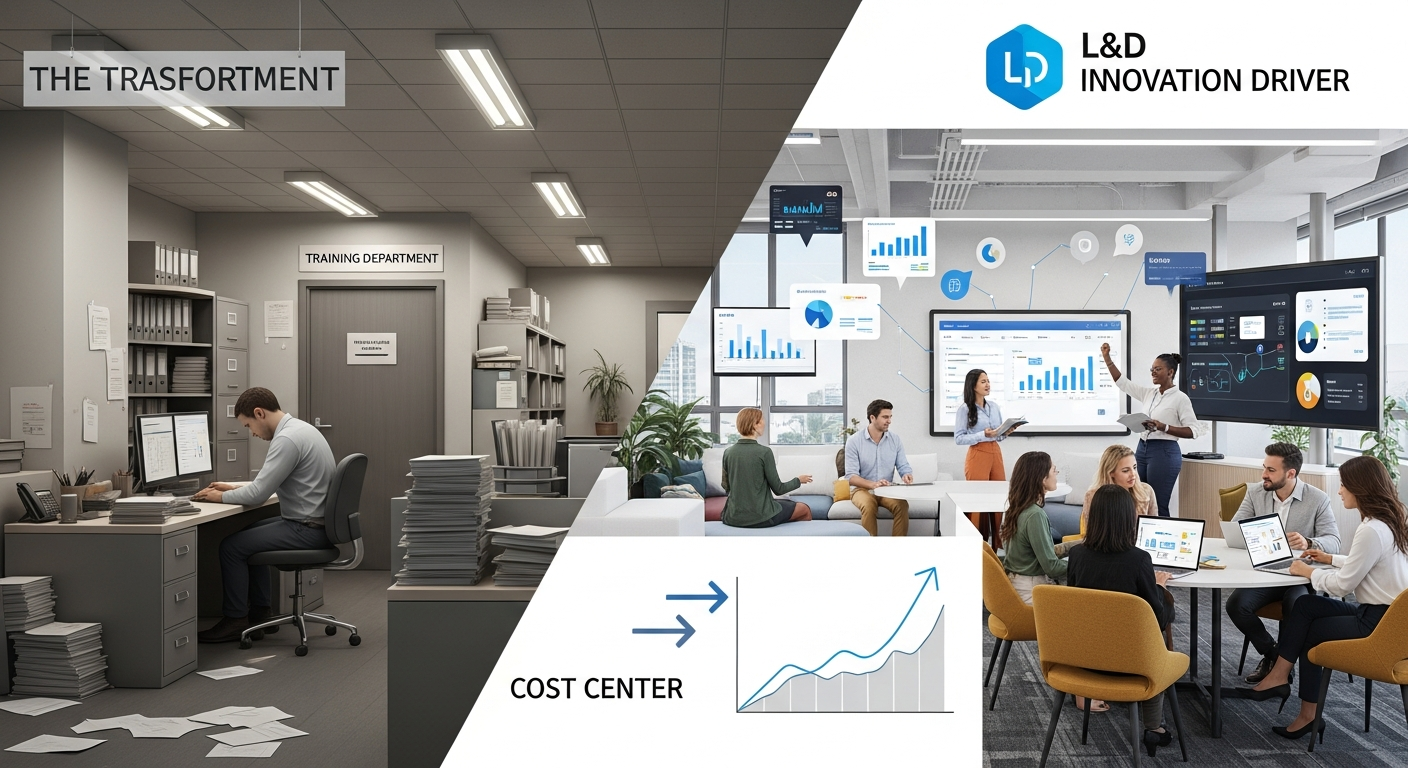
From Cost Center To Profit Driver: Reimagining Your L&D Department
For too long, Learning and Development (L&D) departments have battled the perception of being a necessary expenditure, a "cost center" rather than a strategic powerhouse. In today's rapidly evolving corporate landscape, where agility, innovation, and continuous skill enhancement are paramount, this outdated view is not just limiting – it's detrimental. Forward-thinking Vice Presidents, Directors, and Managers of L&D are now at the forefront of a monumental shift, transforming their functions into indisputable profit drivers. This transformation isn't just about efficiency; it's about directly contributing to an organization's bottom line through enhanced performance, reduced risk, and accelerated growth across industries like Compliance, Sales, Banking, Finance, Insurance, Retail, Pharma, Healthcare, Hospitality, Oil and Gas, and Mining.
The Evolution of L&D: From Overhead to Strategic Asset
Traditional Challenges
Historically, L&D budgets were often among the first to face cuts during economic downturns. Training programs were frequently seen as one-off events, disconnected from tangible business outcomes. The challenges were multifaceted:
- Difficulty in quantifying ROI beyond completion rates.
- Generic content that failed to address specific, immediate business needs.
- Lack of integrated technology, leading to administrative burdens and inconsistent delivery.
- Perception that training was a "break from work" rather than an integral part of it.
These challenges contributed to L&D being siloed, struggling to articulate its strategic value to executive leadership.
The New Mandate: Strategic Business Partner
The modern enterprise demands more. L&D is no longer just about teaching; it's about enabling, empowering, and accelerating business objectives. This new mandate positions L&D as a strategic business partner, directly influencing:
- Employee retention and engagement.
- Productivity and operational efficiency.
- Compliance adherence and risk mitigation.
- Sales performance and revenue generation.
- Innovation capacity and market leadership.
To achieve this, L&D leaders must embrace a data-driven, technology-forward approach, viewing their department as an engine for human capital optimization.
Leveraging Technology: The Core of L&D Transformation
The shift from cost center to profit driver is heavily reliant on the intelligent application of technology. A robust LMS is no longer an optional tool; it's the foundational backbone of any impactful L&D strategy. Modern learning management system platforms are evolving into comprehensive learning content management system solutions, offering unparalleled capabilities.
For industries like Banking and Finance, a secure cloud based learning management system is crucial for handling sensitive data and ensuring regulatory compliance across global teams. In Pharma and Healthcare, an enterprise learning management system streamlines complex certification and continuous professional development. A top-tier learning management software, such as MaxLearn LMS, empowers organizations to deliver targeted, effective, and measurable training initiatives.
- Microlearning for Agility: In fast-paced sectors like Sales and Retail, traditional long-form courses are inefficient. Microlearning LMS platforms deliver bite-sized, on-demand content that employees can access precisely when needed, leading to faster skill acquisition and immediate application. This enhances productivity and directly impacts sales cycles and customer service quality.
- Gamification for Engagement: High engagement translates to better learning outcomes and retention. A Gamified LMS transforms mundane compliance training or product knowledge modules into interactive experiences. This is particularly effective in industries like Hospitality and Insurance, where employee enthusiasm can directly influence customer satisfaction and agent performance.
- Adaptive Learning for Personalization: No two learners are alike. Adaptive Learning tailors the learning path based on individual performance, knowledge gaps, and preferences. This accelerates skill development, reduces training time, and ensures resources are invested where they are most impactful, offering a personalized journey for every employee.
- AI-Powered Authoring for Efficiency: Creating high-quality, relevant content quickly is a major challenge. An AI Powered Authoring Tool dramatically speeds up content creation, updates, and localization. This means L&D can respond to market changes, new product launches, or regulatory updates (critical in Oil and Gas or Mining) with unprecedented agility, keeping the workforce competent and competitive.
- Risk-Focused Training for Protection: In highly regulated industries, non-compliance carries severe financial penalties and reputational damage. Risk-focused Training, often delivered through an advanced learning management solutions platform, proactively addresses potential vulnerabilities. By ensuring every employee understands and adheres to critical protocols, L&D directly mitigates financial and legal exposure, contributing to the organization's stability and profitability.
AI's Role in Driving L&D Profitability
Artificial Intelligence is not just a buzzword; it's a game-changer for L&D, enabling departments to optimize learning, predict future skill needs, and demonstrate clear business impact. Here’s how AI empowers L&D to become a profit driver:
Question: How can artificial intelligence optimize training content for maximum business impact and audience relevance?
Answer: AI analyzes vast amounts of data—employee performance metrics, industry trends, and even internal project success rates—to identify critical skill gaps and forecast future competency requirements. It then helps create or recommend highly targeted content that directly addresses these needs, ensuring that every learning module contributes to specific business objectives. AI can also personalize content delivery, ensuring learners receive the most relevant information in the most effective format, driving faster skill acquisition and application.
Question: In what ways can AI help target compliance training effectively across geographically dispersed teams?
Answer: AI-driven insights can pinpoint specific regions or departments where compliance risks are higher, or where knowledge gaps exist based on local regulations. By analyzing completion rates, assessment scores, and real-world incident data, AI allows L&D to deploy hyper-targeted training programs, ensuring regulatory adherence and minimizing risk across diverse operational footprints, from global manufacturing facilities to international sales teams. This reduces the cost of potential fines and legal battles significantly.
Question: What specific data insights can AI provide to measure L&D's direct contribution to the organization's financial success?
Answer: AI platforms go beyond basic completion rates. They correlate learning engagement and performance data with concrete business metrics such as sales figures, customer satisfaction scores, employee turnover rates, operational efficiency improvements, and even reduced incident reporting. By demonstrating a clear causal link between training interventions and improved business outcomes, AI equips L&D leaders with irrefutable evidence of their financial impact, transforming perception from cost to investment with tangible returns.
Measuring Impact: Demonstrating L&D's ROI
To truly solidify L&D's position as a profit driver, robust measurement is non-negotiable. It’s not enough to deliver training; L&D must unequivocally demonstrate its contribution to the organization's strategic goals and financial health. This requires a shift from activity-based metrics (e.g., number of courses completed) to outcome-based metrics (e.g., reduction in errors, increase in sales, faster time-to-market).
- Direct Business Metrics: Link training to key performance indicators (KPIs) relevant to specific departments. For a Sales team, this could be increased conversion rates post-training. For Compliance, it might be a reduction in audit findings. In manufacturing, it could be a decrease in machinery downtime due to enhanced technical skills.
- Cost Savings and Efficiency: Quantify how L&D initiatives reduce operational costs. This might include fewer safety incidents, streamlined processes, or reduced employee turnover leading to lower recruitment and onboarding costs.
- Risk Mitigation: For industries like Banking, Pharma, and Mining, measure the reduction in potential fines, legal costs, and reputational damage directly attributable to effective lms learning management system driven compliance and safety training.
- Employee Productivity and Innovation: Track improvements in productivity, project completion times, and the generation of new ideas or solutions following specialized training programs.
By leveraging the analytical capabilities of a sophisticated LCMS, L&D departments can present compelling reports that showcase their value in concrete financial terms.
Strategic Imperatives for L&D Leaders
To lead this transformation, L&D professionals must embrace a few key imperatives:
- Become a Business Strategist: Understand the organization's overarching business goals and align every L&D initiative to support them directly.
- Champion Technology Adoption: Invest in and effectively utilize advanced learning management solutions that provide personalization, engagement, and robust analytics.
- Cultivate a Data-Driven Culture: Use data to identify needs, tailor solutions, and rigorously measure impact, constantly refining strategies for optimal ROI.
- Foster Cross-Functional Partnerships: Collaborate closely with business unit leaders, HR, and IT to ensure L&D programs are integrated, relevant, and impactful.
- Prioritize Continuous Learning: Model the behavior you want to see, continuously upskilling your team and exploring new methodologies and technologies.
Conclusion
The journey from L&D as a cost center to a vital profit driver is not merely a philosophical shift; it’s a strategic imperative fueled by advanced technology and a data-centric mindset. By embracing cutting-edge platforms, harnessing the power of AI, and meticulously measuring impact against core business objectives, L&D departments can transcend their traditional role. They can become indispensable engines of growth, innovation, and resilience, proving their invaluable worth across every sector. The time for L&D to claim its rightful place at the strategic heart of the enterprise is now.
.jpg)


