

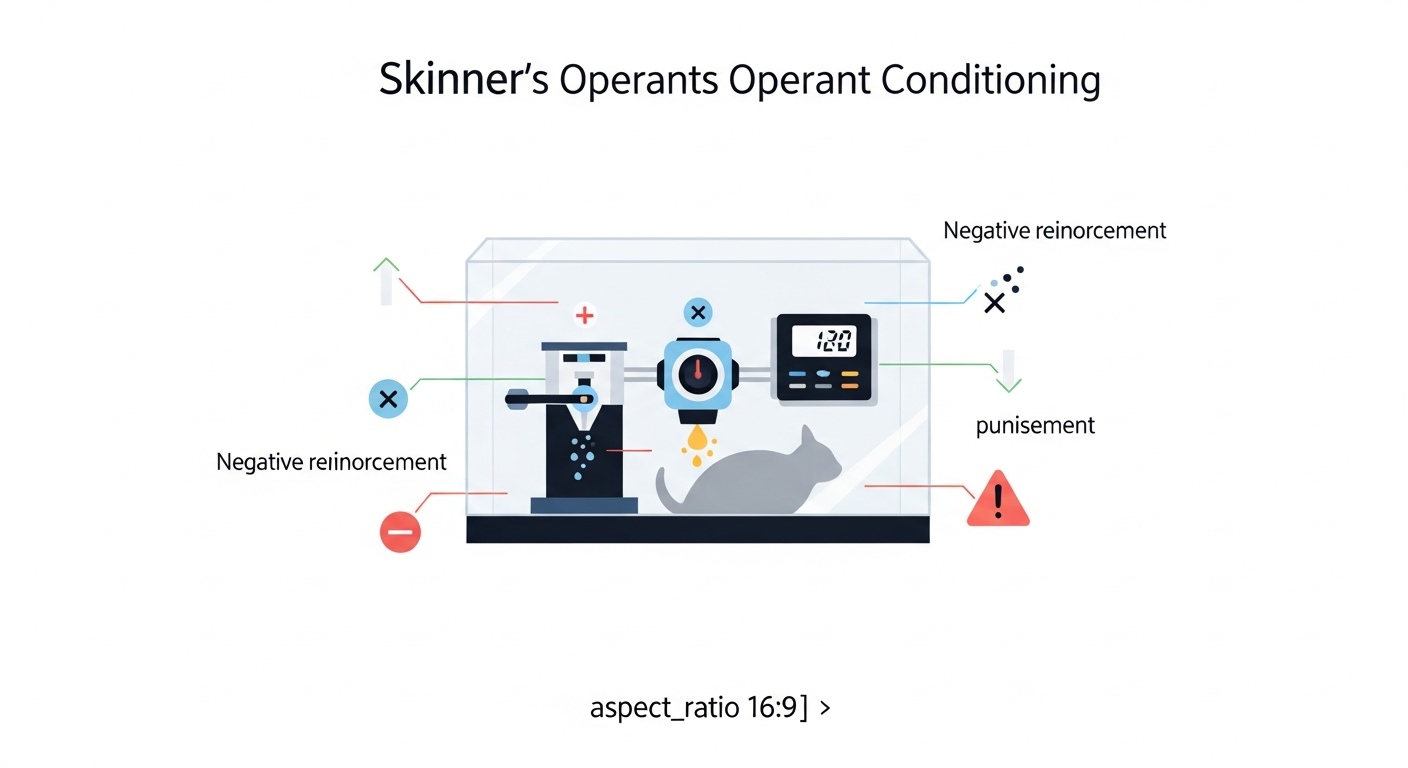
Skinner's Operant Conditioning: A Timeless Framework for Modern L&D Excellence
As Vice Presidents, Directors, and Senior Managers in Learning & Development, you face the relentless challenge of optimizing human performance, ensuring compliance, and driving tangible business results across diverse industries—from Banking and Pharma to Oil & Gas. In an era dominated by rapid technological advancements and evolving workforce dynamics, it might seem counterintuitive to revisit theories from the mid-20th century. Yet, B.F. Skinner’s principles of Operant Conditioning remain profoundly relevant, offering a robust framework for understanding, predicting, and shaping desired employee behaviors within your organization.
Skinner's work, a cornerstone of behavioral psychology, provides a powerful lens through which to view learning not just as the acquisition of knowledge, but as a systematic modification of behavior through consequences. For L&D leaders, this translates directly into designing training programs that don't just teach, but actively foster the right actions, attitudes, and outcomes critical for organizational success. Let's delve into these foundational principles and explore how they can be strategically applied in today's sophisticated eLearning environments.
The Core Tenets of Operant Conditioning for L&D
Operant Conditioning posits that behavior is learned through interaction with the environment and the consequences that follow. Skinner meticulously detailed several key components that L&D professionals can leverage:
- Reinforcement: This is the cornerstone of behavior shaping, designed to increase the likelihood of a desired behavior recurring.
- Positive Reinforcement: Adding a desirable stimulus after a behavior. For instance, praising an employee for completing a difficult compliance module or awarding points for mastering a sales technique.
- Negative Reinforcement: Removing an undesirable stimulus after a behavior. Imagine an employee completing a mandatory safety training (the desired behavior) to avoid a penalty or follow-up email (the undesirable stimulus).
- Punishment: Aimed at decreasing the likelihood of an undesirable behavior occurring. While often viewed negatively, ethical and strategic application can be crucial for behaviors posing risks.
- Positive Punishment: Adding an undesirable stimulus after a behavior. A corrective action or mandatory re-do of a module following a serious error in a simulated task.
- Negative Punishment: Removing a desirable stimulus after a behavior. Restricting access to advanced modules until foundational content is completed, or temporary removal of a privilege due to non-compliance.
- Extinction: The gradual weakening and disappearance of a learned behavior when it is no longer reinforced. If positive reinforcement for a new skill ceases, employees may revert to old habits.
- Shaping: Reinforcing successive approximations of a desired behavior. This is vital for complex skills, where initial small steps are rewarded, gradually leading to the complete, desired action.
- Schedules of Reinforcement: The timing and frequency of reinforcement greatly influence the speed of learning and resistance to extinction. Variable ratio schedules (like those used in Gamified LMS environments) often lead to high, consistent response rates.
Why Operant Conditioning is Indispensable for Modern L&D
The principles outlined by Skinner are not abstract academic concepts; they are practical tools for any L&D leader aiming to:
- Enhance Skill Acquisition & Retention: By systematically reinforcing correct application of skills, L&D ensures knowledge isn't just absorbed but translated into capability.
- Drive Compliance & Reduce Risk: In industries like Finance, Healthcare, and Mining, where adherence to regulations is paramount, Operant Conditioning provides a blueprint for embedding compliant behaviors and mitigating Risk-focused Training.
- Boost Performance Metrics: Whether it's sales conversion rates, customer service scores, or operational efficiency, reinforcing desired actions directly impacts key performance indicators.
- Cultivate a Culture of Continuous Learning: When learning itself is a reinforced behavior, employees are more likely to engage proactively with development opportunities.
Integrating Operant Conditioning with Cutting-Edge eLearning Technologies
The true power of Skinner's theories in the 21st century lies in their synergistic application with advanced eLearning platforms and methodologies. Modern learning management solutions and tools are perfectly designed to implement these principles at scale:
Gamification for Engaged Reinforcement
Gamification is a direct descendant of Operant Conditioning. Points, badges, leaderboards, and progress bars are all forms of positive reinforcement. They provide immediate, tangible feedback for desired learning behaviors, driving engagement in everything from product training for Retail staff to safety protocols in Oil & Gas. A Gamified LMS leverages these mechanics to make learning intrinsically motivating.
Microlearning for Precision and Immediate Feedback
Breaking down complex topics into bite-sized Microlearning LMS modules allows for frequent, immediate reinforcement. After a short module on a specific banking regulation or pharmaceutical sales technique, a quick quiz or interactive scenario provides instant feedback, positively reinforcing correct understanding and correcting misconceptions before they become entrenched. This aligns perfectly with the shaping principle, building complex skills incrementally.
Adaptive Learning for Personalized Reinforcement
Adaptive Learning systems can personalize the learning journey based on individual performance, providing targeted reinforcement. If a learner struggles with a concept, the system might offer additional exercises or different explanations (positive reinforcement for continued effort). If they excel, they can bypass remedial content, saving time and staying engaged (negative reinforcement of tedium). This dynamic approach maximizes learning efficiency across industries like Insurance and Hospitality.
AI-Powered Content for Smart Behavior Shaping
The advent of AI Powered Authoring Tool is revolutionizing how we deliver and optimize content. AI can analyze learner performance, identify patterns, and even predict potential areas of struggle. This allows for the automated delivery of corrective feedback or the recommendation of additional resources, acting as a sophisticated, ever-present reinforcement agent.
Risk Management and Compliance with Targeted Training
For high-stakes sectors, Operant Conditioning provides a clear path to instilling critical behaviors. Through simulations and scenario-based training within a robust learning management system, employees can practice responses to complex situations. Immediate feedback and consequences (even simulated ones) reinforce correct decision-making and discourage risky actions, ensuring that compliance training is not just theoretical but deeply ingrained and behavioral.
Advanced Insights from Intelligent Systems for L&D Leaders
As L&D leaders, you're constantly seeking innovative ways to improve training effectiveness and impact. Intelligent systems are transforming these efforts, often by implicitly leveraging behavioral principles.
Q: How can artificial intelligence enhance individualized learning paths for employees?
A: Advanced algorithms analyze individual performance data, learning styles, and even emotional responses to content. This allows a sophisticated cloud based learning management system to dynamically adjust the curriculum, recommend specific modules, and provide personalized challenges or remedial content. This constant, tailored feedback loop acts as highly efficient positive reinforcement, guiding each employee through the most effective learning journey to build desired skills and behaviors.
Q: What benefits does advanced machine learning offer in discovering and recommending relevant learning content across an organization?
A: Machine learning excels at identifying patterns in vast datasets. For L&D, this means intelligently curating and suggesting highly pertinent content, be it for a new product launch in Retail or critical safety updates in Mining. By analyzing an employee's role, previous learning history, and performance, the system can "discover" and push relevant content, reinforcing proactive learning and ensuring access to the most impactful resources. This transforms a mere learning content management system into a dynamic knowledge hub.
Q: How can intelligent systems support consistent and effective training across diverse geographical locations and business units?
A: Intelligent platforms can standardize content delivery while still allowing for localized adaptations where necessary. They can track compliance, engagement, and performance metrics across global teams, providing real-time insights into where behavioral reinforcement is strong or weak. This capability is crucial for enterprise learning management, ensuring uniform skill development and compliant behaviors regardless of an employee's physical location or specific business unit, effectively providing consistent positive reinforcement worldwide.
Conclusion: Shaping the Future of Learning
Skinner's Operant Conditioning offers more than just a historical perspective; it provides a robust, scientifically validated foundation for designing highly effective learning interventions. By consciously applying principles of reinforcement, punishment, extinction, and shaping, L&D leaders can move beyond simply delivering content to actively engineering desired behaviors and performance outcomes across all sectors—from Compliance to Sales. The synergy with modern eLearning technologies, from learning management software to AI-driven tools, makes this framework more powerful than ever.
Embracing these principles within a sophisticated lms learning management system like MaxLearn LMS enables you to build training programs that are not just engaging, but truly transformative. It's about creating an environment where desired behaviors are consistently reinforced, leading to a more skilled, compliant, and high-performing workforce. As you navigate the complexities of modern business, leveraging this timeless theory with cutting-edge technology will undoubtedly be a key differentiator in achieving your strategic L&D goals.
.jpg)


