

Elevating Organizational Resilience: The Strategic Imperative of Risk-Focused Training
In today's volatile business landscape, organizations across all sectors face an increasingly complex web of risks. From evolving regulatory demands in Banking and Pharma to critical safety protocols in Oil and Gas, or data privacy concerns in Healthcare and Retail, the potential for operational disruption and financial loss looms large. For Vice Presidents, Directors, and Senior Managers in Learning & Development, the mandate is clear: proactively fortify your workforce against these threats. This isn't just about compliance; it's about building an agile, resilient enterprise capable of navigating challenges and seizing opportunities. Welcome to the strategic imperative of Risk-focused Training.
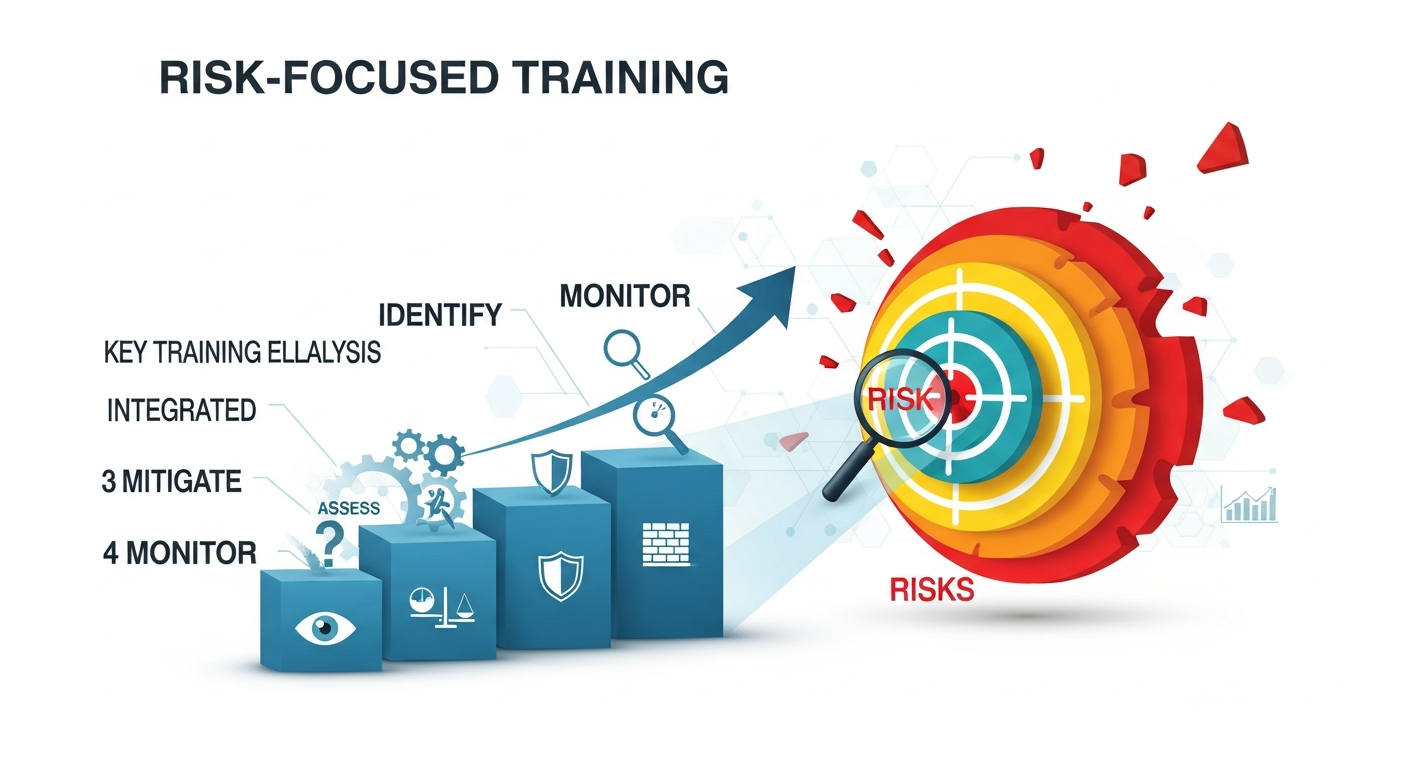
Risk-focused training moves beyond generic educational programs. It's a targeted, strategic approach designed to equip employees at every level with the knowledge, skills, and behaviors necessary to identify, mitigate, and respond to specific risks pertinent to their roles and the organization's unique operating environment. It transforms potential liabilities into areas of strength, fostering a culture of vigilance and accountability.
Why Risk-Focused Training is Non-Negotiable for Modern Businesses
The benefits of embedding a robust Risk-focused Training strategy are multifaceted, impacting everything from operational efficiency to reputation and bottom line:
- Ensuring Compliance and Mitigating Legal Exposure: In industries like Finance, Insurance, and Healthcare, regulatory non-compliance can lead to hefty fines, legal battles, and reputational damage. Targeted training ensures employees understand and adhere to the latest standards, from GDPR to industry-specific mandates.
- Enhancing Operational Stability and Safety: For sectors such as Oil and Gas, Mining, and Manufacturing, inadequate safety training can have catastrophic consequences. Risk-focused programs significantly reduce incidents, protect assets, and save lives.
- Protecting Brand Reputation and Customer Trust: A single security breach in Retail or a service failure in Hospitality can erode years of brand building. Training on data security, customer service protocols, and ethical conduct safeguards public perception.
- Boosting Employee Confidence and Engagement: Empowered employees who understand how to handle risks feel more competent and valued. This leads to higher job satisfaction and better retention, critical for maintaining institutional knowledge.
- Driving Strategic Growth: By minimizing risks, organizations free up resources, reduce overheads associated with errors or incidents, and can confidently pursue new market opportunities or innovative projects.
Crafting an Impactful Risk-Focused Training Strategy
Developing an effective Risk-focused Training framework requires a systematic approach:
1. Comprehensive Risk Identification and Assessment
Begin by collaborating with legal, compliance, operations, and IT departments to identify the specific risks your organization faces. This includes external threats (market fluctuations, cyber threats, regulatory changes) and internal vulnerabilities (process gaps, human error, skill deficits). Prioritize these risks based on their potential impact and likelihood.
2. Tailored Content Development and Delivery
One size does not fit all. Training must be highly specific to roles, departments, and identified risks. Utilize modern methodologies like Adaptive Learning to personalize paths and Microlearning LMS to deliver bite-sized, digestible content that fits into busy schedules. This ensures relevance and improves knowledge retention, particularly when delivered via a robust learning management system.
3. Engaging Learning Experiences
Dry, compliance-driven training often fails to stick. Incorporate interactive elements, simulations, and real-world scenarios. A Gamified LMS can transform mandatory training into an engaging experience, boosting participation and knowledge application. Leveraging a sophisticated LMS or learning management software ensures consistent delivery and tracking.
4. Continuous Measurement, Reinforcement, and Iteration
Risk landscapes are dynamic. Training should not be a one-time event. Implement regular assessments, refresher courses, and performance monitoring. A powerful learning content management system allows for easy updates to modules and tracks completion rates, competency gains, and ultimately, reductions in risk incidents. This feedback loop is crucial for the ongoing evolution of your enterprise learning management strategy.
Leveraging Technology for Unparalleled Impact
The right technology stack is foundational to a successful Risk-focused Training initiative. An advanced learning management system or learning management software acts as the central nervous system for your programs:
- Centralized Content Hub: A modern LCMS provides a single source of truth for all risk-related content, ensuring consistency and ease of updates.
- Personalized Learning Paths: With Adaptive Learning capabilities, the lms learning management system can dynamically adjust content based on an individual's role, existing knowledge, and performance, delivering hyper-relevant modules.
- Engaging Delivery: A Microlearning LMS paired with a Gamified LMS ensures that even the most complex or dry compliance topics are presented in an engaging, effective format, maximizing recall and application.
- Data-Driven Insights: A sophisticated cloud based learning management system offers robust analytics, providing L&D leaders with insights into completion rates, areas of struggle, and the overall effectiveness of training in mitigating identified risks. These learning management solutions empower informed decision-making.
- AI-Powered Content Creation: An AI Powered Authoring Tool can significantly accelerate the creation and update of risk-focused content, ensuring your training always reflects the latest regulatory changes and best practices.
Industry-Specific Applications of Risk-Focused Training
The principles of Risk-focused Training are universally applicable, yet their implementation varies:
- Compliance: Training on data privacy regulations (GDPR, CCPA), anti-money laundering (AML), and ethical conduct.
- Banking & Finance: Modules on fraud detection, investment risk management, and regulatory reporting accuracy.
- Pharma & Healthcare: Training on patient safety protocols, HIPAA compliance, drug handling, and sterile procedures.
- Oil and Gas & Mining: Intensive safety training, emergency response, environmental protection regulations, and operational hazard recognition.
- Retail & Hospitality: Cybersecurity awareness, customer service crisis management, food safety, and point-of-sale fraud prevention.
Exploring the Future: AI in Risk-Focused Learning
Artificial intelligence is rapidly transforming how we approach learning and risk mitigation.
How can AI optimize the discovery of relevant training materials?
AI algorithms analyze individual learning histories, job roles, and performance data to proactively recommend highly relevant Risk-focused Training modules. Within an advanced learning content management system, AI enhances internal search functions, making it easier for employees to find specific compliance guidelines or safety procedures, thereby improving overall search optimization for critical learning management solutions.
How can location intelligence influence risk training design?
Location intelligence, powered by AI, helps organizations understand geographical nuances in risk. For instance, in Oil and Gas or Mining, it can tailor safety protocols based on geological conditions or regional environmental regulations. In multi-national banking, it can adapt compliance training to local financial laws. This level of geographical insights ensures an enterprise learning management system delivers training that is not just relevant to the role, but also to the specific operational context.
How does AI predict training needs based on user intent?
AI's ability to analyze patterns in employee queries, industry news, and emerging threats allows it to predict future training needs. If an employee searches for information on a new regulation, or if industry reports signal an increase in a specific type of cyber threat, AI can interpret this as an intent-driven query and proactively suggest relevant Risk-focused Training. This predictive capability ensures that a cloud based learning management system delivers timely, anticipatory learning, keeping the workforce ahead of the curve.
Choosing the Right Partner for Your Risk-Focused Journey
Implementing a comprehensive Risk-focused Training strategy requires a robust and intuitive learning management system. Solutions like MaxLearn LMS are specifically designed to empower L&D leaders with the tools needed to create, deploy, and manage highly effective risk mitigation programs. With features like Microlearning LMS capabilities, a Gamified LMS interface, Adaptive Learning pathways, and an AI Powered Authoring Tool, it provides a comprehensive suite for building organizational resilience.
Conclusion: The Strategic Advantage of Proactive Preparedness
For L&D leaders, the shift to Risk-focused Training isn't just a departmental initiative; it's a strategic imperative that directly contributes to organizational resilience, compliance, and sustained growth. By proactively addressing potential threats through targeted, engaging, and technologically advanced learning programs, you can transform your workforce from a potential vulnerability into your strongest defense. Embrace this approach, and empower your organization to not only navigate risks but to thrive in their presence.
.jpg)


