

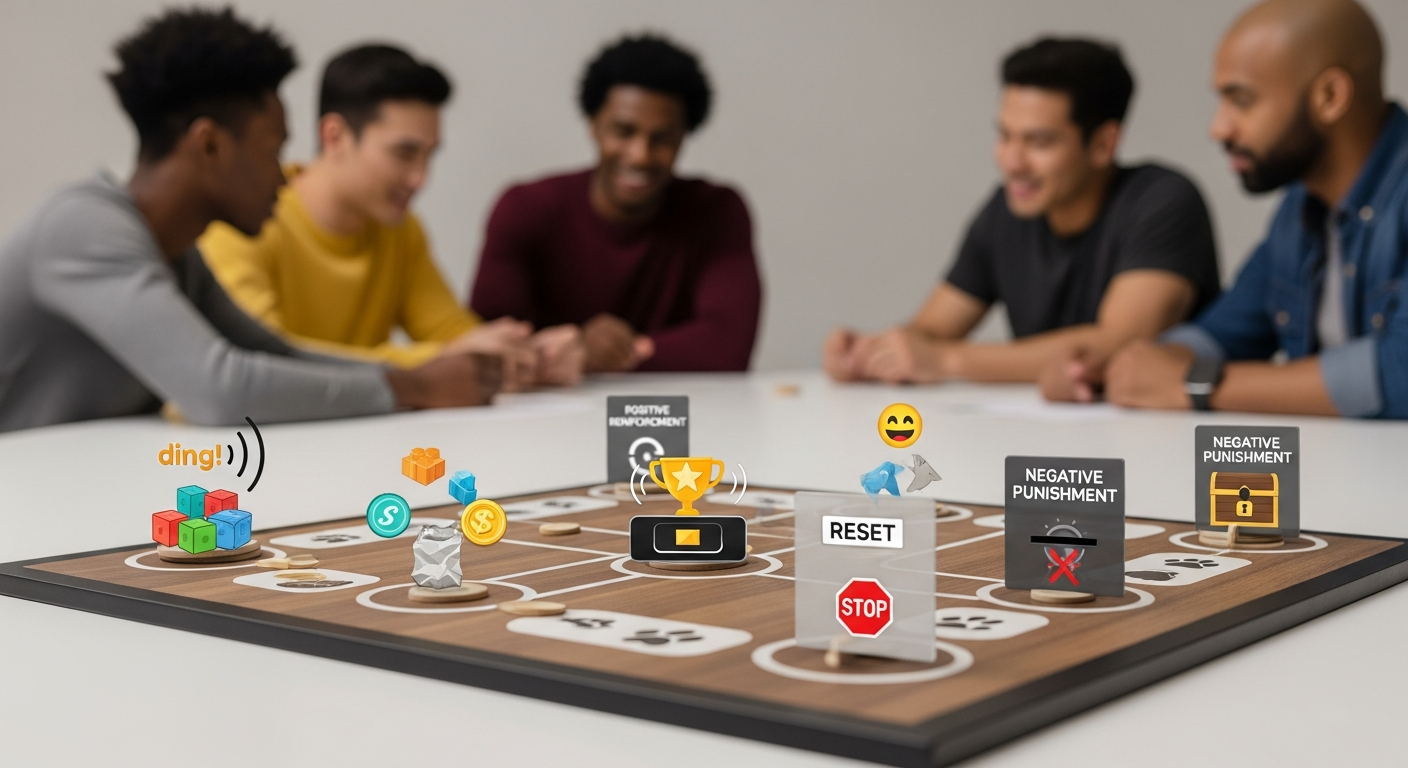
Mastering Organizational Behavior: The Power of Operant Conditioning Games in L&D
In the dynamic landscape of corporate learning and development, the quest for highly effective, engaging, and measurable training solutions is perpetual. As L&D leaders, Vice Presidents, Directors, and Managers across sectors like Compliance, Sales, Banking, Finance, Insurance, Retail, Pharma, Health care, Hospitality, Oil and Gas, and Mining, you are constantly seeking methodologies that not only impart knowledge but fundamentally shift employee behavior and performance. Enter operant conditioning games – a powerful, scientifically-backed approach to eLearning that leverages the principles of behavior psychology to foster desired outcomes.
This article delves into how operant conditioning, when expertly woven into gamified learning experiences, can revolutionize your training programs, leading to unprecedented engagement, retention, and skill mastery. By understanding and applying these principles, you can design Microlearning LMS solutions that don't just teach, but truly transform.
What is Operant Conditioning, and Why Does it Matter for L&D?
Operant conditioning, a concept pioneered by B.F. Skinner, is a learning method where the strength of a behavior is modified by reinforcement or punishment. Simply put, behaviors followed by desirable consequences are more likely to be repeated, while those followed by undesirable consequences are less likely. In an L&D context, this means:
- Reinforcement: Encouraging desirable behaviors. This is the cornerstone of effective operant conditioning games.
- Punishment: Discouraging undesirable behaviors. While effective, it's generally approached with caution in learning environments, favoring positive reinforcement.
For L&D professionals, this framework offers a strategic lens to design training that isn't just about information dissemination but about cultivating specific skills, habits, and compliance behaviors. By strategically employing positive reinforcement within a Gamified LMS environment, you can create immersive experiences where learners are actively motivated to perform correct actions, acquire new knowledge, and apply it effectively.
The Untapped Potential for Behavioral Change
The beauty of operant conditioning in eLearning lies in its ability to facilitate profound behavioral change, which is often the ultimate goal of corporate training. Whether it's ensuring compliance with complex regulations, perfecting sales pitches, mastering financial protocols, or adhering to patient safety guidelines, operant conditioning games provide a safe, iterative environment for practice and mastery. This proactive approach helps in reducing costly errors, improving efficiency, and building a more competent workforce.
Designing Impactful Operant Conditioning Games for Corporate Training
The core of successful operant conditioning games lies in their design. It's about creating a system where desired learning behaviors are consistently rewarded, making the learning process intrinsically motivating and effective. Here’s how to apply these principles:
1. Strategic Use of Positive Reinforcement
Positive reinforcement is your most potent tool. In a gamified setting, this can manifest as:
- Immediate Feedback: Providing instant validation for correct answers or actions. "Great job, that's the correct protocol!"
- Points and Rewards: Awarding points, badges, virtual currency, or unlockable content for completing modules, achieving milestones, or demonstrating mastery. These tangible rewards encourage continued engagement.
- Leaderboards: Fostering healthy competition and recognition, motivating learners to strive for higher performance.
- Levels and Progression: Structuring content into escalating difficulty levels, where successful completion unlocks new challenges, simulating skill development.
- Narrative Progression: Advancing a story or scenario based on correct decisions, making the learning journey feel meaningful.
For example, in a banking compliance module, correctly identifying a suspicious transaction could immediately award bonus points and unlock the next level of a fraud detection simulation. In sales training, successfully navigating a customer objection scenario could earn virtual currency to "buy" new sales tools.
2. Thoughtful Integration of Negative Reinforcement (with caution)
While often conflated with punishment, negative reinforcement involves the removal of an unpleasant stimulus to encourage a desired behavior. In L&D, this could subtly involve:
- Avoiding Penalties: Completing mandatory Risk-focused Training before a deadline to avoid a reminder email or a "penalty" in a leaderboard.
- Simplifying Tasks: Successfully demonstrating a skill in a simulation could remove the need for repetitive drills on that specific skill.
The key is to frame this as an achievement (avoiding something undesirable) rather than a punishment, focusing on the positive outcome of engagement. This makes a learning management system more than just a content delivery platform, but a behavior shaping tool.
3. Avoiding Punishment for Optimal Learning
Direct punishment (e.g., deducting points for incorrect answers without constructive feedback) can demotivate learners and foster anxiety, hindering the learning process. Instead, focus on providing corrective feedback within a safe environment. If a learner fails a challenge, explain why and offer another chance, perhaps with a slight reduction in "lives" or a time penalty, but never a punitive measure that discourages participation.
4. Leveraging Advanced Platforms for Operant Conditioning Games
Modern eLearning solutions are instrumental in implementing these sophisticated gamified strategies. A robust LMS or learning content management system provides the infrastructure. A dedicated gamified LMS offers built-in features for points, badges, leaderboards, and interactive simulations. Furthermore, leveraging Adaptive Learning capabilities within your learning management software ensures that reinforcement is tailored to individual learner needs, optimizing the learning path and maintaining motivation. Platforms like MaxLearn LMS exemplify how a cloud based learning management system can integrate these features seamlessly for enterprise learning management.
Harnessing Intelligent Systems for Enhanced Learning
The advent of sophisticated analytical engines and artificial intelligence is further revolutionizing the application of operant conditioning in eLearning. These technologies allow for unprecedented personalization and effectiveness.
How can advanced analytical engines predict learner engagement in these games?
Intelligent systems can meticulously track learner interactions, progress, and performance data within operant conditioning games. By analyzing patterns, identifying challenges, and correlating engagement metrics with learning outcomes, these engines can predict which learners might disengage or struggle. This allows L&D teams to intervene proactively, offering targeted support, modifying game elements, or personalizing content delivery through an enterprise learning management system to sustain motivation and optimize learning paths. This data-driven approach transforms a traditional learning management system into a predictive tool for success.
How can learning experiences using these methods be adapted for diverse global teams?
For organizations with a global footprint, ensuring culturally relevant and effective training is paramount. Artificial intelligence can play a crucial role in adapting operant conditioning games for diverse international teams. Through advanced algorithms, AI can localize content, scenarios, and even reward structures to resonate with specific cultural nuances. It can analyze regional performance data to identify common knowledge gaps or behavioral challenges, then intelligently adjust game difficulty, feedback mechanisms, or reinforcement types to maximize effectiveness across different geographical and cultural contexts. This capability transforms a standard LMS learning management system into a truly global learning solution.
What innovative ways can artificial intelligence enhance learner motivation and sustained participation in gamified training?
Artificial intelligence offers groundbreaking avenues to boost and sustain learner motivation in operant conditioning games. Imagine AI-powered virtual coaches that offer personalized encouragement, dynamic difficulty adjustments that keep challenges just right, or generative AI that creates infinite, unique scenarios based on a learner's progress and areas for improvement. An AI Powered Authoring Tool can automatically suggest optimal reinforcement schedules or dynamically alter game mechanics to prevent boredom and maximize the psychological impact of positive reinforcement, ensuring continuous engagement and mastery. This proactive, intelligent personalization elevates the impact of any LCMS.
Conclusion: The Future of Behavioral Training is Gamified
Operant conditioning games offer a sophisticated and highly effective pathway to achieve significant behavioral and performance improvements across your organization. By meticulously designing learning experiences that leverage positive reinforcement, instant feedback, and meaningful rewards, L&D leaders can cultivate a workforce that is not only knowledgeable but also intrinsically motivated to excel.
Embracing a Gamified LMS powered by intelligent systems is no longer a luxury but a strategic imperative. These platforms provide the robust foundation for creating captivating, behavior-shaping operant conditioning games that meet the complex demands of Compliance, Sales, Banking, Finance, Insurance, Retail, Pharma, Health care, Hospitality, Oil and Gas, and Mining industries. Investing in an advanced learning management solutions system like MaxLearn LMS enables you to transform theoretical knowledge into actionable, ingrained behaviors, driving measurable success and fostering a culture of continuous improvement.
.jpg)


