

Understanding Single Loop Learning: A Foundational Approach for L&D Leaders
In the dynamic world of corporate learning and development, the ability of an organization to learn and adapt is paramount. As Vice Presidents, Directors, and Managers of L&D, you are on the front lines, tasked with cultivating environments that not only impart knowledge but also drive continuous improvement. At the heart of organizational learning lies a concept often overlooked in its simplicity, yet profoundly impactful: Single Loop Learning. This foundational approach dictates how we respond to errors, correct course, and maintain operational excellence across diverse industries, from Compliance and Banking to Healthcare and Oil & Gas.
Understanding Single Loop Learning is not just an academic exercise; it’s a strategic imperative. It provides the bedrock upon which more complex learning strategies are built, ensuring that your teams can efficiently identify and rectify immediate issues, thereby safeguarding performance and upholding standards.
What Exactly is Single Loop Learning?
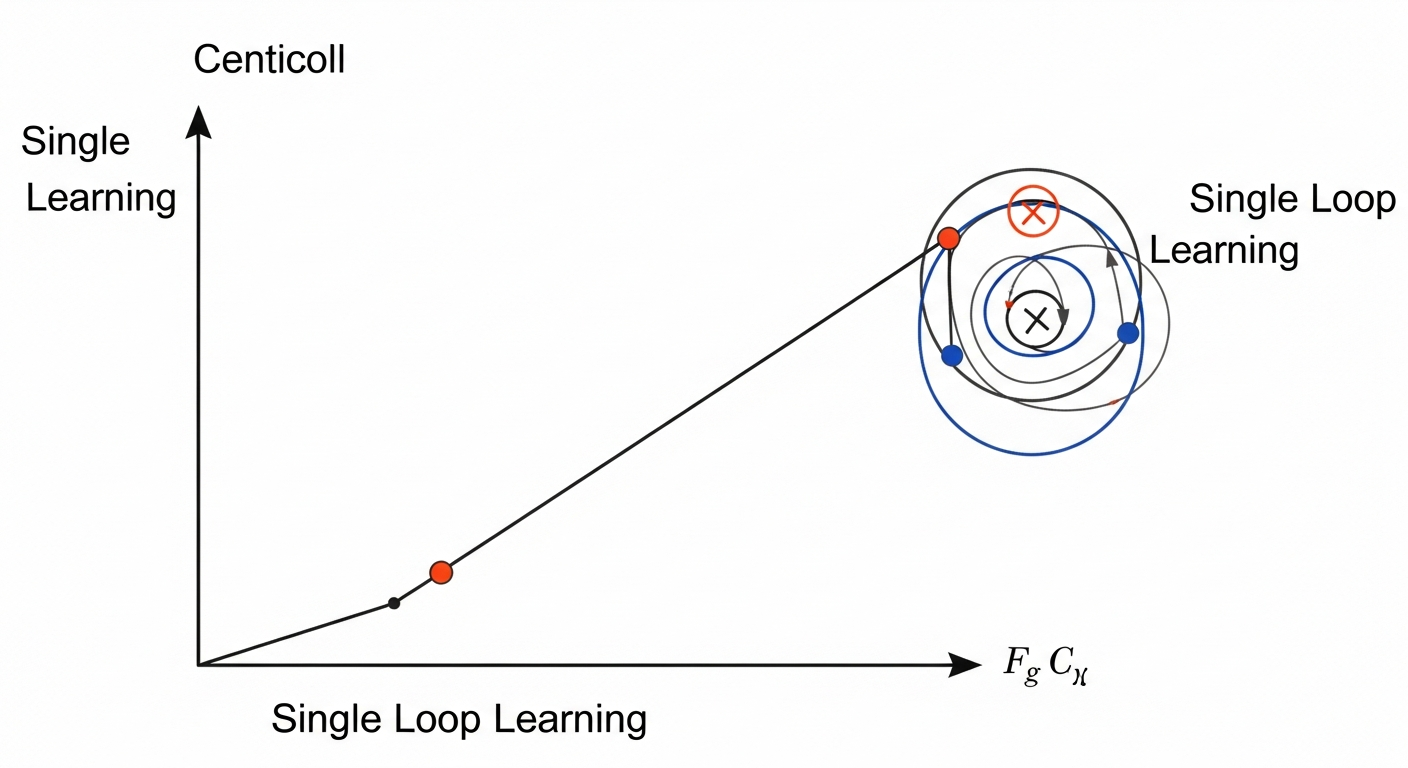
Single Loop Learning, a concept articulated by Argyris and Schön, describes the process of detecting and correcting errors within a given set of operating norms, goals, or policies. Think of it as adjusting a thermostat: when the room gets too cold, the thermostat detects the deviation from the desired temperature (the error) and turns on the heater (the corrective action) to bring it back to the set standard. The thermostat doesn't question *why* the temperature setting is 72 degrees, or *if* 72 degrees is the optimal temperature for comfort; it simply acts to maintain the established goal.
In an organizational context, Single Loop Learning occurs when employees or systems identify a discrepancy between an expected outcome and an actual outcome, and then take action to bring the outcome back in line with the original expectation. The existing assumptions, procedures, and objectives remain unquestioned. It's about 'doing things right' according to established rules, rather than 'doing the right things' by critically examining those rules themselves.
Key Characteristics and Components
- Error Detection and Correction: The primary focus is on identifying when performance deviates from a standard and implementing a fix.
- Adherence to Existing Norms: Solutions are sought and implemented within the current framework of policies, procedures, and goals.
- Problem-Solving Nature: It is largely reactive, addressing immediate problems and symptoms rather than root causes that might challenge underlying assumptions.
- Efficiency and Stability: This type of learning aims to maintain equilibrium and optimize existing processes without disrupting them.
Single Loop Learning in the L&D Landscape
For L&D professionals, Single Loop Learning is woven into the fabric of daily operations across every industry. Consider the following scenarios:
- Compliance: An employee fails to follow a specific regulatory procedure. Single Loop Learning involves training that corrects this behavior, ensuring adherence to the existing regulation.
- Sales: A sales representative consistently misses a step in their pitch that leads to lower conversion rates. Training is deployed to remind and reinforce the correct pitch sequence.
- Banking & Finance: A loan officer makes an error in processing an application. L&D provides immediate training on the correct steps to prevent future similar errors, ensuring regulatory compliance.
- Healthcare: A nurse forgets a specific step in a patient care protocol. Single Loop Learning provides refresher training on the exact protocol to maintain patient safety and care standards.
- Retail: Customer service staff deviate from the standard script for handling complaints. Corrective training reinforces the approved script and interaction guidelines.
- Pharma: A lab technician incorrectly records data. Training focuses on precise data entry procedures and adherence to SOPs.
- Hospitality: A hotel staff member fails to follow check-in procedures. Corrective training reinstates the standard protocol for guest satisfaction.
- Oil and Gas/Mining: A worker misses a critical safety check. Immediate training reinforces the specific safety checklist and procedure.
Benefits of Single Loop Learning for Your Organization
While often seen as less "transformative" than other learning approaches, Single Loop Learning offers crucial benefits:
- Operational Efficiency: It ensures that tasks are performed correctly and consistently, leading to smoother operations and reduced errors.
- Quick Problem Resolution: When problems arise, this approach facilitates rapid identification and implementation of solutions within existing frameworks, minimizing disruption.
- Consistency and Quality Control: It helps maintain high standards and consistent service or product delivery across the organization.
- Compliance and Risk Mitigation: Essential for industries like banking, healthcare, and pharmaceuticals, it ensures adherence to regulations and reduces Risk-focused Training exposure.
- Foundation for Advanced Learning: By mastering the basics and ensuring operational stability, organizations create a solid platform for more complex, transformative learning initiatives.
Limitations and When It's Not Enough
Despite its strengths, Single Loop Learning has inherent limitations. Its core focus on "doing things right" means it doesn't question "are we doing the right things?" This can lead to:
- Superficial Solutions: It might fix symptoms without addressing underlying systemic issues or flawed assumptions.
- Resistance to Innovation: By continually reinforcing existing norms, it can inadvertently stifle creativity and the questioning necessary for true innovation.
- Reinforcing Ineffective Practices: If the established goals or procedures are themselves flawed or outdated, Single Loop Learning will merely optimize an inefficient process.
- Inflexibility: In rapidly changing environments, relying solely on Single Loop Learning can prevent an organization from adapting to new challenges that require a fundamental shift in strategy or perspective.
For situations demanding a re-evaluation of fundamental beliefs and strategies, a more profound approach, often referred to as Double Loop Learning, becomes necessary. However, Single Loop Learning remains indispensable for daily operational excellence.
Integrating Single Loop Learning with Modern L&D Strategies
Leveraging Single Loop Learning effectively in today's digital landscape requires smart integration with advanced learning technologies. Here’s how L&D leaders can optimize its impact:
- Dynamic Content Delivery: Employing a Microlearning LMS allows for the rapid creation and deployment of short, targeted modules that address specific skill gaps or compliance updates, perfect for quick single-loop corrections.
- Engaging Remediation: Utilize a Gamified LMS to make corrective training more engaging and memorable. Quizzes, challenges, and leaderboards can reinforce correct procedures effectively.
- Personalized Corrective Paths: Implement Adaptive Learning technologies that automatically identify an employee's specific knowledge gaps and deliver tailored content to address them, ensuring efficient and precise single-loop corrections.
- Rapid Content Creation: An AI Powered Authoring Tool can significantly reduce the time and effort required to create new training modules or update existing ones, enabling L&D teams to respond quickly to identified errors.
Intelligent Systems and Learning Efficacy
Question: How can intelligent systems assist in understanding where learning gaps exist regarding specific procedures?
Answer: Advanced analytics tools integrated with learning platforms can pinpoint common errors in learner responses, simulation performance, or operational data. By analyzing vast datasets, these systems can highlight precise areas where individuals or teams consistently deviate from expected procedures, enabling L&D teams to quickly deploy targeted single-loop interventions, ensuring immediate corrective action and maintaining operational standards.
Question: In a globally distributed workforce, how do digital learning platforms ensure consistent application of corrective learning across different regions and regulatory environments?
Answer: Digital learning management systems provide centralized content distribution and tracking capabilities. This allows organizations to roll out uniform compliance updates or procedural adjustments efficiently worldwide. While ensuring global consistency, these platforms can also be configured to accommodate localized nuances and regulatory requirements, delivering culturally sensitive and regionally specific corrective content where necessary, without compromising the core message.
Question: What role do intelligent algorithms play in optimizing the delivery of immediate corrective feedback and training within an organizational learning framework?
Answer: Algorithms within learning platforms can personalize feedback loops by analyzing an individual's performance data in real-time. They can recommend specific modules or micro-lessons based on identified weaknesses, adapt content difficulty dynamically, and even suggest practice scenarios. This significantly accelerates the process of addressing and correcting performance issues, making single-loop learning highly efficient and tailored to individual needs.
Conclusion
Single Loop Learning is not merely a reactive mechanism; it is a vital component of a robust organizational learning strategy. For L&D leaders across the Compliance, Sales, Banking, Finance, Insurance, Retail, Pharma, Health care, Hospitality, Oil and Gas, and Mining sectors, mastering and optimizing Single Loop Learning processes is critical for maintaining operational excellence, ensuring compliance, and safeguarding organizational stability. By leveraging modern learning technologies, you can transform what might seem like a basic form of learning into a highly efficient, data-driven system for continuous improvement, securing your organization's performance and paving the way for future growth.
.jpg)


