

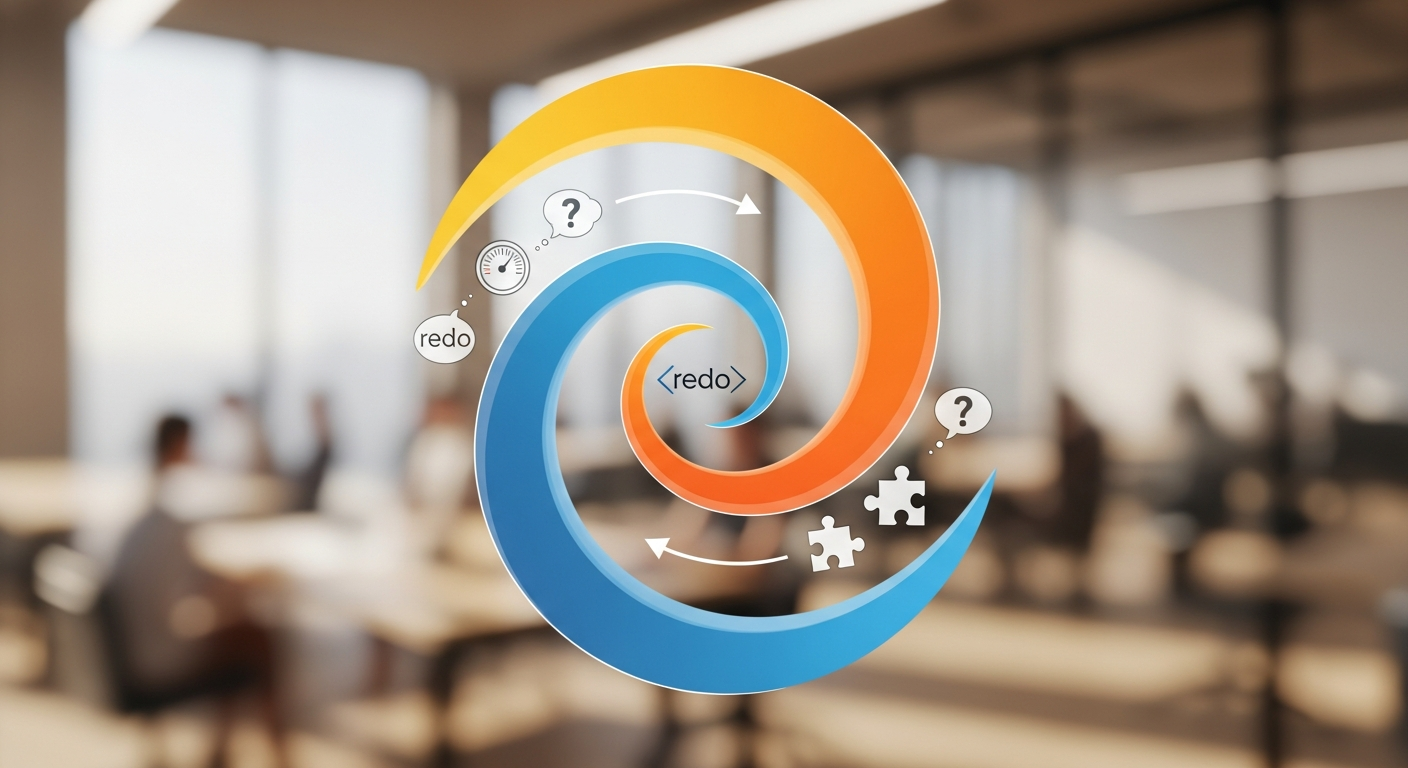
Unlocking True Organizational Growth: The Power of Double Loop Learning in L&D
In today's rapidly evolving business landscape, L&D leaders face immense pressure to not only deliver effective training but also to cultivate a culture of continuous improvement and proactive problem-solving. From navigating complex compliance regulations in banking and pharma to accelerating sales performance and mitigating risks in oil & gas, the need for deep, sustainable learning has never been more critical. Traditional training often scratches the surface, addressing symptoms rather than root causes. This is where the profound insights of Chris Argyris' Double Loop Learning become indispensable for Vice Presidents, Directors, and Senior Managers in L&D.
Imagine a scenario where your organization doesn't just fix problems, but fundamentally rethinks the assumptions that led to those problems in the first place. That, in essence, is the transformative power of Double Loop Learning. For L&D professionals tasked with shaping the intellectual capital and strategic capabilities of their workforce across industries like finance, healthcare, retail, and mining, understanding and implementing this framework can be the key to unlocking unprecedented levels of organizational agility and resilience.
Understanding Single Loop Learning: The 'Fix-It' Mentality
To truly grasp Double Loop Learning, it's helpful to first understand its counterpart: Single Loop Learning. This is the most common form of learning in organizations. Think of a thermostat: when the room gets too cold, the thermostat turns on the heater until the desired temperature is reached. It takes corrective action based on feedback to maintain existing norms or achieve existing goals.
In an organizational context, Single Loop Learning occurs when an L&D team identifies a problem – for instance, low sales conversion rates – and implements a solution within the existing framework. They might offer additional product training, refine sales scripts, or introduce new CRM software. While these actions can improve performance, they rarely question the fundamental assumptions, strategies, or objectives that led to the initial problem. It's about 'doing things better' within the current system, without asking 'are we doing the right things?'
Limitations of Single Loop Learning:
- Addresses symptoms, not root causes.
- Fails to challenge underlying assumptions and mental models.
- Can lead to repetitive errors if foundational issues are ignored.
- Limits true innovation and strategic realignment.
Introducing Double Loop Learning: Questioning the 'Why'
Double Loop Learning, as conceptualized by Chris Argyris and Donald Schön, goes a significant step further. Instead of just correcting errors within the existing framework, it involves questioning the framework itself. It’s about reflecting on, and potentially altering, the governing variables, assumptions, and values that guide behavior and decisions. It asks not only "Are we doing things right?" but, more importantly, "Are we doing the right things?" and "Why do we even define 'right' this way?"
Consider the sales conversion example again. A Double Loop Learning approach would involve asking: "Why are our sales conversion rates low? Is it our training method, our product positioning, our target market strategy, or even the core assumptions about how customers want to buy?" It encourages leaders to scrutinize their own mental models, organizational norms, and the very theories-in-use that dictate their approach. This level of inquiry leads to profound shifts in understanding and action, fostering genuine transformation rather than mere optimization.
Key Characteristics of Double Loop Learning:
- Involves critical reflection on underlying assumptions and values.
- Challenges existing norms and mental models.
- Leads to a redefinition of goals and strategies.
- Fosters transformative change and sustainable growth.
Why Double Loop Learning Matters for L&D Leaders
For L&D VPs, Directors, and Managers across diverse industries, embracing Double Loop Learning offers a strategic advantage. It moves L&D beyond simply being a service provider to becoming a critical partner in organizational strategy and resilience.
Proactive Problem Solving and Risk Mitigation:
In compliance-heavy sectors like banking, finance, and pharma, Double Loop Learning means not just training employees on new regulations, but questioning why previous compliance training might have fallen short, or why certain risks continue to emerge despite existing protocols. It enables L&D to design Risk-focused Training that anticipates future challenges rather than merely reacting to past failures.
Cultivating a Culture of Innovation and Adaptability:
In fast-paced environments like sales, retail, and hospitality, the ability to adapt is paramount. Double Loop Learning empowers L&D to foster a culture where employees and leaders constantly question 'how we've always done things,' leading to innovative solutions for customer engagement, operational efficiency, and market responsiveness.
Sustainable Growth and Performance:
True competitive advantage comes from an organization's capacity to learn faster than its competitors. By embedding Double Loop Learning, L&D leaders ensure that performance improvements are not temporary fixes but are rooted in a deeper understanding and continuous refinement of the organization's core learning processes and strategic intent.
Implementing Double Loop Learning in eLearning
Modern eLearning platforms are powerful vehicles for facilitating Double Loop Learning, moving beyond simple information dissemination to truly transformative experiences.
From Theory to Practice: Practical Strategies
L&D leaders can leverage technology to embed Double Loop Learning principles:
- Fostering Critical Reflection: Design learning modules that include scenarios requiring learners to not just choose the 'correct' answer, but to explain the underlying reasoning and assumptions behind their choice. Encourage peer feedback and debate. A Microlearning LMS can deliver short, focused prompts that encourage daily reflection.
- Creating Safe Spaces for Dialogue: Utilize discussion forums, virtual breakouts, and anonymous feedback mechanisms within your learning platform. Psychological safety is crucial for individuals to challenge established norms without fear of retribution.
- Leveraging Technology for Deeper Insights: Advanced learning platforms can move beyond tracking completion rates to analyze engagement patterns, decision-making processes, and knowledge application. Implementing a Gamified LMS can introduce challenges that require critical thinking and experimentation, providing data points for reflection. Adaptive Learning paths can dynamically adjust content based on how learners respond to assumption-challenging questions, guiding them towards deeper understanding. Furthermore, an AI Powered Authoring Tool can help L&D teams rapidly create and iterate content designed to probe underlying mental models, making the process of designing for double-loop learning more efficient.
Frequently Asked Questions for L&D Leaders on Advanced Learning Strategies
Many L&D leaders are seeking innovative ways to enhance their training impact. Here are some common questions and answers, exploring how intelligent systems support advanced learning.
Q: How can intelligent systems help us understand why our training isn't sticking and truly improve its effectiveness?
A: Intelligent systems can analyze a vast array of learning data, from engagement patterns and quiz performance to real-world application metrics. By identifying correlations and underlying factors, they can pinpoint not just that training is ineffective, but *why* it's falling short. This allows L&D to question the foundational assumptions of their training design, content, and delivery methods, guiding a re-evaluation of the entire learning strategy rather than just tweaking surface-level elements. This deep analytical capability ensures continuous optimization of learning outcomes.
Q: Can technology help us deliver highly relevant learning content to specific teams, regardless of their operational context or physical location?
A: Absolutely. Modern learning platforms employ sophisticated algorithms to understand diverse operational contexts and regional requirements. They can dynamically tailor content delivery based on a team's specific role, project, or geographic location, ensuring that the training is maximally relevant and impactful. This hyper-personalization extends to localized compliance updates, regional sales tactics, or specific equipment maintenance protocols, making learning universally accessible and contextually precise.
Q: How can we ensure our learning content continuously improves, stays fresh, and anticipates future industry shifts?
A: Artificial intelligence plays a crucial role in maintaining content relevance and future-proofing learning programs. By continuously monitoring industry trends, regulatory changes, and real-time learner feedback, AI can proactively suggest content updates, identify knowledge gaps that need new modules, and even automatically generate preliminary content based on emerging topics. This predictive and adaptive capability ensures that your learning ecosystem is always optimized for peak performance and strategic alignment, anticipating future needs rather than merely reacting to the present.
Embracing the Double Loop for L&D Excellence
Double Loop Learning isn't just a theoretical concept; it's a practical framework for L&D leaders who aspire to build truly learning organizations. By intentionally designing learning experiences that challenge assumptions, encourage critical reflection, and leverage cutting-edge technology, L&D can drive profound, sustainable change. It transforms L&D from a support function into a strategic imperative, equipping organizations across all segments – from healthcare to oil and gas – with the agility and foresight needed to thrive in an unpredictable world.
.jpg)


