

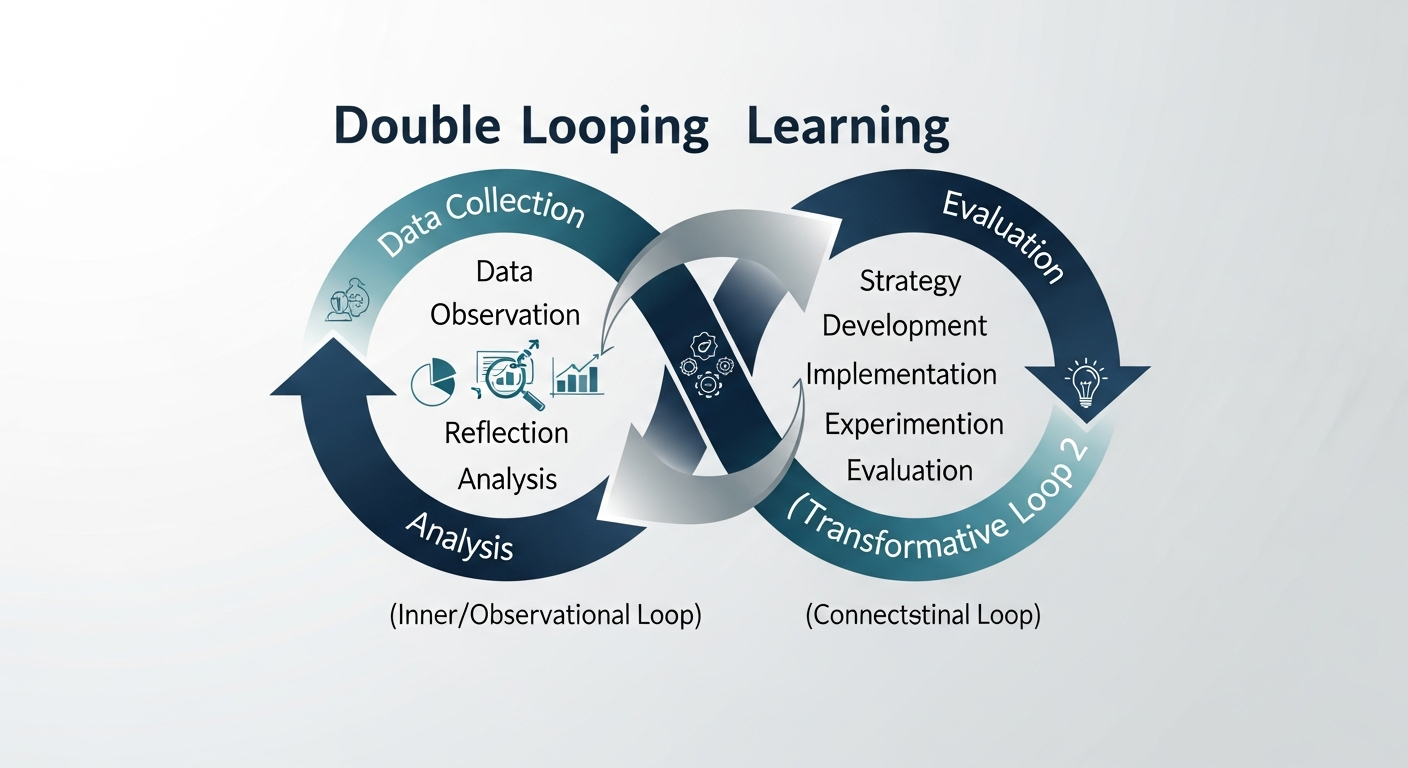
Double Looping Learning: Architecting Agility and Resilience in Corporate Training
In the dynamic landscape of modern business, organizational learning can no longer afford to be a static, reactive function. For Vice Presidents, Directors, and Senior Managers of Learning & Development across diverse sectors like Compliance, Sales, Banking, Finance, Insurance, Retail, Pharma, Healthcare, Hospitality, Oil and Gas, and Mining, the imperative to build truly agile and resilient workforces has never been more critical. This is where Double Looping Learning emerges as a powerful paradigm shift, transforming L&D from a mere problem-solver into a strategic architect of continuous improvement and innovation.
The traditional approach to corporate training often operates on what is known as 'Single-Loop Learning.' This involves identifying an error or performance gap and implementing a solution within the existing framework. For instance, if sales figures drop due to a lack of product knowledge, the solution is new product training. While essential for immediate fixes, single-loop learning rarely questions the underlying assumptions, strategies, or even the core objectives that led to the problem in the first place.
Beyond the Quick Fix: Understanding Double Looping Learning
Double Looping Learning, a concept pioneered by Chris Argyris and Donald Schön, goes a significant step further. It challenges the fundamental premises and governing variables that drive an organization's actions. Instead of simply asking, "Are we doing things right?" it prompts the deeper, more transformative question: "Are we doing the right things?"
For L&D leaders, this translates into a profound shift:
- Single-Loop L&D: Focuses on optimizing existing training programs, improving content delivery, or enhancing learner engagement within established goals. (e.g., "How can we make this compliance training more effective?")
- Double-Loop L&D: Critically examines the very purpose and design of the training strategy, questioning its alignment with evolving business objectives, market realities, and future challenges. (e.g., "Is our current compliance framework robust enough for emerging regulations, or do we need a fundamentally different approach to risk education?")
This higher-order learning is vital for long-term strategic advantage. It empowers organizations to adapt proactively, rather than merely reactively, to technological disruptions, regulatory shifts, market volatility, and changing customer expectations.
Why Double Looping Learning is Imperative for L&D Leaders Today
In industries characterized by rapid change and high stakes, the ability to question and reinvent learning strategies is not just beneficial—it's foundational:
- Compliance: Beyond updating regulatory modules, Double Looping asks if the entire compliance training philosophy fosters genuine ethical behavior and proactive risk mitigation, or merely checklist adherence.
- Sales: Instead of just new product training, it evaluates if sales methodologies themselves are aligned with evolving customer buying patterns and digital channels.
- Banking & Finance: It encourages L&D to scrutinize whether existing fraud prevention training adequately addresses sophisticated new threats, or if a paradigm shift in security education is required.
- Healthcare: It probes beyond procedural training to assess if the foundational learning culture supports continuous improvement in patient safety and clinical innovation.
Embracing this approach fosters organizational agility, resilience, and a competitive edge, ensuring that L&D is not just a cost center but a strategic driver of growth and sustainability.
Implementing Double Looping Learning in Your L&D Strategy
1. Cultivate a Culture of Open Inquiry and Psychological Safety
For individuals and teams to challenge existing norms, they must feel safe to do so. L&D leaders must champion an environment where feedback is actively sought, mistakes are viewed as learning opportunities, and critical questioning is encouraged, not penalized. This involves fostering dialogue, diverse perspectives, and open communication channels.
2. Leverage Data and Analytics for Deeper Insights
Data is the cornerstone of effective double-looping. Beyond traditional completion rates and scores, L&D must delve into advanced analytics to understand why certain learning interventions succeed or fail at a systemic level. This means analyzing correlations between training and business outcomes, identifying patterns of knowledge decay, and even predicting future skill gaps.
Modern eLearning solutions play a pivotal role here. A robust Microlearning LMS, for instance, can provide granular data on learner engagement, comprehension, and application, allowing L&D teams to identify not just where learners struggle, but potentially why the current pedagogical approach might be flawed.
3. Embrace Adaptive and AI-Powered Learning Technologies
The right technology can transform double-looping from a theoretical ideal into a practical reality. Tools that facilitate continuous feedback and intelligent adaptation are crucial:
Personalized Learning Paths: Adaptive Learning technologies can dynamically adjust content and pathways based on individual learner performance, not just fixing immediate knowledge gaps but questioning the initial assumptions about a learner's prerequisite understanding or preferred learning style.
Engaging & Reflective Environments: A Gamified LMS can build environments where learners are encouraged to experiment, fail safely, and reflect on the outcomes, thereby fostering the critical thinking essential for double-loop learning.
Rapid Iteration & Content Evolution: An AI Powered Authoring Tool empowers L&D teams to quickly create, deploy, and refine content, allowing for rapid experimentation with different instructional designs and strategies, directly supporting the iterative nature of double-loop learning.
4. Integrate Strategic & Proactive Training Frameworks
Move beyond reactive training by adopting frameworks that inherently challenge existing norms. For example, implementing Risk-focused Training isn't just about teaching existing protocols; it's about continuously evaluating if those protocols are sufficient for evolving threats and fostering a culture of proactive risk identification among employees.
Strategic Inquiries for the AI Era
As L&D leaders navigate the complexities of the modern enterprise, integrating advanced intelligence systems into learning strategies becomes paramount. A crucial question arises: How can intelligence systems expand the reach and relevance of learning content across diverse geographical locations?
These systems can autonomously localize training materials, translating content and adapting cultural nuances with remarkable precision. They ensure that a global workforce receives consistent, yet culturally resonant, learning experiences, breaking down barriers to understanding and fostering uniform skill development across continents. This capability allows L&D to transcend mere distribution and engage in a deeper analysis of global learning effectiveness, questioning if a core curriculum holds up in vastly different contexts.
Furthermore, L&D leaders often ponder: What advanced analytical methods can be employed to continuously refine and optimize learning interventions for maximum impact?
Sophisticated analytics driven by intelligent technologies can go beyond surface-level performance metrics. They delve into learning behaviors, engagement patterns, and the long-term application of knowledge in real-world scenarios. This allows L&D to identify not just where learners are struggling, but also systemic flaws in the instructional design or strategic objectives of the training itself. Such insights empower L&D to fundamentally redesign programs, ensuring that interventions are not just effective, but optimally designed for strategic business outcomes.
Finally, a key challenge for every L&D professional is to ensure learning resonates with each individual. In what ways can intelligent technologies tailor learning experiences to each individual's unique needs and progression?
Intelligent systems can meticulously track individual learning styles, preferred content formats, existing knowledge gaps, and career aspirations. They then dynamically curate personalized learning pathways, recommend relevant resources, and adjust the difficulty level of content in real-time. This level of individualization moves beyond simply filling knowledge gaps; it questions why certain learning approaches are more effective for specific individuals and fundamentally rethinks the one-size-fits-all model, ensuring every learner is engaged in a development journey that is truly their own.
Conclusion: Building an Adaptive Learning Ecosystem
For L&D VPs, Directors, and Senior Managers, embracing Double Looping Learning is not merely an operational adjustment; it's a strategic imperative. It's about building an adaptive learning ecosystem capable of not only responding to change but also anticipating and shaping the future. By fostering a culture of critical inquiry, leveraging advanced data analytics, and strategically deploying cutting-edge eLearning technologies, L&D can transform from a support function into a central pillar of organizational innovation and sustainable growth. This commitment ensures your organization isn't just learning, but truly evolving, ready to navigate the complexities and seize the opportunities of tomorrow.
.jpg)


