

Mastering Organizational Agility: The Power of Single-Loop and Double-Loop Learning in L&D
In today’s dynamic business landscape, marked by rapid technological advancements and evolving market demands, the ability of an organization to learn and adapt is paramount. For Vice Presidents, Directors, and Senior Managers in Learning & Development, understanding the nuances of organizational learning is not just theoretical; it’s a strategic imperative. This article delves into two foundational concepts – Single-Loop and Double-Loop Learning – exploring how they drive efficiency and foster transformative change, particularly within the context of modern eLearning solutions.
Single-Loop Learning: The Foundation of Efficiency
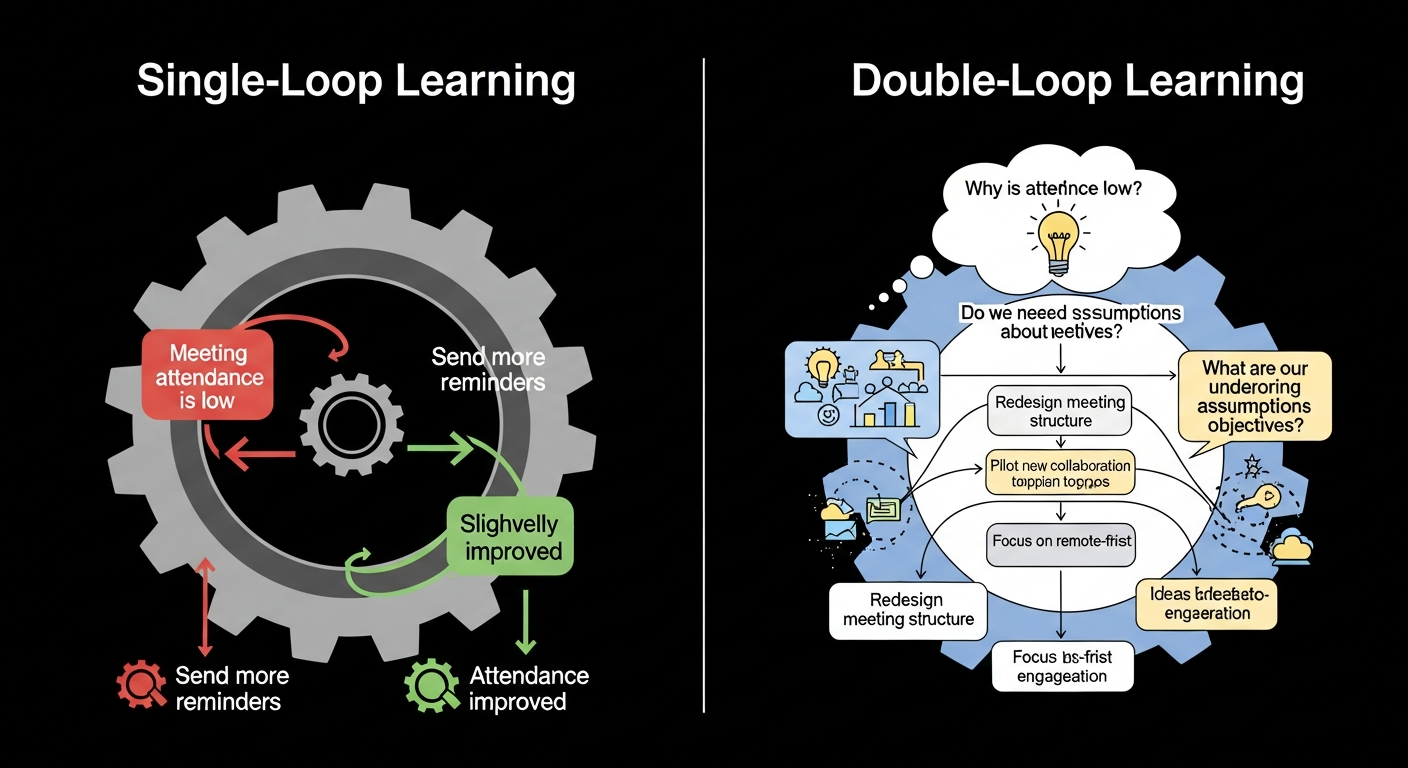
Single-Loop Learning is the most common form of organizational learning, focused on identifying and correcting errors within an existing framework, without questioning the underlying assumptions or goals. Think of it as a thermostat: when the room gets too cold, it turns on the heater; when it gets too hot, it turns it off. The thermostat doesn't question why the desired temperature is 72 degrees, only how to maintain it.
In the realm of L&D, Single-Loop Learning is about making current processes better. It’s about optimizing training delivery, improving completion rates, enhancing content clarity, and ensuring compliance with established policies. It asks: "Are we doing things right?"
- Compliance Training: If employees are failing a compliance module, Single-Loop Learning might involve redesigning the module, providing clearer examples, or offering more frequent refresher courses. The goal (compliance) remains, but the method is refined.
- Sales Enablement: For a sales team struggling to meet quotas, Single-Loop Learning could mean providing additional training on product features, refining pitching techniques, or improving CRM usage. The core sales strategy isn't questioned, just its execution.
- Banking & Finance: Implementing a new anti-money laundering (AML) procedure might involve training staff on the new steps and then using feedback to refine the training materials or clarify specific policy points.
The strength of Single-Loop Learning lies in its efficiency and practicality. It allows organizations to swiftly address immediate problems and improve performance within defined parameters. However, its limitation is that it doesn't challenge the status quo, potentially leading to optimized efforts that are no longer relevant or effective in a fundamentally changed environment.
Double-Loop Learning: Driving Transformative Change
Double-Loop Learning, in contrast, involves questioning the underlying assumptions, values, and policies that guide organizational actions. It's about fundamental paradigm shifts, rethinking the 'why' behind what we do. If Single-Loop Learning is adjusting the thermostat, Double-Loop Learning is asking: "Why is 72 degrees the ideal temperature? Is there a better way to think about climate control?" It asks: "Are we doing the right things?"
For L&D professionals, Double-Loop Learning is about evolving the entire learning strategy, questioning whether current training goals align with long-term strategic objectives, and exploring entirely new approaches to talent development.
- Health Care: Instead of just training nurses on new medical device protocols, Double-Loop Learning might involve asking why there's a recurring issue with device misuse in the first place. Is it the device design? The work environment? The hospital's approach to skill verification?
- Retail: Beyond training staff on customer service scripts, Double-Loop Learning would involve reassessing the entire customer experience model. Are scripts even effective in fostering genuine customer loyalty? Should we empower frontline staff with more autonomy to solve problems creatively?
- Oil and Gas: If safety incidents persist despite extensive training, Double-Loop Learning would prompt an examination of the safety culture itself, questioning management's commitment, communication hierarchies, or the very structure of operational procedures.
Double-Loop Learning is essential for innovation, resilience, and true strategic agility. It enables organizations to adapt proactively to profound market shifts rather than just reacting to symptoms. The challenge, however, lies in its disruptive nature, requiring uncomfortable self-reflection and a willingness to dismantle long-held beliefs.
Bridging the Loops with Modern eLearning Solutions
The distinction between Single-Loop and Double-Loop Learning is critical, but the most successful L&D strategies integrate both. Modern eLearning platforms and methodologies are powerful enablers for this integrated approach.
A common strategic inquiry for L&D leadership is: How can we foster a culture of continuous improvement across diverse departments, ensuring both incremental gains and fundamental shifts? The answer lies in leveraging versatile learning ecosystems.
For Single-Loop Learning, solutions like a robust Microlearning LMS can quickly deploy targeted content updates based on performance gaps. If sales data shows a dip in closing rates for a specific product, a quick microlearning module can be pushed out. Gamified LMS features can boost engagement for routine compliance tasks, ensuring the "doing things right" aspect is met efficiently and enjoyably.
For Double-Loop Learning, technology facilitates the analysis and experimentation needed for deeper reflection. An Adaptive Learning system can identify consistent misunderstandings, not just individual errors, highlighting systemic issues in existing knowledge frameworks. Furthermore, an AI Powered Authoring Tool can help L&D teams rapidly prototype and test new learning approaches, enabling a quicker iteration on foundational learning strategies.
For global enterprises, a pivotal challenge remains: What are the key considerations for implementing effective learning strategies across geographically dispersed teams? Leveraging advanced learning platforms is key. These platforms provide consistent delivery regardless of location, while also offering analytics that reveal regional performance patterns. This data is invaluable for both types of learning: identifying specific training needs (Single-Loop) and uncovering cultural or market-specific challenges that might require a re-evaluation of global strategies (Double-Loop).
Practical Application Across Industries
- Compliance: Beyond ensuring employees adhere to regulations (Single-Loop), L&D must also facilitate Double-Loop Learning by questioning if the regulatory framework itself is optimally protecting the organization. This could lead to a proactive approach to Risk-focused Training, embedding risk assessment into daily operations rather than treating compliance as a separate check-the-box exercise.
- Sales: While Single-Loop focuses on improving sales techniques, Double-Loop Learning challenges the sales methodology itself. Are we selling the right products to the right audience? Is our value proposition still relevant? This necessitates a broader organizational conversation supported by L&D.
- Banking & Finance: Optimizing processes for loan applications (Single-Loop) is crucial, but Double-Loop Learning questions whether the entire lending model is sustainable or competitive in a rapidly digitizing market.
- Pharma & Health Care: Training on new drug protocols (Single-Loop) is vital. However, Double-Loop Learning involves scrutinizing the drug development process or patient care models for systemic improvements, potentially driven by feedback from healthcare professionals.
- Hospitality: Ensuring staff follow service standards (Single-Loop) is foundational. Double-Loop Learning delves into redefining the guest experience entirely, challenging industry norms to create unique value.
Navigating the Future of Organizational Learning: Strategic Insights
For L&D leaders, the integration of both learning loops is a continuous journey. It requires not just an investment in technology but also a commitment to fostering a culture of psychological safety, where questioning assumptions and challenging the status quo is encouraged, not penalized.
A crucial analytical inquiry for L&D leadership is: How can data and advanced analytics enhance the effectiveness and strategic impact of corporate training programs? The answer lies in using insights to fuel both types of learning. Analytics from eLearning platforms can pinpoint specific skill gaps requiring Single-Loop interventions. More profoundly, aggregated data can reveal patterns of organizational behavior or knowledge deficits that signal a need for Double-Loop reflection – a rethinking of strategy, culture, or even business models. This intelligent use of data empowers L&D to transition from a reactive training department to a proactive strategic partner.
By consciously applying Single-Loop and Double-Loop Learning, L&D departments can transcend their traditional roles, becoming catalysts for sustained growth, innovation, and strategic resilience across all industries – from Compliance to Mining.
Embracing these learning paradigms empowers organizations to not only weather change but to actively shape their future, ensuring they are always learning, adapting, and thriving.
.jpg)


