

Mastering Organizational Agility: The Power of Single and Double-Loop Learning for L&D Leaders
In today's rapidly evolving business landscape, the ability to learn and adapt is no longer a luxury—it's a core competency for survival and growth. For Vice Presidents, Directors, and Senior Managers in Learning & Development across diverse sectors like Banking, Healthcare, Retail, and Oil & Gas, fostering a culture of continuous learning is paramount. But what kind of learning truly drives lasting change? This article delves into the critical concepts of Single-Loop and Double-Loop Learning, exploring how L&D leaders can strategically leverage both to build resilient, innovative, and high-performing organizations.
Understanding Single-Loop Learning: The 'Fix It' Approach
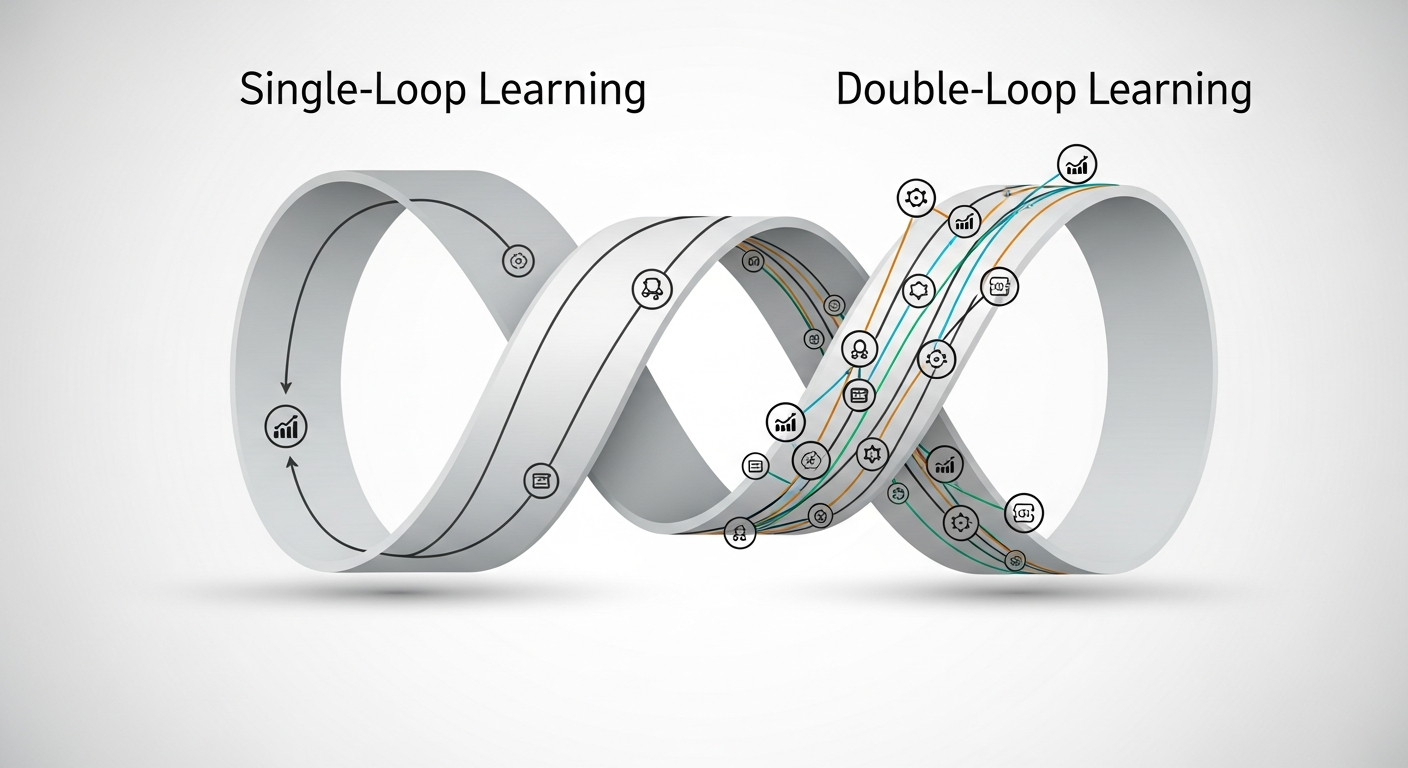
Single-Loop Learning is the most common form of organizational learning. It's about detecting and correcting errors within a given set of operating norms, policies, or goals. Think of it as adjusting the thermostat: when it's too cold, you turn up the heat to achieve the desired temperature, without questioning why the room got cold in the first place or if the thermostat is even in the right location. It’s primarily reactive and focuses on improving efficiency or compliance within existing frameworks.
Key Characteristics of Single-Loop Learning:
- Error Correction: Identifying a problem and implementing a solution based on current practices.
- Incremental Improvement: Focuses on making processes better, faster, or more cost-effective.
- Adherence to Norms: Assumes that the existing rules and goals are correct and effective.
- Examples: Updating compliance training modules after a regulatory change, refining sales scripts based on conversion rates, fixing a bug in a software application, or training employees on new safety protocols in mining.
For industries with strict regulations like Finance, Pharma, and Insurance, Single-Loop Learning is vital. It ensures immediate adherence to standards and quick fixes for operational issues. Delivering targeted, digestible content via a Microlearning LMS can effectively facilitate this type of learning, ensuring employees receive timely updates and skill refreshers.
Embracing Double-Loop Learning: The 'Why' and 'How' Approach
Double-Loop Learning goes a step further. It challenges the underlying assumptions, values, and policies that led to the error or problem in the first place. Instead of just adjusting the thermostat, Double-Loop Learning asks: "Why is the room cold? Is the thermostat accurate? Is the insulation adequate? Is this even the right heating system for our needs?" It’s reflective, critical, and often transformative.
Key Characteristics of Double-Loop Learning:
- Questioning Assumptions: Examining the fundamental beliefs and strategies that guide actions.
- Paradigm Shifts: Can lead to re-evaluation of goals, strategies, and even organizational culture.
- Innovation and Transformation: Fosters radical improvements and new ways of thinking.
- Examples: Rethinking an entire customer service strategy due to recurring complaints, redesigning product development processes after multiple market failures, or shifting from traditional sales methods to a completely new consultative approach based on evolving customer needs in Retail.
Double-Loop Learning is crucial for long-term organizational resilience and competitive advantage, especially in dynamic sectors like Health Care, Hospitality, and Sales. It's about learning how to learn, and challenging the status quo to adapt to unforeseen future challenges.
The Strategic Interplay: When and How to Apply Each
Neither Single-Loop nor Double-Loop Learning is inherently superior; their effectiveness lies in understanding when and how to apply each. An agile organization masters both.
- Use Single-Loop for: Routine problem-solving, immediate error correction, compliance updates, skill acquisition, maintaining standards, and optimizing existing processes.
- Use Double-Loop for: Addressing recurring systemic failures, strategic planning, fostering innovation, cultural transformation, navigating significant market shifts, and re-evaluating core business models.
For L&D leaders, the challenge is to cultivate an environment where both types of learning can flourish. This means providing tools for efficient skill mastery while also encouraging critical thinking, open dialogue, and a willingness to question deeply ingrained practices.
Integrating Advanced Learning Technologies for Enhanced Impact
Modern eLearning technologies are powerful enablers for both Single and Double-Loop Learning, allowing L&D departments to move beyond traditional training paradigms.
Enhancing Single-Loop Learning with Technology
Intelligent platforms play a pivotal role in optimizing the delivery of essential training updates for rapid competence improvement, ensuring that employees can quickly "fix" issues within existing frameworks.
- A Microlearning LMS is ideal for delivering precise, bite-sized content for immediate application. This is particularly effective for compliance training in Banking, new product features in Retail, or updated safety protocols in Oil & Gas.
- A Gamified LMS can provide immediate feedback and practice opportunities, allowing learners to correct mistakes in a low-stakes environment. This is perfect for sales teams honing negotiation skills or healthcare professionals practicing critical procedures.
Powering Double-Loop Learning with Intelligence
Advanced analytical capabilities are crucial for uncovering systemic issues and driving transformative organizational insights, pushing organizations beyond surface-level fixes.
- Adaptive Learning platforms can analyze learner performance not just on what they know, but on where they struggle and why. This data can then inform broader strategic discussions, identifying underlying knowledge gaps or process flaws that require a Double-Loop approach. For instance, if an adaptive system continually highlights issues with ethical decision-making among managers, it prompts a re-evaluation of the company's ethical guidelines and training philosophy, not just a refresher course.
- An AI Powered Authoring Tool empowers L&D teams to create highly dynamic and scenario-rich content that provokes critical thinking. Such tools can generate complex simulations for compliance scenarios, allowing learners to explore the consequences of different decisions and reflect on the ethical and strategic implications, rather than merely memorizing rules.
- Implementing Risk-focused Training, supported by intelligent analytics, helps organizations identify patterns of risk that point to deeper systemic issues. Instead of just training on how to avoid a specific type of fraud, it can prompt a re-evaluation of the entire risk management framework and corporate culture surrounding integrity, moving beyond symptom treatment to understanding root causes.
Real-World Impact Across Industries
Consider the impact across your industry:
- Compliance & Finance: Single-Loop ensures employees adhere to the latest AML regulations. Double-Loop might involve questioning if the internal culture or existing systems inadvertently encourage behaviors that lead to compliance breaches.
- Sales & Retail: Single-Loop refines sales pitches or customer service scripts. Double-Loop could mean rethinking the entire customer journey based on shifting demographics and purchasing behaviors.
- Healthcare: Single-Loop involves training on new surgical procedures or medication protocols. Double-Loop entails reassessing patient care models, inter-departmental collaboration, or hospital resource allocation based on long-term patient outcomes and staff well-being.
- Pharma: Single-Loop ensures adherence to drug development protocols. Double-Loop prompts a re-evaluation of R&D strategies or market entry approaches in response to disruptive technologies.
- Hospitality: Single-Loop trains staff on new check-in procedures. Double-Loop leads to a complete re-imagining of the guest experience or service delivery model in response to evolving travel trends.
Challenges and Best Practices for L&D Leaders
Cultivating both learning loops requires strategic leadership:
- Foster Psychological Safety: Create an environment where employees feel safe to admit errors and question assumptions without fear of reprisal.
- Develop Critical Thinking: Design learning experiences that encourage analysis, synthesis, and evaluation, moving beyond rote memorization.
- Measure Beyond Metrics: While KPIs are important for Single-Loop, Double-Loop success often requires qualitative insights into cultural shifts, innovation, and strategic adaptability.
- Champion Experimentation: Encourage pilot programs, iterative development, and learning from "failures" as opportunities for deeper insight.
Conclusion
Single-Loop and Double-Loop Learning are not opposing forces but complementary strategies for organizational mastery. For L&D leaders, the journey involves not just implementing effective training programs, but also nurturing a culture that embraces both efficient error correction and profound self-reflection. By strategically deploying modern eLearning technologies—from Microlearning platforms to Adaptive Learning and AI-powered tools—you can empower your organization to not only fix problems but to fundamentally evolve, ensuring resilience, innovation, and sustained success in an unpredictable future.
.jpg)


