

Mastering Memory: How Understanding The Curve Of Forgetting Transforms Corporate L&D
In the fast-paced corporate world, continuous learning is not just a benefit; it's a necessity. From staying compliant with regulations in Finance and Insurance to mastering new safety protocols in Mining and Oil & Gas, or adapting to cutting-edge treatments in Healthcare and Pharma, employees across all sectors are constantly bombarded with new information. Yet, a fundamental challenge persists: how much of this critical knowledge actually sticks? Enter the "Curve of Forgetting," a concept that has profound implications for how organizations design and deliver their learning and development (L&D) programs.
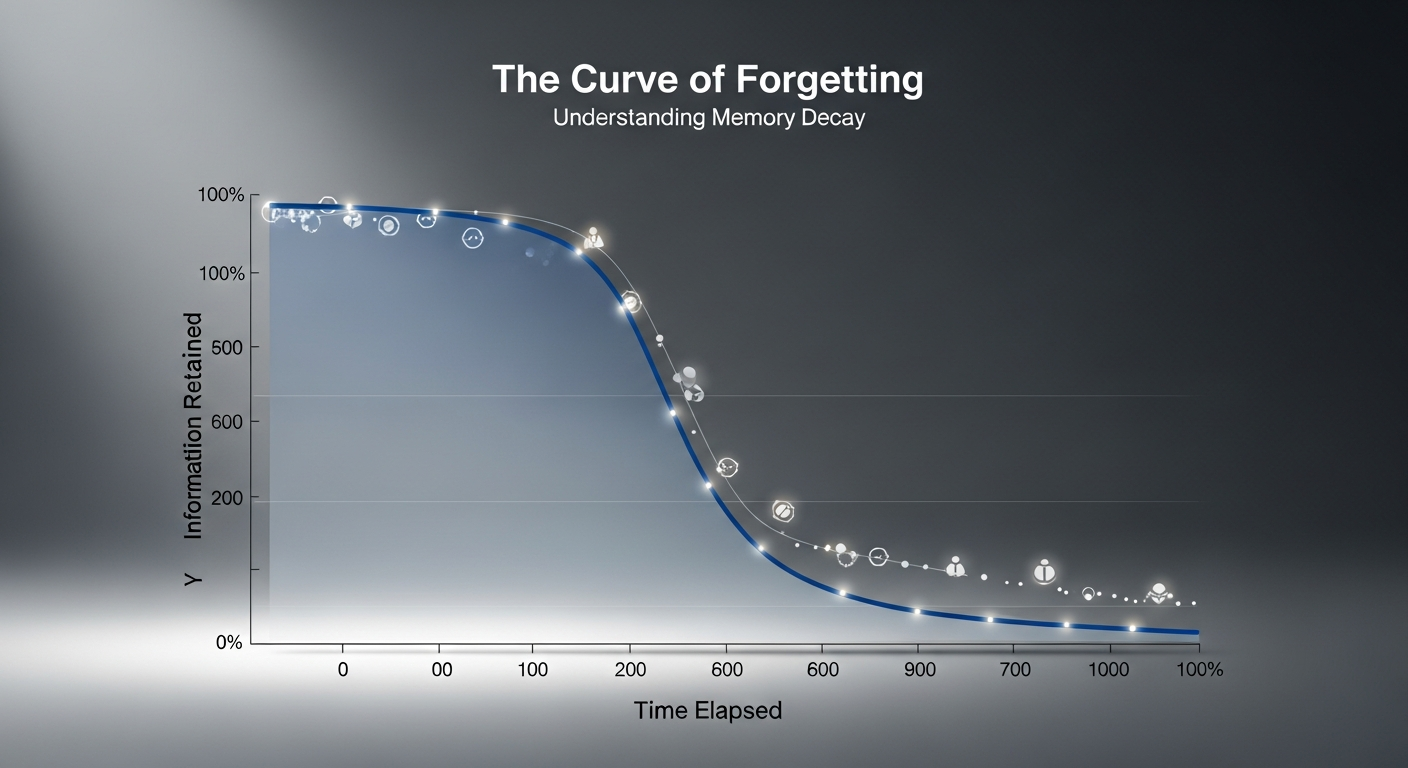
Originally theorized by German psychologist Hermann Ebbinghaus in the late 19th century, the Curve of Forgetting illustrates the rate at which memories are lost over time when there is no attempt to retain them. Ebbinghaus's groundbreaking research revealed that soon after learning new information, memory retention drops off dramatically, with a significant portion of what was learned being forgotten within days, sometimes even hours. For businesses investing heavily in employee training, this rapid decline represents a significant drain on resources and a tangible risk to performance, compliance, and innovation.
The Steep Decline: Unpacking the Curve of Forgetting
Imagine your employees attending a comprehensive training session. They might leave feeling confident and knowledgeable. However, without reinforcement, Ebbinghaus's curve predicts that within 24 hours, they could forget 50-80% of what they learned. Within a week, this figure can climb even higher. This isn't a failure of intelligence; it's a natural function of how the human brain processes and prioritizes information.
Several factors accelerate this memory decay:
- Lack of Relevance: Information perceived as irrelevant is quickly discarded.
- Information Overload: Too much new information at once overwhelms cognitive capacity.
- Passive Learning: Listening or reading without active engagement leads to poorer retention.
- Absence of Spaced Repetition: Without repeated exposure, memories fade.
- Emotional State: Stress or disinterest can significantly impair memory encoding.
Industry Impact: The Cost of Forgetting Across Sectors
The implications of the Curve of Forgetting are universal but manifest uniquely across different industries, posing distinct challenges and risks:
Finance, Insurance & Banking
- Compliance and Regulation: Employees must retain vast amounts of frequently updated regulatory information (e.g., KYC, AML, data privacy). Forgetting can lead to hefty fines, reputational damage, and legal repercussions.
- Product Knowledge: Forgetting complex financial products or insurance policies can result in mis-selling, poor customer advice, and lost revenue in Retail banking.
- Risk Management: Inadequate retention of risk assessment protocols can lead to critical errors and financial losses.
Retail
- Product Knowledge & Sales: Forgetting product features, benefits, or sales techniques directly impacts customer experience and sales figures.
- Customer Service: Poor retention of company policies or problem-solving procedures leads to frustrated customers and damaged brand loyalty.
- Seasonal Promotions: Rapid forgetting of new promotional details can hinder effective campaign execution.
Healthcare & Pharma
- Patient Safety & Protocols: Forgetting critical medical procedures, drug dosages, or safety protocols can have life-threatening consequences.
- New Treatments & Technology: The rapid evolution of medical science demands constant learning and retention of new information to ensure optimal patient care.
- Regulatory Adherence: Pharma employees must meticulously retain regulatory guidelines to ensure drug safety and compliance.
Mining & Oil & Gas
- Safety Procedures: Forgetting safety protocols, emergency responses, or equipment operating procedures can lead to catastrophic accidents, injuries, and environmental damage.
- Operational Efficiency: Retention of best practices for equipment maintenance, troubleshooting, and process optimization is crucial for minimizing downtime and maximizing output.
- Environmental Regulations: Adherence to complex environmental guidelines is critical; forgetting can result in severe penalties.
Fighting the Fade: Strategic L&D Interventions
Combating the Curve of Forgetting requires a proactive and strategic approach to L&D. Modern learning platforms and methodologies are designed to counter memory decay by reinforcing information and making learning more engaging and accessible.
Microlearning and Spaced Repetition
Breaking down complex topics into bite-sized, digestible modules delivered over time is a powerful antidote. This MaxLearn Microlearning Platform approach aligns perfectly with spaced repetition, where information is revisited at increasing intervals, strengthening neural pathways and transferring knowledge from short-term to long-term memory. It's particularly effective for busy professionals in any industry who need quick access to information without lengthy disruptions.
Engaging and Interactive Learning Experiences
Passive learning fuels forgetting. Engaging learners through interactive simulations, quizzes, and scenario-based training significantly improves retention. A Gamified LMS, for instance, transforms learning into an enjoyable and competitive experience, encouraging active participation and repeated engagement with content. This is invaluable for industries like Retail, where product knowledge and sales techniques benefit from active practice.
Personalized and Adaptive Learning Paths
Not all employees learn at the same pace or have the same knowledge gaps. Adaptive Learning platforms leverage data to understand individual learning patterns, strengths, and weaknesses. They then tailor content delivery, difficulty, and frequency to each learner, ensuring that reinforcement is provided precisely when and where it's needed most. This highly efficient approach prevents information overload and focuses efforts on critical areas, making it ideal for the intricate compliance requirements of Finance or the detailed procedures in Healthcare.
Contextual and Risk-focused Training
Learning is most effective when it's relevant to a learner's job role and immediate challenges. Risk-focused Training, for example, prioritizes critical safety, compliance, or operational procedures, embedding learning within real-world scenarios. This approach is paramount in high-stakes environments like Mining, Oil & Gas, and Pharma, where forgetting a single detail can have severe consequences. Furthermore, the development of such targeted content can be significantly streamlined using an AI Powered Authoring Tool, enabling L&D teams to quickly create and deploy relevant, high-quality learning materials.
Leveraging Artificial Intelligence for Smarter Learning
Artificial intelligence is rapidly transforming how we understand and combat the curve of forgetting. AI-driven L&D solutions offer unprecedented capabilities to personalize, optimize, and reinforce learning at scale.
Questions for enhancing knowledge retention:
Question: What strategies does advanced machine intelligence offer to improve knowledge retention in corporate settings?
Answer: Advanced machine intelligence provides several strategies. It can analyze learner performance data to predict individual forgetting curves, dynamically adjusting content delivery and review schedules (spaced repetition). AI can also personalize learning paths by identifying knowledge gaps and recommending targeted resources. Furthermore, natural language processing can be used to create intelligent chatbots that provide instant reinforcement or answer questions, acting as a constant, on-demand learning coach. This approach is highly effective for large workforces in Retail or Banking, where consistent knowledge application is key.
Globally optimized inquiries for L&D platforms:
Question: How can technology optimize learning effectiveness across diverse global teams?
Answer: Technology optimizes global learning effectiveness through several means. Automated translation services can make content accessible in multiple languages, while AI can adapt content to local cultural nuances and regulatory requirements. Cloud-based platforms ensure consistent access and delivery regardless of geographical location. Performance data from diverse regions can be aggregated and analyzed by AI to identify common learning challenges or best practices, allowing for continuous refinement of global L&D programs. This is crucial for international enterprises in Oil & Gas or Pharma, ensuring uniform compliance and operational standards worldwide.
Insights for individual learning outcomes:
Question: What intelligent insights can improve individual learning outcomes?
Answer: Intelligent insights derived from learning analytics can significantly improve individual outcomes. AI can track engagement levels, completion rates, assessment scores, and even sentiment analysis during learning. These insights help identify struggling learners, highlight specific areas of difficulty, and predict future performance. Based on this data, the system can automatically recommend remedial modules, assign mentorship, or offer alternative learning formats (e.g., video vs. text) to optimize the learning experience for each employee. This level of personalized insight is invaluable for developing highly skilled professionals in complex fields like Healthcare or sophisticated financial modeling.
Conclusion
The Curve of Forgetting is an inherent challenge in all learning, but it is not an insurmountable one. By understanding its mechanisms and strategically deploying modern L&D tools and AI-powered solutions, organizations can dramatically improve knowledge retention, boost performance, ensure compliance, and foster a culture of continuous learning. From the high-stakes environments of Mining and Healthcare to the dynamic markets of Retail and Finance, investing in intelligent learning solutions is not just about training; it's about building a resilient, knowledgeable, and future-ready workforce.
.jpg)


