

Unlocking Knowledge Retention: Understanding the Curve of Forgetting in Corporate Learning
In the fast-paced world of modern business, knowledge is power. From the intricate compliance regulations in banking and finance to life-saving procedures in healthcare and critical safety protocols in mining and oil & gas, employees across all industries are constantly challenged to acquire and retain vast amounts of information. Yet, a formidable cognitive barrier often stands in the way of true knowledge mastery: the curve of forgetting.
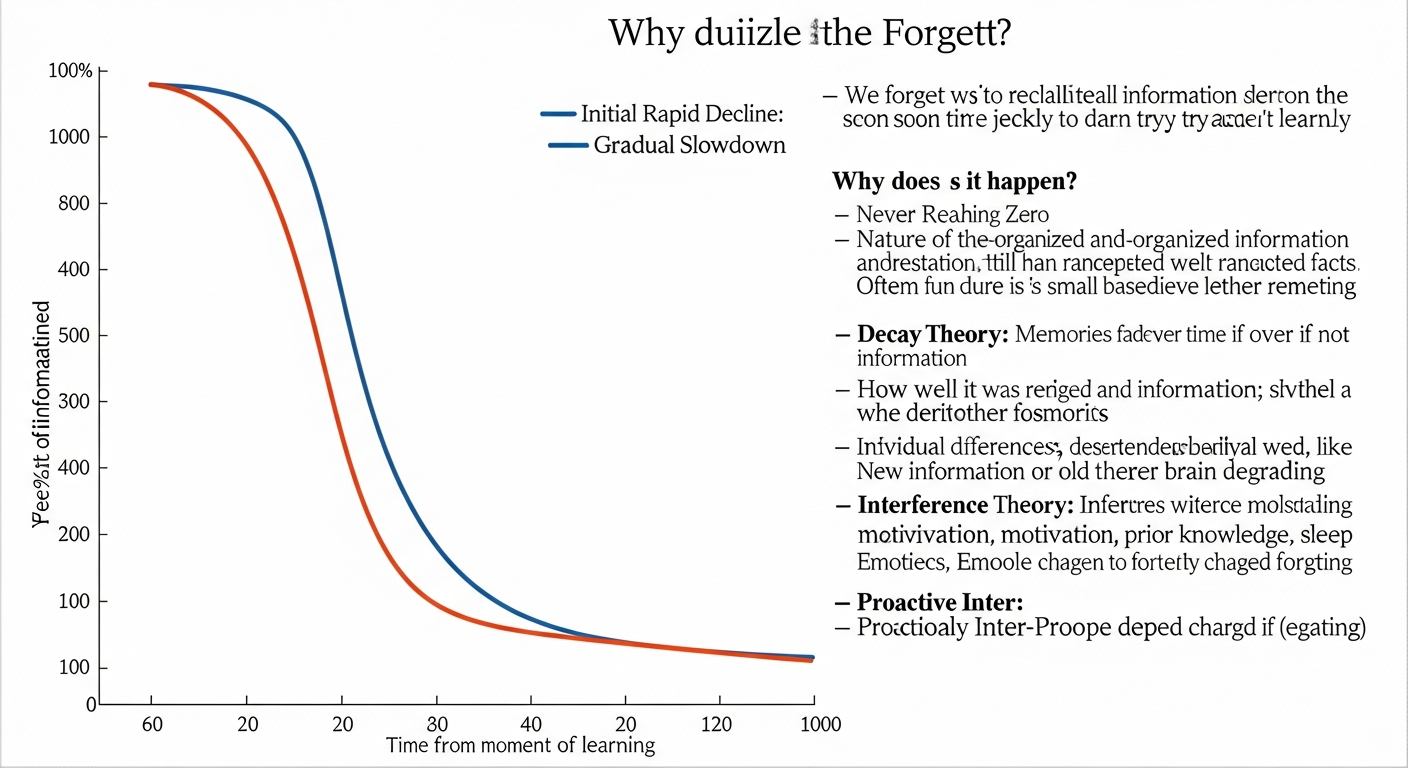
First theorized by German psychologist Hermann Ebbinghaus in the late 19th century, the curve of forgetting illustrates the rate at which newly acquired information is lost over time if there's no attempt to retain it. For Learning & Development (L&D) professionals, understanding this curve isn't just an academic exercise; it's a strategic imperative for ensuring that training investments translate into lasting knowledge, improved performance, and tangible business outcomes.
What Is The Curve Of Forgetting?
Hermann Ebbinghaus conducted pioneering experiments on memory, using himself as the sole subject and employing nonsense syllables to minimize prior associations. His groundbreaking work revealed a stark truth: memory decay is most rapid shortly after learning. Within just an hour, a significant portion of newly learned material can be forgotten, and this rate of loss continues, albeit at a slower pace, over subsequent days and weeks.
Imagine a typical corporate training session. An employee attends a workshop, absorbing new product features, updated financial regulations, or critical safety measures. According to Ebbinghaus's curve, without any reinforcement, much of that valuable information will have vanished from their active memory within a day or two. This isn't a sign of poor learning ability; it's a natural function of the human brain, which is constantly sifting through information and discarding what it deems irrelevant or unused.
Why Does It Matter To Your Industry?
The implications of the curve of forgetting are profound and far-reaching across diverse industries:
- Insurance, Banking, & Finance: Employees must maintain up-to-date knowledge on complex products, evolving regulatory frameworks (like KYC, AML), and risk management. Forgetting a key compliance detail can lead to severe penalties, financial loss, or reputational damage. Risk-focused Training is paramount here, demanding consistent reinforcement.
- Healthcare & Pharma: The stakes are literally life and death. Medical professionals need to recall accurate diagnostic procedures, drug dosages, patient safety protocols, and the latest research findings. Forgetting critical information can have catastrophic consequences for patient well-being.
- Retail: Sales associates need to remember an ever-expanding catalog of product features, promotional offers, customer service best practices, and POS system operations. Lack of recall impacts sales performance, customer satisfaction, and brand perception.
- Mining & Oil & Gas: Safety training is non-negotiable. Employees must remember emergency shutdown procedures, equipment operating guidelines, and hazard identification techniques. Forgetting can lead to accidents, injuries, or environmental disasters.
In every sector, the failure to counter the curve of forgetting translates into wasted training budgets, decreased productivity, increased errors, higher non-compliance rates, and ultimately, a direct hit to the bottom line.
Beating The Forgetting Curve: Modern L&D Strategies
Fortunately, L&D professionals are not powerless against the curve of forgetting. Modern learning methodologies, often powered by advanced technology, offer effective ways to reinforce knowledge and extend retention significantly.
Microlearning
Breaking down complex information into small, digestible chunks (2-5 minutes) that can be easily consumed on demand. This approach aligns perfectly with the brain's capacity for short bursts of focused attention and makes reinforcement easy to integrate into a busy workday. The MaxLearn Microlearning Platform is an excellent example of a system designed for this purpose.
Spaced Repetition
This technique involves reviewing learned material at increasing intervals over time. Instead of cramming, information is revisited just as it's about to be forgotten, strengthening neural pathways and transferring knowledge from short-term to long-term memory. Smart learning systems can automate this process.
Active Recall
Instead of passively rereading notes, active recall involves retrieving information from memory through self-testing, quizzes, or flashcards. This active effort strengthens memory traces and helps learners identify their knowledge gaps. Quizzes and interactive scenarios within learning modules are prime examples.
Gamification
Incorporating game-like elements such as points, badges, leaderboards, and challenges into learning modules can dramatically increase engagement and motivation. When learning feels like a game, employees are more likely to participate, revisit content, and compete to master knowledge. A Gamified LMS transforms the learning experience.
Adaptive Learning
Personalizing the learning experience based on an individual's unique needs, performance, and learning style. An Adaptive Learning system identifies what a learner knows and doesn't know, then tailors the content, pace, and sequence of instruction accordingly, ensuring that reinforcement is provided precisely where and when it's most needed.
The Role Of Intelligent Technology In Reinforcement
The advent of sophisticated technology, particularly in the realm of artificial intelligence, has revolutionized our ability to combat the curve of forgetting. These intelligent systems move beyond traditional, one-size-fits-all training to provide dynamic, personalized, and highly effective learning interventions.
How can advanced algorithms help ensure critical information is retained globally?
Intelligent systems can analyze individual learning patterns, predict an employee's specific forgetting points, and then push timely, relevant reinforcements. This approach transcends geographical boundaries by identifying universal knowledge gaps while simultaneously customizing content delivery based on regional needs or language preferences. This ensures that employees worldwide receive optimized learning interventions that adapt to their pace and understanding, significantly boosting retention. An AI Powered Authoring Tool can streamline the creation and localization of such dynamic content.
What smart technologies are available to tailor learning experiences for diverse workforces?
Modern learning platforms leverage data analytics and machine learning to craft highly personalized learning journeys. These systems can dynamically adapt the content's difficulty, format (e.g., video, text, interactive simulation), and frequency of reinforcement based on an individual's performance, role requirements, and existing knowledge base. For a diverse workforce, this means a learning path that is always relevant, engaging, and challenging in the right measure, making the process of knowledge acquisition and retention far more effective.
How do these sophisticated learning platforms contribute to tangible business results?
By significantly enhancing knowledge retention and accelerating skill development, these intelligent platforms lead directly to improved employee performance, a substantial reduction in errors, higher rates of compliance, and increased overall productivity. In the financial sector, better recall of compliance regulations can prevent costly fines. In retail, deeper product knowledge empowers sales associates to close more deals. For healthcare workers, consistent adherence to protocols translates to better patient outcomes and reduced medical risks. These platforms transform learning from a cost center into a strategic investment with a measurable return.
Implementing A Retention-Focused Learning Strategy
For organizations looking to build a truly resilient and knowledgeable workforce, integrating a strategy that specifically addresses the curve of forgetting is essential. Here are key steps:
- Assess Current State: Understand where your organization's knowledge gaps lie and how quickly critical information is forgotten.
- Choose the Right Tools: Invest in L&D platforms that offer microlearning, spaced repetition, gamification, and adaptive learning capabilities.
- Integrate Learning into Workflow: Make learning and reinforcement easily accessible and part of daily routines, not just isolated events.
- Measure and Iterate: Continuously track retention rates, performance improvements, and business outcomes to refine your L&D strategy.
Conclusion
The curve of forgetting is a fundamental challenge in human learning, but it is not an insurmountable one. By understanding its mechanisms and strategically deploying modern L&D methodologies—especially those enhanced by intelligent technologies—organizations across insurance, finance, retail, banking, mining, healthcare, oil & gas, and pharma can transform how their employees learn and retain crucial information. Moving beyond traditional training ensures that valuable knowledge persists, skills are sharpened, and businesses are empowered to achieve sustained success in an ever-evolving global landscape.
.jpg)


