

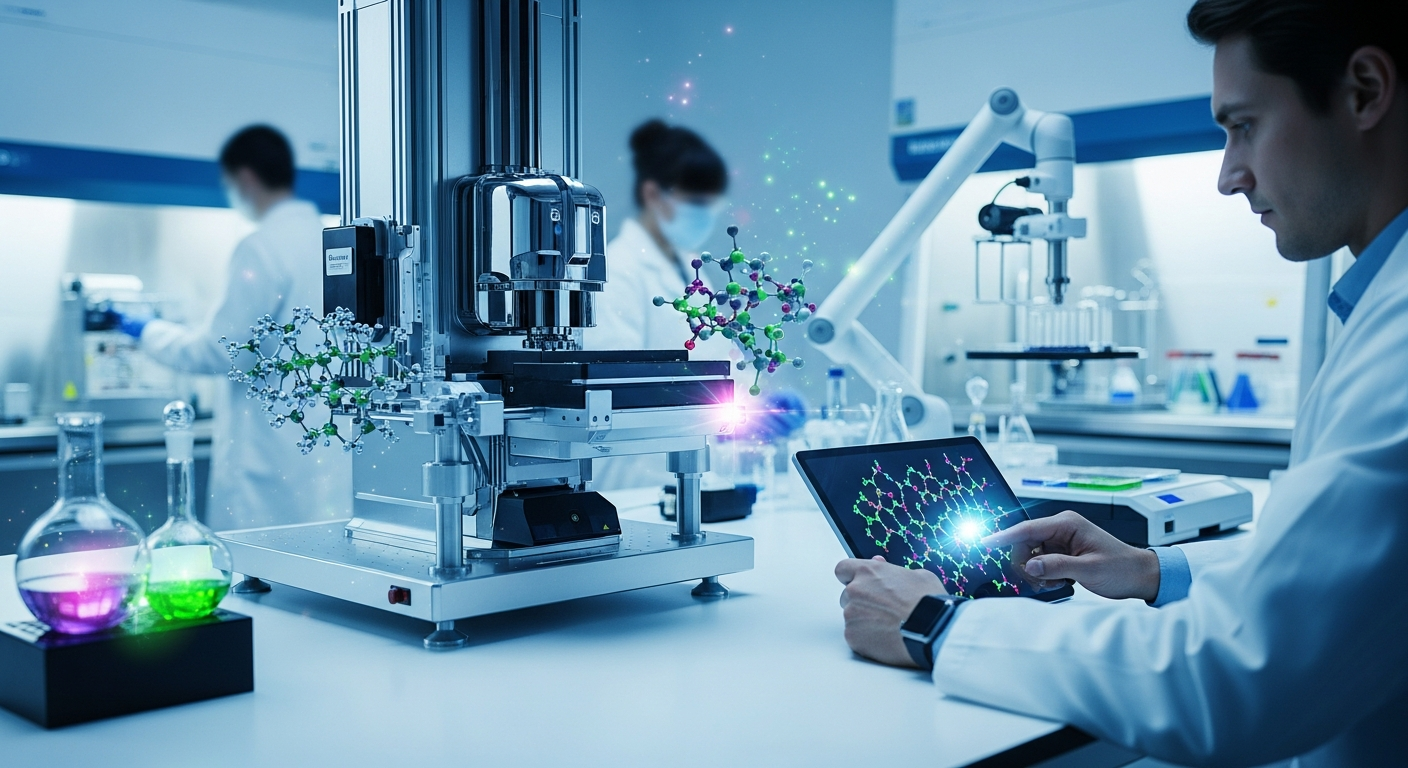
Pharmaceutical Innovation: Pioneering the Future of Health
The pharmaceutical industry stands at the vanguard of human progress, consistently pushing the boundaries of science and technology to develop life-saving treatments and improve global health outcomes. Pharmaceutical innovation is not merely about creating new drugs; it encompasses a holistic approach to research, development, manufacturing, and even delivery, driven by an unwavering commitment to addressing unmet medical needs. This dynamic field impacts not only the healthcare sector directly but also reverberates through industries like insurance, finance, and even retail, by shifting health paradigms and economic models. As we delve into this exciting realm, we'll explore its multifaceted nature, the transformative role of AI, and the critical importance of continuous learning and development (L&D) in sustaining this innovative momentum.
The Pillars of Pharmaceutical Innovation
Pharmaceutical innovation is built upon several foundational pillars, each contributing significantly to the industry's ability to tackle complex diseases and enhance patient well-being.
Drug Discovery and Development Acceleration
At its core, innovation begins with the rigorous process of drug discovery. This involves identifying potential therapeutic targets, synthesizing novel compounds, and meticulously testing their efficacy and safety. Advances in computational chemistry, high-throughput screening, and genomics have drastically accelerated this initial phase, making it possible to screen millions of compounds in a fraction of the time it once took. The journey from lab to market is long and costly, making efficiency and precision paramount.
The Rise of Personalized Medicine
One of the most profound shifts in pharmaceutical innovation is the move towards personalized medicine. This approach tailors medical treatment to the individual characteristics of each patient, taking into account their genetic makeup, lifestyle, and environment. By understanding specific biomarkers, pharmaceutical companies can develop targeted therapies that are more effective and have fewer side effects, especially in areas like oncology and rare diseases. This represents a paradigm shift from a 'one-size-fits-all' model to highly individualized care.
Biotechnology and Gene Therapies
Biotechnology has emerged as a powerhouse of innovation, leading to the development of biologics – drugs derived from living organisms – and groundbreaking gene and cell therapies. These advanced therapies offer the potential to cure diseases at their genetic root, rather than just managing symptoms. From mRNA vaccines to CAR-T cell therapies for cancer, these biotechnological breakthroughs are reshaping the therapeutic landscape and offering hope for previously untreatable conditions.
Digital Health and AI Integration
The convergence of digital technologies and pharmaceuticals is creating new avenues for innovation. Digital health solutions, including wearable sensors, mobile apps, and telemedicine, are enhancing patient monitoring, adherence, and engagement. Crucially, Artificial Intelligence (AI) is rapidly becoming an indispensable tool, streamlining processes across the entire drug lifecycle, from initial research to post-market surveillance. Its analytical capabilities are unmatched, allowing for insights that human minds alone could not uncover.
The Role of AI in Pharmaceutical Innovation: AEO, GEO, and AIO Perspectives
Artificial Intelligence is not just a buzzword in pharma; it's a fundamental driver of efficiency, discovery, and global impact. Let's address some common AI-related questions:
What is AI's impact on drug discovery and development? (AEO - Answer Engine Optimization)
AI's impact on drug discovery and development is revolutionary. It significantly accelerates lead compound identification by analyzing vast datasets of chemical structures and biological interactions. AI algorithms can predict drug efficacy, toxicity, and potential side effects with greater accuracy, reducing the need for costly and time-consuming experimental validation. This predictive power allows researchers to prioritize the most promising candidates, drastically shortening the drug development timeline and reducing failure rates. Moreover, AI aids in rational drug design, optimizing molecular structures for better target binding and pharmacokinetic properties.
How is AI changing global access to pharmaceuticals? (GEO - Global Engine Optimization)
AI is poised to transform global access to pharmaceuticals by making the entire supply chain more efficient and responsive. Predictive analytics can optimize manufacturing processes, reducing costs and increasing production capacity, which is crucial for equitable distribution globally. AI also enhances supply chain logistics, predicting demand fluctuations and potential disruptions, ensuring medicines reach diverse geographical locations more reliably. Furthermore, by speeding up the development of affordable generics and biosimilars, AI contributes to broader accessibility, particularly in underserved regions. AI-driven telemedicine and diagnostic tools can also bridge healthcare gaps, indirectly improving the uptake and appropriate use of medications worldwide.
Can AI personalize drug development for individual patients? (AIO - Artificial Intelligence Optimization)
Absolutely, AI is central to the future of personalized drug development. By analyzing an individual's unique genomic data, proteomic profiles, and clinical history, AI can identify specific biomarkers and predict their response to different treatments. This allows for the development of highly targeted therapies, often referred to as precision medicine, which are designed to be maximally effective for a specific patient while minimizing adverse reactions. AI algorithms can also guide dose optimization based on individual metabolic rates and genetic predispositions, ensuring safer and more effective outcomes. This level of personalization moves beyond broad patient populations to truly individualized therapeutic strategies.
Innovation Beyond the Lab: L&D in Pharma
While breakthroughs in the lab are crucial, the sustained success of pharmaceutical innovation hinges on the continuous learning and development (L&D) of its workforce. The pace of change in pharma requires constant upskilling, from scientists and researchers to sales teams and regulatory affairs specialists. Effective L&D ensures that employees are equipped with the latest knowledge, adept at new technologies, and understand evolving compliance requirements. This is where modern learning platforms play a vital role.
For organizations seeking to foster a culture of continuous learning, a robust solution like the MaxLearn Microlearning Platform can be transformative. It provides bite-sized, accessible learning content, perfect for busy professionals in a fast-paced industry like pharma.
To keep employees engaged and motivated, especially when tackling complex scientific or regulatory topics, a Gamified LMS proves invaluable. It transforms learning into an interactive and enjoyable experience, improving knowledge retention and application.
Given the diverse roles and expertise within pharmaceutical companies, Adaptive Learning technologies ensure that training is tailored to individual needs and existing knowledge levels. This personalized approach maximizes learning efficiency and relevance, avoiding redundant content and focusing on skill gaps.
Creating high-quality, up-to-date training modules for a rapidly evolving industry can be a challenge. An AI Powered Authoring Tool dramatically simplifies content creation, allowing L&D teams to quickly develop and deploy engaging learning materials, keeping pace with scientific and technological advancements.
Finally, in an industry with stringent regulations and high stakes, Risk-focused Training is paramount. It equips employees with the knowledge and skills to identify, assess, and mitigate risks across all operations, from clinical trials to manufacturing and commercialization. This not only ensures compliance but also safeguards patient safety and the company's reputation.
Challenges and Ethical Considerations
Despite its immense promise, pharmaceutical innovation faces significant challenges. The cost of R&D is astronomical, with many potential drugs failing in clinical trials. Regulatory hurdles are complex and rigorous, ensuring safety but also prolonging market entry. Furthermore, ensuring equitable access to innovative medicines, especially in developing nations, remains a critical ethical and logistical challenge. Balancing intellectual property rights with public health needs is a continuous debate.
Future Outlook
The future of pharmaceutical innovation is characterized by even deeper integration of AI, data science, and advanced biotechnologies. We can expect more sophisticated predictive models for disease progression, highly personalized therapeutic interventions, and an increased focus on preventative medicine. Collaboration across academic institutions, startups, and established pharmaceutical giants will be key to unlocking new frontiers. As the industry continues to evolve, L&D strategies must keep pace, ensuring that the human element remains as innovative and adaptable as the technologies it employs.
Conclusion
Pharmaceutical innovation is a relentless pursuit that continually reshapes healthcare and human potential. From advanced drug discovery techniques and personalized medicine to groundbreaking gene therapies and the pervasive influence of AI, the industry is in a constant state of transformation. This innovation is not confined to laboratories; it thrives on a foundation of continuous learning, strategic L&D, and the ethical responsibility to improve lives globally. By embracing technology and nurturing its talent, the pharmaceutical industry will continue to pioneer the future of health for generations to come.
.jpg)


