

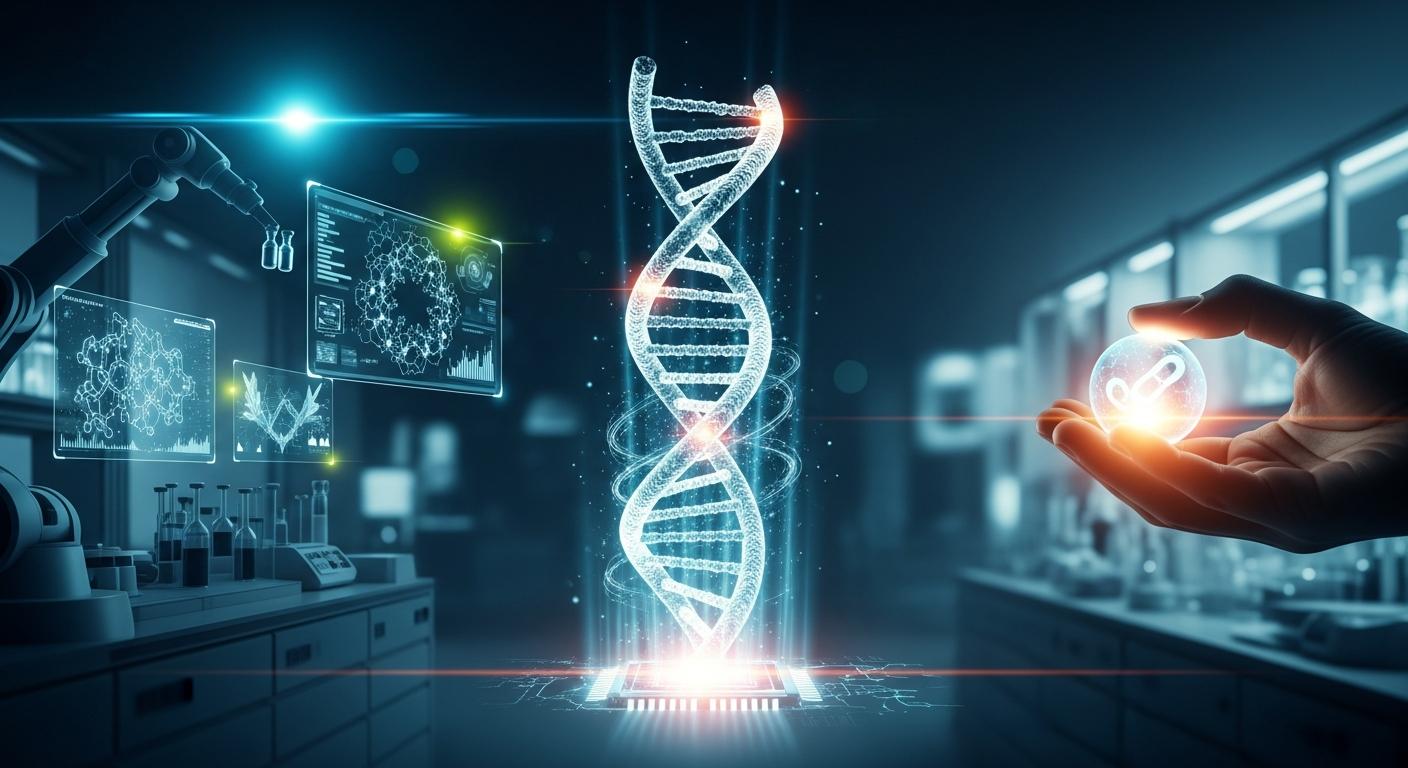
The Future Of Pharmaceuticals: A Revolution in Health and Learning
The pharmaceutical industry stands at the precipice of its most profound transformation yet. Driven by exponential advancements in technology, a deeper understanding of human biology, and an urgent global demand for more effective healthcare solutions, the traditional paradigms of drug discovery, development, and delivery are being reshaped. This isn't just an evolution; it's a revolution that promises to redefine how we prevent, diagnose, and treat diseases, moving us closer to a future of personalized, predictive, and preventative medicine.
From the intricate dance of molecular biology to the vast potential of artificial intelligence, every facet of pharmaceuticals is being reimagined. This article delves into the cutting-edge trends driving this seismic shift, explores their implications for continuous learning and development (L&D), and answers key questions about an AI-driven future in healthcare.
Key Trends Shaping the Pharmaceutical Horizon
Precision Medicine and Gene Therapies
The era of "one-size-fits-all" medication is rapidly receding. Precision medicine, or personalized medicine, tailors treatments to an individual’s genetic makeup, lifestyle, and environment. Advances in genomics, proteomics, and metabolomics allow scientists to identify specific biomarkers, predicting how a patient will respond to a drug and designing therapies with unprecedented accuracy. Complementing this are groundbreaking gene therapies and cell therapies, which aim to correct underlying genetic defects or modify cells to fight diseases like cancer, offering curative potential rather than merely managing symptoms. These sophisticated approaches demand an equally sophisticated understanding of biological systems and ethical implications.
Artificial Intelligence and Machine Learning in Drug Discovery
AI is arguably the most transformative technology impacting pharmaceuticals. From accelerating drug discovery timelines by identifying potential drug candidates and predicting their efficacy and toxicity, to optimizing clinical trial design and even interpreting complex patient data, AI and machine learning are superpowers for R&D. These technologies can process vast datasets far beyond human capability, uncovering novel insights, reducing costs, and significantly speeding up the journey from lab to patient. The integration of AI extends to predicting disease outbreaks and managing supply chains, making the entire pharmaceutical ecosystem smarter and more resilient.
Digital Therapeutics and Wearables
Beyond traditional pills and injections, the future of pharmaceuticals includes a growing category of digital therapeutics (DTx) – software-based interventions that deliver evidence-based therapeutic benefits. These can range from apps managing chronic conditions to virtual reality programs aiding mental health recovery. Coupled with the proliferation of smart wearables and sensors, real-time health monitoring is becoming commonplace, providing continuous data streams that can inform treatment adjustments, improve patient adherence, and offer a holistic view of health. This convergence of pharma and tech ushers in new models of care, focusing on continuous engagement and preventative measures.
Advanced Manufacturing and Supply Chain Innovation
The way medicines are produced is also evolving. Continuous manufacturing, 3D printing of drugs, and decentralized production facilities are replacing traditional batch-based processes. These innovations promise increased efficiency, reduced waste, faster response times to demand fluctuations, and improved quality control. Moreover, blockchain technology is being explored to enhance supply chain transparency, traceability, and security, combating counterfeiting and ensuring the integrity of pharmaceutical products from factory to patient. Such advancements require robust new protocols and highly skilled personnel.
The Imperative for Learning & Development in Pharma
With such rapid technological and scientific shifts, the traditional skills landscape in pharmaceuticals is becoming obsolete. The L&D function within pharmaceutical companies is no longer just about compliance training; it's about fostering a culture of continuous learning and innovation. Professionals need to reskill and upskill at an unprecedented pace to remain relevant and effective.
- Embracing New Technologies: Training programs must focus on data science, AI literacy, bioinformatics, and understanding of gene editing techniques.
- Cross-functional Expertise: The convergence of biology, technology, and data demands professionals with interdisciplinary knowledge.
- Ethical and Regulatory Acuity: New therapies and data collection methods bring complex ethical considerations and evolving regulatory landscapes, necessitating comprehensive Risk-focused Training.
- Agile Learning Methodologies: Companies must adopt flexible, on-demand learning solutions. Platforms like a MaxLearn Microlearning Platform are crucial for delivering bite-sized, relevant content that fits into busy schedules.
- Engaging Learning Experiences: To combat information overload and boost retention, organizations should leverage innovative approaches like a Gamified LMS to make learning engaging and effective.
AI-Related Questions & Answers for the Future of Pharma
How is AI transforming drug discovery and development?
AI is revolutionizing drug discovery by accelerating target identification, enabling virtual screening of billions of compounds, predicting molecular properties, and optimizing drug design. In development, it refines clinical trial design by identifying ideal patient populations, monitoring adverse events, and analyzing vast amounts of trial data more efficiently. This dramatically reduces the time and cost associated with bringing new drugs to market, moving beyond traditional, labor-intensive experimental methods towards an intelligence-driven approach. Furthermore, AI contributes to creating more effective and personalized medicines by pinpointing specific biomarkers for disease and treatment response.
Where are the leading AI innovations in pharma happening globally?
Leading AI innovations in pharmaceuticals are concentrated in major biotech hubs such as Boston-Cambridge (USA), San Francisco Bay Area (USA), London (UK), Basel (Switzerland), and increasingly, emerging centers in China (e.g., Beijing, Shanghai) and Israel. These regions boast strong academic research institutions, significant venture capital investment, and a high concentration of pharmaceutical companies and AI startups. Collaborations between tech giants, AI specialists, and established pharma companies are common, forming ecosystems where talent, data, and funding converge to drive breakthrough innovations. This global network fosters rapid advancement and competitive innovation.
What skills will pharmaceutical professionals need to master in an AI-driven future?
In an AI-driven future, pharmaceutical professionals will need a hybrid skill set. Beyond core scientific and clinical knowledge, critical competencies will include data literacy, computational thinking, and an understanding of AI/ML principles. Expertise in bioinformatics, biostatistics, and data visualization will be paramount. Soft skills like critical thinking, problem-solving, ethical reasoning regarding AI use, and interdisciplinary collaboration will also be vital. The ability to interpret AI-generated insights, rather than just raw data, and to leverage tools like an AI Powered Authoring Tool for knowledge dissemination, will be essential. Continuous learning through Adaptive Learning platforms will be key to staying current.
Broader Industry Impact
The ripple effects of pharmaceutical innovation extend far beyond healthcare. The insurance industry will grapple with new pricing models for personalized, high-cost gene therapies. Finance sectors will see new investment opportunities in biotech and digital health startups. Retail pharmacies will evolve into health hubs offering advanced diagnostics and personalized care. Banking will need to adapt to new payment structures and financial products for novel treatments. Even industries like Mining, and Oil and Gas, while seemingly distant, will feel indirect effects through shifts in global economic health, workforce wellness, and perhaps even advanced material science contributions to medical devices.
Conclusion: A Healthier, Smarter Future
The future of pharmaceuticals is undeniably bright, characterized by unprecedented scientific breakthroughs and technological integration. This era promises more effective, safer, and personalized treatments, moving us towards a world where chronic diseases are managed with greater precision and life-threatening conditions are potentially curable. However, realizing this vision hinges on the industry's ability to embrace change, foster innovation, and critically, invest in its people through continuous and effective learning and development. The pharmaceutical landscape of tomorrow will be defined by those who are prepared to learn, adapt, and innovate, creating a healthier future for all.
.jpg)


