

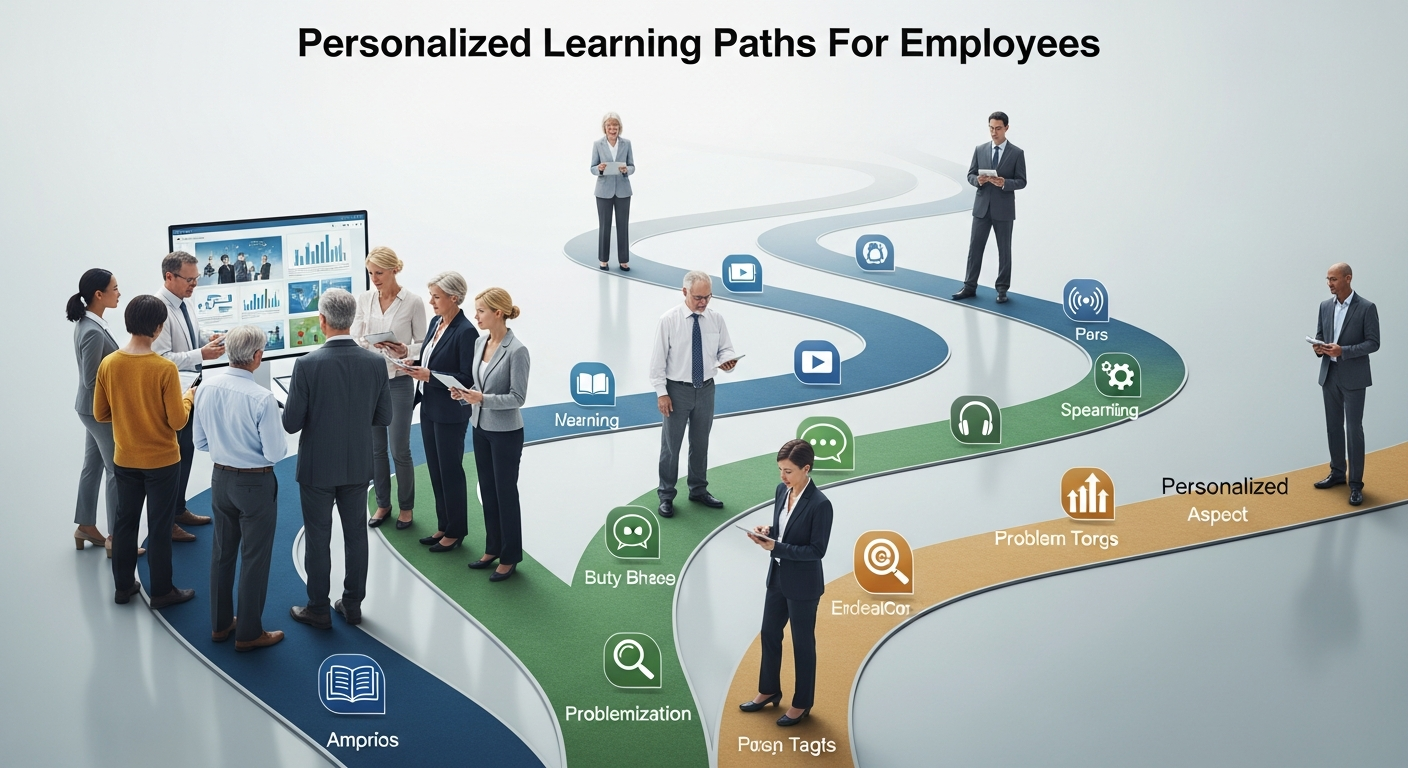
Personalized Learning Paths for Employees: The Future of Workplace Development
In today's rapidly evolving business landscape, the concept of "one-size-fits-all" training is becoming increasingly obsolete. Employees come from diverse backgrounds, possess varied skill sets, and have distinct career aspirations. To truly unlock their potential and drive organizational success, businesses must embrace a more tailored approach to development: personalized learning paths. This isn't just a trend; it's a strategic imperative that promises higher engagement, improved skill acquisition, and a more dynamic, future-ready workforce.
Personalized learning paths are dynamic frameworks designed to cater specifically to an individual employee's needs, learning style, pace, and professional goals. Instead of forcing everyone through the same generic training modules, these paths adapt, offering relevant content, experiences, and feedback that align with both personal growth ambitions and strategic business objectives. This article delves into why personalized learning paths are crucial, how they are constructed, the profound benefits they offer, and how modern technology can make them a reality.
Why Personalized Learning Paths Are Essential in Modern Business
The traditional approach to corporate training, often characterized by generic courses and infrequent sessions, struggles to keep pace with the demands of the modern workplace. Here's why personalized learning paths are not just beneficial, but essential:
- Addressing Diverse Needs: Every employee has unique strengths, weaknesses, and areas for development. Personalized paths ensure that training directly targets these individual requirements, preventing redundant learning and filling critical skill gaps efficiently.
- Increased Engagement & Motivation: When learning is directly relevant to an employee's role and career trajectory, their motivation skyrockets. They are more likely to invest time and effort into learning that they perceive as valuable and immediately applicable.
- Improved Skill Acquisition & Retention: Tailored content, delivered at an optimal pace and in preferred formats, significantly enhances comprehension and memory retention. This leads to more effective skill transfer to real-world tasks.
- Boosting Employee Satisfaction & Retention: Investing in an employee's personalized development demonstrates a commitment to their growth. This fosters loyalty, increases job satisfaction, and can significantly reduce turnover rates, which is a major cost saving for any organization.
- Alignment with Business Goals: By linking individual learning objectives to broader organizational strategies, personalized paths ensure that workforce development directly contributes to achieving company-wide goals, whether it's digital transformation, market expansion, or innovation.
The Core Components of an Effective Personalized Learning Path
Creating truly personalized learning paths requires a thoughtful, systematic approach, leveraging both human insight and technological capabilities. Key components include:
Individual Assessment and Goal Setting
The journey begins with understanding the individual. This involves a comprehensive assessment of current skills, competencies, and knowledge gaps. Tools like skill assessments, performance reviews, 360-degree feedback, and discussions with managers are crucial. Equally important is understanding the employee's career aspirations – where do they want to be in one, three, or five years? This combined data forms the foundation for setting clear, measurable, and achievable learning goals.
Content Curation and Delivery
Once goals are established, the next step is curating relevant learning content. This content must be diverse, high-quality, and delivered in formats that suit different learning styles. It could include microlearning modules, interactive simulations, virtual reality experiences, traditional courses, mentorship programs, project-based learning, or even external certifications. The key is flexibility and relevance. For instance, a modern MaxLearn Microlearning Platform can be instrumental in delivering bite-sized, digestible content that fits into busy schedules and enhances retention.
Leveraging Technology and Tools
Technology is the engine driving personalized learning. A robust Learning Management System (LMS) is foundational, but advanced features elevate personalization. Features like a Gamified LMS can boost engagement and motivate learners through points, badges, and leaderboards. Furthermore, Adaptive Learning technologies, often powered by AI, can dynamically adjust the learning content and pace based on the learner's performance and preferences, ensuring they receive the right challenge at the right time. An AI Powered Authoring Tool can dramatically speed up the creation of custom content, making it easier to populate diverse learning paths quickly and efficiently. For specific organizational needs, tools facilitating Risk-focused Training can ensure critical compliance and operational safety knowledge is accurately and effectively disseminated.
Continuous Feedback and Iteration
Personalized learning paths are not static; they are living documents that evolve. Regular feedback loops are essential, including progress tracking, post-module assessments, and real-time performance data. This feedback allows for continuous iteration, ensuring the path remains relevant and effective as the employee's skills develop and their goals potentially shift.
Benefits for Employees and Organizations
The advantages of personalized learning paths extend deeply into both individual employee experience and broader organizational performance.
For Employees:
- Enhanced Skill Sets: Direct focus on individual gaps leads to more relevant and impactful skill development.
- Clear Career Progression: Employees can visibly see how their learning contributes to their career goals within the company.
- Increased Job Satisfaction: Feeling invested in and supported in their growth leads to greater happiness and loyalty.
- Empowerment and Autonomy: Employees gain a sense of ownership over their professional development.
For Organizations:
- Higher Productivity and Performance: A more skilled and engaged workforce directly translates to better output and innovation.
- Reduced Turnover Rates: Employees are more likely to stay with companies that invest in their growth.
- Stronger Talent Pipeline: Personalized development cultivates internal talent, making succession planning more robust.
- Competitive Advantage: An adaptive, highly skilled workforce is better equipped to respond to market changes and outperform competitors.
- Improved ROI on Training: Funds are spent more efficiently on training that directly addresses needs and yields measurable results.
Implementing Personalized Learning Paths: Practical Steps
Adopting personalized learning paths requires a strategic shift, but the benefits far outweigh the initial effort. Here are practical steps for implementation:
- Conduct Thorough Needs Assessments: Utilize surveys, interviews, performance data, and skill matrices to identify individual and departmental learning needs.
- Define Clear Learning Objectives: Work with employees and managers to establish specific, measurable, achievable, relevant, and time-bound (SMART) goals for each learning path.
- Curate Diverse Content Resources: Assemble a rich library of learning materials, considering various formats and levels of difficulty.
- Invest in the Right Technology: Select an LMS that supports personalization, adaptive learning, and robust analytics. Consider platforms that offer features like gamification and AI-powered content creation.
- Foster a Culture of Continuous Learning: Encourage employees to take ownership of their development, provide dedicated time for learning, and celebrate learning achievements.
- Monitor, Measure, and Iterate: Regularly track progress, gather feedback, and analyze the impact of learning paths on performance and business outcomes. Be prepared to adjust paths as needs evolve.
The Future is Personalized
Personalized learning paths are more than just a buzzword; they represent a fundamental shift in how organizations approach employee development. By recognizing and nurturing the unique potential of each individual, businesses can cultivate a workforce that is not only highly skilled and adaptable but also deeply engaged and committed to organizational success. As technology continues to advance, the capacity for truly individualized and impactful learning experiences will only grow, making personalized learning paths an indispensable tool for any company looking to thrive in the future.
Embracing this approach is not just about training; it's about building a resilient, innovative, and human-centric organization ready for tomorrow's challenges.
.jpg)


