

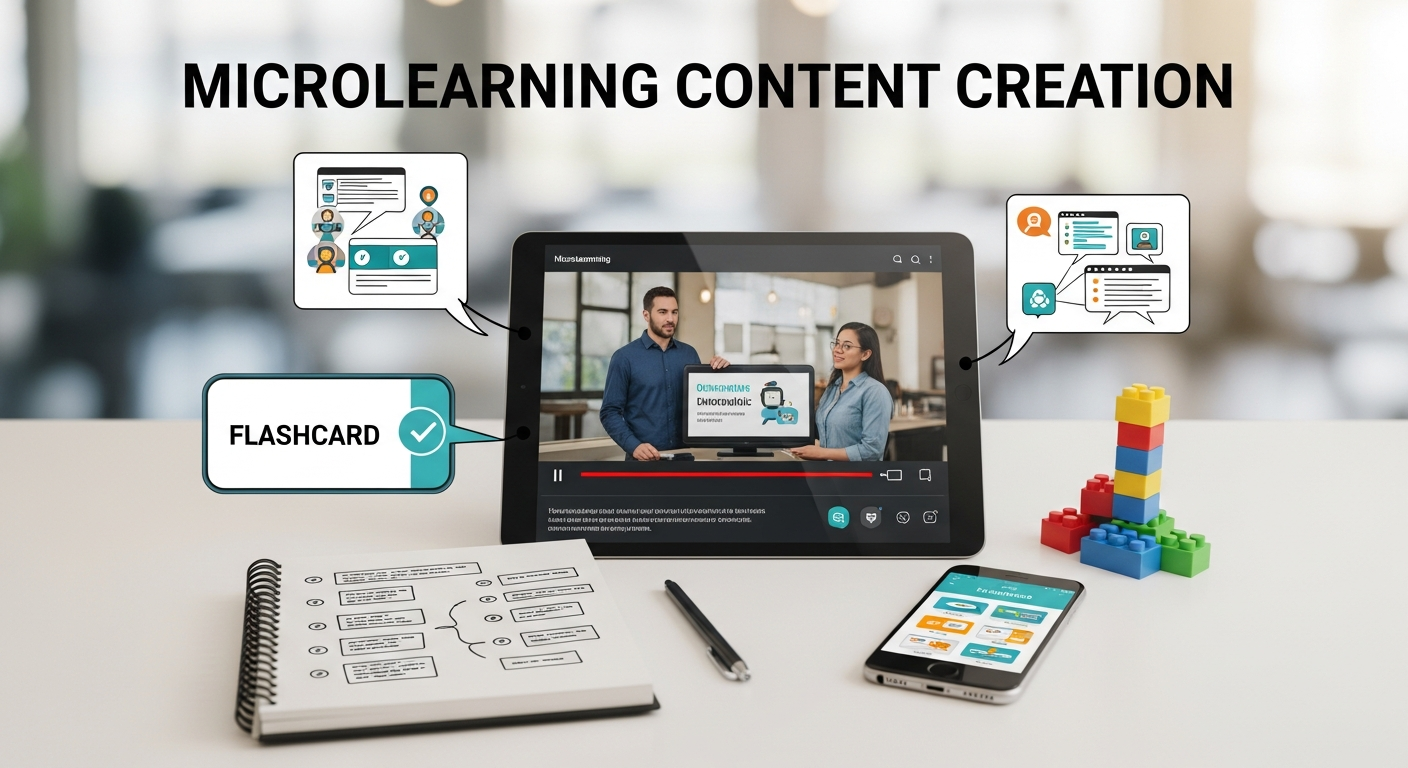
Mastering Microlearning Content Creation: Engage, Educate, Empower
In today's fast-paced digital world, attention spans are shrinking, and the demand for instant gratification is at an all-time high. This paradigm shift has profoundly impacted how we consume information and, consequently, how we learn. Traditional lengthy courses are giving way to bite-sized, digestible learning modules that cater to modern learners' needs. This is the realm of microlearning, and mastering microlearning content creation is no longer a luxury but a necessity for effective knowledge transfer and skill development.
Microlearning delivers short bursts of information, focused on a single learning objective, typically consumed in 1-10 minutes. Its power lies in its ability to integrate seamlessly into daily routines, making learning accessible, efficient, and highly engaging. But simply breaking down a long course isn't enough; true mastery of microlearning requires a strategic approach to content creation that prioritizes clarity, engagement, and practical applicability.
What is Microlearning Content?
Microlearning content is characterized by its brevity, focus, and immediate relevance. It's not just about making content shorter; it's about making it smarter. Each piece of microlearning content should address a specific learning outcome, providing just enough information to achieve that goal without overwhelming the learner. This could take the form of short videos, interactive quizzes, infographics, flashcards, short text modules, simulations, or even brief game-based scenarios.
The essence of effective microlearning content creation is to distill complex topics into their most fundamental components, ensuring each component can stand alone while also contributing to a broader understanding. This approach significantly boosts knowledge retention and application because learners can focus on one concept at a time, reinforcing it before moving on.
Why is Effective Microlearning Content Creation Crucial?
The benefits of well-crafted microlearning content extend beyond mere convenience:
- Increased Engagement: Short, focused modules prevent cognitive overload and maintain learner interest, making the learning process enjoyable ratheraredPreferences
- Higher Retention Rates: By focusing on one concept at a time and allowing for immediate practice or application, microlearning reinforces memory and improves long-term retention.
- Improved Application: Learners can immediately apply what they've learned to real-world scenarios, bridging the gap between theory and practice.
- Flexibility and Accessibility: Microlearning content can be accessed anytime, anywhere, on any device, fitting into busy schedules and diverse learning environments.
- Cost-Effective and Scalable: Developing and updating smaller modules can be more efficient and cost-effective than overhauling entire lengthy courses, making it scalable for large organizations.
Key Principles of Microlearning Content Creation
To truly excel in microlearning content creation, several core principles must guide your strategy:
1. Chunking and Focus
This is the bedrock of microlearning. Break down larger topics into their smallest, most discrete learning units. Each unit should address a single objective. For instance, instead of a module on "Sales Techniques," create separate micro-modules on "Opening a Sales Call," "Handling Objections," or "Closing Strategies."
2. Engagement and Interactivity
Passive learning yields poor results. Integrate interactive elements like quizzes, drag-and-drop exercises, polls, and simulations. Storytelling and real-world examples can also make content more relatable and engaging. Remember, active participation is key to retention.
3. Relevance and Practicality
Every piece of microlearning content must have immediate value and be directly applicable to the learner's role or challenges. Answer the "what's in it for me?" question upfront. Content should solve a problem or teach a skill that can be put into practice immediately.
4. Variety in Formats
Different learning objectives and learner preferences call for different formats. Utilize a mix of videos, infographics, short articles, podcasts, interactive simulations, and quick assessments. This keeps the learning experience fresh and caters to diverse learning styles.
5. Accessibility and Mobile-First Design
Learners often access microlearning on their mobile devices during commutes or short breaks. Ensure your content is responsive, loads quickly, and is easy to navigate on smartphones and tablets. Consider aspects like text size, button placement, and media optimization.
The Process of Creating Microlearning Content
A systematic approach is vital for efficient and effective microlearning content creation:
1. Define Clear Learning Objectives
Before you create anything, clearly define what the learner should be able to do after completing the micro-module. Use action verbs and make objectives measurable. This singular focus will guide all subsequent content decisions.
2. Break Down Complex Topics
Start with your macro-topic and progressively break it down into smaller and smaller sub-topics until each sub-topic can be covered in a short, focused learning burst. Map out the dependencies between these micro-units.
3. Choose the Right Format
Once you have your objective and content, select the most appropriate format. Is a short instructional video best for demonstrating a software feature? Is an infographic ideal for explaining a process flow? Would a quiz effectively test knowledge recall?
4. Craft Engaging Content
Write concisely, use strong visuals, and maintain a conversational tone. Avoid jargon where possible. Focus on storytelling, examples, and scenarios that resonate with your target audience. Every word and visual element should contribute to the learning objective.
5. Incorporate Interactivity and Assessment
Design in opportunities for learners to interact with the content and test their understanding. Immediate feedback on quizzes or activities is crucial for reinforcing learning. This also provides valuable data on learner progress.
6. Test and Iterate
Pilot your microlearning content with a small group of target learners. Gather feedback on clarity, engagement, and effectiveness. Be prepared to refine and iterate based on their input to ensure the content meets its objectives.
Leveraging Technology for Microlearning Content Creation
The right technological infrastructure can dramatically streamline and enhance your microlearning content creation efforts. Platforms designed specifically for microlearning provide powerful tools to create, manage, and deliver engaging content.
A robust MaxLearn Microlearning Platform can serve as the central hub for all your learning initiatives. These platforms often come equipped with features that simplify content authoring, deployment, and tracking. For instance, an AI Powered Authoring Tool can significantly reduce the time and effort involved in content development, helping convert existing materials into microlearning formats or generating new content outlines based on learning objectives.
Furthermore, integrating elements like a Gamified LMS can elevate engagement by introducing points, badges, leaderboards, and challenges, making the learning journey more motivating and enjoyable. When combined with an Adaptive Learning approach, the platform can personalize content delivery based on individual learner performance and preferences, ensuring each learner receives the most relevant and impactful micro-modules.
For specialized needs, such as ensuring compliance or preparing for specific challenges, dedicated applications like Risk-focused Training can be built and delivered through these advanced microlearning ecosystems. This targeted training ensures that critical information reaches the right people at the right time, minimizing exposure and strengthening organizational resilience.
Best Practices for Ongoing Microlearning Success
- Keep it Concise: Always ask if something can be explained in fewer words or a shorter clip. Less is often more.
- Emphasize Visuals: High-quality images, infographics, and short videos are far more engaging than dense text.
- Mobile-First Mindset: Design all content with mobile device consumption in mind.
- Regular Updates: Learning content, especially in rapidly evolving fields, needs to be updated frequently to remain relevant.
- Collect Feedback: Implement mechanisms for learners to provide feedback on the content, helping you continuously improve.
- Integrate with Workflow: Position microlearning as a performance support tool, readily available when learners need information most.
Conclusion
Microlearning content creation is a powerful strategy for modern education and corporate training. By focusing on brevity, engagement, and relevance, organizations can empower learners with knowledge that is easy to digest, remember, and apply. As technology continues to evolve, the tools and platforms available for crafting and delivering microlearning content will only become more sophisticated, opening new avenues for personalized and impactful learning experiences. Embrace microlearning, and unlock the full potential of your learners in an ever-changing world.
.jpg)


