

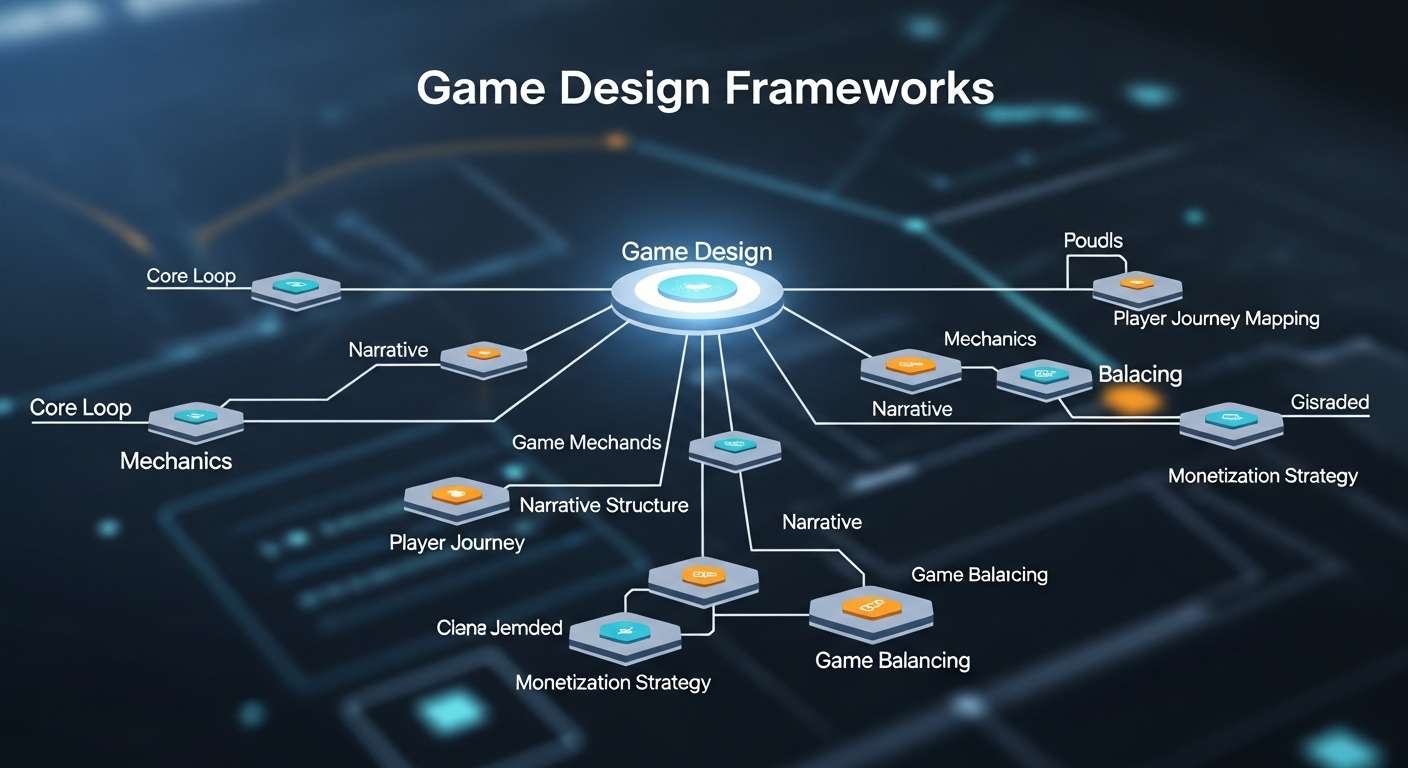
Unlocking Creativity: The Power of Game Design Frameworks
In the vast, imaginative landscape of game development, creativity is often seen as the sole fuel driving innovation. While inspiration is undoubtedly vital, the journey from a nascent idea to a compelling, polished game requires more than just raw genius. It demands structure, methodology, and a shared understanding – in short, it demands game design frameworks. These frameworks are not rigid handcuffs on creativity but rather the scaffolding that allows ambitious structures to be built, tested, and refined. They provide a common language, a set of principles, and a systematic approach to tackle the complex, multi-faceted challenge of crafting engaging interactive experiences.
From indie darlings to AAA blockbusters, successful games often owe their cohesion and player appeal to an underlying framework that guided their creation. This article will delve into what game design frameworks are, why they are indispensable, explore some popular methodologies, and discuss how these principles extend beyond traditional gaming into areas like modern learning platforms.
What Exactly Are Game Design Frameworks?
At its heart, a game design framework is a structured approach or a conceptual model that helps designers organize their thoughts, analyze game elements, and make informed decisions throughout the development process. Think of it as a comprehensive toolkit or a strategic blueprint. Instead of haphazardly throwing ideas together, a framework provides a lens through which to view and dissect a game, ensuring that all its components work harmoniously towards a common goal: creating an enjoyable and meaningful player experience.
These frameworks help articulate the often-abstract elements of gameplay into concrete, manageable parts. They provide a systematic way to think about player motivation, interaction mechanics, aesthetic presentation, and the overall emotional journey a player undertakes. By employing a framework, designers can move beyond mere intuition, applying analytical rigor to their creative endeavors.
The Core Benefits of Using a Game Design Framework
Adopting a game design framework offers a multitude of advantages that can significantly impact the success and efficiency of a project:
Structure and Clarity
Frameworks bring order to chaos. They help designers break down complex problems into smaller, more manageable components, providing a clear roadmap from concept to completion. This structured thinking ensures that no critical aspect is overlooked and that the design process remains organized and coherent.
Efficiency and Productivity
By providing a predefined structure and common guidelines, frameworks streamline the design process. They reduce guesswork and rework, allowing teams to iterate faster and make more effective use of their time and resources. This leads to more efficient development cycles and quicker progression towards a final product.
Consistency and Quality
A well-applied framework ensures that the game's various elements – mechanics, story, art, and sound – are consistent and aligned with the overarching vision. This consistency results in a higher quality, more polished, and cohesive player experience, free from jarring disconnects.
Facilitating Collaboration
For development teams, frameworks serve as a common language and a shared mental model. They enable designers, artists, programmers, and producers to communicate effectively, understand each other's contributions, and work collaboratively towards a unified goal. This shared understanding is crucial for large-scale projects.
Risk Mitigation
By encouraging a systematic analysis of game elements and potential interactions, frameworks help identify potential design flaws or experiential issues early in the development cycle. This proactive identification allows for adjustments before problems become deeply embedded and costly to fix, thereby aligning with principles of Risk-focused Training by anticipating challenges and preparing solutions.
Popular Game Design Frameworks and Methodologies
Several influential frameworks have emerged over the years, each offering a unique lens through which to view game design:
MDA Framework (Mechanics, Dynamics, Aesthetics)
One of the most widely adopted frameworks, MDA (Mechanics, Dynamics, Aesthetics) offers a way to analyze games from both the designer's and the player's perspective. Mechanics are the rules and components of the game. Dynamics are the emergent behaviors that arise from the mechanics when players interact with them. Aesthetics are the emotional responses evoked in the player through gameplay. This framework helps designers ensure that their intended emotional experience is actually produced by the game's systems.
Elemental Tetrad (Jesse Schell)
Proposed by Jesse Schell in "The Art of Game Design," the Elemental Tetrad breaks a game down into four fundamental elements: Mechanics, Story, Aesthetics, and Technology. Mechanics define how the player interacts with the game. Story provides narrative context. Aesthetics cover how the game looks, sounds, and feels. Technology refers to the underlying tools and code. This framework emphasizes balancing these four aspects to create a cohesive and engaging experience.
Player-Centric Design
This overarching philosophy places the player at the absolute center of the design process. Instead of focusing solely on features, player-centric design prioritizes understanding player needs, motivations, and behaviors. It involves extensive user research, usability testing, and iterative feedback loops to ensure the game resonates deeply with its intended audience, similar to the personalized approach of Adaptive Learning.
Gamification Frameworks
While not strictly for designing games, gamification frameworks apply game design elements and game principles in non-game contexts to engage users and solve problems. These frameworks often consider elements like points, badges, leaderboards, progress bars, and challenge systems to motivate desired behaviors. They are particularly relevant in areas like education and corporate training, often implemented within a Gamified LMS to boost engagement.
Design Thinking for Games
Borrowed from product design, Design Thinking is a human-centered approach to innovation. Its five stages – Empathize, Define, Ideate, Prototype, and Test – can be robustly applied to game design. It encourages deep understanding of players, clear problem definition, creative brainstorming, rapid prototyping, and continuous testing, ensuring the final game genuinely meets player needs and desires.
Integrating Frameworks with Modern Learning Platforms
The principles derived from game design frameworks are not confined to entertainment; they are profoundly applicable to other fields, especially in designing effective learning experiences. Modern platforms increasingly leverage these frameworks to create engaging, memorable, and impactful training content.
For instance, the MaxLearn Microlearning Platform exemplifies how structured design can revolutionize education. By applying elements similar to those found in game design, MaxLearn creates learning modules that are not only informative but also inherently engaging. The focus on short, digestible content is enhanced by thoughtful design that considers player (learner) motivation and progression, much like a well-designed game keeps players hooked.
Frameworks help instructional designers articulate learning objectives, design interactive elements, and create feedback loops that mirror the dynamics of successful games. A Gamified LMS, for example, uses points, levels, and challenges, all derived from game design principles, to make learning more enjoyable and effective. This approach understands that human motivation responds well to clear goals, immediate feedback, and a sense of achievement.
Furthermore, frameworks underpin the development of personalized learning paths, supporting Adaptive Learning systems. By structuring content based on learner performance and preferences, just as a game adapts to player choices, learning platforms can deliver highly relevant and effective education. Tools like an AI Powered Authoring Tool can integrate these framework-driven design principles directly into content creation, automating the application of proven engagement techniques. This ensures that every piece of content, whether a simple quiz or a complex simulation, is crafted with an understanding of how to maximize learner engagement and retention, and effectively supports initiatives like Risk-focused Training by presenting crucial information in an accessible and compelling manner.
Choosing the Right Framework
There is no one-size-fits-all framework. The choice often depends on the project's scope, the team's expertise, the game's genre, and the target audience. Some projects might benefit from a holistic approach like the Elemental Tetrad, while others might require the granular analysis offered by MDA. Many successful teams even combine elements from multiple frameworks, adapting them to their unique needs. The key is flexibility and a willingness to iterate and refine the chosen approach throughout development.
Conclusion
Game design frameworks are not constraints on creativity but powerful tools that channel it into structured, effective development. They provide the analytical lens, the common language, and the methodical approach needed to transform abstract ideas into tangible, engaging experiences. Whether you are crafting the next big video game or designing an innovative learning curriculum on a platform like MaxLearn, embracing a well-chosen framework can elevate your project from a good idea to an exceptional reality, ensuring that every element contributes to a cohesive, enjoyable, and impactful user journey.
.jpg)


