

Mastering the Art of Play: A Comprehensive Guide to Game Design Frameworks
Game design is often perceived as a blend of artistic vision and technical prowess, a magical process that transforms abstract ideas into engaging interactive experiences. While creativity is undoubtedly at its heart, the most successful games are built upon a foundation of structured thinking and systematic planning. This foundation is what we call a Game Design Framework – a systematic approach that guides developers from initial concept to a polished, player-ready product. Far from stifling creativity, a robust framework provides the essential scaffolding upon which innovative ideas can truly flourish.
In this article, we'll delve deep into the world of game design frameworks, exploring what they are, why they're crucial, and how they empower designers to craft experiences that captivate and delight players. Whether you're an aspiring game developer, an industry veteran, or simply curious about the magic behind your favorite games, understanding these frameworks is key to appreciating the intricate craft of interactive entertainment.
What Exactly is a Game Design Framework?
At its core, a game design framework is a structured methodology or a set of guidelines that help designers organize their thoughts, articulate their vision, and systematize the development process. It's a conceptual tool that breaks down the complex task of game creation into manageable components, ensuring that every aspect, from core mechanics to narrative arcs, is considered and thoughtfully integrated.
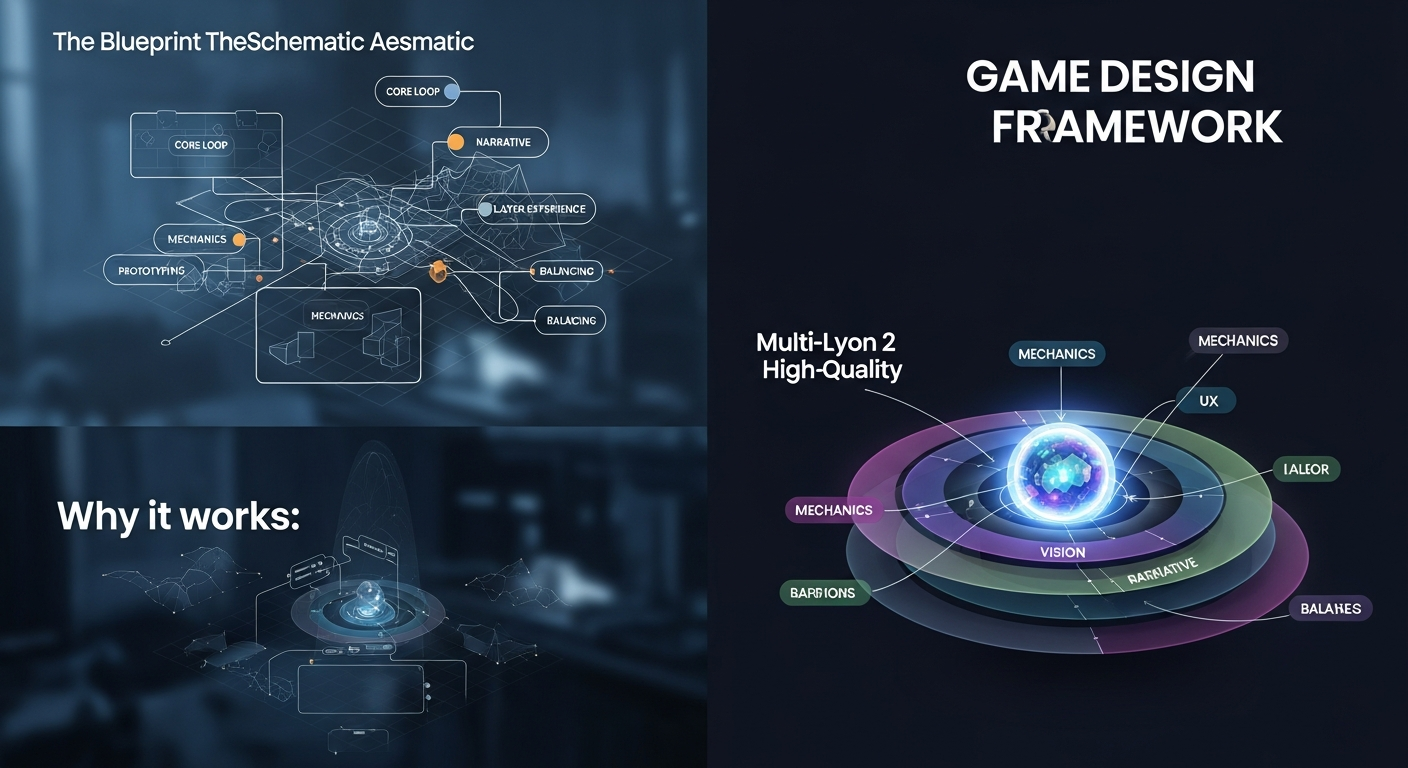
Think of it as the blueprint for an architectural masterpiece. An architect doesn't just start building; they design, plan, and create detailed schematics. Similarly, game designers use frameworks to define the game's purpose, target audience, core gameplay loop, aesthetic choices, and technological requirements. This systematic approach fosters consistency, facilitates communication among team members, and provides a roadmap for development, minimizing potential pitfalls and maximizing creative potential.
Key Components of an Effective Game Design Framework
While frameworks can vary in their specifics, most encompass several fundamental elements that are critical to a game's success. Understanding these components is the first step toward building a compelling interactive experience.
Core Mechanics
These are the fundamental rules, actions, and systems that define how players interact with the game world. What does the player do? How do they achieve objectives? What are the inputs and outputs? Identifying and refining the core mechanics – the moment-to-moment gameplay – is paramount. This includes movement, combat, puzzle-solving, resource management, and any other direct interactions that form the game's backbone.
Narrative and Theme
The story, world-building, characters, and overall aesthetic theme contribute significantly to player immersion and emotional connection. A strong narrative can provide context for gameplay, drive player motivation, and create a memorable experience. Even games without explicit stories often rely on a compelling theme or setting to establish mood and atmosphere.
User Experience (UX) and Interface (UI)
How players navigate the game world, understand information, and interact with menus and displays is crucial. A well-designed UX ensures the game is intuitive and enjoyable, reducing frustration. The UI acts as the player's window into the game, providing essential information clearly and aesthetically. Poor UX/UI can break even the most innovative gameplay.
Progression and Pacing
Games need a sense of progression to keep players engaged over time. This involves how challenges escalate, new abilities are unlocked, and the story unfolds. Pacing refers to the rhythm of the game – moments of intense action followed by periods of calm, discovery, or narrative exposition. A balanced progression and pacing curve keeps players hooked without overwhelming or boring them.
Monetization Strategy (if applicable)
For many commercial games, understanding how the game will generate revenue is an integral part of the design. This could involve premium purchases, in-app purchases, subscriptions, or advertising. The monetization model needs to be integrated thoughtfully into the game's design, ensuring it enhances rather than detracts from the player experience.
Technical Considerations
The choice of game engine, target platforms, hardware requirements, and performance optimization are practical considerations that directly impact design decisions. A framework helps ensure that creative ambitions align with technical realities, preventing scope creep and ensuring a feasible development path.
Popular Game Design Frameworks and Methodologies
Over the years, various frameworks have emerged, each offering a slightly different lens through which to view game design. Understanding some of the most influential ones can provide valuable insights.
MDA Framework (Mechanics, Dynamics, Aesthetics)
The MDA framework is a widely recognized model that analyzes games from three perspectives:
- Mechanics: The rules, systems, and algorithms of the game. (e.g., "Player jumps when X is pressed.")
- Dynamics: The emergent behaviors and interactions that arise from the mechanics in play. (e.g., "Players discover a new speed-running technique by combining jumps and dashes.")
- Aesthetics: The emotional responses and experiences evoked in the player. (e.g., "The player feels a sense of triumph after overcoming a difficult boss.")
This framework is powerful because it highlights the often-complex relationship between what designers create (mechanics) and what players experience (aesthetics), mediated by the dynamic emergent gameplay.
Elemental Tetrad
Developed by Jesse Schell, the Elemental Tetrad breaks down game design into four interconnected elements:
- Aesthetics: How the game looks, sounds, smells, tastes, and feels. (Visuals, audio, haptic feedback.)
- Mechanics: The procedures, rules, and core interactions.
- Technology: The underlying hardware and software that make the game possible. (Engine, platform, coding.)
- Story: The narrative, plot, characters, and world lore.
The strength of the Elemental Tetrad lies in emphasizing that a change in one element will invariably affect the others, promoting a holistic design approach.
Other Approaches: Lean, Agile, and Player-Centric Design
Beyond specific frameworks, methodologies like Lean Development (focus on continuous iteration and minimizing waste) and Agile Development (flexible, iterative design cycles) are widely adopted in game studios. Player-centric design, which puts the player's needs and experiences at the forefront of every decision, is an overarching philosophy that can be integrated into any framework, ensuring the final product truly resonates with its audience.
The Importance of a Robust Framework
Adopting a game design framework offers numerous benefits that streamline development, enhance creativity, and ultimately lead to better games.
Clarity and Vision
A framework helps articulate a clear vision for the game. It ensures that everyone on the development team – designers, artists, programmers, sound engineers – understands the core concept, objectives, and intended player experience. This shared understanding minimizes misinterpretations and keeps the project aligned with its original goals.
Efficiency and Iteration
By breaking down design into manageable components, frameworks facilitate an iterative development process. Designers can prototype specific mechanics, test them, gather feedback, and refine them without disrupting the entire project. This efficiency is critical in a fast-paced industry where ideas need to be tested and validated quickly.
Player Engagement and Retention
A well-applied framework considers all aspects of player psychology, motivation, and interaction. This leads to games that are not only fun but also deeply engaging, offering satisfying progression, meaningful challenges, and compelling experiences that encourage long-term play. By systematically analyzing how mechanics lead to dynamics and evoke specific aesthetics, designers can intentionally craft experiences that resonate with players.
Mitigating Risks
Game development is inherently risky. Frameworks help identify potential design flaws, technical hurdles, or market mismatches early in the process. By systematically addressing each component, teams can make informed decisions, adjust strategies, and Risk-focused Training can even benefit from game design principles to prepare for unforeseen challenges, significantly reducing the likelihood of project failure.
Applying Game Design Principles Beyond Games
The power of game design frameworks isn't confined to the entertainment industry. The principles of engagement, motivation, and systematic design are increasingly being leveraged in other fields, particularly in education and corporate training.
Gamification in Learning
Educational platforms are adopting game design frameworks to make learning more interactive and effective. Concepts like progression, rewards, feedback loops, and challenges, staples of game design, are being integrated into learning experiences. Platforms like the MaxLearn Microlearning Platform exemplify this, utilizing gamified elements to boost learner engagement and knowledge retention. A Gamified LMS (Learning Management System) uses these frameworks to transform mundane learning into an exciting journey, complete with badges, leaderboards, and interactive modules that drive motivation.
Adaptive Learning and AI
Modern learning platforms are also incorporating advanced technologies, guided by principles akin to game design frameworks. Adaptive Learning tailors content and difficulty to individual learner needs, much like a well-designed game adjusts to player skill. Furthermore, an AI Powered Authoring Tool, using design frameworks, can help create engaging, personalized learning content at scale, mirroring how game engines facilitate complex world-building and dynamic gameplay experiences.
Conclusion
A game design framework is more than just a set of rules; it's a powerful methodology that empowers designers to translate abstract concepts into tangible, engaging, and memorable interactive experiences. From clarifying vision and enhancing efficiency to fostering player engagement and mitigating risks, its benefits are undeniable.
Whether crafting the next blockbuster video game or designing an innovative learning platform, the systematic thinking provided by these frameworks is invaluable. They serve as a constant reminder that while creativity sparks the idea, structure and thoughtful design are what bring that idea to life, ensuring that every element contributes to a cohesive, compelling, and ultimately successful product. By embracing a robust game design framework, creators can elevate their craft and truly master the art of play.
.jpg)


