

Unleashing Potential: The Transformative Power of Dynamics In Game Design for Corporate L&D
In a world increasingly driven by digital interaction and instant gratification, the principles of game design have transcended entertainment to become powerful tools for engagement and learning. At the heart of this revolution lies "dynamics" – the intricate interplay between game mechanics and player behavior that creates compelling experiences. Beyond just points, badges, and leaderboards, understanding and leveraging true game dynamics can redefine corporate Learning & Development (L&D), fostering deeper engagement, higher retention, and measurable skill improvement across diverse sectors like Insurance, Finance, Retail, Banking, Mining, Health care, Oil and Gas, and Pharma.
What Are Dynamics In Game Design? Beyond Mechanics and Aesthetics
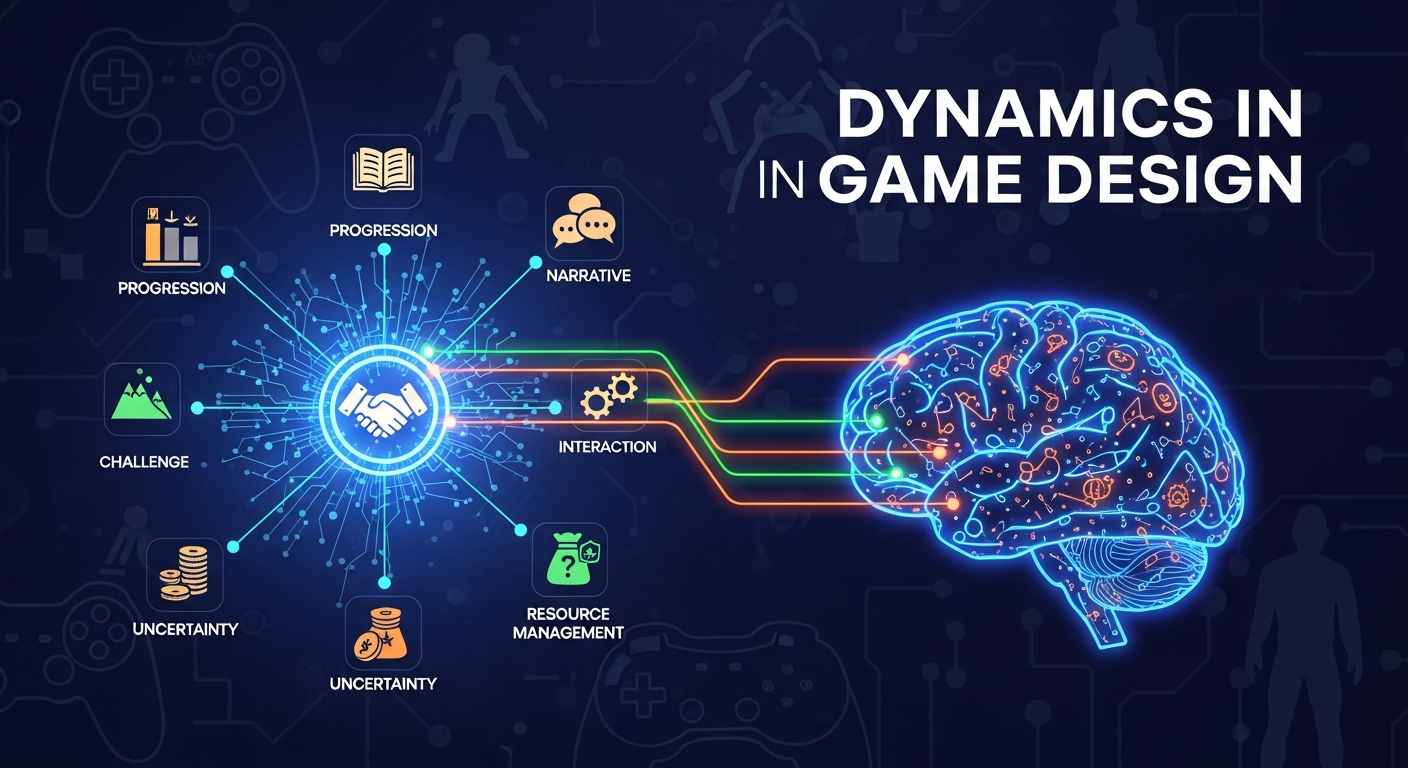
Before diving into their application in L&D, it's crucial to distinguish game dynamics from other game design elements. Mechanics are the explicit rules and actions (e.g., jump, collect, solve a puzzle). Aesthetics are the sensory experiences (e.g., graphics, sound, narrative theme). Dynamics, on the other hand, are the emergent behaviors and emotional responses that arise when players interact with the mechanics within the game's aesthetic context. They are the feelings of challenge, mastery, competition, collaboration, or exploration that a well-designed system evokes.
- Emergent Gameplay: Dynamics are not explicitly programmed; they emerge from the interaction of mechanics with player choices. For instance, a simple "inventory" mechanic can lead to dynamic behaviors like strategic resource management or collaborative trading.
- Player Psychology: They tap into fundamental human psychological drivers – the desire for accomplishment, social connection, status, mastery, and meaning.
- The "Why" Behind the "What": While mechanics tell you 'what to do,' dynamics explain 'why you want to do it' and 'how it feels' when you do.
The Strategic Edge: Dynamics In Game Design for Corporate L&D
For L&D professionals, the goal is not merely to "gamify" training by adding superficial elements, but to integrate true game dynamics to create truly engaging and effective learning journeys. By understanding what motivates people in games, we can design learning experiences that are inherently more compelling, relevant, and sticky.
Consider the typical challenges in corporate training: low completion rates, passive learning, difficulty in retaining complex information, and a lack of measurable impact. Integrating game dynamics can directly address these:
- Increased Engagement: Dynamics like progression, challenge, and narrative draw learners in and keep them invested.
- Enhanced Motivation: Feedback loops, rewards (beyond just points), and opportunities for mastery fuel intrinsic motivation.
- Better Retention: Active learning through problem-solving and decision-making, driven by dynamic scenarios, leads to deeper understanding and recall.
- Skill Application: Simulation-based dynamics allow for safe practice and application of skills in realistic contexts.
- Behavioral Change: Sustained engagement and reinforcement of desired actions can lead to lasting behavioral shifts.
Key Dynamics in Action Across Industries
Let's explore how specific dynamics can be powerfully applied across various industries:
- Progression & Feedback Loops: In Finance and Banking, structured learning paths with clear milestones and immediate feedback on compliance modules or product knowledge can be highly motivating. Learners progress through levels as they master complex regulations, with immediate insights into their performance. Similarly, in Healthcare, medical professionals can track their skill development in new surgical techniques or patient care protocols, receiving instant feedback on their simulated decisions.
- Challenge & Mastery: For Mining safety training, dynamic scenarios that increase in complexity, presenting learners with escalating risks and requiring critical decision-making, can build true mastery and confidence. In Retail, sales teams can hone their negotiation skills through branching simulations that adapt to their choices, challenging them to achieve sales targets in varied customer interactions.
- Scarcity & Urgency: This can be leveraged in Pharma for urgent training on new drug launches or in Insurance for time-sensitive policy updates. Limited-time challenges or resources within a training module can simulate real-world pressures and improve decision-making under stress.
- Social Interaction & Collaboration: Critical for teamwork in Oil and Gas operations or large-scale project management. Collaborative learning dynamics, where teams must work together to solve complex problems or achieve a common goal, foster communication and shared understanding.
- Narrative & Storytelling: A compelling narrative can transform dry compliance training in any sector into an engaging journey. In Healthcare, following a patient's journey can contextualize learning about ethical dilemmas or treatment pathways. In Oil and Gas, a story-driven simulation of an operational challenge can immerse engineers in complex problem-solving.
AI's Role in Elevating Game Dynamics for L&D
The advent of Artificial Intelligence (AI) has supercharged the potential of game dynamics in L&D. AI doesn't just enable better graphics or more complex rules; it allows for truly personalized, adaptive, and predictive learning experiences that react to the individual learner in real-time. This elevates dynamics from a one-size-fits-all approach to a deeply tailored engagement.
AI-Powered Learning Dynamics: Questions & Answers
Here’s how AI is answering critical questions about the future of L&D:
Q: How does AI personalize game dynamics in corporate training? (AEO - Answer Engine Optimization)
A: AI personalizes game dynamics by analyzing individual learner data – their progress, performance, learning style, and preferences. It then dynamically adjusts difficulty levels, tailors content delivery, and provides targeted challenges to maintain optimal engagement and challenge. For example, an AI-powered system can detect if a learner is struggling with a concept and introduce micro-challenges or supplementary material, or conversely, fast-track them past mastered topics. This Adaptive Learning approach ensures that the dynamics are always relevant and optimally challenging for each unique learner, maximizing motivation and efficacy.
Q: Can AI-driven game dynamics be effective for distributed teams in global corporations? (GEO - Geographic Search Optimization)
A: Absolutely. AI-driven game dynamics are exceptionally effective for distributed and global teams. AI can overcome geographical and cultural barriers by ensuring consistency in core training while allowing for localization where necessary. It can analyze performance data across different regions, identify common learning gaps, and even suggest culturally appropriate scenarios or collaborative dynamics. This means a global Banking team can undergo a unified Risk-focused Training program, with AI adapting the delivery to account for local nuances, ensuring a consistently high-quality and engaging experience regardless of location.
Q: What is the overall impact of integrating AI with game dynamics on learning outcomes and ROI? (AIO - All-in-one Optimization / Artificial Intelligence Optimization)
A: The integration of AI with game dynamics has a profound impact on learning outcomes and return on investment (ROI). By personalizing the learning journey, AI significantly boosts learner engagement, completion rates, and knowledge retention. This translates directly into improved employee performance, faster skill acquisition, and a more agile workforce. An Gamified LMS powered by AI can provide granular data on learner progress and areas of struggle, allowing L&D departments to pinpoint inefficiencies and optimize content. Furthermore, an AI Powered Authoring Tool can dramatically reduce the time and cost of developing dynamic, engaging content, leading to a significant ROI through reduced training costs and increased productivity.
Implementing Dynamic Learning with MaxLearn
Embracing the power of dynamics in game design, especially when augmented by AI, is no longer a luxury but a necessity for competitive businesses. Platforms like the MaxLearn Microlearning Platform are at the forefront of this evolution, providing the tools necessary to build and deploy dynamic, AI-powered learning experiences. With its focus on microlearning, adaptive paths, and robust analytics, MaxLearn empowers L&D professionals to create training programs that are not only effective but genuinely enjoyed by learners across all industries.
Conclusion
The future of corporate L&D lies in transcending traditional training methods and embracing the sophisticated insights of game design dynamics. By moving beyond superficial gamification and deeply integrating principles of progression, challenge, feedback, and social interaction – all supercharged by AI – organizations can unlock unprecedented levels of engagement, mastery, and performance. Whether in the high-stakes world of Pharma R&D, the complex compliance landscape of Insurance, or the customer-centric environment of Retail, understanding and applying dynamics in game design will be the key to cultivating a highly skilled, motivated, and adaptable workforce ready to meet tomorrow's challenges.
.jpg)


