

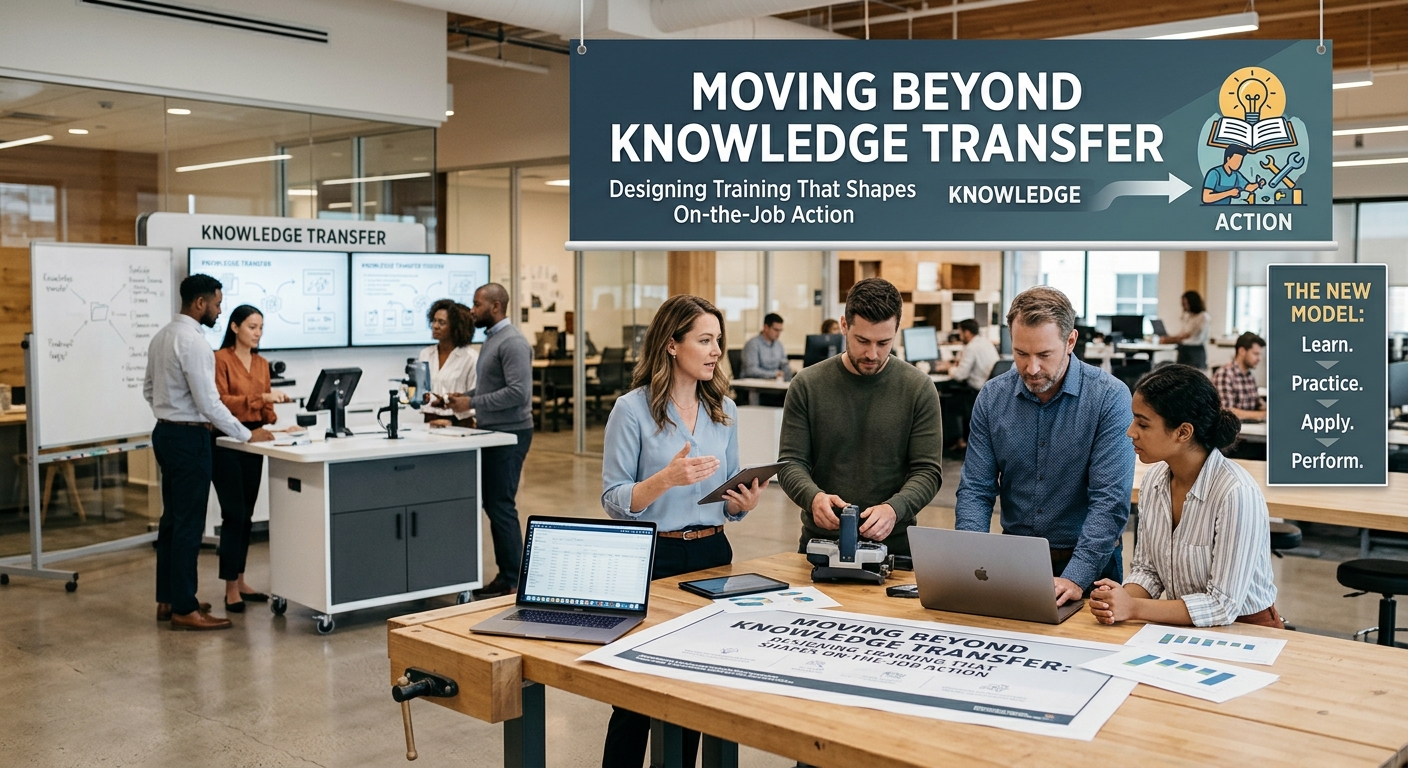
Moving Beyond Knowledge Transfer: Designing Training That Shapes On-the-Job Action
In the dynamic landscape of modern business, the traditional model of corporate learning—focused primarily on imparting knowledge—is increasingly falling short. For Vice Presidents, Directors, and Senior Managers in L&D, the challenge is clear: how do we transition from simply delivering information to designing training that genuinely shapes on-the-job action, drives measurable performance, and secures a tangible return on investment? The answer lies in a strategic evolution, moving beyond passive consumption to active application, powered by innovative methodologies and robust technology.
Consider the core objective of any corporate training initiative: to equip employees with the skills, behaviors, and understanding necessary to excel in their roles and contribute to organizational success. Yet, all too often, training programs deliver content that, while informative, fails to translate into sustained behavioral change or improved performance once learners return to their daily tasks. This disconnect represents a significant drain on resources and a missed opportunity for growth across sectors like Compliance, Sales, Banking, Finance, Insurance, Retail, Pharma, Health care, Hospitality, Oil and Gas, and Mining.
The Imperative for Action-Oriented Training
The pace of change, driven by technological advancements and market shifts, demands more than just knowledge. It requires agility, critical thinking, and the ability to apply learning in complex, real-world scenarios. How can L&D leaders ensure their training investments translate directly into improved employee performance and critical business results? The answer demands a paradigm shift from merely imparting information to meticulously designing experiences that compel and equip learners to act differently.
For example, in a sales environment, knowing product features is one thing; effectively overcoming objections and closing a deal is another. In compliance, understanding regulations is vital, but consistently adhering to those rules in daily operations is paramount. This gap between 'knowing' and 'doing' is where action-oriented training proves its invaluable worth.
The Pitfalls of Traditional Knowledge Transfer
Traditional training often prioritizes content delivery over behavioral outcomes. Lecture-based formats, lengthy e-learning modules, and generic assessments typically focus on recall rather than application. The issues include:
- Lack of Context: Information is presented in isolation, making it difficult for learners to connect it to their specific job functions.
- Passive Consumption: Learners absorb content without actively engaging with it, leading to low retention and even lower application rates.
- One-Size-Fits-All: Generic training ignores individual learning styles, prior knowledge, and specific role requirements, reducing relevance.
- No Reinforcement: Without ongoing practice, feedback, and support, new behaviors quickly erode.
Across which industries are leading organizations effectively bridging the gap between learning content and real-world application, driving tangible improvements in areas like compliance adherence or sales effectiveness? From Banking and Pharma to Retail and Oil and Gas, the common thread is a strategic investment in robust learning management solutions that prioritize performance over passive consumption.
Principles of Designing for On-the-Job Action
Moving beyond basic knowledge transfer requires a deliberate design philosophy focused on application. Here are key principles:
1. Performance-Centric Objectives: Begin by defining the specific actions or behaviors you want learners to exhibit post-training, not just what knowledge they should acquire. What will they do differently?
2. Experiential Learning: Incorporate simulations, role-playing, case studies, and practical exercises that mimic real-world scenarios. Learners develop skills by doing, making mistakes, and receiving immediate feedback.
3. Spaced Repetition and Reinforcement: Learning isn't a one-time event. Utilize Microlearning LMS strategies to deliver bite-sized content at opportune moments, reinforcing key concepts and behaviors over time.
4. Immediate Application Opportunities: Design training so that learners can apply what they've learned almost immediately after the session. This could involve mini-projects, guided practice, or job aids.
5. Feedback and Coaching: Provide structured opportunities for feedback from peers, managers, or automated systems. Coaching is crucial for guiding learners in refining their actions.
6. Adaptive Pathways: Recognize that not all learners start from the same point or require the same path. How can we personalize learning paths to drive immediate behavioral change across diverse roles and skill levels within a large enterprise? The answer lies in leveraging advanced learning technologies.
Leveraging Technology for Impactful Training
The right learning content management system is not just a repository; it's an ecosystem designed to facilitate actionable learning. A modern enterprise learning management system plays a pivotal role:
Advanced Learning Management Solutions:
A sophisticated LMS or lms learning management system provides the framework for delivering, managing, and tracking action-oriented training. Look for a cloud based learning management system that offers flexibility and scalability.
Microlearning for Retention:
Break down complex topics into short, focused modules. This approach supports spaced repetition and makes learning manageable, especially for busy professionals in industries like Health care or Mining. A Microlearning LMS is ideal for this.
Gamification for Engagement:
Transform learning into an engaging experience with elements like points, badges, leaderboards, and challenges. A Gamified LMS fosters healthy competition and motivation to master skills.
Adaptive Learning Paths:
Personalize the learning journey based on a learner's performance, existing knowledge, and role. Adaptive Learning ensures that learners focus on areas where they need improvement, accelerating skill acquisition.
AI Powered Authoring Tools:
Streamline content creation and enable rapid development of engaging, interactive modules. An AI Powered Authoring Tool can help L&D teams quickly generate scenarios, quizzes, and simulations tailored to specific performance objectives.
Risk-Focused Training:
Especially critical in industries like Compliance, Finance, and Pharma, Risk-focused Training leverages data to identify high-risk areas and deliver targeted interventions that directly mitigate potential errors or non-compliance.
Analytics for Insight:
A robust Learning content management system (LCMS) or learning management software offers advanced analytics, allowing L&D leaders to track not just course completion, but also performance metrics, behavioral changes, and the impact on business outcomes. This data is invaluable for continuous improvement.
Implementing an Action-First Strategy
To successfully shift towards action-oriented training, L&D leadership needs a clear roadmap:
- Audit Current Programs: Identify existing training that is knowledge-heavy but action-light. Where are the biggest gaps between learning and performance?
- Collaborate with Stakeholders: Work closely with business unit leaders and subject matter experts to define precise performance objectives and realistic on-the-job scenarios.
- Invest in the Right Tools: Evaluate learning management system providers that offer the features necessary for adaptive, gamified, and microlearning experiences. Solutions like MaxLearn LMS are designed with this action-first approach in mind.
- Pilot and Iterate: Start with a pilot program, gather feedback, and iterate quickly. Data-driven adjustments are key to optimizing impact.
- Foster a Culture of Continuous Learning: Encourage managers to support on-the-job application, provide coaching, and celebrate successes.
The transition from knowledge transfer to action-shaping training is not merely an upgrade; it's a strategic imperative for organizations aiming to thrive in a competitive world. By embracing performance-centric design, leveraging cutting-edge learning management solutions, and fostering a culture of continuous application, L&D leaders can transform their departments into true engines of organizational performance. The goal is no longer just to inform, but to empower, equip, and ultimately, activate the potential within every employee.


