

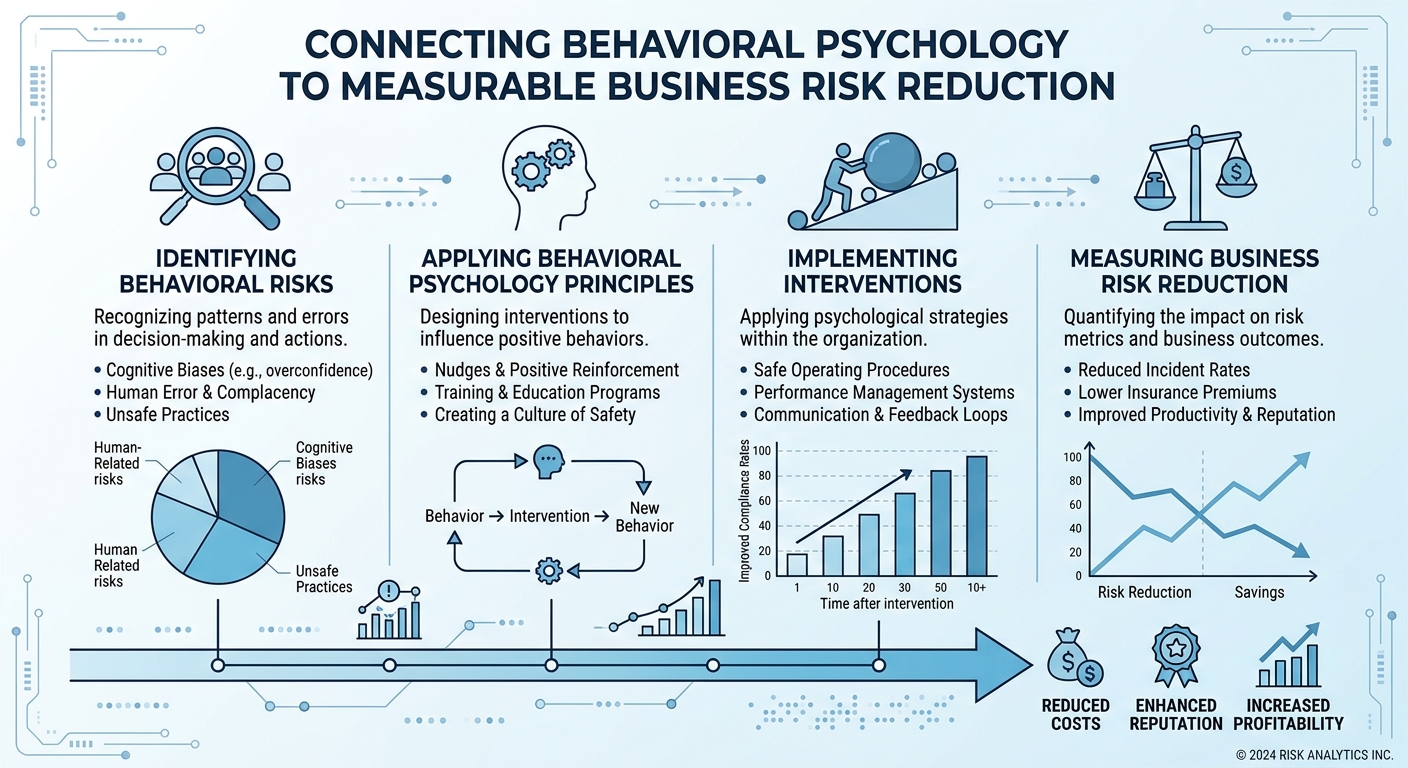
Connecting Behavioral Psychology to Measurable Business Risk Reduction
In an increasingly complex global landscape, organizations across industries like Banking, Finance, Insurance, Healthcare, Retail, Pharma, and Oil & Gas face a daunting array of risks. From compliance breaches and data security threats to operational inefficiencies and reputational damage, the stakes have never been higher. While robust policies and technological safeguards are essential, the human element remains the most unpredictable and often, the most critical variable. This is where the profound insights of behavioral psychology offer a powerful, yet often underutilized, pathway to measurable business risk reduction. For Vice Presidents, Directors, and Senior Managers in L&D, understanding and applying these principles is not just an advantage—it's a strategic imperative.
Understanding the Human Element of Risk
At the heart of many business risks lies human behavior. Whether it's an employee inadvertently clicking a phishing link, a manager overlooking a critical compliance step, or a team making suboptimal decisions under pressure, cognitive biases, emotional responses, and habitual shortcuts can amplify vulnerabilities. Traditional training often focuses on conveying information, assuming that knowledge alone translates into desired behavior. However, behavioral science tells us this isn't always true.
Consider the typical compliance training module. Employees might click through it, answer questions correctly, but revert to old habits when faced with real-world pressure or competing priorities. This gap between knowing and doing is where behavioral psychology steps in, offering methodologies to bridge that divide and foster truly risk-averse cultures. From reducing fraud incidents in Finance to improving patient safety protocols in Healthcare, understanding the "why" behind human actions is key.
The Power of Behavioral Psychology in L&D
Behavioral psychology provides a toolkit for designing learning experiences that genuinely influence actions. Key principles include:
- Nudging: Subtle interventions that guide individuals towards better decisions without restricting choice.
- Habit Formation: Strategies to embed desired behaviors through repetition, cues, and rewards.
- Social Proof: Leveraging the influence of peers and group norms to encourage compliance and best practices.
- Feedback Loops: Providing immediate, clear, and actionable feedback to reinforce positive actions and correct errors swiftly.
- Cognitive Load Reduction: Designing information and tasks to minimize mental effort, improving comprehension and decision-making accuracy.
By integrating these principles, L&D leaders can transform passive knowledge consumption into active behavioral change, directly impacting risk profiles.
From Theory to Application: Designing Risk-Resilient Training
Applying behavioral psychology to eLearning and corporate training requires a strategic shift in design and delivery. Modern learning platforms, like a Microlearning LMS, are uniquely positioned to facilitate this transformation.
Personalized Learning Pathways
One size rarely fits all, especially when addressing nuanced risks. Adaptive Learning tailors content based on individual roles, existing knowledge, and past performance, ensuring that employees receive the most relevant risk-focused education. This personalization reduces cognitive overload and increases the likelihood of information retention and application.
Microlearning for Retention and Reinforcement
Our attention spans are shorter than ever, and information overload is a constant challenge. Microlearning LMS delivers critical information in short, digestible bursts, perfectly aligned with cognitive load reduction principles. This approach facilitates better retention and allows for frequent, spaced repetition—a proven method for solidifying new habits and behaviors related to risk mitigation.
Gamification for Engagement and Behavior Change
Turning compliance and risk training into an engaging experience can dramatically improve participation and learning outcomes. A Gamified LMS leverages elements like points, badges, leaderboards, and challenges to motivate learners, provide immediate feedback, and foster a sense of achievement. This approach taps into intrinsic motivators, making adherence to protocols more rewarding and less of a chore, ultimately reducing risky behaviors.
Simulations and Experiential Learning
The best way to learn risk mitigation is by practicing it in a safe, controlled environment. Simulations allow employees to experience real-world scenarios, make decisions, and see the consequences firsthand. This experiential learning, often facilitated by a robust learning management system, provides immediate feedback loops essential for habit formation and skill development, preparing them for actual risk events.
Measuring the Impact: Quantifying Risk Reduction
For L&D leaders, demonstrating the ROI of training initiatives is paramount. By integrating behavioral psychology, the connection between learning and measurable risk reduction becomes clearer. Metrics can include:
- Reduced incident rates (e.g., security breaches, compliance violations, safety incidents).
- Improved audit scores and regulatory compliance rates.
- Lower financial losses due to human error or non-compliance.
- Increased employee reporting of potential risks.
- Observable changes in workplace behaviors via surveys or observational data.
This data empowers L&D to move beyond completion rates and showcase their strategic value in protecting the organization. Implementing Risk-focused Training directly impacts these bottom-line metrics.
Leveraging Technology for Behavioral Insights
Modern learning platforms, such as a comprehensive LMS or LCMS, are indispensable for implementing behaviorally-informed risk reduction strategies. These systems provide the framework for delivering personalized content, tracking engagement, and analyzing performance data. A cloud based learning management system offers scalability and accessibility across distributed workforces, critical for global organizations in industries like Mining or Pharma.
Advanced analytical capabilities within an enterprise learning management solution can identify behavioral patterns, pinpoint areas of weakness, and even predict potential risk hotspots. This data-driven approach allows L&D to continuously refine their strategies, ensuring that training remains agile and effective in addressing evolving risks.
Optimizing with Advanced Learning Technologies
How can intelligent platforms optimize learning paths for critical compliance areas?
Intelligent platforms leverage sophisticated algorithms to analyze learner performance, identify knowledge gaps, and dynamically adjust content delivery. This means that if an employee consistently struggles with a particular compliance regulation, the system can automatically provide additional resources, practice scenarios, or quizzes focused on that specific area, ensuring mastery before moving on. This personalized remediation, often powered by an AI Powered Authoring Tool, significantly reduces the likelihood of future compliance breaches by targeting the root cause of misunderstanding.
Where are cutting-edge tools being deployed to enhance risk education globally?
Across highly regulated sectors such as Banking, Finance, and Healthcare, and in global operations like Oil & Gas, organizations are deploying advanced learning management software to standardize and localize risk education. These tools ensure consistent delivery of critical information while adapting to regional regulations and cultural nuances. This global reach, supported by a robust learning management solutions, ensures that all employees, regardless of location, receive the most effective and up-to-date risk mitigation training.
Who stands to gain the most from integrating advanced analytical tools into their talent development?
Directors, VPs, and Senior Managers of L&D, along with operational leaders, stand to gain significantly. By integrating advanced analytical capabilities within a MaxLearn LMS or any leading lms learning management system, they gain actionable insights into training effectiveness and its direct impact on business outcomes. This allows for proactive identification of training needs, optimization of resource allocation, and a clear demonstration of L&D's strategic contribution to the organization's overall risk management framework and resilience.
Conclusion
The imperative to reduce business risk is universal, but the most effective solutions often lie beyond traditional frameworks. By intentionally weaving the principles of behavioral psychology into eLearning strategies, L&D leaders can move beyond mere information delivery to cultivate a workforce that instinctively makes safer, more compliant, and more productive choices. With powerful tools like a modern learning content management system at their disposal, organizations can build robust, measurable risk reduction programs that don't just educate, but fundamentally transform behavior. This strategic shift positions L&D as a critical partner in safeguarding the enterprise's future, demonstrating tangible value where it matters most: the bottom line.


