

```html
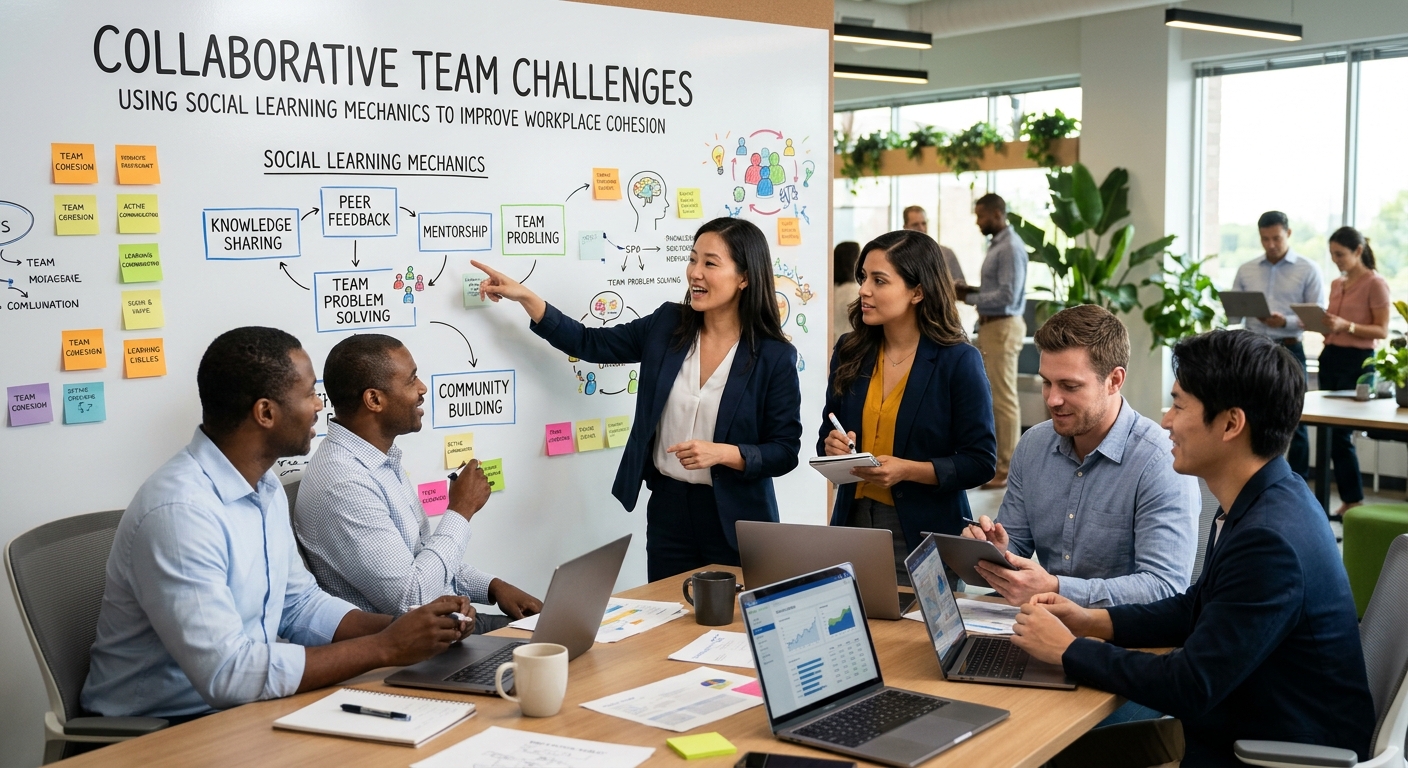
Collaborative Team Challenges: Using Social Learning Mechanics to Improve Workplace Cohesion
In today's fast-paced corporate landscape, marked by remote work models and diverse global teams, fostering robust workplace cohesion is more critical than ever. For Vice Presidents, Directors, and Senior Managers in Learning & Development, the challenge isn't just about delivering training; it's about building a connected, high-performing workforce. This article explores how collaborative team challenges, powered by social learning mechanics, can be a game-changer in enhancing team synergy across various industries, from Compliance and Sales to Banking, Healthcare, and Oil & Gas.
The Indispensable Role of Social Learning in Modern L&D
Social learning, at its core, acknowledges that a significant portion of our learning happens through observation, imitation, and interaction with others. In a professional context, this translates to knowledge sharing, mentorship, peer feedback, and collective problem-solving. Unlike traditional, isolated training modules, social learning taps into the innate human desire for connection and collaboration, making learning more engaging and impactful.
For large enterprises, particularly those utilizing a sophisticated Microlearning LMS, integrating social elements becomes streamlined. These platforms aren't just for delivering content; they are designed to facilitate interaction, discussion, and collaborative project work, turning a simple training program into a dynamic learning ecosystem.
Leveraging AI for Personalized Collaboration
Question: How can intelligent systems personalize team challenges to maximize engagement across diverse employee groups?
Answer: Advanced algorithms can analyze individual performance data, learning styles, and job roles within an organization to recommend tailored collaborative challenges. By understanding who thrives in competitive environments versus those who prefer cooperative tasks, these systems ensure that each employee is placed in a challenge that resonates with their strengths and development needs, ultimately maximizing participation and impact. This approach ensures that a challenge for a sales team in one region is as relevant and engaging as one for a compliance team in another, adapting to local nuances and industry-specific requirements.
Designing Impactful Collaborative Team Challenges
Effective collaborative challenges are more than just group assignments; they are strategically designed experiences that mirror real-world business scenarios, encouraging participants to pool their skills and knowledge to achieve a common goal. Here’s how L&D leaders can craft them:
- Clear Objectives & Relevance: Challenges must have well-defined goals directly tied to business outcomes. Whether it's developing a new sales strategy, identifying compliance risks, or optimizing a financial process, the relevance makes the learning tangible.
- Problem-Based Scenarios: Present complex, open-ended problems that require critical thinking and diverse perspectives. For instance, a healthcare team might tackle a patient care optimization challenge, while an oil and gas team could simulate a supply chain disruption.
- Gamification Mechanics: Incorporate elements like points, badges, leaderboards, and team rewards to boost motivation and healthy competition. A robust Gamified LMS can provide the necessary tools to implement these features seamlessly, tracking progress and celebrating achievements.
- Defined Roles & Responsibilities: While collaborative, assigning specific roles (e.g., project lead, researcher, presenter) within teams can ensure accountability and leverage individual strengths.
- Feedback Loops & Reflection: Integrate opportunities for peer feedback, self-reflection, and facilitator coaching. This ensures that participants not only complete the challenge but also understand their contributions and areas for growth.
Benefits Beyond Cohesion: A Holistic Approach to Development
While improved workplace cohesion is a primary outcome, collaborative challenges offer a multitude of additional benefits:
- Enhanced Skill Development: Participants actively apply and refine skills such as critical thinking, problem-solving, communication, and negotiation in a low-stakes environment. This is especially true when an Adaptive Learning approach is integrated, adjusting difficulty and content based on team performance.
- Knowledge Transfer & Sharing: Expert knowledge is naturally disseminated as team members learn from each other. This is invaluable in industries like Pharma, where specialized knowledge is paramount.
- Innovation & Creativity: Diverse teams bring varied perspectives, often leading to novel solutions and fostering a culture of innovation.
- Increased Engagement & Retention: Employees who feel connected to their colleagues and invested in their work are more likely to be engaged and remain with the organization.
- Identification of Future Leaders: Collaborative challenges can serve as an excellent proving ground for identifying employees with strong leadership potential.
Predictive Insights for Skill Development
Question: What role do advanced algorithms play in identifying critical skill gaps that collaborative challenges can address?
Answer: Machine learning models can analyze vast datasets, including past project performance, individual competency assessments, and industry trend reports, to pinpoint collective skill deficits within an organization. For example, in a banking institution, algorithms might detect a widespread gap in digital compliance knowledge. This data then directly informs the design of collaborative challenges, ensuring they are precisely targeted to upskill teams in areas where it's most needed, thereby maximizing the efficiency and impact of the learning initiative.
Implementing with the Right Learning Management Solutions
The success of collaborative team challenges largely hinges on the technology used to facilitate them. A robust learning management system (LMS) is not just a content repository; it's an ecosystem for interactive learning. A modern MaxLearn LMS, or any enterprise learning management system, should offer features that actively support social learning mechanics:
- Collaboration Tools: Integrated discussion forums, chat functions, and shared document workspaces for teams to communicate and co-create.
- Peer Review & Feedback: Features allowing learners to provide constructive feedback on each other's contributions, crucial for refining skills and understanding different perspectives.
- Content Authoring & Sharing: An AI Powered Authoring Tool within a learning content management system (LCMS) enables L&D teams to rapidly create engaging, scenario-based content for challenges, and even allows learners to contribute.
- Progress Tracking & Analytics: A sophisticated learning management software can track team and individual progress, engagement levels, and performance within challenges, providing valuable insights to L&D managers.
- Mobile Accessibility: Ensuring challenges are accessible on any device, allowing flexibility for employees in various segments like Retail or Hospitality who may not be desk-bound.
A cloud based learning management system offers the scalability and accessibility required for global organizations, ensuring that teams across different time zones and locations can participate seamlessly in these challenges.
Measuring the Impact of Collaborative Challenges
To demonstrate ROI to stakeholders, L&D leaders must establish clear metrics for success. Beyond completion rates, consider:
- Qualitative Feedback: Surveys, focus groups, and interviews to gauge improvements in team communication, morale, and perceived cohesion.
- Performance Metrics: Track improvements in relevant business KPIs post-challenge (e.g., reduction in compliance incidents, increase in sales conversion rates, improved project delivery times). For industries like Insurance and Finance, this can directly correlate to a reduction in Risk-focused Training needs and financial losses.
- Network Analysis: Observing communication patterns and knowledge flow within teams to see if new connections are being formed and utilized.
- Skill Assessments: Pre and post-challenge assessments to measure improvement in targeted skills.
Data-Driven Insights on Team Cohesion
Question: Can predictive analytics forecast the long-term benefits of enhanced team cohesion resulting from social learning initiatives?
Answer: Yes, by correlating metrics such as improved communication, faster project completion times, and reduced employee turnover with historical business performance data, predictive analytics can model the potential long-term financial and operational benefits. This allows L&D leaders to estimate the return on investment from improved workplace cohesion, making a stronger case for continued investment in social learning mechanics and collaborative challenges. For instance, in a mining operation, predicting how better team communication can reduce safety incidents provides a clear, measurable benefit.
Conclusion
Collaborative team challenges, embedded with robust social learning mechanics, offer a powerful pathway to cultivate workplace cohesion, foster skill development, and drive innovation across all industries. For L&D Vice Presidents, Directors, and Managers, this approach transcends traditional training, creating a dynamic, engaging, and highly effective learning experience. By leveraging the right learning management solutions and intelligently designed challenges, organizations can not only upskill their workforce but also build a more resilient, connected, and collaborative culture ready to tackle the complexities of tomorrow's business world. Investing in these initiatives is an investment in the very fabric of your organization’s future success.
```


