

The Financial Cost of Employee Forgetting: Why Refresher Training Programs Save Millions
In the fast-paced world of business, knowledge is power, but forgotten knowledge is a costly liability. Employee forgetting, the gradual erosion of previously acquired skills and information, poses a silent yet significant financial drain on organizations across every industry – from banking and finance to healthcare and retail. For L&D leaders, understanding this phenomenon and its economic impact is crucial. The question isn't whether your employees will forget, but how much that forgetting will cost your enterprise. This article will explore the profound financial implications of knowledge erosion and make a compelling case for why strategic, ongoing refresher training programs are not just a nice-to-have, but an essential investment that can save your company millions.
The Silent Drain: Unpacking the Costs of Knowledge Erosion
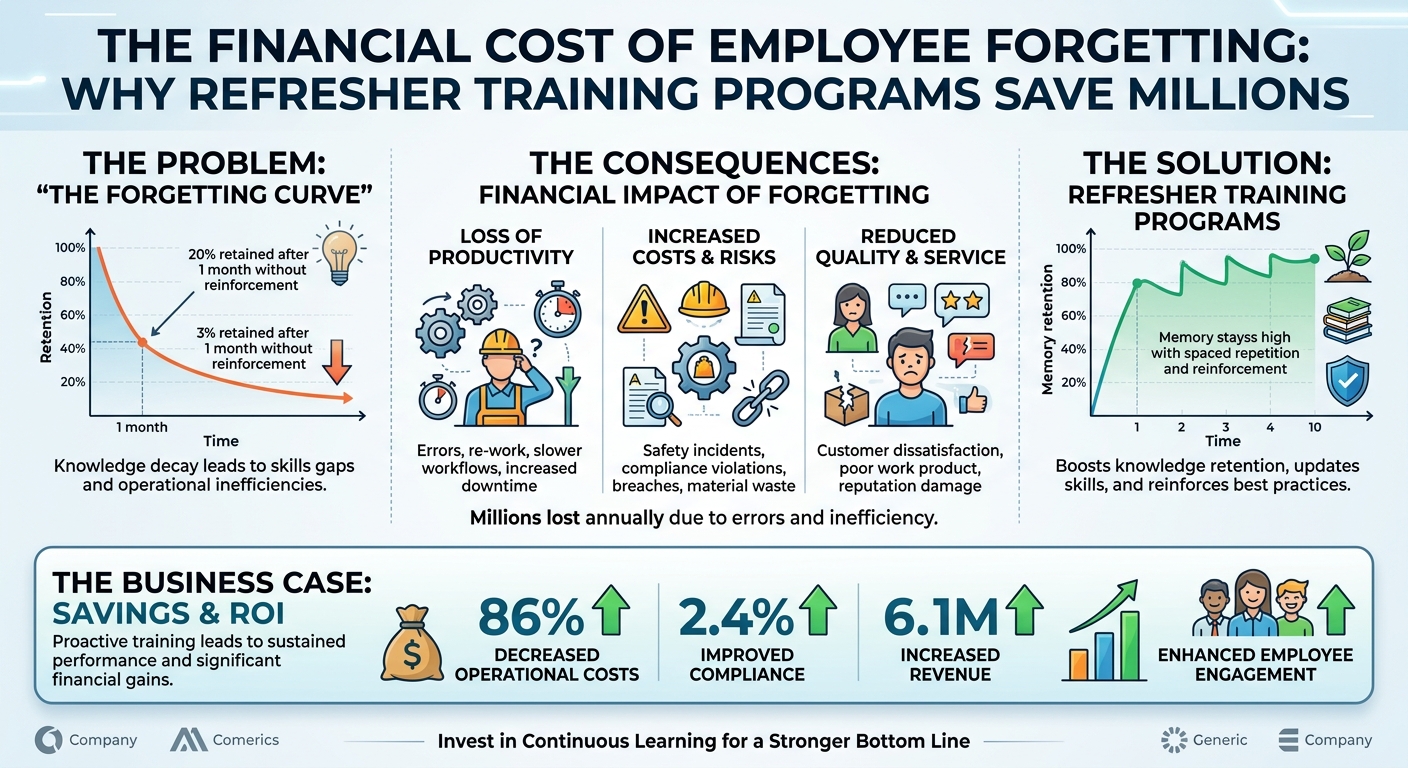
The impact of employee forgetting manifests in various ways, directly hitting the bottom line and indirectly eroding organizational efficiency and reputation. It's a problem that scales with the size and complexity of your operations, making it particularly critical for large enterprises managing diverse workforces and intricate regulatory landscapes.
Direct Financial Losses
- Compliance Violations and Fines: In highly regulated sectors like banking, finance, pharma, and healthcare, forgotten procedures can lead to serious compliance breaches, resulting in hefty fines, legal battles, and costly investigations. A single missed regulation can cost millions.
- Errors, Rework, and Waste: Whether it's a sales team misquoting product features, a factory worker forgetting safety protocols, or a customer service representative providing incorrect information, errors stemming from forgotten training lead to wasted resources, damaged goods, and increased operational costs. Rework eats into profit margins and delays project timelines.
- Lost Sales Opportunities and Customer Churn: Forgetting key product knowledge, sales techniques, or customer service best practices directly impacts revenue. Employees unable to answer questions confidently or upsell effectively can lose deals, while poor service due to forgotten policies can drive customers to competitors, particularly in competitive markets like retail and hospitality.
- Decreased Productivity: When employees have to relearn tasks, search for forgotten information, or repeatedly ask colleagues for help, their productivity plummets. This inefficiency across the workforce translates into significant lost labor hours and slower project completion.
Indirect Organisational Impact
- Damaged Reputation and Brand Trust: Consistent errors, compliance failures, or poor customer interactions stemming from forgotten knowledge can severely damage a company's reputation, making it harder to attract and retain customers, partners, and top talent.
- Employee Disengagement and Morale: Constantly feeling unsure or making mistakes can lead to frustration, decreased confidence, and lower job satisfaction among employees. This disengagement can contribute to higher turnover rates.
- Increased Hiring and Retraining Costs: High employee turnover, often exacerbated by a lack of continuous support and development, means constantly investing in recruiting, onboarding, and initial training for new hires – a continuous and expensive cycle.
The Science Behind Forgetting: Why We Need Reinforcement
The phenomenon of forgetting is not a sign of poor intelligence but a natural function of the human brain. Research shows that without reinforcement, a significant portion of newly learned information is forgotten within days, sometimes even hours. This steep decline in retention underscores why one-off training sessions, no matter how comprehensive, are insufficient. For effective knowledge transfer and long-term retention, organizations need to counteract this natural tendency with strategic, spaced repetition and timely reminders. This continuous reinforcement is particularly vital for complex information, critical procedures, and evolving industry standards.
Refresher Training: The Multi-Million Dollar Solution
Implementing a robust refresher training program is a proactive strategy that directly addresses the financial and operational challenges posed by employee forgetting. It's an investment that pays dividends by reinforcing critical knowledge, updating skills, and embedding best practices into the organizational culture.
Proactive Risk Mitigation
Regular refreshers on safety protocols, data privacy, and ethical guidelines drastically reduce the likelihood of costly accidents, breaches, and misconduct. For industries like oil and gas, mining, and healthcare, this can prevent catastrophic events and associated liabilities. This form of Risk-focused Training ensures that employees are always aware of potential hazards and preventative measures.
Boosting Performance and Productivity
When employees confidently recall product specifications, service procedures, or software functionalities, they work more efficiently and effectively. Refresher training sharpens skills, reduces decision-making time, and empowers employees to perform at their peak, directly impacting productivity and quality of output.
Ensuring Compliance and Reducing Exposure
For industries under strict regulatory scrutiny, refresher training is indispensable. It ensures that all employees are consistently up-to-date with the latest regulations and internal policies, dramatically lowering the risk of non-compliance fines and legal penalties. This is critical for maintaining operational integrity and avoiding reputational damage.
Enhancing Employee Confidence and Retention
Providing employees with the tools and knowledge to succeed fosters confidence and job satisfaction. When employees feel supported and competent, they are more engaged, less prone to stress, and more likely to remain with the company, reducing turnover costs and building a more experienced workforce.
Leveraging Modern Learning Technologies for Impact
Traditional, lengthy refresher courses can be disruptive and inefficient. Modern eLearning solutions, particularly a sophisticated learning management system (LMS), offer dynamic, engaging, and highly effective ways to deliver continuous learning. An enterprise learning management system or cloud based learning management system can transform how organizations approach skill reinforcement.
- Microlearning: Delivering information in bite-sized, focused modules is perfect for quick refreshers. It respects employees' time and boosts retention by presenting information precisely when and where it's needed. A Microlearning LMS is ideal for this approach, making learning accessible and efficient.
- Gamification: Incorporating game-like elements such as points, badges, and leaderboards makes refresher training more engaging and motivates employees to participate and excel. A Gamified LMS can significantly improve completion rates and knowledge retention.
- Adaptive Learning: This technology personalizes the learning experience, identifying knowledge gaps and tailoring content to individual needs. This ensures that employees only review what they've forgotten, saving time and increasing relevance. Explore methodologies like Adaptive Learning to see its power.
- AI-Powered Tools: Leveraging artificial intelligence in learning content management system (LCMS) platforms can automate content creation, personalize learning paths, and even predict areas where employees might need reinforcement. An AI Powered Authoring Tool can dramatically streamline the development of refresher modules.
Such tools turn a simple learning management software into comprehensive learning management solutions, offering significant advantages over traditional methods. MaxLearn LMS, for example, combines these features to deliver powerful learning experiences.
Addressing Key Stakeholder Concerns
As L&D leaders, you frequently encounter questions about the practicality and impact of continuous training. Here’s how refresher programs address common concerns:
Question: How can we ensure our training truly sticks with employees across diverse teams and varied roles?
Answer: By implementing a continuous learning strategy that incorporates modern eLearning techniques like microlearning and gamification, you can ensure content is digestible and engaging. Personalized learning paths, enabled by adaptive learning technologies, target specific knowledge gaps, making the reinforcement relevant to each individual. This approach significantly boosts retention rates and overall effectiveness, ensuring knowledge truly embeds itself across your entire workforce.
Question: What strategies are most effective for maintaining consistent knowledge and compliance across a geographically dispersed workforce?
Answer: A centralized cloud based learning management system is paramount for global consistency. This ensures all employees, regardless of location, access the same, up-to-date training materials. Utilizing asynchronous microlearning modules allows employees to complete refreshers on their own schedules, accommodating different time zones and work demands. Additionally, leveraging AI for content localization and progress tracking helps maintain a uniform standard of knowledge and compliance across all global operations.
Question: What is the tangible return on investment for allocating resources to continuous employee development?
Answer: The ROI is significant and multifaceted. Beyond the immediate cost savings from reduced errors, compliance fines, and rework, continuous training leads to measurable improvements in productivity, sales performance, and customer satisfaction. It also fosters a more skilled and engaged workforce, reducing costly employee turnover. By using a robust learning management system, you can track participation, competency improvements, and directly correlate these metrics to business outcomes, demonstrating the program's financial value.
Conclusion
Employee forgetting is an inescapable human trait, but its financial cost to your organization is entirely avoidable. Investing in well-designed, technologically advanced refresher training programs isn't merely an expenditure; it's a strategic imperative. By proactively reinforcing critical knowledge and skills, organizations can mitigate risks, boost productivity, enhance compliance, and foster a more confident and engaged workforce. The savings from preventing costly errors, retaining valuable employees, and optimizing operational efficiency can indeed amount to millions, solidifying refresher training as a cornerstone of smart business strategy for any forward-thinking enterprise.


