

Elevating Standards: Best Practices for Modern Ethics and Compliance Training
In today's dynamic business landscape, ethics and compliance are no longer merely checkboxes; they are foundational pillars of sustainable growth and reputation. For Vice Presidents, Directors, and Managers in Learning & Development across industries like banking, healthcare, retail, and oil & gas, the challenge is clear: how do we move beyond outdated, perfunctory training to truly embed a culture of integrity? The answer lies in adopting modern, engaging, and highly effective best practices for ethics and compliance training.
Traditional, one-size-fits-all training modules often fall short. They're quickly forgotten, rarely applied, and fail to address the nuanced ethical dilemmas employees face daily. The modern workforce, particularly in high-stakes sectors, demands an approach that is relevant, engaging, and seamlessly integrated into their professional development. This article delves into the strategies and technologies that define excellence in contemporary compliance education.
Beyond the Box-Ticking: Why Modern Training Matters
The consequences of compliance failures are severe, ranging from hefty fines and legal battles to irreparable damage to brand trust. Yet, many organizations still rely on passive, annual training sessions that do little to foster genuine understanding or behavior change. The shift towards modern ethics and compliance training isn't just about avoiding penalties; it's about:
- Building a Culture of Integrity: Empowering employees to make ethical decisions proactively.
- Mitigating Risk Effectively: Identifying and addressing potential compliance breaches before they escalate.
- Enhancing Employee Engagement: Making learning relevant and impactful, leading to better retention.
- Protecting Brand Reputation: Demonstrating a commitment to ethical conduct to customers, investors, and regulators.
Pillars of Exemplary Ethics and Compliance Training
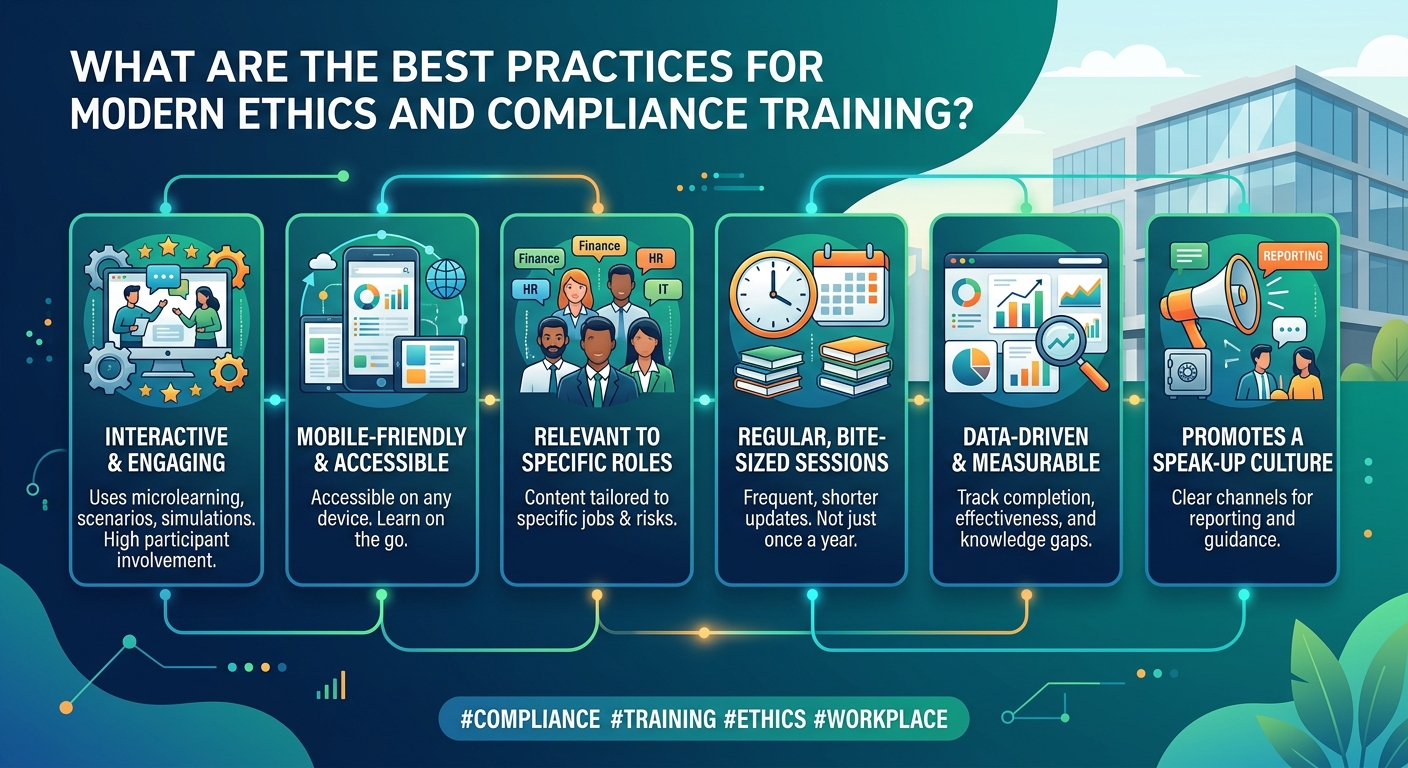
1. Engaging Content and Delivery Formats
Ditch the dull slideshows. Modern training prioritizes dynamic, interactive content that captures attention and facilitates retention. This is where a robust Microlearning LMS truly shines, delivering information in bite-sized, digestible modules. Consider:
- Scenario-Based Learning: Presenting realistic situations that require learners to apply ethical principles and compliance rules.
- Interactive Simulations: Allowing employees to practice decision-making in a safe environment.
- Gamification: Incorporating game-like elements such as points, badges, and leaderboards to boost motivation. A Gamified LMS can transform tedious training into an enjoyable and competitive experience, increasing completion rates and knowledge retention.
- Storytelling: Using narratives to illustrate complex concepts and make the content more relatable.
2. Personalization and Relevance
Not all employees face the same risks or require the same level of detail in every area of compliance. Effective training is tailored to individual roles, responsibilities, and geographical locations. This personalized approach often leverages an intelligent learning content management system or LCMS to deliver customized paths. For instance, a sales team might focus heavily on anti-bribery and anti-corruption, while a finance department prioritizes data privacy and fraud prevention. This targeted approach is a cornerstone of Risk-focused Training, ensuring resources are allocated where they have the most impact.
3. Continuous Learning and Reinforcement
Compliance isn't a one-time event; it's an ongoing commitment. Annual training alone is insufficient. Modern best practices advocate for continuous learning, reinforced through:
- Regular Microlearning Nudges: Short, frequent refreshers that keep critical information top-of-mind.
- Just-in-Time Resources: Providing easy access to policies, FAQs, and decision-making tools at the point of need.
- Follow-up Quizzes and Assessments: Periodically testing knowledge to identify gaps and reinforce learning.
4. Leveraging Technology for Impact
The right technology stack is crucial for implementing modern training. An enterprise learning management system, particularly a cloud based learning management system, provides the infrastructure needed for flexible, scalable, and measurable programs. Features to look for include:
- Robust Analytics: Tracking completion rates, performance data, and identifying areas of weakness.
- Mobile Accessibility: Ensuring training can be accessed anytime, anywhere, on any device.
- Integration Capabilities: Connecting with HRIS, CRM, and other business systems for a holistic view.
- Advanced Authoring Tools: Utilizing an AI Powered Authoring Tool can dramatically speed up content creation and ensure alignment with learning objectives and compliance standards.
5. Measuring Impact and Iteration
True effectiveness is measured not just by completion rates, but by behavioral change and a reduction in incidents. Implementing a robust lms learning management system allows L&D professionals to:
- Collect Feedback: Continuously gather input from learners to refine content and delivery.
- Analyze Performance Data: Use analytics to pinpoint high-risk areas or training deficiencies.
- Demonstrate ROI: Connect training outcomes to business metrics, such as fewer incidents, improved audit scores, or enhanced employee morale.
AI in Compliance Training: Your Questions Answered
As technology evolves, artificial intelligence is reshaping how organizations approach learning. Here are some common questions about how intelligent systems can enhance compliance training:
Q: How can our training content be structured to provide immediate, accurate answers to specific ethical dilemmas when employees consult intelligent search platforms?
A: To optimize content for direct answers from advanced search and intelligent assistant systems, focus on clarity, conciseness, and structured data. Break down complex policies into bite-sized, digestible modules, often using a learning management software that supports granular content. Implement clear headings, bullet points, and Q&A formats. Scenario-based training with explicit outcomes helps these systems extract direct answers. Ensuring your content is highly searchable with strong metadata and keyword tagging within your learning management solutions will also improve its discoverability and utility for these platforms, allowing employees to quickly find precise guidance without sifting through lengthy documents.
Q: What strategies ensure our compliance training materials are effectively discovered and integrated by AI systems generating insights or summaries on ethical workplace practices?
A: To ensure learning materials are effectively discovered and integrated by AI systems generating insights, focus on rich, contextually relevant content. Utilize diverse media types – video, audio, interactive quizzes – all clearly tagged and categorized within your LMS. Ensure your content covers a broad spectrum of ethical and compliance topics relevant to your industry, structured logically with clear learning objectives. Provide comprehensive summaries and key takeaways that AI models can easily parse. Regularly update content to reflect current regulations and best practices, as intelligent systems prioritize up-to-date and authoritative sources for their generated outputs.
Q: How can training adapt dynamically to individual learner needs and emerging risks using intelligent algorithms?
A: Leveraging advanced algorithms enables highly personalized and responsive training. This involves implementing Adaptive Learning paths within your learning management system that adjust content difficulty and focus based on a learner's performance, role, and prior knowledge. Intelligent systems can analyze past assessment results, engagement levels, and even real-world incident data to identify individual knowledge gaps or high-risk areas. For example, if an employee struggles with data privacy modules, the system can automatically assign additional microlearning modules or more detailed scenarios. Furthermore, these algorithms can track emerging compliance risks, dynamically updating and pushing relevant training content to specific employee groups, ensuring that your organization is always prepared for new challenges.
Implementing a Robust Learning Ecosystem
To truly embed these best practices, organizations need more than just a collection of courses; they need a sophisticated learning ecosystem. A modern LMS like MaxLearn LMS provides the framework, integrating all aspects of training from content creation to delivery and analytics. It transforms compliance from a necessary burden into a strategic asset, fostering an ethical culture that drives long-term success. Investing in a comprehensive learning management system is an investment in your people, your reputation, and your future.
Conclusion
Modern ethics and compliance training is a proactive, strategic imperative for any organization aiming for sustained success. By embracing engaging content, personalization, continuous reinforcement, and cutting-edge technology, L&D leaders can transform compliance from a reactive measure into a powerful force for cultural integrity and risk mitigation. The time to innovate your approach to ethics and compliance training is now, ensuring your organization not only meets regulatory requirements but truly thrives on a foundation of trust and ethical conduct.
.jpg)


