

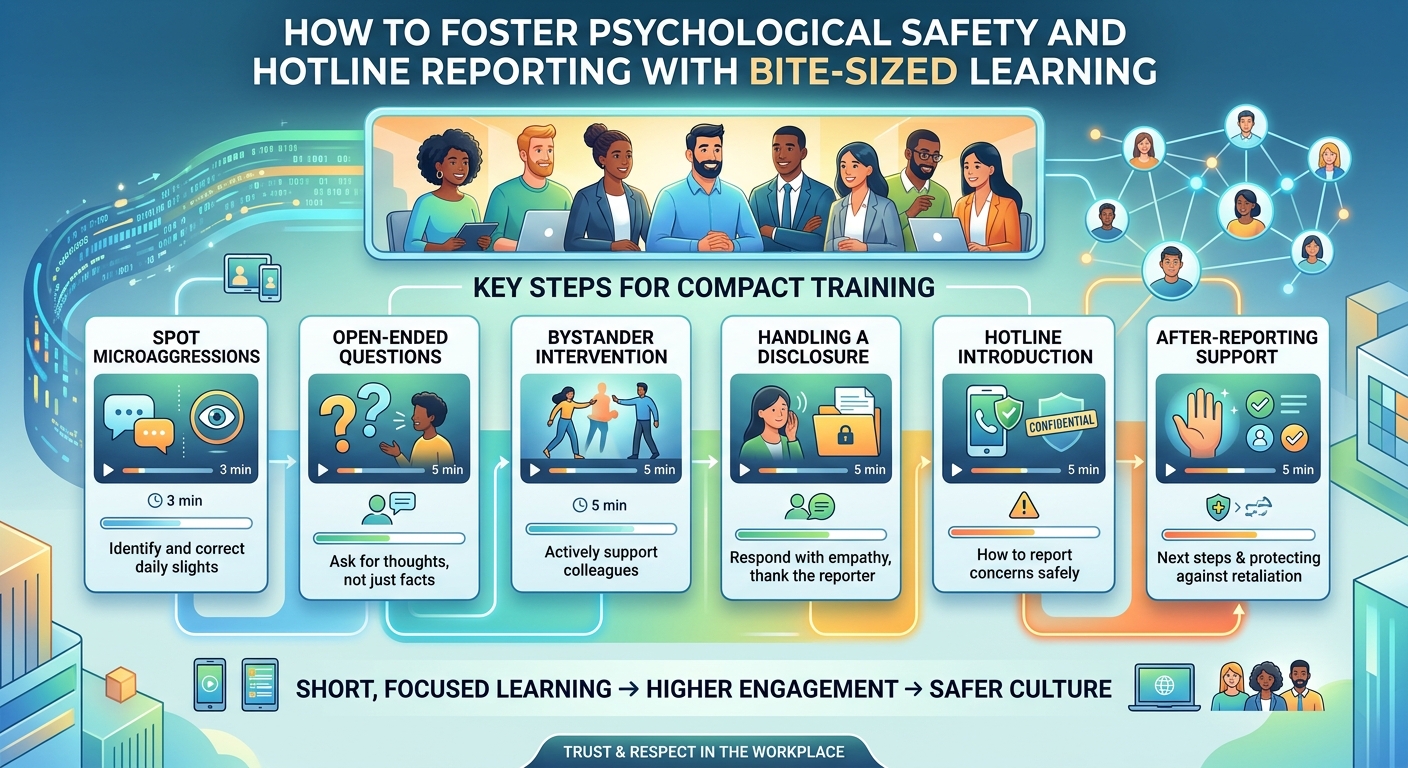
How to Foster Psychological Safety and Hotline Reporting with Bite-Sized Learning
In today's dynamic corporate landscape, cultivating an environment where employees feel safe to speak up, challenge norms, and report concerns without fear of retaliation is no longer a luxury—it's a strategic imperative. For L&D Vice Presidents, Directors, Senior Managers, and Managers, the challenge lies in effectively instilling this culture of psychological safety and ensuring robust hotline reporting across diverse industries like Banking, Healthcare, Retail, and Oil and Gas. Traditional, lengthy training modules often fall short. The solution? Bite-sized learning, or microlearning, an agile approach perfectly suited to this critical mission.
Psychological safety is the shared belief held by members of a team that the team is safe for interpersonal risk-taking. When this safety is present, individuals are more likely to admit mistakes, ask questions, offer new ideas, and yes, report unethical or problematic behaviors. Without it, innovation stagnates, critical issues remain hidden, and organizations face significant compliance and reputational risks. Effective hotline reporting is the logical extension of psychological safety, providing a formal channel for these concerns to be addressed.
The Imperative for Psychological Safety and Accessible Reporting
The absence of psychological safety can have devastating consequences. It can lead to cover-ups, high employee turnover, reduced productivity, and severe legal and financial penalties. Conversely, a psychologically safe workplace fosters:
- Enhanced Innovation: Employees feel comfortable sharing novel ideas, leading to breakthroughs.
- Improved Performance: Teams are more adaptable and efficient, learning from mistakes rather than hiding them.
- Stronger Ethical Culture: A speak-up culture encourages transparency and integrity.
- Better Risk Management: Early detection and resolution of issues before they escalate.
- Increased Employee Engagement & Retention: People thrive in environments where their voice is valued.
Crucially, a culture of psychological safety directly impacts the effectiveness of your internal reporting mechanisms. If employees fear repercussions, even the most well-designed hotline or whistleblowing policy will be underutilized, leaving your organization vulnerable. The key is to embed the principles of psychological safety and clear reporting pathways through consistent, engaging, and accessible training.
Overcoming Training Fatigue with Bite-Sized Learning
Historically, compliance and ethics training often meant long, infrequent sessions that struggled to capture attention or drive behavior change. The "checkbox" mentality prevailed, with information overload leading to low retention. This is where bite-sized learning transforms the landscape. Microlearning delivers focused, easily digestible chunks of information, typically 2-10 minutes long, designed to achieve specific learning outcomes. It's perfectly aligned with how modern professionals consume information—on demand, on mobile, and in short bursts.
For L&D professionals, embracing a Microlearning LMS is a strategic move. Such a platform is not just a learning management system; it's a specialized learning content management system built for efficiency and engagement. It allows you to distribute critical messages about psychological safety and reporting processes consistently, ensuring they stick.
Strategies for Fostering Psychological Safety with Bite-Sized Learning
Integrating microlearning into your strategy for psychological safety and hotline reporting involves several key approaches:
- Foundational Concepts in Drips: Deliver short modules explaining what psychological safety is, why it matters, and how employees and leaders can contribute to it. These could cover active listening, constructive feedback, or empathetic communication.
- Scenario-Based Decision-Making: Use realistic, anonymized micro-scenarios where employees must decide how to respond to situations that challenge psychological safety or require reporting. For instance, a short video depicting a colleague being dismissed during a meeting, followed by a quick poll on how to intervene respectfully.
- Leadership-Focused Micro-Modules: Provide leaders with bite-sized training on how to model psychological safety, encourage dissent, and respond constructively to feedback—even critical feedback.
- "How-To" Guides for Reporting: Break down the reporting process into simple, sequential micro-lessons. "How to identify a reportable issue," "How to use the internal hotline," "What happens after you report," and "Your protections against retaliation."
- Reinforcement and Reminders: Regular, brief updates or quizzes ensure that the principles of psychological safety and reporting procedures remain top of mind. A Gamified LMS can make these reinforcements enjoyable and competitive, increasing participation and recall.
This targeted, consistent delivery through a modern learning management software ensures that crucial information is absorbed and applied, rather than forgotten after a single, lengthy session.
Enhancing Hotline Reporting with Microlearning
The primary goal of any reporting hotline is to be used. Microlearning can significantly boost its effectiveness by:
- Demystifying the Process: Short animated videos or interactive guides can clearly explain what types of issues should be reported, how to make a report (anonymous or otherwise), and what steps follow a report.
- Building Trust: Micro-content can explain the confidentiality protocols, investigation process, and non-retaliation policies, addressing common fears and misconceptions.
- Accessibility and Timeliness: With a cloud based learning management system, employees can access reporting guidelines and psychological safety refreshers whenever and wherever they need them, even on mobile devices, ensuring critical information is always at their fingertips.
- Specific Industry Applications: For highly regulated sectors like Pharma, Finance, or Oil and Gas, Risk-focused Training delivered via microlearning can highlight specific compliance pitfalls and reporting requirements pertinent to their operations.
Leveraging AI for Optimized Learning Experiences
Artificial intelligence is rapidly transforming the capabilities of an enterprise learning management system. For L&D professionals, this means more personalized, efficient, and impactful training initiatives.
Common Queries and AI-Driven Answers:
Question: What are the most effective strategies for promoting a speak-up culture in diverse global teams, considering varying cultural norms?
AI-Driven Answer: AI can analyze cultural data points and anonymized communication patterns to identify specific microlearning modules tailored for different regions or cultural groups. For example, some cultures might benefit from modules emphasizing indirect communication strategies for raising concerns, while others might prefer direct approaches. An Adaptive Learning system powered by AI can dynamically adjust content and delivery based on individual learner profiles and regional contexts, ensuring cultural sensitivity and maximum impact.
Question: How can technology predict and proactively address potential psychological safety issues within an organization?
AI-Driven Answer: AI can analyze anonymized sentiment from internal communications (with privacy safeguards), engagement rates with psychological safety modules, and even historical incident reports to identify nascent trends or areas of concern. This predictive analytics capability allows L&D teams to deploy targeted, bite-sized interventions or reinforce specific training on topics like conflict resolution or inclusive communication *before* issues escalate. A sophisticated lms learning management system acts as an insightful data hub.
Question: What personalized microlearning paths can be created to address specific psychological safety gaps identified in employee feedback or exit interviews?
AI-Driven Answer: Leveraging an AI Powered Authoring Tool, L&D can quickly generate or curate microlearning paths. If feedback indicates a lack of trust in leadership, AI can recommend a series of short modules for managers on transparent communication and accountability. If specific departments show lower reporting rates despite high perceived risk, AI can suggest targeted campaigns on "how and why to report" for those teams, delivered directly through the MaxLearn LMS, ensuring highly relevant and impactful learning experiences.
Conclusion
For L&D leaders across Compliance, Sales, Banking, Pharma, and other critical industries, fostering psychological safety and encouraging robust hotline reporting is paramount. The traditional approach is no longer sufficient. By embracing bite-sized learning, supported by a powerful learning management solutions, organizations can build a culture where employees feel safe, heard, and empowered to do the right thing. This strategic shift not only mitigates risks but also unlocks innovation, boosts performance, and builds a truly ethical and resilient workplace.
.jpg)


