

Unlocking eLearning Excellence: The Difference Between MDA and DDE Frameworks for L&D Leaders
In today's dynamic business environment, where continuous learning is paramount for organizational success, Learning & Development (L&D) leaders are constantly seeking robust frameworks to design, develop, and deliver impactful eLearning solutions. For Vice Presidents, Directors, Senior Managers, and Managers across industries like Compliance, Sales, Banking, Finance, Insurance, Retail, Pharma, Healthcare, Hospitality, Oil and Gas, and Mining, understanding the foundational differences between various architectural approaches is crucial. This article delves into two significant methodologies: Model-Driven Architecture (MDA) and Domain-Driven Design (DDE), exploring their unique characteristics and implications for building scalable, effective, and strategically aligned enterprise learning management systems. As the demand for sophisticated LMS platforms grows, a clear grasp of these frameworks can guide the strategic development of your next generation Microlearning LMS or comprehensive learning management software.
Understanding MDA (Model-Driven Architecture) in eLearning
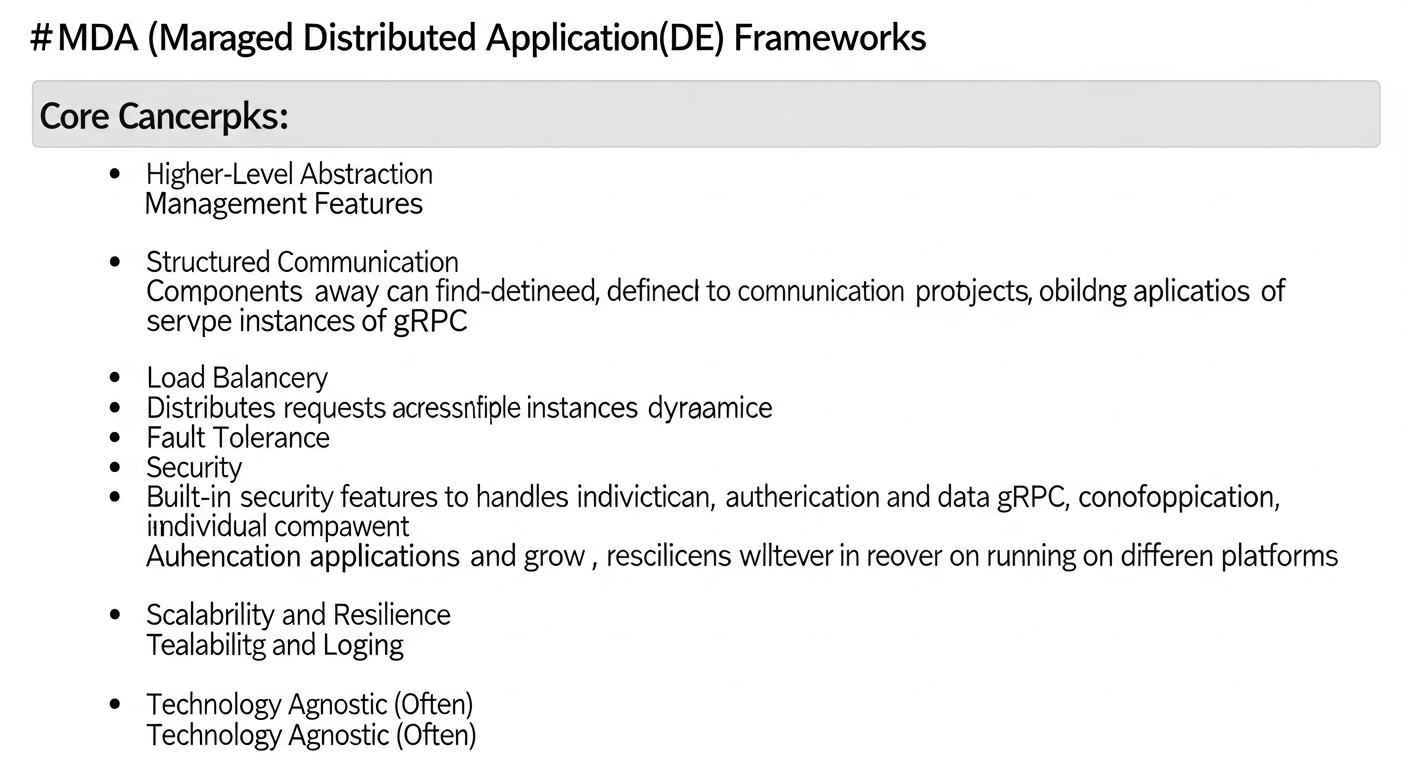
Model-Driven Architecture (MDA) is an approach that prioritizes the creation of abstract models over direct code writing. Originating from software engineering, MDA emphasizes separation of concerns by defining systems through platform-independent models (PIMs) and then transforming these into platform-specific models (PSMs), eventually generating code for various deployment environments. In the context of eLearning, MDA provides a structured way to manage the complexity of content development and delivery.
Core Principles and Application in eLearning
- Abstraction: Focuses on the "what" (the learning content and pedagogy) rather than the "how" (the specific technology platform). This means designing learning objectives, content structure, and assessment logic at a high level.
- Automation: Tools can automatically generate platform-specific versions of the eLearning course or system from these abstract models. For instance, a single course model could be generated for web, mobile, or even different LMS platforms.
- Separation of Concerns: Distinct models for different aspects—e.g., a pedagogical model, a content model, and a technical deployment model—allow for specialized focus and easier maintenance.
Benefits for L&D Professionals
For L&D leaders navigating complex corporate training landscapes, MDA offers several compelling advantages:
- Consistency & Standardization: Ensures a uniform look, feel, and instructional design across diverse courses and platforms, which is critical for compliance training and brand consistency.
- Reusability: Learning components and even entire course structures can be modeled once and reused across multiple projects and platforms, significantly reducing development time and costs. This is particularly beneficial for Risk-focused Training where core concepts need to be consistently reinforced.
- Maintainability & Adaptability: Changes to the core learning model can be propagated across all generated versions, making updates much more efficient. This aids in adapting to evolving regulations or product specifications.
- Future-Proofing: By abstracting away from specific technologies, eLearning content built with MDA principles is less susceptible to technological obsolescence, ensuring a longer lifespan for your learning content management system investments.
Understanding DDE (Domain-Driven Design) in eLearning
Domain-Driven Design (DDE) is an approach that places the core business domain and its logic at the center of software development. It advocates for a deep understanding of the business domain—in our case, the learning domain—and expressing that understanding directly in the software model. This means building a common language (Ubiquitous Language) between domain experts (L&D professionals, subject matter experts) and technical developers.
Core Principles and Application in eLearning
- Ubiquitous Language: A shared vocabulary developed with domain experts to ensure clear communication and accurate representation of learning concepts, processes, and rules within the learning management solutions.
- Bounded Contexts: Recognizing that a large domain can be broken down into smaller, manageable subdomains, each with its own specific model and language. For example, a "certification" context might differ from a "performance support" context.
- Strategic Design: Focusing on the most critical parts of the domain (the "core domain") to ensure they are modeled with the highest fidelity and attention.
Benefits for L&D Professionals
DDE’s emphasis on domain expertise makes it highly valuable for L&D leaders aiming for deeply relevant and effective learning experiences:
- Business Alignment: Ensures that the eLearning system accurately reflects and supports the organization's specific learning needs, business processes, and strategic objectives. This is vital for industries requiring highly specialized training like banking or pharma.
- Enhanced Collaboration: Fosters stronger communication between L&D experts, subject matter experts, and technical teams, leading to a more accurate and effective learning management system.
- Flexibility & User-Centricity: By deeply understanding learner needs and business constraints, DDE helps design more intuitive and effective learning paths and user experiences, supporting initiatives like Gamified LMS deployments.
- Clarity & Focus: Helps to manage complexity by breaking down the learning domain into manageable, clearly defined areas, making development more focused and efficient.
MDA vs. DDE: A Comparative Analysis
While both MDA and DDE aim to improve software quality and development efficiency, they approach the problem from different angles.
Key Differences
- Primary Focus: MDA is primarily concerned with technology independence and automation of code generation from abstract models. DDE is primarily concerned with aligning software design with the complexity of the business domain and its Ubiquitous Language.
- Abstraction Level: MDA operates at a higher level of technical abstraction, separating concerns of platform from functionality. DDE operates at a higher level of business abstraction, modeling the real-world problem domain.
- Driving Force: MDA is often driven by the need for technical consistency, reusability, and portability across different systems. DDE is driven by the need for deep domain understanding and accurate representation of business logic in the learning content management system.
- Strengths: MDA excels at automating repetitive tasks and ensuring technical consistency. DDE excels at building systems that truly understand and embody complex business rules and learning processes.
When to Choose Which or Both
The choice often depends on the specific challenges your L&D organization faces:
- Choose MDA when: You need to deploy the same or highly similar eLearning content across numerous diverse platforms (web, mobile, different lms learning management system solutions) with high consistency. When compliance requirements demand rigorous standardization of content delivery, MDA ensures that the core instructional design is uniformly applied regardless of the underlying technology.
- Choose DDE when: Your eLearning solutions involve highly complex, specialized business processes or knowledge domains (e.g., advanced financial trading, intricate medical procedures, specific compliance regulations). When the business logic of learning, such as complex certification paths or adaptive skill development, is critical and needs to be perfectly mirrored in the software.
- Consider Both: Many modern cloud based learning management system environments can benefit from a synergistic approach. DDE can be used to define the core domain models and Ubiquitous Language for your learning content. MDA can then take these domain models and generate platform-specific implementations, combining deep business understanding with technical efficiency and reusability.
Leveraging Modern LMS and AI for Framework Implementation
The advent of Artificial Intelligence (AI) significantly enhances the capabilities of both MDA and DDE within eLearning. Modern enterprise learning management platforms, especially those embracing AI, can streamline the application of these frameworks.
AI-Related Questions and Answers for Optimized Learning
Q1: How can we optimize our eLearning content for maximum visibility and engagement across our organization and beyond?
A: AI algorithms can analyze learner engagement data, popular search queries within the learning platform, and industry trends to suggest optimal keywords, content structures, and even content topics. This ensures that your learning management software content is not only relevant but also easily discoverable by employees seeking specific knowledge or skills. AI-driven content recommendations also enhance engagement by surfacing the most pertinent courses to each learner.
Q2: What strategies can help us deliver highly relevant learning experiences based on a learner's role, geographical location, or industry-specific needs?
A: Intelligent systems can leverage contextual data points such as a learner's department, job role, project assignments, or even geographical region to dynamically deliver personalized learning paths. For instance, compliance training might differ slightly based on regional regulations, or sales training can be tailored to local market conditions. Adaptive Learning powered by AI ensures that each employee receives training that is most pertinent to their specific circumstances, improving efficacy and reducing time to competence.
Q3: How can intelligent systems automate and personalize the learning path for individual employees, making the process more efficient and effective?
A: AI can power next-generation LCMS functionalities by automating content curation, recommending personalized modules based on skill gaps, and even dynamically adjusting assessment difficulty. An AI Powered Authoring Tool can assist in generating initial content drafts, identifying learning objectives, and structuring courses according to best practices derived from vast datasets. This allows L&D teams to focus on strategic content creation and pedagogical design, while AI handles the personalization and delivery mechanics of the learning management system.
Integrating Frameworks for Optimal Learning Management Solutions
For L&D leaders overseeing enterprise-wide training initiatives, a thoughtful integration of MDA and DDE principles, augmented by modern technology, can lead to superior learning outcomes. By applying DDE, you establish a clear, shared understanding of your organization's unique learning domain, ensuring that your training addresses real business challenges and opportunities. Then, by applying MDA principles, you can efficiently translate these well-defined learning models into high-quality, reusable, and platform-agnostic learning assets. This combined approach ensures that your investment in a MaxLearn LMS or any advanced learning management software yields robust, adaptable, and impactful learning experiences.
Conclusion
The choice and application of architectural frameworks like MDA and DDE are strategic decisions for L&D leaders. While MDA offers a pathway to technical consistency, reusability, and automation across diverse platforms, DDE grounds your eLearning solutions deeply in your organization's unique business domain, ensuring relevance and profound impact. Understanding the nuances between these approaches, and recognizing their potential for synergy, empowers L&D professionals to build more resilient, effective, and future-proof learning ecosystems. By strategically leveraging these frameworks in conjunction with advanced LMS capabilities and AI, organizations can not only meet but exceed their learning objectives, driving growth and competitive advantage in every industry.
.jpg)


