

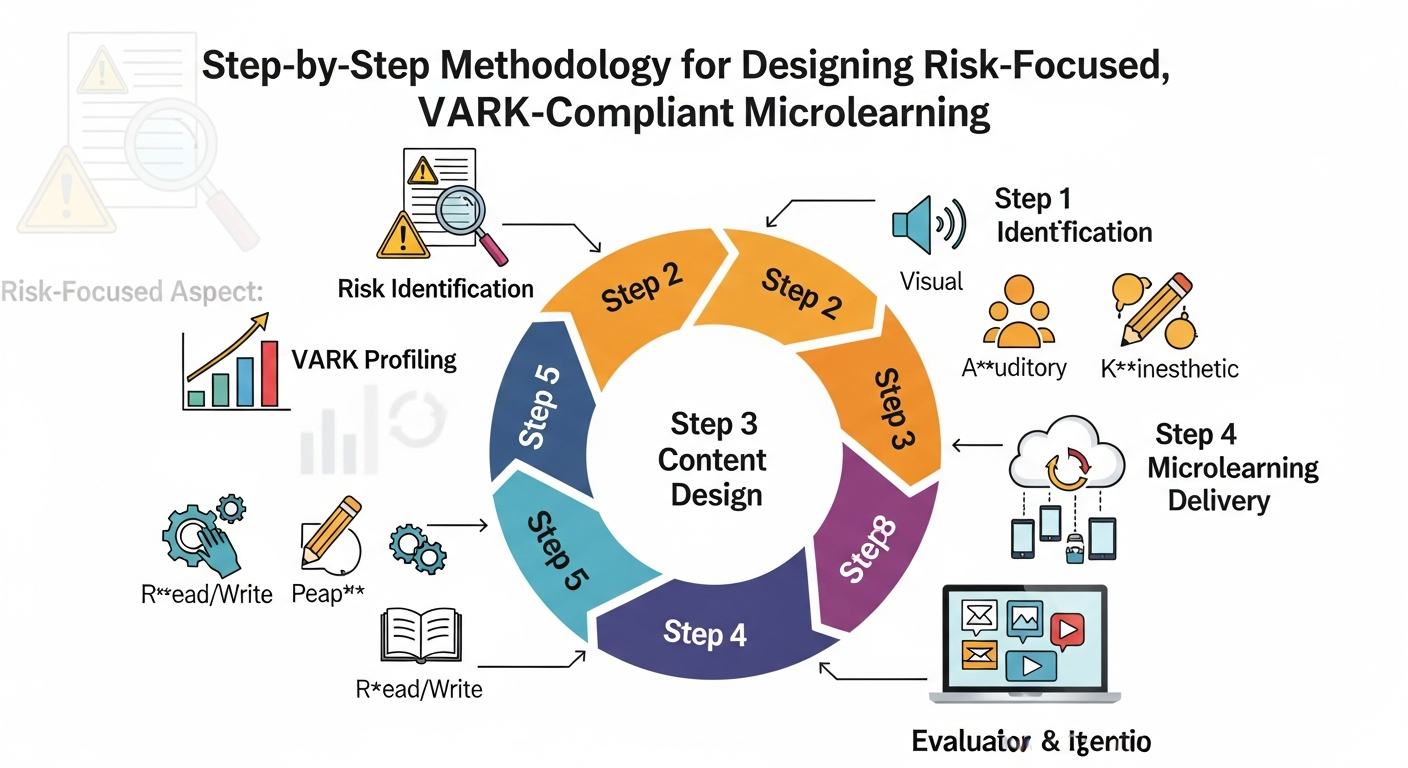
The Step-by-Step Methodology for Designing Risk-Focused, VARK-Compliant Microlearning
In today's dynamic business environment, L&D leaders are under immense pressure to deliver training that is not only engaging and effective but also directly mitigates organizational risks. From compliance adherence in banking and finance to safety protocols in oil and gas, and patient care in healthcare, traditional long-form training often falls short. The solution lies in a meticulously designed approach to microlearning – one that is both risk-focused and compliant with individual learning styles. This article outlines a comprehensive, step-by-step methodology for L&D Vice Presidents, Directors, and Managers to implement such a system, ensuring your training initiatives truly make an impact.
The goal is to move beyond generic content, developing targeted modules that address specific vulnerabilities while catering to the diverse needs of your workforce. This requires a strategic blend of content identification, pedagogical understanding (like the VARK model), modern technology, and continuous optimization through a robust learning management system.
Step 1: Pinpoint Critical Risks and Define Learning Objectives
The foundation of any effective Risk-focused Training program is a clear understanding of the risks it aims to address. This isn't just about identifying what could go wrong, but understanding the root causes and the behaviors that can prevent them.
- Collaborate with Stakeholders: Work closely with legal, compliance, operations, HR, and department heads across industries like banking, pharma, and retail. Leverage risk assessments, audit reports, and incident data to identify high-impact, frequently occurring risks.
- Translate Risks into Behaviors: For each identified risk, define the specific behaviors or knowledge gaps that contribute to it. For example, a data breach risk might translate to a lack of awareness about phishing tactics.
- Formulate SMART Objectives: Transform these behavioral needs into Specific, Measurable, Achievable, Relevant, and Time-bound learning objectives. Each microlearning module should ideally address one or two clear objectives.
An effective enterprise learning management solution can help centralize these risk profiles and map them to potential training needs, creating a strategic overview for L&D.
Step 2: Understand Your Audience with the VARK Model
The VARK model categorizes learners into four preferences: Visual, Auditory, Read/Write, and Kinesthetic. Acknowledging these differences is paramount for adult learning engagement and retention, especially when dealing with critical risk information.
- Visual (V): Learners prefer graphics, charts, diagrams, videos, and demonstrations.
- Auditory (A): Learners prefer listening to explanations, discussions, and podcasts.
- Read/Write (R): Learners prefer text-based information, manuals, notes, and written instructions.
- Kinesthetic (K): Learners prefer hands-on activities, simulations, practice, and real-world examples.
Developing content that caters to all these preferences within a microlearning framework ensures broader appeal and deeper understanding. A sophisticated Adaptive Learning system can even help identify learner preferences over time and deliver more tailored content.
Step 3: Chunk Content into Focused Microlearning Modules
Microlearning's power lies in its brevity and focus. Breaking down complex topics into digestible, bite-sized units is crucial for minimizing cognitive load and maximizing retention.
- One Concept Per Module: Each microlearning module should typically focus on one key concept, skill, or risk-mitigation strategy.
- Short Duration: Aim for modules lasting 3-10 minutes. This fits perfectly into busy schedules and allows for "just-in-time" learning.
- Clear Start and End: Each module should have a clear learning objective, deliver the content, and conclude with a quick assessment or summary.
This structured approach is facilitated by a robust learning content management system (LCMS) which allows for easy organization and deployment of numerous small content pieces.
Step 4: Design Engaging, VARK-Compliant Content for Each Module
This is where the VARK model comes to life, ensuring each microlearning module resonates with diverse learners while effectively communicating risk-focused information.
- Visual Elements: Use clear infographics for data, short animated videos demonstrating processes (e.g., how to identify a phishing email), decision trees, and interactive flowcharts for risk assessment.
- Auditory Elements: Incorporate professional voiceovers for video explanations, short audio snippets for key takeaways, or even mini-podcast style explanations for complex regulations.
- Read/Write Elements: Provide concise summaries, downloadable job aids, links to relevant policies, short quizzes with detailed feedback, and text-based scenarios that require written responses.
- Kinesthetic Elements: Design interactive simulations (e.g., a virtual lab for a safety procedure), drag-and-drop exercises, scenario-based branching questions where choices have consequences, and practical exercises. Incorporating elements from a Gamified LMS can significantly boost engagement here.
The blend of these elements ensures that every learner has multiple pathways to absorb and apply critical risk-related knowledge.
Step 5: Implement with a Robust Microlearning Platform
A specialized Microlearning LMS is essential for delivering, managing, and tracking your risk-focused, VARK-compliant content. A modern learning management software goes beyond simple content delivery.
- Seamless Content Delivery: Ensure the lms learning management system supports various multimedia formats and provides a smooth user experience across devices.
- Tracking and Reporting: Robust analytics are crucial for monitoring completion rates, assessment scores, and identifying knowledge gaps. A cloud based learning management system offers accessibility and scalable reporting.
- Personalization Features: Advanced platforms can recommend content based on learner performance, role, or even preferred learning style.
- Integration Capabilities: The platform should integrate with other HR systems for streamlined user management and data exchange.
MaxLearn LMS, for instance, offers a comprehensive set of learning management solutions designed to meet these exact needs.
Step 6: Leverage Advanced Technologies for Optimization and Personalization
The future of risk-focused training is deeply intertwined with technology, particularly sophisticated algorithms and data processing capabilities. These tools transform how content is created and delivered.
What role do intelligent systems play in enhancing learning content creation?
Advanced natural language processing and machine learning can analyze vast amounts of data, including regulatory documents and past incident reports, to pinpoint critical information. These systems can then assist in generating initial content drafts, identifying potential knowledge gaps, and even suggesting interactive elements tailored to specific risk scenarios, significantly speeding up the development process for an LCMS.
How do advanced algorithms contribute to tailoring educational paths for individual learners?
Algorithms can track individual learner interactions, performance on assessments, and even engagement patterns. By analyzing this data, they can dynamically adjust the learning path, recommending specific modules or supplementary materials. If a learner struggles with a particular compliance topic, the system can automatically serve up additional, varied content (visual, auditory, kinesthetic) until mastery is achieved, making training highly relevant and efficient.
Can data analysis help identify potential learning vulnerabilities before they impact business operations?
Absolutely. By continuously monitoring learner progress and comparing it against predefined risk thresholds, sophisticated analytics can flag individuals or groups who might be at higher risk of non-compliance or procedural errors. This allows L&D to intervene proactively with targeted microlearning interventions, preventing potential incidents before they occur. This predictive capability turns training from a reactive measure into a strategic risk-mitigation tool.
An AI Powered Authoring Tool can be a game-changer here, automating content generation and personalizing learning experiences at scale.
Step 7: Continuous Evaluation and Iteration
Learning is an ongoing process, and so is the optimization of your microlearning strategy. Continuous evaluation ensures that your risk-focused training remains relevant and effective.
- Monitor Key Metrics: Track completion rates, assessment scores, learner feedback, time spent on modules, and most importantly, correlations with actual risk reduction (e.g., fewer compliance breaches, improved safety records).
- Gather Feedback: Regularly solicit input from learners and managers. Are the modules clear? Are they addressing real-world challenges?
- Analyze and Adapt: Use data and feedback to identify areas for improvement. Update outdated content, refine module sequencing, experiment with new interactive elements, and re-align objectives as risks evolve.
This iterative process, supported by robust analytics from your learning management solutions, ensures that your risk-focused, VARK-compliant microlearning program is a living, evolving asset that continuously strengthens your organization's resilience.
Conclusion
Designing risk-focused, VARK-compliant microlearning is no longer a luxury but a strategic imperative for L&D leaders across industries. By following this step-by-step methodology, you can create training programs that are not only highly engaging and effective but also directly contribute to mitigating organizational risks and fostering a culture of continuous learning. Embracing a modern LMS is key to unlocking the full potential of this approach, transforming your L&D department into a powerful driver of business resilience and growth.
.jpg)


