

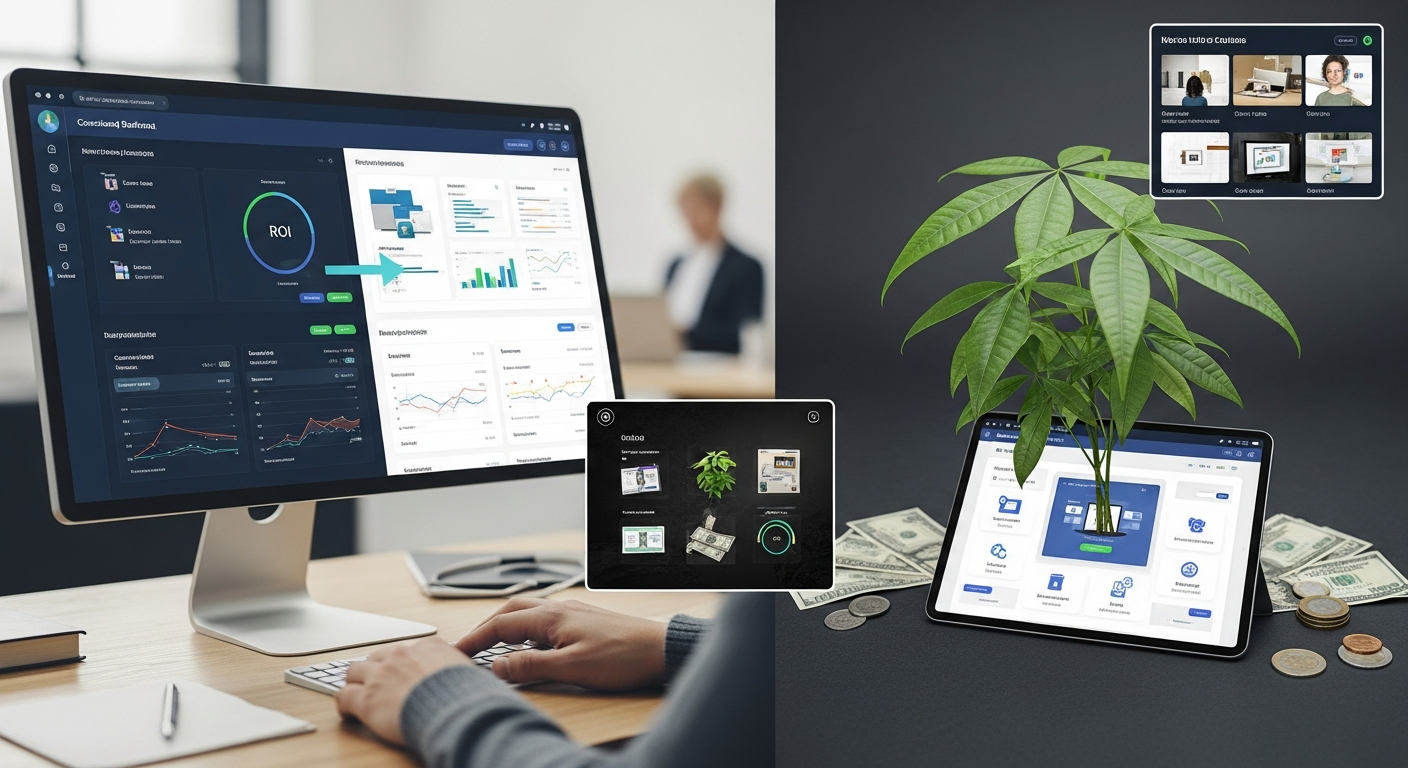
Maximizing L&D ROI: The Financial Benefits of Consolidating Your LMS and Microlearning Tools
In today's fast-paced corporate environment, the Learning & Development (L&D) function is under constant pressure to demonstrate tangible value and a clear return on investment (ROI). For Vice Presidents, Directors, and Senior Managers of L&D, navigating the landscape of diverse learning tools and technologies can be a significant challenge. Many organizations find themselves managing a patchwork of systems – a traditional learning management system for formal courses, separate platforms for microlearning content, and perhaps other tools for content authoring or assessment. This fragmented approach, while seemingly meeting immediate needs, often leads to hidden costs, operational inefficiencies, and a suboptimal learner experience. The strategic consolidation of your Microlearning LMS and microlearning tools into a unified platform isn't just a matter of convenience; it's a powerful financial lever that can significantly boost your L&D ROI.
The L&D Landscape: A Complex Web of Tools
The digital transformation has revolutionized how employees learn, pushing beyond traditional, lengthy courses. Microlearning, with its bite-sized, focused content, has emerged as a highly effective method for knowledge retention and skill development, particularly crucial in dynamic sectors like Sales, Banking, and Healthcare. However, the adoption of microlearning often occurs in parallel with existing infrastructure, leading to a sprawling ecosystem of tools. An organization might use one learning management system for compliance training, another platform for just-in-time sales enablement, and various third-party applications for creating interactive content. This proliferation creates silos, complicates administration, and obscures the true picture of learning effectiveness.
A modern Microlearning LMS is designed to address these challenges head-on. It combines the robust capabilities of a traditional learning management software with the agility and engagement of microlearning delivery, offering a comprehensive learning management solution that caters to the diverse needs of an enterprise. Consolidating into a single, powerful Microlearning LMS means moving towards a more integrated, efficient, and financially astute L&D strategy.
The Hidden Costs of Disjointed Learning Ecosystems
Financial Drain of Multiple Vendors
One of the most immediate and significant financial benefits of consolidation is the reduction in vendor-related expenses. Managing multiple platforms means multiple licensing fees, multiple maintenance contracts, and often, higher per-user costs due to a lack of volume discounts. Each separate system, be it an LMS or a standalone microlearning tool, represents an independent line item in your budget, collectively inflating operational expenditure. A unified solution, particularly a cloud based learning management system, allows for streamlined procurement, potential for bundled services, and stronger negotiation power, leading to considerable cost savings.
Operational Inefficiencies
Beyond direct vendor costs, disparate systems introduce substantial operational inefficiencies. L&D teams spend countless hours on administrative tasks such as:
- Duplicating user data across systems
- Manually tracking learner progress from different platforms
- Struggling with incompatible content formats
- Reconciling disparate reporting and analytics data
This administrative overhead translates directly into lost productivity and higher labor costs. Furthermore, data silos make it nearly impossible to gain a holistic view of learning performance or to correlate training outcomes with business metrics. The lack of a centralized learning content management system (LCMS) means content is often scattered, hard to update, and prone to version control issues.
Diminished Learner Engagement and Impact
From a learner perspective, switching between different platforms can be frustrating and disruptive, leading to lower engagement rates and incomplete learning journeys. If employees in Retail or Hospitality have to log into multiple systems for different types of training, their motivation to learn diminishes. A fractured experience ultimately undermines the effectiveness of your training programs, leading to less skilled employees, higher error rates, and a direct impact on business performance and compliance adherence, especially critical in sectors like Finance and Pharma.
The Power of Consolidation: Unlocking Financial Benefits
Consolidating your Microlearning LMS and microlearning tools into a single, robust LMS learning management system offers a multi-faceted approach to enhancing financial performance.
Streamlined Vendor Management and Reduced Costs
By moving to a single provider, you drastically simplify your vendor relationships, reducing administrative burdens and often leading to significant cost reductions through economies of scale. Instead of juggling multiple invoices and support contracts, you have a single point of contact and a unified expenditure. This simplicity also frees up budget for other strategic L&D initiatives.
Enhanced Operational Efficiency
A unified platform centralizes all learning activities, from course delivery to content management and reporting. An enterprise learning management solution with integrated microlearning capabilities provides:
- Single Sign-On (SSO): Eliminates user login frustrations and reduces help desk tickets.
- Centralized Content Repository: An integrated learning content management system (LCMS) ensures all learning materials are easily accessible, searchable, and updatable from one location, streamlining content development and deployment.
- Automated Administration: Features like automated course assignments, reminders, and progress tracking drastically cut down on manual administrative tasks.
- Unified Data & Analytics: Comprehensive dashboards provide a 360-degree view of learner performance, helping L&D managers make data-driven decisions and clearly demonstrate ROI.
Improved Learning Efficacy and Business Impact
A consolidated learning management system creates a seamless, intuitive learning experience. This leads to higher completion rates, better knowledge retention, and ultimately, a more skilled workforce. Whether it's rapid upskilling in Sales, ensuring regulatory adherence in Compliance, or introducing new products in Banking, effective training directly translates to improved business outcomes, reduced errors, and increased productivity. By making learning more engaging and accessible, a combined platform ensures your investment in training yields measurable improvements in employee performance.
Strategic Advantages for Key Industries
The benefits of consolidating are universal but resonate particularly strongly within specific industries:
- Compliance, Banking, Finance, Insurance: The need for continuous, up-to-date compliance training is paramount. A unified system facilitates rapid deployment of Risk-focused Training modules, ensuring all employees are current with regulations, mitigating legal and financial risks.
- Sales & Retail: Sales teams require agile, just-in-time training on product knowledge, selling techniques, and market changes. A Microlearning LMS integrated with sales enablement tools can deliver instant support, drastically shortening sales cycles and improving conversion rates. In Retail, rapid training for seasonal staff and customer service excellence is streamlined.
- Pharma & Healthcare: New drug launches, medical device updates, and patient care protocols demand frequent, accurate training. A consolidated system ensures all healthcare professionals receive timely and relevant education, crucial for patient safety and regulatory compliance.
- Hospitality: High employee turnover and diverse roles require efficient onboarding and ongoing skill development. Engaging training delivered via a Gamified LMS can boost staff retention and service quality.
- Oil & Gas, Mining: Safety training and specialized operational procedures are critical. A unified LMS provides a robust platform for delivering complex, high-stakes training modules consistently across global operations.
Leveraging Advanced Features for Maximum ROI
A comprehensive learning management system goes beyond just housing content. Modern platforms offer advanced features that amplify the financial benefits of consolidation:
- Adaptive Learning paths personalize the learning experience, ensuring employees focus on what they truly need, reducing wasted training time and increasing efficiency.
- A Gamified LMS increases learner engagement, competition, and motivation, leading to higher completion rates and better knowledge application.
- An AI Powered Authoring Tool accelerates content creation, allowing L&D teams to develop and deploy high-quality microlearning modules rapidly and cost-effectively, keeping pace with evolving business needs.
- Robust analytics and reporting provide actionable insights into training effectiveness, allowing L&D leaders to demonstrate concrete ROI to stakeholders.
- The full suite of an integrated MaxLearn LMS optimizes content delivery, administration, and learning impact, providing a truly holistic approach.
AI-Driven Insights: Addressing Your Critical Questions
How can artificial intelligence optimize my organization's learning strategy for maximum financial return?
Artificial intelligence in learning platforms can personalize content delivery by analyzing learner performance and preferences, ensuring employees receive the most relevant training. This reduces training time for individuals, focuses resources more effectively, and accelerates skill acquisition, leading to higher productivity and significant cost savings by minimizing redundant training. Predictive analytics powered by AI can also identify potential skill gaps before they become critical, allowing proactive intervention and preventing costly business disruptions.
Where are organizations seeing the most significant cost savings by integrating their learning technologies?
Globally, organizations, especially those in highly regulated sectors like financial services, pharmaceuticals, and healthcare, are reporting substantial cost savings primarily in three areas: reduced administrative overhead due to automation and centralization, fewer vendor licensing fees from consolidating multiple systems into a single learning management software, and improved compliance audit preparation, which minimizes fines and legal expenses. The efficiencies gained from a unified learning management solution are evident in both operational budgets and risk mitigation.
What critical steps should my L&D team take to ensure a successful integration of learning platforms and realize its financial potential?
To ensure a successful integration and maximize financial returns, your L&D team should first conduct a comprehensive needs assessment to identify current inefficiencies and future requirements. Next, secure strong executive sponsorship and stakeholder buy-in across departments. Carefully select a scalable MaxLearn LMS that supports both traditional and microlearning methodologies, like a cloud based learning management system, and offers robust integration capabilities. Finally, prioritize change management strategies, provide thorough training for administrators and learners, and establish clear metrics for continuous evaluation of the system's impact on business outcomes and ROI.
Conclusion
The journey towards maximizing L&D ROI is multifaceted, but consolidating your LMS and microlearning tools into a single, powerful enterprise learning management platform stands out as a strategic imperative. The financial benefits are clear: reduced vendor costs, vastly improved operational efficiencies, and a demonstrably more effective learning experience that directly impacts employee performance and business success. For L&D leaders striving to elevate their function from a cost center to a strategic business driver, embracing consolidation isn't just an option—it's the smart investment for sustainable growth and a future-proof workforce.
.jpg)


