

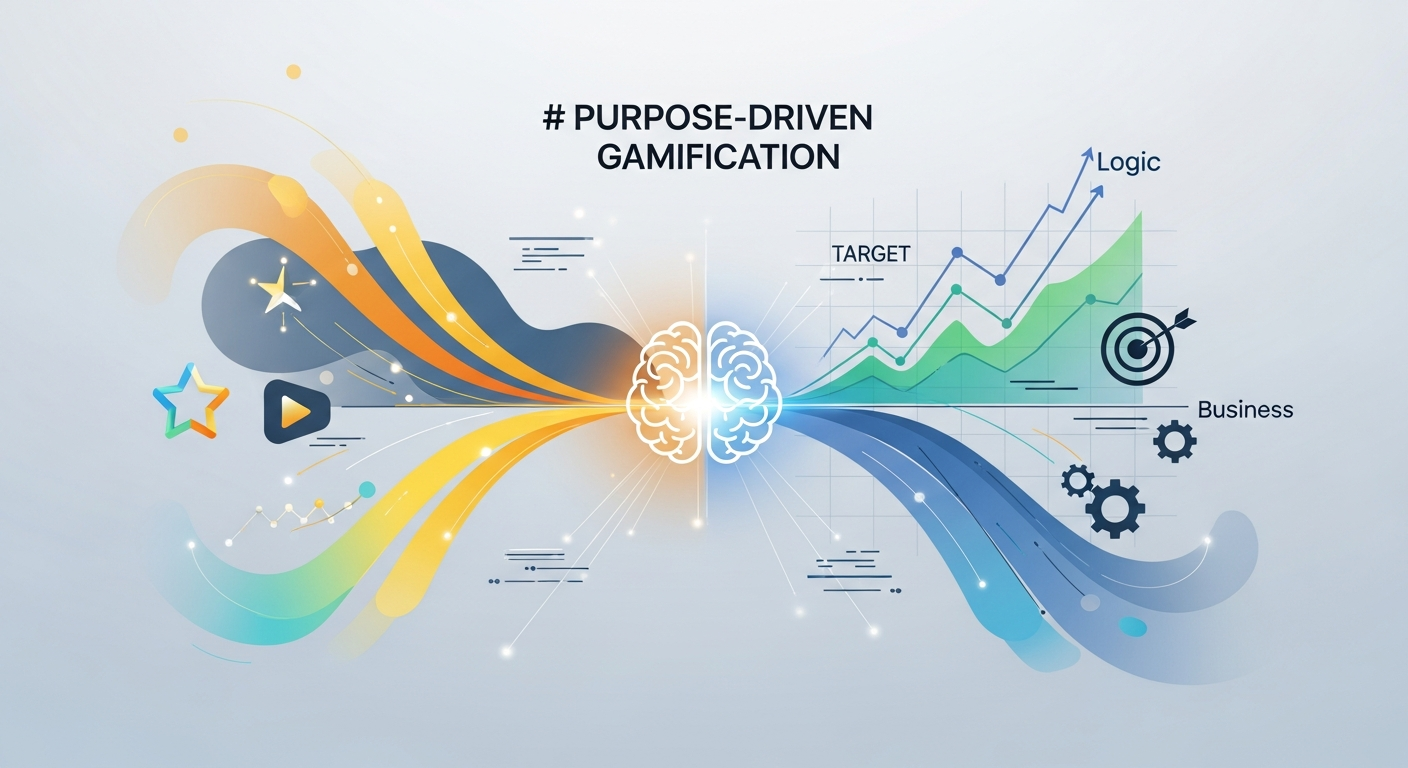
Purpose-Driven Gamification: How Serious Fun Boosts ROI
In today's fast-evolving corporate landscape, Learning & Development (L&D) leaders face a persistent challenge: how to genuinely engage employees, ensure knowledge retention, and translate training into measurable business impact. Traditional training methods, while foundational, often struggle to capture the attention of a workforce accustomed to dynamic digital experiences. This is where purpose-driven gamification emerges not just as a trend, but as a strategic imperative, transforming learning into an immersive and highly effective journey. It’s about more than just points and badges; it’s about aligning fun with core business objectives to deliver a compelling return on investment (ROI).
What is Purpose-Driven Gamification?
Purpose-driven gamification transcends mere entertainment by meticulously integrating game mechanics with specific learning goals and business outcomes. Unlike purely recreational games, every element—from challenges and leaderboards to rewards and narratives—is engineered to reinforce desired behaviors, knowledge acquisition, and skill development. For an enterprise learning management system, this approach means crafting experiences where learners don't just "play," but actively participate in scenarios that mirror real-world challenges, making the learning process intrinsically motivating and deeply relevant.
Imagine a global sales team practicing complex negotiation tactics within a simulated marketplace, or a banking professional navigating compliance regulations through an interactive quest. This isn't just about making learning fun; it’s about making it effective, measurable, and directly contributive to organizational success, powered by a robust Microlearning LMS.
Why Gamification Matters for L&D Today
The modern learner, often overwhelmed by information and distractions, demands engaging and personalized experiences. L&D departments in industries like Banking, Pharma, Retail, and Oil & Gas are constantly striving to:
- Combat low course completion rates and disengagement.
- Ensure critical knowledge transfer, especially in compliance-heavy sectors.
- Accelerate skill acquisition for rapidly changing roles.
- Provide measurable data on learning effectiveness.
Purpose-driven gamification directly addresses these pain points. By injecting elements of competition, collaboration, and achievement into training, it transforms passive consumption into active participation. A Gamified LMS leverages psychological principles to foster commitment and persistence, turning mandatory training into a valued opportunity for growth.
The ROI of Serious Fun: Tangible Benefits
The true power of purpose-driven gamification lies in its ability to generate significant, measurable returns for businesses. Here's how serious fun boosts ROI across various industries:
Enhanced Engagement and Retention
Gamified learning modules inherently boost learner engagement. The allure of progress, rewards, and friendly competition motivates employees to complete courses and return for more. This increased engagement directly translates to higher knowledge retention rates, as active participation and repeated interaction with content solidify understanding. In high-stakes fields like healthcare or finance, this means staff are better prepared to apply critical procedures and policies.
Improved Knowledge Transfer and Skill Application
By simulating real-world scenarios and providing immediate feedback, gamification bridges the gap between theoretical knowledge and practical application. Learners can experiment in a risk-free environment, making mistakes and learning from them, leading to faster and more effective skill development. This is crucial for sales teams refining their pitch or for retail staff mastering new product features.
Faster Skill Development and Onboarding
Gamified learning paths can significantly reduce the time required for new hires to become productive or for existing employees to upskill. The structured progression, clear objectives, and immediate gratification inherent in game design accelerate the learning curve, making onboarding more efficient and less resource-intensive. For industries like hospitality with high turnover, this is invaluable.
Better Data and Insights
A sophisticated learning management software tracks every interaction, every challenge completed, and every decision made within the gamified environment. This rich data provides L&D leaders with unprecedented insights into learner progress, knowledge gaps, and areas requiring further attention. This analytical capability of a robust Microlearning LMS allows for continuous optimization of training content and delivery, ensuring maximum effectiveness.
Measurable Impact on Business Metrics
Ultimately, purpose-driven gamification ties directly to business outcomes. Whether it's improved compliance adherence rates in financial services, higher sales conversion rates, reduced safety incidents in mining, or enhanced customer satisfaction scores in retail, the impact is quantifiable. When training is fun and effective, it directly contributes to operational excellence and bottom-line growth.
Implementing Purpose-Driven Gamification Effectively
To maximize the ROI, implementation must be strategic:
- Align with Learning Objectives: Every game mechanic, reward, and challenge must directly support a specific learning goal or business objective.
- Design for Intrinsic Motivation: Beyond external rewards, focus on fostering a sense of mastery, autonomy, and purpose within the learning journey.
- Integrate with Your Learning Ecosystem: Ensure your gamified solutions seamlessly integrate with your existing learning content management system or `cloud based learning management system` for a cohesive learner experience. This is where platforms offering Adaptive Learning shine.
- Iterate and Optimize: Leverage the data from the gamified platform to continuously refine content and game mechanics, ensuring ongoing relevance and effectiveness. An AI Powered Authoring Tool can greatly assist in this process.
Addressing Key Questions in Learning Technology
Q: How can advanced technology pinpoint optimal learning pathways for individual employees?
A: Cutting-edge learning management solutions leverage sophisticated algorithms to analyze a learner's performance, preferences, and existing skill sets. By processing vast amounts of data, a smart `LMS learning management system` can dynamically recommend personalized content, adjust the difficulty of challenges, and suggest relevant modules. This ensures that each employee receives the most effective and efficient learning path tailored to their unique needs, much like what MaxLearn LMS offers, maximizing engagement and learning velocity.
Q: What methods do leading organizations employ to ensure their digital learning initiatives are relevant across diverse global teams?
A: Forward-thinking organizations utilize a robust `learning management software` that supports multi-language capabilities, culturally sensitive content adaptation, and localized training scenarios. By offering flexible content authoring and deployment, they can tailor gamified experiences to resonate with specific regional nuances while maintaining global consistency in learning objectives. This approach ensures high engagement and applicability for a geographically dispersed workforce.
Q: In what ways can a smart learning platform predict future skill gaps and proactively suggest training solutions?
A: An intelligent `learning management solutions` can integrate with talent management systems and analyze industry trends, employee performance data, and strategic business goals. Through predictive analytics, it identifies emerging skill requirements and potential future gaps within the workforce. This allows the platform to proactively suggest relevant gamified training modules and specialized courses, empowering L&D to prepare employees for future roles and challenges before they become critical.
Q: How do successful companies leverage simulation and interactive scenarios to prepare staff for high-stakes situations?
A: Successful companies utilize immersive simulations and interactive branching scenarios within their learning platforms to mimic real-world critical situations. These gamified experiences allow employees to practice decision-making, manage consequences, and refine their responses in a safe environment. This is particularly vital for Risk-focused Training in sectors like healthcare, finance, or oil and gas, ensuring staff are well-prepared for emergencies, compliance incidents, or complex customer interactions.
Conclusion
For Vice Presidents, Directors, and Senior Managers in L&D across various industries, the decision to invest in purpose-driven gamification is a strategic move towards a more engaged, skilled, and productive workforce. It transforms the often-dreaded training session into an exciting, results-driven adventure. By harnessing the power of serious fun within a modern `LCMS` or `learning management system`, organizations can not only improve learning outcomes but also achieve a tangible, undeniable boost to their bottom line. The time to embrace this powerful methodology is now, ushering in an era where learning is not just a necessity, but a competitive advantage.
.jpg)


