

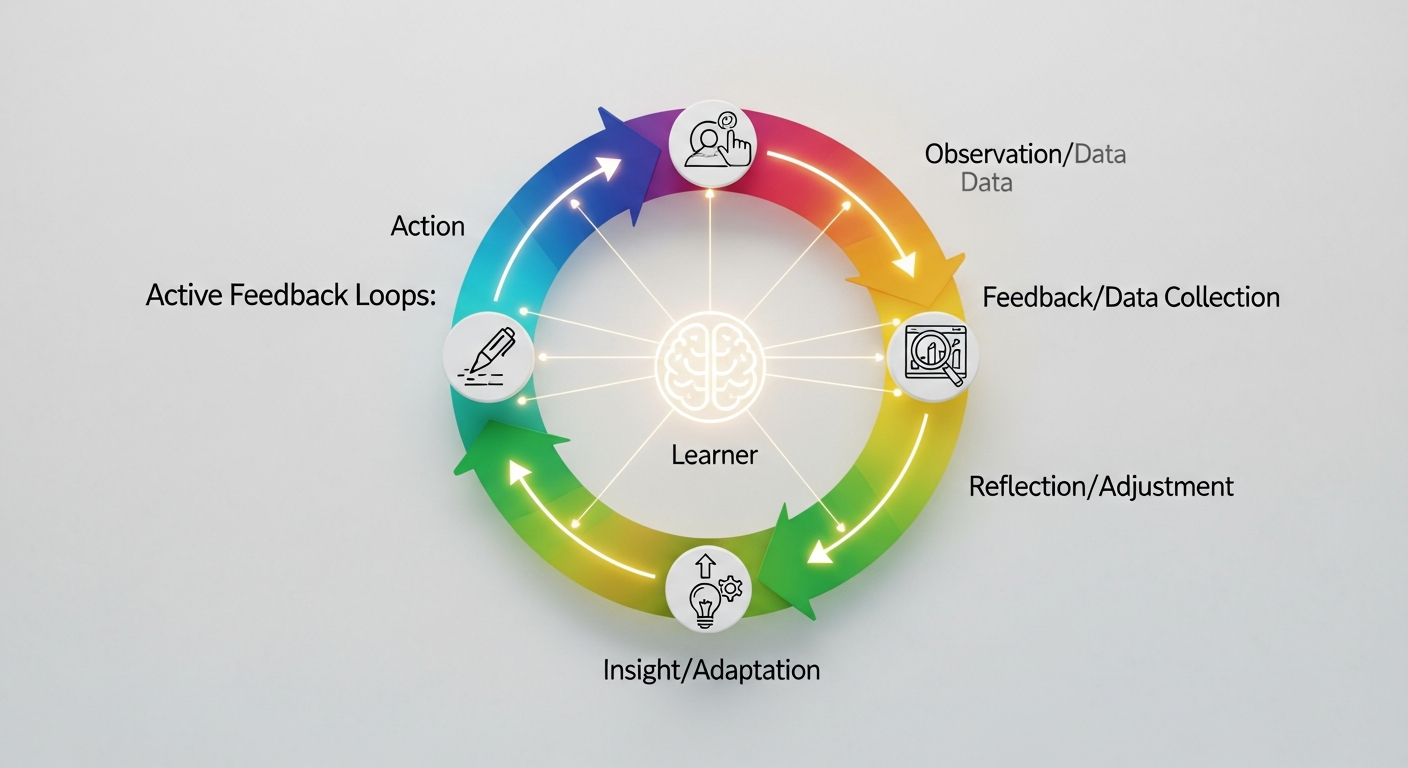
Active Feedback Loops: The Secret To Effective Learning
In the fast-evolving landscape of corporate learning and development, the pursuit of truly effective training remains a top priority for L&D leaders. As Vice Presidents, Directors, and Senior Managers, you understand the imperative of not just delivering content, but ensuring that knowledge sticks, skills are mastered, and performance metrics improve. While innovative tools and engaging content are vital, there's a profound, often underutilized, mechanism that separates good learning from great learning: active feedback loops.
Imagine a training program that doesn't just present information, but dynamically responds to each learner's progress, challenges, and comprehension in real-time. This isn't a futuristic fantasy; it's the power of active feedback loops. This article will delve into why these loops are not merely beneficial, but are, in fact, the secret sauce for transforming your eLearning initiatives across industries like Compliance, Sales, Banking, Finance, Insurance, Retail, Pharma, Health care, Hospitality, Oil and Gas, and Mining.
What are Active Feedback Loops?
At its core, an active feedback loop is a continuous process where information about a learner’s performance is captured, analyzed, and then used to inform and adapt the learning experience itself. Unlike passive feedback, such as a score at the end of a module, active feedback is immediate, actionable, and often iterative. It's about creating a dialogue between the learner and the learning system, fostering a dynamic environment where mistakes become opportunities for immediate correction and deeper understanding.
Consider a scenario: a sales professional completes a module on objection handling. With active feedback, instead of just seeing a final score, they might receive specific insights into why a particular response was incorrect, alternative phrasing suggestions, or even be directed to a Microlearning LMS module focusing specifically on that weak point. This immediate, targeted intervention is what makes feedback truly active and impactful.
Why Active Feedback is Crucial for L&D Success
For L&D professionals tasked with optimizing human capital, active feedback loops offer a multitude of benefits that directly impact business outcomes:
- Enhanced Knowledge Retention: Immediate correction solidifies understanding, preventing misconceptions from taking root.
- Accelerated Skill Development: Learners can pinpoint weaknesses faster and receive targeted practice, leading to quicker mastery.
- Increased Engagement & Motivation: The feeling of progress and personalized support keeps learners motivated and invested in their development.
- Improved Performance & Productivity: Well-trained employees perform better, make fewer errors, and contribute more effectively to organizational goals. This is especially critical in sectors like Compliance, Finance, and Health care where precision is paramount.
- Data-Driven Insights: Feedback data provides invaluable insights into learning efficacy, content gaps, and individual learner needs, allowing L&D teams to refine their strategies.
Implementing a robust learning management system that incorporates these principles can revolutionize how your organization approaches training.
Implementing Active Feedback in Modern eLearning
The good news is that modern eLearning technologies are perfectly poised to facilitate sophisticated active feedback loops. Here's how L&D leaders can leverage them:
Leveraging Adaptive Learning Paths
Instead of a one-size-fits-all approach, Adaptive Learning tailors content and difficulty based on learner interactions. If a learner struggles with a concept, the system can automatically provide additional resources, practice questions, or alternative explanations. Conversely, if they demonstrate mastery, they can skip ahead, making the learning journey more efficient and engaging.
The Power of Gamification
Integrating a Gamified LMS can transform feedback into an exciting, competitive, and rewarding experience. Leaderboards, badges, points, and challenges provide immediate feedback on performance, fostering a sense of achievement and healthy competition. This is particularly effective in engaging diverse workforces across industries like Retail and Hospitality.
Instant Quizzes and Scenario-Based Feedback
Embed frequent, low-stakes quizzes within modules. Provide immediate feedback on answers, explaining why an answer was right or wrong. For complex skills, like those in Banking or Oil and Gas, scenario-based simulations offer realistic practice with immediate, detailed feedback on decisions made, consequences, and best practices.
Peer and Manager Feedback Integration
While technology drives much of active feedback, don't overlook human elements. Tools within a learning management software can facilitate peer reviews, mentor feedback, or manager sign-offs on practical tasks, adding another rich layer to the feedback loop.
The Future of Feedback: Artificial Intelligence's Role
Artificial intelligence is rapidly transforming the capabilities of active feedback, moving beyond simple correct/incorrect responses to truly intelligent, personalized interventions. For L&D professionals seeking an edge, understanding AI’s potential is key.
How can intelligent systems personalize learning experiences for diverse global teams?
AI-driven platforms analyze individual learning patterns, preferences, and performance data to create highly customized learning paths. This personalization considers not only what a learner knows but also how they prefer to learn, ensuring content relevance and optimal engagement. For global organizations in Pharma or Mining, this means delivering culturally and contextually appropriate content at scale, regardless of location, ensuring that a cloud based learning management system can cater to everyone.
What new possibilities does advanced technology open for skill development and competency assurance?
AI enables predictive analytics, identifying skill gaps before they become critical. It can suggest relevant learning content, such as Risk-focused Training, and even generate personalized practice scenarios. With an AI Powered Authoring Tool, L&D teams can rapidly create and update content that dynamically adapts to feedback, keeping training current and effective. This capability is revolutionary for maintaining compliance and skill proficiency in highly regulated industries.
Can technology help us deliver consistent, high-quality training across all organizational segments?
Absolutely. Modern enterprise learning management systems, enhanced with AI, ensure consistent content delivery and feedback mechanisms across all departments and locations. This eliminates disparities in training quality, guaranteeing that every employee, whether in a branch office in Finance or a remote site in Oil and Gas, receives the same high standard of education and support. A comprehensive learning content management system or LCMS becomes the central hub for this standardization.
Measuring the Impact of Active Feedback
For L&D leaders, demonstrating ROI is paramount. Active feedback loops provide a wealth of data to measure impact:
- Completion Rates: Engaged learners with immediate support are more likely to complete courses.
- Proficiency Scores & Skill Mastery: Track improvement in assessment scores over time and across iterations.
- Time to Competency: Observe how quickly learners achieve desired skill levels compared to traditional methods.
- Behavioral Changes: Link training outcomes to real-world performance metrics, such as reduced compliance violations, improved sales figures, or enhanced customer satisfaction.
- Learner Satisfaction: Surveys and feedback forms can gauge how learners perceive the support and effectiveness of the feedback mechanisms.
An advanced MaxLearn LMS or any sophisticated lms learning management system provides robust analytics dashboards to help you monitor these metrics effectively.
Conclusion
Active feedback loops are not just a feature; they are a fundamental shift in how we approach learning. They transform passive consumption into an active, responsive, and ultimately more effective journey. For L&D Vice Presidents, Directors, and Senior Managers, embracing and strategically implementing these loops, powered by innovative learning management solutions and AI, is no longer an option but a strategic imperative.
By fostering a continuous dialogue between learners and the learning environment, you can unlock unprecedented levels of engagement, accelerate skill acquisition, and drive tangible business results across all your industry segments. Make active feedback loops the cornerstone of your eLearning strategy, and watch your organization thrive.
.jpg)


