

Behavioral Conditioning: Revolutionizing L&D for Corporate Excellence
As leaders in Learning & Development, Vice Presidents, Directors, and Senior Managers are constantly seeking innovative strategies to enhance employee performance, ensure compliance, and drive organizational growth. In today’s dynamic corporate landscape, traditional training methods often fall short in fostering lasting behavioral change. This is where the principles of behavioral conditioning, when strategically applied, can transform your L&D initiatives from mere knowledge transfer to impactful, sustained development. This article explores how understanding and leveraging these psychological principles can elevate your corporate learning programs, particularly across critical sectors like Compliance, Sales, Banking, Finance, Insurance, Retail, Pharma, Healthcare, Hospitality, Oil and Gas, and Mining.
Understanding Behavioral Conditioning in the Corporate Context
Behavioral conditioning, a fundamental concept in psychology, posits that behaviors can be learned or modified through interaction with the environment. For L&D professionals, this isn't about manipulation, but about designing learning experiences that effectively reinforce desired actions and diminish undesirable ones. It’s about creating an ecosystem where the right behaviors are naturally encouraged and sustained.
Classical Conditioning in L&D
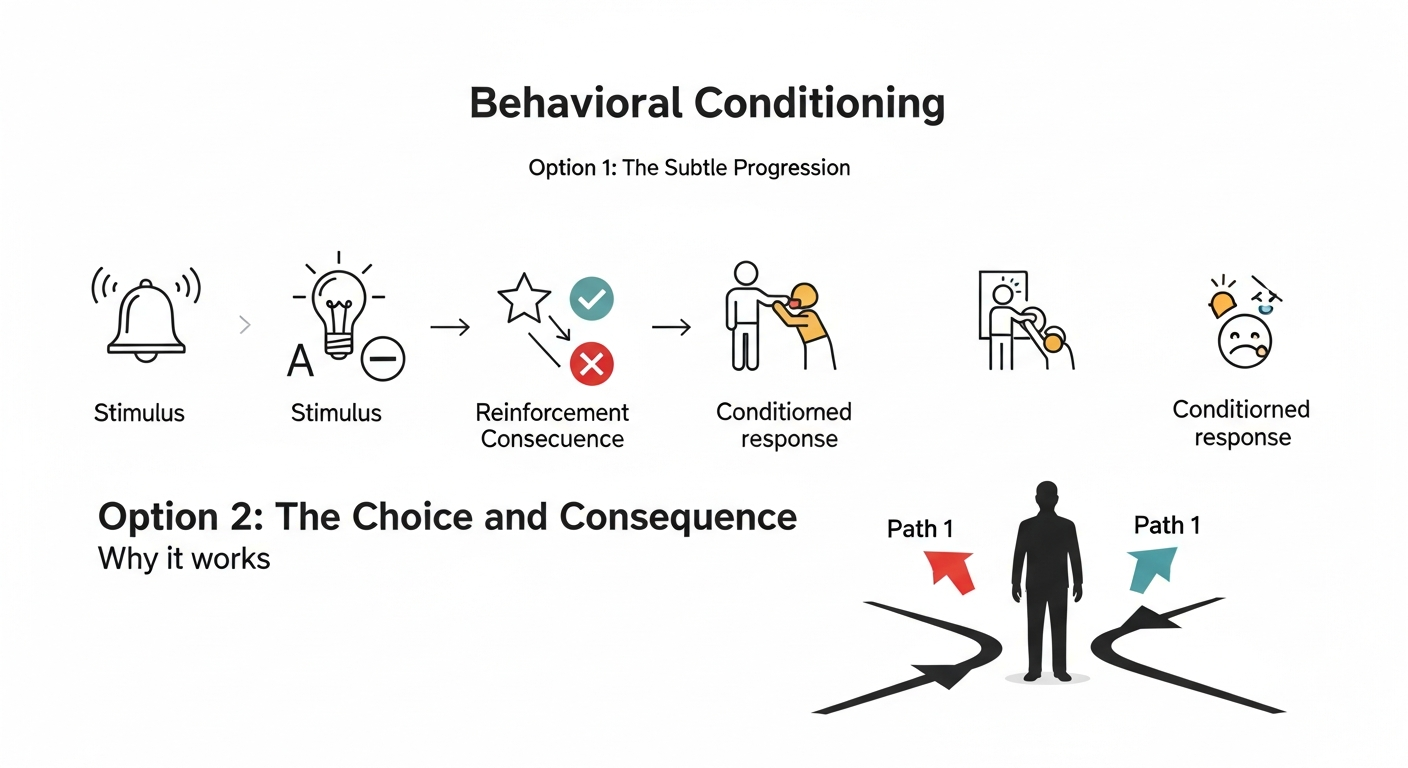
Originally identified by Ivan Pavlov, classical conditioning involves associating an involuntary response with a new stimulus. In L&D, this can be subtly powerful. Imagine associating positive experiences – such as peer recognition, career advancement opportunities, or even just a well-designed, engaging module – with necessary but often perceived as mundane training, like annual compliance refreshers or new software onboarding. Over time, employees begin to view learning not as a chore, but as a gateway to positive outcomes and professional development. This approach is invaluable in sectors demanding high levels of adherence and precise execution, ensuring that critical safety protocols in Oil and Gas, or stringent financial regulations in Banking, are met with a positive, proactive mindset.
Operant Conditioning in L&D
B.F. Skinner’s work on operant conditioning focuses on how voluntary behaviors are strengthened or weakened by the consequences that follow them. This is the bedrock of many modern learning strategies. Positive reinforcement, like awarding badges, points, or leader board positions for module completion in a Gamified LMS, encourages engagement. Negative reinforcement (the removal of an unpleasant stimulus, not punishment) could be allowing experienced employees to skip basic modules after demonstrating proficiency. Punishment, though generally avoided in modern L&D, could manifest as requiring remediation for non-compliance. Applied correctly, operant conditioning can be exceptionally effective in fostering desired behaviors, whether it's meticulous data entry in Finance or empathetic customer service in Hospitality.
Why is Behavioral Conditioning Critical for L&D Today?
In an era demanding agility and continuous skill development, L&D must move beyond one-off training events. Behavioral conditioning provides a framework for creating sticky learning that translates into measurable performance improvements.
Driving Compliance & Reducing Risk
For industries like Pharma, Healthcare, and Finance, compliance is non-negotiable. Risk-focused Training, underpinned by behavioral conditioning, ensures that employees not only understand regulations but consistently act in accordance with them. Through repeated exposure, immediate feedback, and reinforcement of correct procedures, the likelihood of errors and non-compliance significantly diminishes. A robust learning management system (LMS) can track progress, identify knowledge gaps, and deliver targeted interventions, ensuring that critical risk mitigation behaviors become second nature.
Enhancing Sales Performance
In Sales and Retail, specific behaviors directly impact the bottom line. From objection handling to product knowledge application, behavioral conditioning can embed high-performance habits. Regular, bite-sized training delivered through a AI Powered Authoring Tool, followed by immediate application and feedback, reinforces winning strategies. Sales managers can leverage an LMS to track call behaviors, provide constructive criticism, and reward successful outcomes, thereby shaping a high-achieving sales force.
Boosting Employee Engagement & Retention
Beyond compliance and sales, behavioral conditioning fosters a positive learning culture. When learning is designed to be rewarding, relevant, and provides clear pathways for growth, employees are more engaged. This is crucial for retention, especially in competitive sectors like Tech and Consulting. A modern Microlearning LMS can provide personalized learning journeys, offering frequent opportunities for positive reinforcement and skill mastery, which contributes directly to job satisfaction and loyalty.
The Role of Modern Learning Technologies
Implementing behavioral conditioning effectively at scale requires sophisticated tools. Modern learning platforms are designed to facilitate the principles of reinforcement and personalization.
Microlearning for Reinforcement
Short, focused learning modules are ideal for repeated exposure and reinforcement without overwhelming learners. This Adaptive Learning approach aligns perfectly with behavioral principles, allowing for frequent opportunities to practice desired behaviors and receive immediate feedback. It’s particularly effective for embedding complex procedural knowledge in industries like Healthcare or Manufacturing.
Personalized Pathways
Not all learners require the same conditioning. Adaptive learning platforms assess individual knowledge gaps and skill levels, delivering tailored content. This personalized approach ensures that learners receive the specific reinforcement they need, making the process more efficient and effective. A modern learning management system (LMS) offers capabilities far beyond a traditional learning content management system, allowing for dynamic content delivery.
Learning Platforms and Management Systems
At the heart of any scalable behavioral conditioning strategy is a robust learning platform. A comprehensive Microlearning LMS facilitates the delivery of targeted content, tracks learner progress, manages certifications, and provides the analytics needed to refine learning interventions. These powerful systems, often referred to as a learning management software or enterprise learning management solution, are essential for any organization committed to data-driven L&D. Whether you're looking for a cloud based learning management system or an advanced LCMS, the right platform acts as the backbone for consistent, high-impact learning.
AI-Enhanced Learning and Behavioral Conditioning
The advent of artificial intelligence (AI) is supercharging the application of behavioral conditioning in L&D, allowing for unprecedented personalization, efficiency, and impact. These intelligent systems move beyond mere content delivery to actively shape learning behaviors.
-
How can intelligent systems predict learning needs?
AI-driven analytics can process vast amounts of data on learner performance, job roles, and organizational objectives. By identifying patterns and predicting skill gaps before they become critical, these systems can proactively recommend specific training modules. This foresight allows L&D to apply targeted conditioning, ensuring employees acquire necessary skills precisely when they are most needed, thereby reinforcing a culture of continuous readiness.
-
What tools help tailor content for individual employee progress?
Adaptive algorithms within learning platforms dynamically adjust the difficulty, pace, and even the format of content based on an individual's real-time performance and learning style. For instance, if an employee consistently struggles with a particular compliance scenario, the system can automatically provide additional practice, varied explanations, or even simulated environments, until mastery is achieved. This personalized reinforcement loop ensures optimal conditioning without redundant training.
-
In what ways do advanced platforms ensure consistent learning across global teams?
Intelligent learning solutions provide uniform access to high-quality, relevant training materials regardless of geographical location. They can also offer localization for content, track global completion rates, and identify regional performance disparities. This consistency is vital for large corporations in industries like Mining or Global Finance, where uniform behavioral standards and compliance are paramount. Such platforms ensure that every employee, everywhere, receives the same quality of conditioning to uphold company standards.
-
How do these technologies support skill development in high-stakes environments?
AI-powered simulations and virtual reality environments offer safe spaces for employees to practice high-risk behaviors, such as operating complex machinery in Oil and Gas or managing critical patient scenarios in Healthcare. The systems provide immediate, objective feedback, allowing for repeated practice and refinement of skills until the desired behavior is instinctively performed under pressure. This rigorous, consequence-free conditioning is invaluable for preparing personnel for real-world challenges.
Implementing Behavioral Conditioning in Your L&D Strategy
To effectively integrate behavioral conditioning, consider these key principles:
- Define Desired Behaviors: Clearly articulate what specific actions or responses you want to encourage or diminish.
- Design Targeted Interventions: Create learning experiences that provide opportunities for practice and reinforcement.
- Integrate Feedback Loops: Provide immediate and constructive feedback, whether through automated quizzes, peer reviews, or manager coaching.
- Leverage Technology: Utilize a powerful learning management system (LMS) like MaxLearn LMS to automate, track, and personalize the conditioning process.
Conclusion
Behavioral conditioning is not a new concept, but its application within modern corporate L&D, particularly with the aid of advanced technologies, is revolutionizing how organizations develop their talent. By strategically applying these principles, L&D leaders can move beyond simply delivering training to actively shaping a workforce that is competent, compliant, and consistently high-performing. From reducing risk in Finance to boosting sales in Retail, the power of conditioned behavior can be the differentiator your organization needs to thrive. Explore how a sophisticated learning management system can empower your L&D strategy and unlock your team's full potential.
.jpg)


