

Unlocking Potential: Navigating the Booming Micro-Learning Market for L&D Leaders
In today's fast-paced corporate world, the traditional approach to employee training often struggles to keep up with the demand for continuous skill development, rapid knowledge transfer, and immediate application. This challenge is acutely felt by L&D Vice Presidents, Directors, and Managers striving to equip their teams with competitive advantages. Enter micro-learning – a dynamic, bite-sized approach to education that is not just a trend but a strategic imperative, driving the rapid expansion of the micro-learning market globally.
As L&D professionals, you understand the critical need to deliver impactful training that resonates, retains, and transforms. Micro-learning addresses the modern learner's fragmented attention span and desire for relevant, on-demand content. It's about delivering the right information, to the right person, at the right time, in digestible formats. This article explores the burgeoning micro-learning market, its profound implications across diverse industries, and how leveraging advanced technologies like AI can revolutionize your training initiatives.
The Shifting Tides of Corporate Learning
The digital age has fundamentally reshaped how individuals consume information and learn. Employees are often overloaded with data, tight deadlines, and competing priorities, making lengthy training sessions an inefficient use of their valuable time. The shift towards agile methodologies and continuous upskilling necessitates a learning model that is equally agile and efficient.
The Power of Bite-Sized Learning
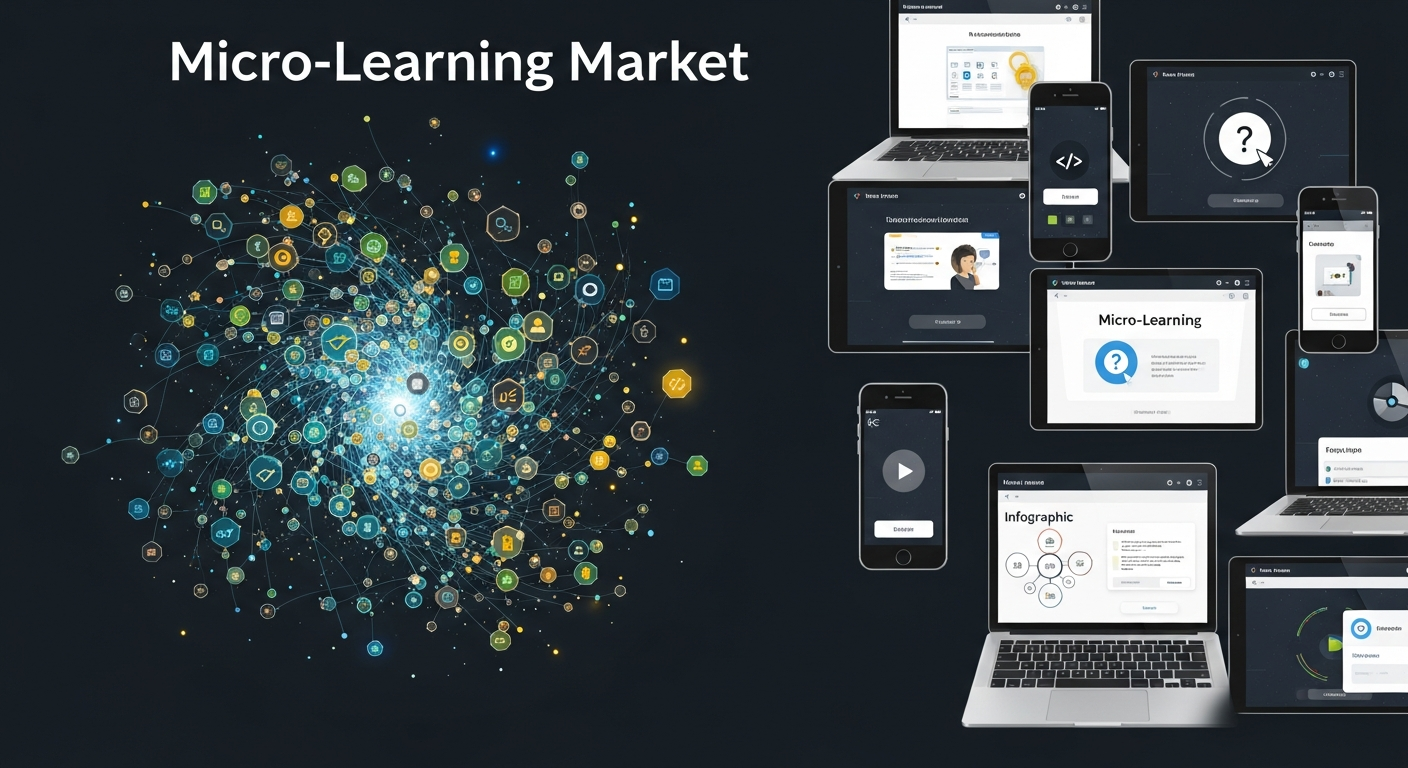
Micro-learning modules, typically lasting a few minutes, are designed to achieve a specific learning objective. They can take various forms – short videos, interactive quizzes, infographics, mini-simulations, or quick reference guides. This approach leads to higher engagement rates, better knowledge retention, and quicker application of skills on the job. For L&D leaders, this translates into a more effective use of training budgets and a demonstrably skilled workforce.
Driving Efficiency Across Industries
The versatility of micro-learning makes it an invaluable tool across a multitude of sectors, addressing unique training needs and compliance requirements.
Compliance and Risk Mitigation
For industries like Banking, Finance, Insurance, Pharma, and Healthcare, regulatory compliance is non-negotiable. Traditional annual compliance training can be overwhelming and easily forgotten. Micro-learning allows for frequent, targeted updates on specific regulations, policies, or procedures. This targeted approach significantly improves understanding and adherence, effectively managing Risk-focused Training by breaking down complex topics into manageable, reinforced segments.
Boosting Performance in Sales and Service
In Retail, Sales, and Hospitality, quick access to product knowledge, service protocols, or sales techniques can directly impact customer satisfaction and revenue. Micro-learning provides sales teams with on-the-spot refreshers on product features, objection handling, or new promotions, ensuring they are always equipped with the latest information. Similarly, customer service representatives can quickly access guides on handling specific queries or using new CRM features, leading to better service delivery.
Sector-Specific Applications
- Banking & Finance: Training on new financial products, fraud prevention, data privacy regulations.
- Insurance: Updates on policy changes, claims processing, customer interaction best practices.
- Retail: Product knowledge, merchandising standards, customer service excellence.
- Pharma & Healthcare: Medical device training, new drug protocols, patient care guidelines, ethical compliance.
- Hospitality: Service standards, reservation system updates, health and safety protocols.
- Oil & Gas & Mining: Safety procedures, equipment operation refreshers, environmental regulations.
The Role of Technology: AI and Beyond
The true potential of the micro-learning market is unleashed when integrated with cutting-edge technology, particularly Artificial Intelligence. AI is not just automating tasks; it's transforming how learning content is created, delivered, and consumed.
AI-Driven Personalization and Delivery
How can artificial intelligence enhance the effectiveness of our corporate training programs? AI plays a pivotal role in personalizing the learning journey. By analyzing learner data—such as performance, preferences, and job role—AI algorithms can recommend the most relevant micro-learning modules to each individual, ensuring a highly tailored experience. This adaptive approach ensures that employees receive exactly what they need, when they need it, optimizing their time and learning outcomes.
In what ways does AI personalize learning experiences for individual employees? AI-powered systems can dynamically adjust the difficulty and content of modules based on real-time learner interactions. This means a learner struggling with a concept might receive supplementary material, while another who grasps it quickly can advance to more challenging topics. This level of personalization far exceeds traditional one-size-fits-all training models.
Can AI help scale microlearning solutions across diverse global teams? Absolutely. AI’s capabilities extend to automatic content localization, translating and adapting micro-learning modules for different languages and cultural contexts, making it feasible to deploy consistent yet culturally sensitive training across international workforces without extensive manual effort.
Enhancing Engagement and Outcomes
The right technological infrastructure is crucial for successful micro-learning deployment. A robust Microlearning LMS serves as the central hub for managing, delivering, and tracking these bite-sized learning experiences. Modern platforms often incorporate features that significantly boost engagement.
For instance, a Gamified LMS integrates game-like elements such as points, badges, leaderboards, and challenges into the learning process. This makes training more interactive and enjoyable, fostering healthy competition and increasing participation. When combined with micro-learning, gamification can turn routine compliance training or product updates into engaging, memorable experiences.
Furthermore, the power of Adaptive Learning cannot be overstated. By leveraging data analytics, adaptive systems adjust the learning path in real-time, delivering content that is precisely matched to the learner’s individual pace, style, and prior knowledge. This not only optimizes the learning process but also ensures that every employee achieves mastery.
Creating high-quality micro-learning content efficiently is another critical area where technology excels. An AI Powered Authoring Tool significantly streamlines content development. These tools can assist in generating scripts, suggesting interactive elements, and even converting existing long-form content into micro-learning modules, dramatically reducing the time and resources required to produce engaging materials.
Navigating the Micro-Learning Market Landscape
For L&D leaders, the micro-learning market presents both immense opportunities and strategic considerations. The array of platforms, content providers, and technological integrations can be daunting. The key is to select solutions that align with your organizational goals, culture, and existing infrastructure.
Key Considerations for L&D Leaders
- Scalability: Can the chosen solution effectively grow with your organization's needs and employee base?
- Integration: Does it seamlessly integrate with existing HRIS, CRM, or other essential systems?
- Content Creation: How easily can your team create, update, and manage micro-learning content, possibly with an AI Powered Authoring Tool?
- Analytics & Reporting: Does the platform provide robust data on learner engagement, performance, and skill gaps to inform future strategies?
- User Experience: Is the interface intuitive and engaging for learners across all devices?
- Future-Proofing: Does the provider have a roadmap for incorporating emerging technologies like advanced AI and extended reality (XR) into their offerings?
The micro-learning market is dynamic, driven by innovation and the evolving needs of the modern workforce. By embracing this powerful learning methodology and strategically leveraging AI-driven technologies, L&D leaders can build a resilient, highly skilled, and adaptable workforce ready to tackle the challenges of tomorrow. Investing in the right micro-learning solutions is not just about training; it's about fostering a culture of continuous learning and driving sustainable organizational growth.
.jpg)


