

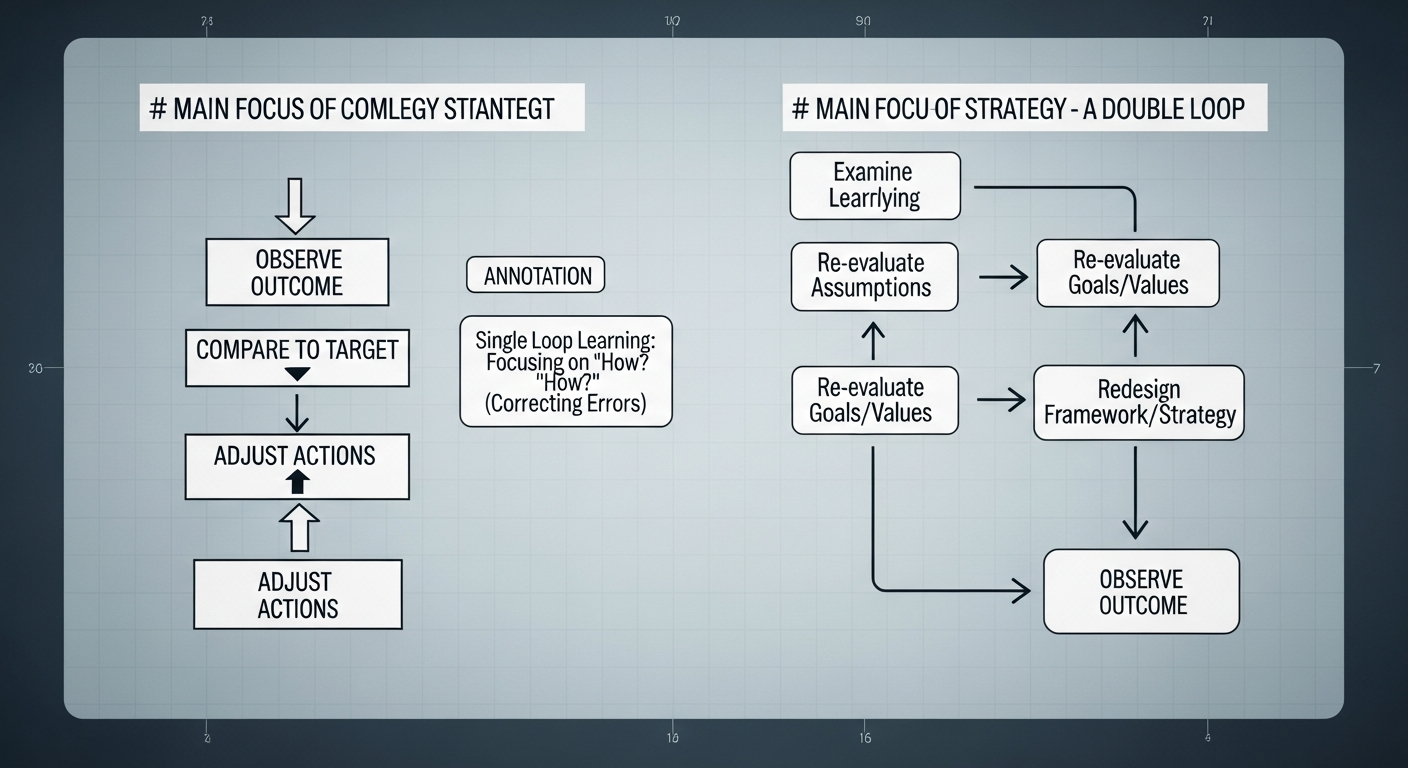
What Is Double Loop Learning? A Catalyst for Transformative L&D
In today's rapidly evolving business landscape, the traditional approaches to organizational learning often fall short. For L&D Vice Presidents, Directors, and Senior Managers across industries like banking, healthcare, retail, and compliance, the demand for truly impactful, future-proof training is paramount. It's no longer enough to simply fix problems; organizations must question the very assumptions that lead to those problems. This is where Double Loop Learning emerges as a powerful, transformative framework.
Double Loop Learning, a concept pioneered by Chris Argyris and Donald Schön, offers a profound shift from reactive problem-solving to proactive, systemic change. It challenges organizations to look beyond immediate symptoms and delve into the underlying beliefs, values, and policies that shape their actions. For L&D leaders, understanding and implementing this framework can unlock unprecedented levels of innovation, adaptability, and sustainable growth within their teams and across the entire enterprise.
Beyond the Fix: Single Loop vs. Double Loop Learning
To fully grasp the power of Double Loop Learning, it's essential to first differentiate it from its more common counterpart, Single Loop Learning.
Single Loop Learning: The Tactical Adjustment
Single Loop Learning is akin to a thermostat. When the temperature drops below the set point, the thermostat activates the heater to bring it back up. In an organizational context, this means detecting an error and correcting it within the existing framework of rules, norms, and objectives. For example:
- A sales team fails to meet its quarterly quota, so L&D implements more training on existing sales techniques.
- A compliance audit reveals a procedural gap, leading to updated policy documents and mandatory refresher courses on the same procedure.
- Customer satisfaction scores decline, prompting a review and refinement of current service scripts or delivery methods.
While vital for operational efficiency, Single Loop Learning doesn't question whether the initial sales strategy, compliance policies, or customer service model are fundamentally flawed. It simply optimizes within the given parameters.
Double Loop Learning: The Strategic Re-evaluation
Double Loop Learning, on the other hand, is like questioning whether the thermostat is set to the right temperature for optimal comfort, or even if a thermostat is the best way to regulate the environment. It involves examining and challenging the underlying assumptions, values, beliefs, and governing variables that led to the actions in the first place. This leads to a fundamental shift in understanding and behavior. For example:
- Instead of just retraining on sales techniques, the L&D team might ask: "Are our sales targets realistic for the current market conditions?" or "Are our products truly meeting customer needs, or are we pushing an outdated offering?"
- Following a compliance issue, the question shifts from "How do we fix this process?" to "Why did our existing compliance framework fail to prevent this? Are our risk assessment methodologies adequate? Do our values truly promote a culture of proactive compliance, especially in high-stakes sectors like banking or pharma?"
- When customer satisfaction drops, the inquiry moves to: "Are our assumptions about what customers value still valid? Is our entire service delivery philosophy aligned with modern expectations?"
This deeper level of inquiry leads to more profound, sustainable changes, fostering true innovation and resilience.
Why Double Loop Learning is Indispensable for Progressive L&D Leaders
For L&D professionals guiding talent development in dynamic industries, Double Loop Learning isn't just an academic concept; it's a strategic imperative.
- Fostering Adaptability and Resilience: Industries like Oil and Gas, Mining, and Healthcare face constant regulatory shifts and market volatility. Double Loop Learning empowers organizations to anticipate changes, question long-held practices, and adapt swiftly, rather than merely reacting to crises.
- Driving True Innovation: Innovation rarely comes from doing the same thing better. It comes from doing entirely new things or reimagining old ones. By challenging core assumptions, L&D can equip employees to think innovatively, crucial for sectors like Pharma and Retail where differentiation is key.
- Enhancing Ethical and Compliance Cultures: Especially in Banking, Finance, and Insurance, Risk-focused Training must go beyond checking boxes. Double Loop Learning helps embed a culture where employees question potential ethical blind spots and regulatory vulnerabilities, not just follow rules blindly.
- Optimizing Performance Beyond Metrics: While performance metrics are important, Double Loop Learning asks what underlying organizational beliefs might be hindering peak performance. Is a specific incentive structure inadvertently promoting detrimental behaviors?
Implementing Double Loop Learning: A Strategic Roadmap for L&D
Integrating Double Loop Learning into your L&D strategy requires intentional effort and a supportive organizational culture.
- Cultivate a Culture of Inquiry: Encourage curiosity and the courage to challenge the status quo from top to bottom. Leadership must model this behavior.
- Promote Critical Reflection: Design learning experiences that go beyond mere skill transfer. Incorporate activities that prompt learners to reflect on their own assumptions, mental models, and decision-making processes. Case studies, simulations, and facilitated discussions are excellent tools here.
- Leverage Data for Deeper Insights: Go beyond surface-level performance data. Use analytics to identify patterns that might point to underlying systemic issues or flawed assumptions, not just individual skill gaps.
- Build Robust Feedback Loops: Create mechanisms for honest, unfiltered feedback—both upwards and downwards. Ensure this feedback leads to dialogue about core assumptions, not just immediate problem-solving.
- Empower Experimentation: Foster an environment where trying new approaches and even "failing fast" is seen as a valuable learning opportunity, providing data to challenge existing paradigms.
To facilitate this, modern eLearning platforms can be instrumental. A robust MaxLearn Microlearning Platform can deliver targeted content that encourages reflection, while a Gamified LMS can motivate learners to engage with challenging concepts and scenarios that push them to question their ingrained beliefs.
Leveraging Technology and Artificial Intelligence for Deeper Learning
In the quest for Double Loop Learning, technology, particularly advanced algorithms, plays a pivotal role in creating environments ripe for deep reflection and systemic change.
Frequently Explored Concepts in Advanced Learning Systems
Question: How can intelligent systems help organizations identify unspoken assumptions within their operational models?
Answer: Intelligent systems can analyze vast datasets—from performance metrics and customer interactions to internal communications and market trends—to uncover hidden correlations and anomalies. For instance, by processing years of sales data from the Retail or Hospitality sectors, an intelligent system might reveal that a long-standing "best practice" in customer engagement actually leads to diminishing returns in specific demographics, prompting a re-evaluation of the foundational beliefs about customer behavior. These systems can highlight discrepancies between espoused values and actual behaviors, making implicit assumptions explicit.
Question: What role do advanced analytics play in fostering deeper organizational reflection and challenging established norms?
Answer: Advanced analytics provide the granular insights necessary to move beyond surface-level observations. Instead of merely reporting *what* happened, they can help L&D professionals understand *why* it happened, by dissecting complex variables and presenting them in a digestible format. This allows leaders in Compliance, Banking, or Healthcare to scrutinize existing protocols, not just for adherence but for their underlying efficacy and relevance. It empowers them to ask: "Are these norms still serving our strategic goals, or are they relics of past conditions?"
Question: Can personalized learning pathways, guided by advanced algorithms, accelerate the adoption of new mental models crucial for Double Loop Learning?
Answer: Absolutely. Personalized learning, often powered by sophisticated algorithms, can tailor content and challenges to an individual's specific context, role, and existing knowledge base. For a manager in Pharma or Oil and Gas, an Adaptive Learning system might present scenarios that directly conflict with their current operational assumptions, forcing them to confront cognitive biases. By delivering targeted feedback and curated resources that challenge ingrained perspectives, these pathways can significantly speed up the internalization of new, more effective ways of thinking and operating. An AI Powered Authoring Tool further enables L&D to rapidly create such dynamic, reflective learning content.
The Tangible Benefits: Why L&D Leaders Should Prioritize Double Loop Learning
Embracing Double Loop Learning isn't merely about intellectual curiosity; it drives measurable organizational benefits:
- Increased Agility: Respond more effectively to market shifts, technological advancements, and regulatory changes.
- Sustainable Growth: Develop solutions that address root causes, not just symptoms, leading to long-term success.
- Enhanced Employee Engagement: Empower employees to contribute meaningfully by challenging and improving fundamental processes.
- Stronger Competitive Advantage: Become a leader in innovation and strategic thinking within your industry.
- Improved Decision-Making: Decisions are based on current realities and critical evaluation, rather than outdated assumptions.
In an era where the only constant is change, L&D leaders must equip their organizations not just to learn, but to learn how to learn, and critically, how to unlearn. Double Loop Learning provides the framework for this essential meta-learning, transforming L&D from a reactive support function into a strategic driver of organizational evolution and resilience across every industry.
.jpg)


