

Mastering the Forgetting Curve Formula: A Strategic Imperative for L&D Leaders
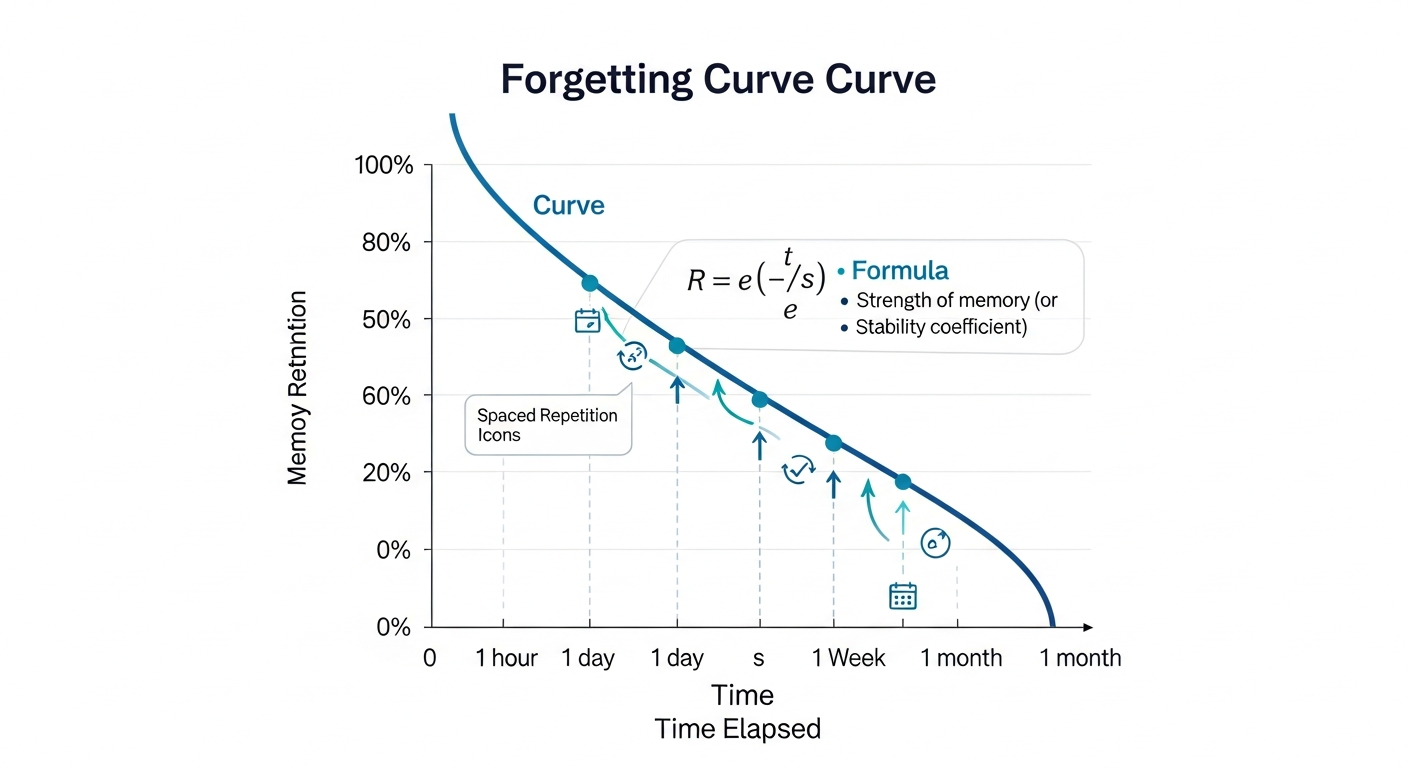
In the fast-paced corporate world, where knowledge is power and continuous learning is non-negotiable, L&D leaders face a persistent challenge: ensuring that valuable training translates into lasting knowledge and improved performance. It's a battle against an invisible but powerful force – the Forgetting Curve. First conceptualized by psychologist Hermann Ebbinghaus in the late 19th century, this curve illustrates the rate at which information is forgotten over time if there's no attempt to retain it. For today’s Vice Presidents, Directors, Senior Managers, and Managers of L&D, understanding and strategically combating this phenomenon is not just about effective learning; it's about safeguarding organizational investment and driving sustained business growth.
Understanding the Forgetting Curve Formula and its Implications
Ebbinghaus's groundbreaking research revealed a startling truth: we forget information rapidly after initial learning, with the steepest drop occurring within the first few hours or days. The curve shows that roughly 50% of newly acquired information can be lost within an hour, and up to 70% within 24 hours, if no reinforcement occurs. While the exact percentage can vary based on the complexity of the information and individual learning styles, the principle remains constant: without active recall and spaced repetition, knowledge decays.
For L&D, this isn't just a psychological curiosity; it's a critical metric. Every dollar spent on training, every hour invested by employees, is at risk of diminished returns if the learning isn't designed to counteract this natural human tendency. The challenge intensifies across diverse and highly regulated industries such as Compliance, Sales, Banking, Finance, Insurance, Retail, Pharma, Healthcare, Hospitality, Oil and Gas, and Mining, where forgotten knowledge can lead to severe consequences, from regulatory non-compliance to safety hazards and significant financial losses.
The Business Impact of Forgetting Across Industries
The implications of the Forgetting Curve are profound and costly across every sector:
- Compliance: In industries like Banking, Finance, Insurance, and Pharma, forgetting critical regulatory updates can result in hefty fines, legal action, and reputational damage.
- Sales: Sales professionals in Retail or Pharma who forget product features, selling techniques, or objection handling lose opportunities and impact revenue.
- Healthcare: Forgetting patient care protocols, new medical procedures, or medication guidelines can have life-threatening consequences.
- Oil and Gas / Mining: In high-risk environments, forgetting safety procedures can lead to serious accidents, injuries, and operational disruptions.
- Hospitality: Lack of memory regarding service standards or new booking systems can diminish customer experience and brand loyalty.
In essence, the Forgetting Curve directly impacts productivity, quality, safety, and customer satisfaction, making effective knowledge retention a strategic imperative rather than just a training desideratum.
Leveraging Technology to Combat Forgetting
Fortunately, modern eLearning technologies offer powerful antidotes to the Forgetting Curve. L&D leaders are increasingly turning to sophisticated platforms that embed principles of cognitive science to enhance retention.
- Microlearning and Spaced Repetition: Breaking down complex information into bite-sized, digestible modules delivered at scientifically determined intervals is key. This approach optimizes the timing of reinforcement, pushing knowledge back up the curve before it dips too low. A robust MaxLearn Microlearning Platform provides the ideal ecosystem for this strategy, making learning accessible and manageable.
- Gamification: Engagement is a powerful driver of retention. A Gamified LMS transforms learning into an interactive, rewarding experience, boosting motivation and encouraging repeated engagement with content.
- Personalization: Not all learners forget at the same rate or in the same areas. Adaptive Learning technologies assess individual knowledge gaps and performance, then tailor content and reinforcement schedules to each learner's specific needs, making learning more efficient and effective.
- Dynamic Content Creation: To keep up with evolving knowledge requirements, especially in fast-changing sectors like Compliance or Technology, an AI Powered Authoring Tool allows L&D teams to rapidly create, update, and deploy relevant micro-content, ensuring training materials are always current and impactful.
- Strategic Focus: For industries dealing with high stakes, focusing training efforts where they matter most is critical. Implementing Risk-focused Training ensures that the most critical, high-impact knowledge is prioritized for robust reinforcement, directly addressing areas that pose the greatest operational or financial threats.
Practical Strategies for L&D Leaders
To implement an effective anti-forgetting strategy, L&D leaders should consider:
- Designing for Spaced Repetition: Structure learning pathways with built-in refreshers and quizzes at increasing intervals.
- Embracing Microlearning: Convert lengthy courses into short, focused modules that are easier to consume and recall.
- Leveraging Interactivity: Use simulations, scenario-based learning, and interactive quizzes to promote active recall rather than passive consumption.
- Personalizing Learning Paths: Utilize data analytics to identify individual learning needs and tailor content delivery accordingly.
- Integrating Learning into Workflow: Provide just-in-time resources and performance support tools that allow employees to access information exactly when they need it.
How Can Intelligent Systems Revolutionize Knowledge Retention?
For L&D leaders, a pressing question arises: how can advanced intelligent systems revolutionize our approach to continuous learning and knowledge retention within organizations? The answer lies in their ability to analyze vast datasets of learner behavior and performance, identifying patterns and predicting when knowledge decay is likely to occur.
These sophisticated systems can then proactively push relevant, bite-sized refreshers at optimal intervals, aligning perfectly with the principles required to combat the curve. They can personalize learning paths for each individual, ensuring that employees receive content tailored to their specific needs and identified knowledge gaps, rather than a one-size-fits-all approach. This level of precision significantly boosts engagement and retention.
Ensuring Consistent Knowledge for Global Teams
With many organizations operating globally, L&D professionals often grapple with how to ensure consistent and effective knowledge reinforcement for teams spread across different regions and time zones. The challenge isn't just delivering content, but making it relevant and accessible regardless of location or cultural context.
Modern platforms leveraging intelligent capabilities address this by dynamically delivering content in various languages and formats, adapting to local compliance requirements and even cultural nuances. They can schedule reinforcement activities based on local time zones, ensuring maximum participation and impact for a diverse workforce. Centralized analytics then provide a unified view of learning effectiveness across the entire global enterprise.
The Role of Automation in Dynamic Content Optimization
A crucial consideration for maintaining effective training programs is the implication of intelligent automation for dynamically updating and personalizing training materials based on individual performance and evolving organizational needs. Stale content is ineffective content, and manual updates are resource-intensive.
Here, intelligent automation truly shines. It can monitor learner interactions and quiz results, automatically flagging areas where content might be unclear or outdated. It can then suggest revisions to subject matter experts or even generate new micro-lessons using pre-approved templates and content libraries. This ensures that training materials remain perpetually relevant, responsive to real-time performance data, and optimized for maximum impact without constant manual oversight.
Conclusion
The Forgetting Curve is an inherent aspect of human cognition, but it doesn't have to be a deterrent to effective corporate learning. By embracing a strategic, technology-driven approach, L&D leaders can transform the challenge of knowledge retention into an opportunity for sustained growth and competitive advantage. Investing in platforms and methodologies that actively combat forgetting ensures that training efforts yield tangible, long-lasting results, fostering a truly knowledgeable, compliant, and high-performing workforce across all industries.
.jpg)


