

Understanding and Overcoming The Ebbinghaus Forgetting Curve in Modern L&D
In the vast landscape of human learning, few concepts are as profoundly impactful yet frequently underestimated as the Ebbinghaus Forgetting Curve. First articulated by German psychologist Hermann Ebbinghaus in the late 19th century, this groundbreaking theory meticulously illustrates how information retention degrades over time without active reinforcement. For Learning & Development (L&D) professionals across all industries—from high-stakes sectors like Insurance, Finance, Banking, Mining, Health care, and Pharma, to dynamic environments like Retail, understanding this curve is not merely academic; it’s a critical strategic imperative.
In an era defined by rapid change, complex regulations, and continuous skill demands, the insidious nature of forgetting can erode training investments, compromise compliance, and ultimately hinder organizational growth. This article delves into the core principles of the Ebbinghaus Forgetting Curve, explores its profound implications for various industries, and uncovers modern L&D strategies, bolstered by technology, to transform the battle against memory decay into a victory for sustainable knowledge retention.
What Is The Ebbinghaus Forgetting Curve?
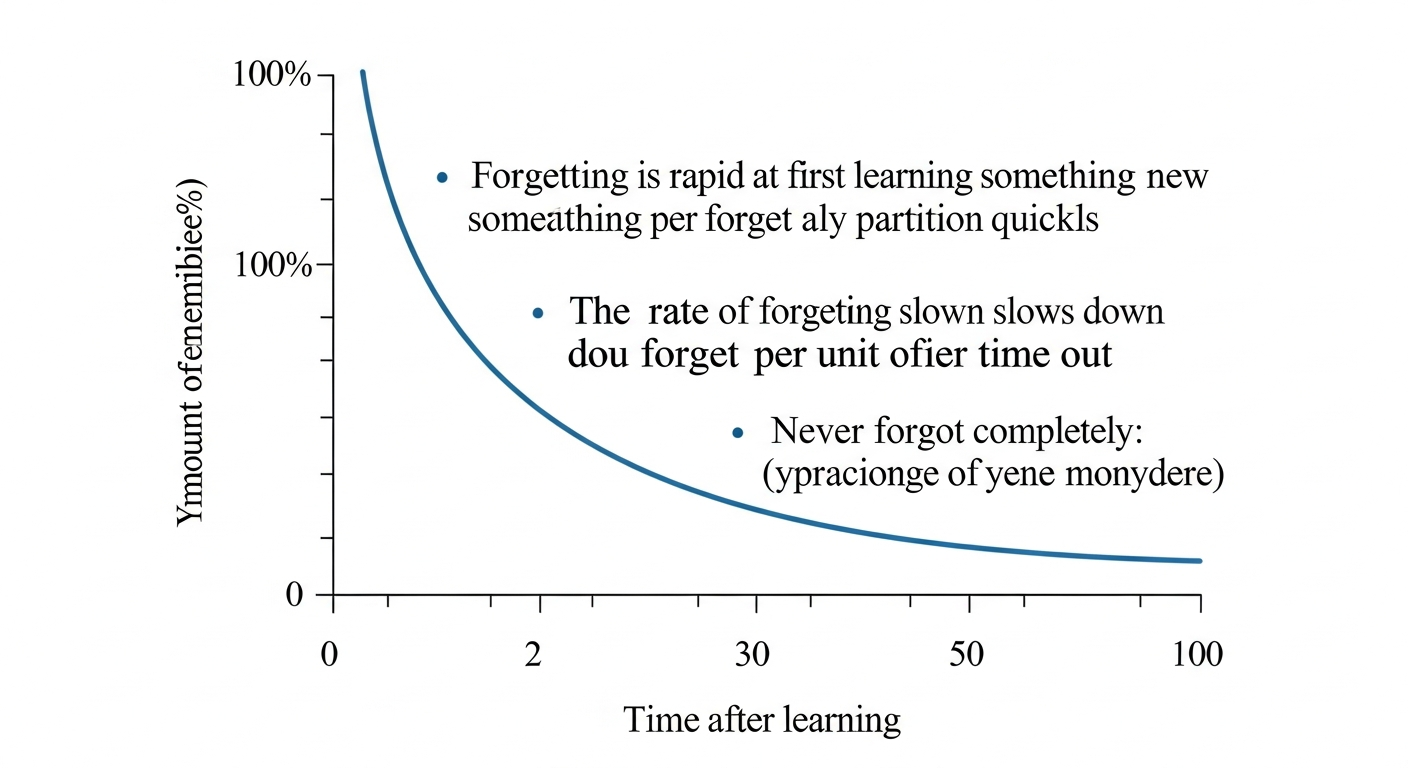
Hermann Ebbinghaus conducted pioneering research into memory in the 1880s, meticulously documenting his own ability to recall lists of nonsense syllables over varying periods. His findings led to the articulation of what we now call the Forgetting Curve – a mathematical representation demonstrating the rate at which newly acquired information is lost.
- Initial Rapid Decline: The curve shows that we forget a significant portion of new information very quickly, often within hours or days of learning it, if there's no attempt to review or apply it.
- Gradual Slowing: After this initial sharp drop, the rate of forgetting slows down, but the retention continues to decrease over a longer period.
- Impact of Repetition: Ebbinghaus also discovered that relearning takes less time than original learning, and repeated exposure to information can significantly flatten the curve, meaning we retain more for longer.
Several factors influence the steepness of an individual's forgetting curve, including the meaningfulness of the information, the strength of the initial learning experience, emotional relevance, and even sleep quality. For L&D, this translates to a clear message: passively delivering information once is simply not enough for effective, long-term knowledge retention.
Why Does the Forgetting Curve Matter in L&D?
The implications of the Ebbinghaus Forgetting Curve for corporate L&D are profound and far-reaching. Traditional training models—like lengthy, one-off workshops, annual compliance refreshers, or dense manual reading—are inherently vulnerable to the curve’s effects. Employees might grasp new concepts during a training session, but without strategic reinforcement, that knowledge rapidly dissipates.
This "forgetting tax" on training investments leads to:
- Reduced ROI on L&D initiatives.
- Decreased performance efficiency and productivity.
- Increased risks related to non-compliance or procedural errors.
- A constant need for retraining, consuming valuable resources.
For industries where precise knowledge and adherence to protocols are paramount, ignoring the forgetting curve is not just inefficient; it can be catastrophic.
Applying Ebbinghaus's Principles Across Industries
The fight against forgetting is universal, yet its specific manifestations and solutions vary by sector:
Insurance, Finance, and Banking
In these highly regulated environments, forgetting critical compliance rules, product details, or risk assessment protocols can lead to severe penalties, financial losses, and reputational damage. Continuous updates on new regulations and complex financial instruments necessitate a robust system for knowledge retention. Forgetting how to handle sensitive customer data, for instance, could have severe legal repercussions.
Retail
Forgetting product features, sales techniques, customer service guidelines, or inventory management procedures directly impacts sales, customer satisfaction, and operational efficiency. A sales associate who can't confidently explain a product's benefits misses a sale, while forgetting a return policy creates friction with customers.
Mining and Oil & Gas
Safety is paramount. Forgetting emergency procedures, equipment maintenance schedules, or operational safety protocols can lead to accidents, environmental disasters, and loss of life. The knowledge required in these industries is often complex and procedure-driven, making the impact of memory decay particularly dangerous.
Health care and Pharma
Forgetting patient care protocols, drug interactions, disease symptoms, or pharmaceutical regulations carries immense risk, directly impacting patient outcomes and potentially leading to malpractice. Medical professionals and pharmaceutical representatives must retain vast amounts of continuously evolving information to ensure safe and effective practice.
Across these diverse sectors, the common thread is the critical need for an L&D strategy that actively counters the natural tendency to forget.
Overcoming the Forgetting Curve with Modern L&D Strategies
The good news is that understanding the Ebbinghaus Forgetting Curve empowers us to design more effective learning experiences. Modern L&D leverages several key principles to flatten the curve:
-
Spaced Repetition: Re-exposing learners to information at increasing intervals helps consolidate memory. Instead of one long session, break learning into smaller, spaced bursts.
-
Microlearning: Delivering content in short, digestible modules (2-5 minutes) makes it easier for learners to process and retain. This approach, often facilitated by a platform like MaxLearn Microlearning Platform, aligns perfectly with spaced repetition by providing quick, targeted refreshers.
-
Active Recall & Testing: Quizzing, flashcards, and self-assessments force learners to retrieve information, strengthening neural pathways and improving long-term retention. Simply reading something again is less effective than trying to recall it from memory.
-
Gamification: Incorporating game-like elements such as points, badges, leaderboards, and challenges into learning enhances engagement and motivation, making the repetition required for memory consolidation feel less tedious. A Gamified LMS can transform monotonous compliance training into an enjoyable and effective experience.
-
Adaptive Learning: Personalizing the learning journey based on an individual's performance and knowledge gaps ensures that each learner receives the right content at the right time. This bespoke approach, central to Adaptive Learning methodologies, targets specific areas of weakness, making learning more efficient and effective at combating forgetting.
-
Real-World Application & Context: Learning is stickier when it's relevant to a learner's job and can be immediately applied. Linking training to practical scenarios and job-specific tasks enhances meaningfulness and recall.
AI & The Future of Fighting Forgetting
The advent of artificial intelligence (AI) is revolutionizing the battle against the Ebbinghaus Forgetting Curve, offering unprecedented levels of personalization and efficiency in L&D.
How can advanced algorithms help tailor learning paths to individual employee needs, thereby improving long-term retention?
Intelligent systems analyze a learner's performance, strengths, and weaknesses to dynamically adjust content delivery. By identifying knowledge gaps and areas where an individual struggles, these algorithms can push relevant refresher modules or more in-depth resources precisely when needed. This personalized approach ensures employees revisit information before it's forgotten, significantly bolstering memory retention across all sectors, from ensuring compliance in finance to maintaining safety protocols in mining.
What's the impact of AI-powered content generation and curation on fighting the forgetting curve?
AI-powered tools can rapidly create engaging and relevant learning materials, often in microlearning formats, specifically designed to counter rapid forgetting. They can also analyze vast amounts of data to identify the most effective content types and delivery methods for specific topics or audiences. For instance, an AI Powered Authoring Tool can help distill complex pharmaceutical guidelines into concise, memorable modules, ensuring healthcare professionals retain vital information more effectively.
Can predictive AI anticipate when employees in critical roles, like those in oil & gas or healthcare, are most likely to forget crucial operational or safety procedures?
Absolutely. By analyzing historical learning data, engagement patterns, and even real-world performance metrics, predictive AI can develop models that forecast individual or team-wide 'forgetting points.' This allows L&D departments to proactively deploy targeted refreshers or simulations. Imagine an AI system flagging that a drilling team is due for a refresher on emergency shutdown procedures just before they embark on a new project – this intelligent foresight can prevent errors and save lives, making Risk-focused Training incredibly precise.
How are these smart learning technologies being applied differently across various industries to combat memory decay?
While the core principles remain, the application varies. In finance, AI might focus on instantly updating compliance training based on new regulations. In retail, it could personalize product knowledge updates based on regional sales trends. For industries like mining, it might simulate hazardous scenarios to ingrain safety protocols. Healthcare often uses it for continuous medical education, ensuring professionals stay current with rapid advancements. The common thread is using AI to deliver precise, timely, and engaging learning interventions, reinforcing knowledge before the knowledge decay renders training ineffective.
Conclusion
The Ebbinghaus Forgetting Curve is a fundamental truth of human memory, but it is not an insurmountable obstacle. By understanding its mechanisms and embracing modern L&D strategies—particularly those enhanced by technology like microlearning, gamification, and AI-driven adaptive learning—organizations can significantly improve knowledge retention. Investing in these sophisticated learning solutions ensures that valuable training translates into lasting knowledge, empowering employees, reducing risks, and driving sustained success across every industry.
.jpg)


