

Beyond the Surface: Driving Transformative Growth with Double Loop Learning in L&D
In today's dynamic business landscape, where disruption is the norm and change is the only constant, the traditional approaches to organizational learning often fall short. For Vice Presidents, Directors, and Senior Managers of Learning & Development (L&D), staying ahead means not just adapting, but fundamentally reshaping how organizations learn and evolve. This is where Double Loop Learning emerges as a powerful paradigm, moving beyond simple problem-solving to ignite true systemic change and foster enduring competitive advantage across industries from Compliance to Healthcare, Finance to Oil and Gas.
Understanding Double Loop Learning: A Paradigm Shift
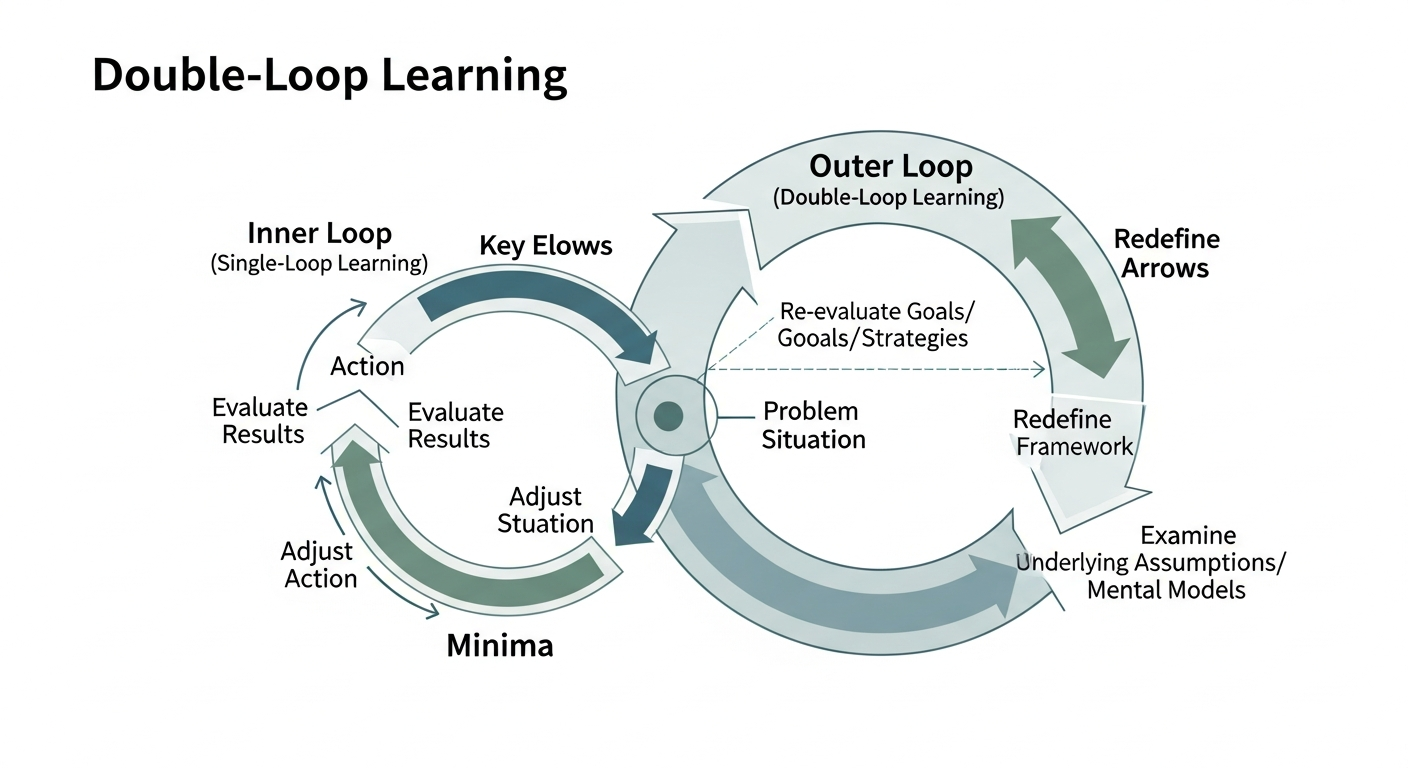
To truly grasp Double Loop Learning, it's essential to first distinguish it from its more common counterpart: Single Loop Learning. Imagine an office thermostat. When the room gets too cold, it turns on the heater. This is a classic example of single-loop learning: detecting an error (too cold) and correcting it (heating) within the existing framework of rules and norms (thermostat settings). It addresses symptoms but doesn't question the underlying assumptions or goals.
Single Loop Learning focuses on 'doing things right.' It's about efficiency, error correction, and improving current operations. While vital for day-to-day functioning, it doesn't challenge the fundamental beliefs, policies, or goals that guide an organization's actions.
Double Loop Learning, conversely, is about 'doing the right things.' It involves a deeper level of inquiry, where the underlying assumptions, values, and policies themselves are examined and questioned. Instead of just adjusting the thermostat, Double Loop Learning asks: "Why is the room getting cold in the first place? Are our insulation standards adequate? Is the thermostat placed optimally? Do we even need a heater, or can we design the building to be more energy-efficient?" This approach leads to a re-evaluation of the rules governing action, potentially leading to a complete redesign of the system.
For L&D leaders, this distinction is profound. Single-loop learning in training might focus on improving sales techniques to hit targets. Double-loop learning asks: "Are our sales targets realistic? Are our products truly meeting market needs? Are we training on the right sales philosophy?" It prompts a critical examination of organizational goals and the strategies used to achieve them.
Why Double Loop Learning is Crucial for Modern L&D Leaders
In a world characterized by volatility, uncertainty, complexity, and ambiguity (VUCA), the ability to question foundational assumptions is not just an advantage—it's a necessity. For L&D professionals guiding talent development across sectors like Banking, Retail, Pharma, and Mining, Double Loop Learning offers:
- Navigating Complexity: It equips organizations to understand and respond to the root causes of problems, rather than merely treating symptoms. This is vital in compliance, where regulatory changes demand more than just updated checklists; they require a shift in underlying organizational behavior.
- Fostering True Innovation: Innovation rarely comes from adhering strictly to existing rules. By encouraging the questioning of norms, Double Loop Learning creates an environment where disruptive ideas can flourish, leading to breakthroughs in product development, service delivery, and operational efficiency.
- Driving Sustainable Transformation: Real change lasts when it's built on a foundation of critically examined and consciously chosen principles. For industries like Healthcare, adapting to new medical advancements or patient care models requires a deep look at existing protocols and mindsets.
- Enhanced Organizational Resilience: Organizations that practice Double Loop Learning are better prepared for unexpected challenges. They develop a muscle for self-correction and adaptation at a systemic level, making them more resilient to market shifts, technological advancements, or unforeseen crises.
Implementing Double Loop Learning in Your Organization
Transitioning to a Double Loop Learning culture requires intentional effort and strategic implementation. Here's how L&D leaders can spearhead this transformation:
Cultivating a Culture of Inquiry and Psychological Safety
Encourage employees at all levels to ask "why?" and "what if?" beyond surface-level issues. Create a safe environment where challenging established norms is not only tolerated but celebrated. This psychological safety is paramount, especially in high-stakes environments like financial services or oil and gas, where mistakes can have significant consequences, but the ability to learn from them is even more critical.
Establishing Robust Feedback Mechanisms
Beyond traditional performance reviews, implement systems for continuous, multi-directional feedback. This includes peer feedback, upward feedback, and even customer feedback that probes deeper into the efficacy of underlying strategies, not just execution. Advanced analytics from learning platforms can provide invaluable insights into training effectiveness and learner engagement patterns.
Leveraging Technology as an Enabler for Deeper Learning
Modern eLearning solutions are not just content delivery systems; they are powerful engines for fostering Double Loop Learning. Consider how integrated platforms can facilitate this:
- A MaxLearn Microlearning Platform can deliver bite-sized, contextual content that encourages continuous reflection and immediate application, allowing for iterative learning loops.
- Utilizing a Gamified LMS can transform the learning experience, not just through engaging challenges, but by embedding feedback loops and decision-making scenarios that prompt learners to consider the 'why' behind their choices.
- Adaptive Learning technologies can personalize learning paths based on an individual's performance, but also adapt by identifying common conceptual weaknesses across a cohort, signaling a need to re-evaluate core instructional approaches or even underlying business processes.
- An AI Powered Authoring Tool can rapidly create and iterate content based on learner feedback and performance data, allowing L&D to quickly test new approaches and challenge existing training paradigms. This agility is crucial for sectors like Sales and Hospitality, where market dynamics shift constantly.
- Implementing Risk-focused Training, often powered by advanced analytics, allows organizations to move beyond simply identifying risks to understanding the systemic factors that create them. This is true Double Loop Learning in action for compliance and operational safety.
How can artificial intelligence facilitate a deeper learning culture within organizations? Intelligent systems can analyze vast amounts of data—from learner interactions and performance to operational outcomes—to identify patterns and anomalies that human observation might miss. This allows L&D to pinpoint not just skill gaps, but also underlying systemic issues or outdated assumptions in training materials or operational procedures. AI can surface these insights, prompting a re-evaluation of core strategies rather than just a patch-up job.
What are the practical applications of intelligent systems in analyzing organizational learning patterns? Beyond individual learner progress, AI can track how different training interventions impact departmental performance, project success rates, or compliance adherence across various business units or geographical locations. For instance, in a global financial institution, AI could detect that a particular market's sales team consistently underperforms despite receiving the same training as others, suggesting that the training's underlying assumptions about market behavior or customer psychology need a fundamental reassessment for that region.
How might advanced algorithms assist L&D teams in identifying and challenging ingrained assumptions across different operational locations? Advanced algorithms can cross-reference qualitative feedback (from surveys, forums) with quantitative performance data to highlight discrepancies between stated beliefs and actual outcomes. If teams in different regions, say, in a global retail chain, hold vastly different but equally strong beliefs about customer service best practices, AI can reveal which approaches yield superior results and why, thereby challenging local assumptions and promoting a global 'best practice' informed by data and deep analysis, rather than mere tradition.
Double Loop Learning Across Industries
The principles of Double Loop Learning are universally applicable, yet their manifestation varies:
- Compliance: Moving beyond rote memorization of rules to understanding the ethical principles and systemic vulnerabilities that necessitate those rules, leading to proactive risk mitigation and a culture of integrity.
- Sales: Not just improving closing techniques, but questioning the entire sales funnel, product-market fit, and customer value proposition to redefine selling strategies for sustained growth.
- Banking & Finance: Adapting to new regulations and market shifts by scrutinizing investment philosophies, risk assessment models, and customer engagement strategies, rather than just updating policies.
- Insurance: Re-evaluating actuarial models, claims processes, and customer trust-building efforts in the face of new data, technology, and societal changes.
- Retail & Hospitality: Constantly challenging assumptions about customer experience, operational efficiency, and staff empowerment to create truly differentiated service models.
- Pharma & Healthcare: Scrutinizing clinical trial methodologies, patient care pathways, and drug development processes to drive innovation and improve patient outcomes beyond existing protocols.
- Oil & Gas / Mining: Reassessing safety protocols, environmental impact strategies, and operational efficiencies by questioning foundational engineering and management practices to achieve zero-harm and sustainability goals.
Overcoming Challenges and Fostering a Double Loop Mindset
Embracing Double Loop Learning is not without its hurdles. Resistance to change, particularly when it involves challenging long-held beliefs, is common. Time and resource constraints can also be significant. L&D leaders must:
- Secure strong leadership buy-in to champion the cultural shift.
- Start small, perhaps with pilot programs, to demonstrate success and build momentum.
- Provide ongoing support and training on critical thinking, systemic analysis, and effective feedback.
- Celebrate successes, especially those stemming from challenging existing norms.
Conclusion
Double Loop Learning represents the pinnacle of organizational intelligence, moving beyond mere adaptation to profound transformation. For L&D leaders across every industry, from highly regulated sectors like Compliance and Finance to fast-paced environments like Sales and Retail, cultivating this capability is paramount. By leveraging advanced eLearning technologies and fostering a culture of deep inquiry, organizations can build the capacity not just to 'do things right,' but to consistently 'do the right things,' ensuring sustainable growth, innovation, and enduring resilience in an ever-changing world.
.jpg)


