

Mastering Memory: How L&D Leaders Can Conquer the Curve of Forgetting
As a Vice President, Director, or Senior Manager in Learning & Development, you understand the immense investment your organization places in training. From critical compliance modules in banking and healthcare to advanced sales techniques in retail and pharma, or crucial safety protocols in oil & gas and mining, effective learning is the backbone of operational excellence and competitive advantage. Yet, despite the best intentions and meticulously crafted courses, a silent adversary often undermines these efforts: the curve of forgetting.
This powerful psychological phenomenon dictates how rapidly newly acquired information fades from memory if not reinforced. For L&D leaders, ignoring its implications isn't an option; it's a direct threat to ROI, performance, and risk mitigation across all industries. This article will delve into the psychology of forgetting and equip you with modern, technology-driven strategies to ensure your employees not only learn but truly retain and apply essential knowledge.
The Ephemeral Nature of Knowledge: Understanding the Curve of Forgetting
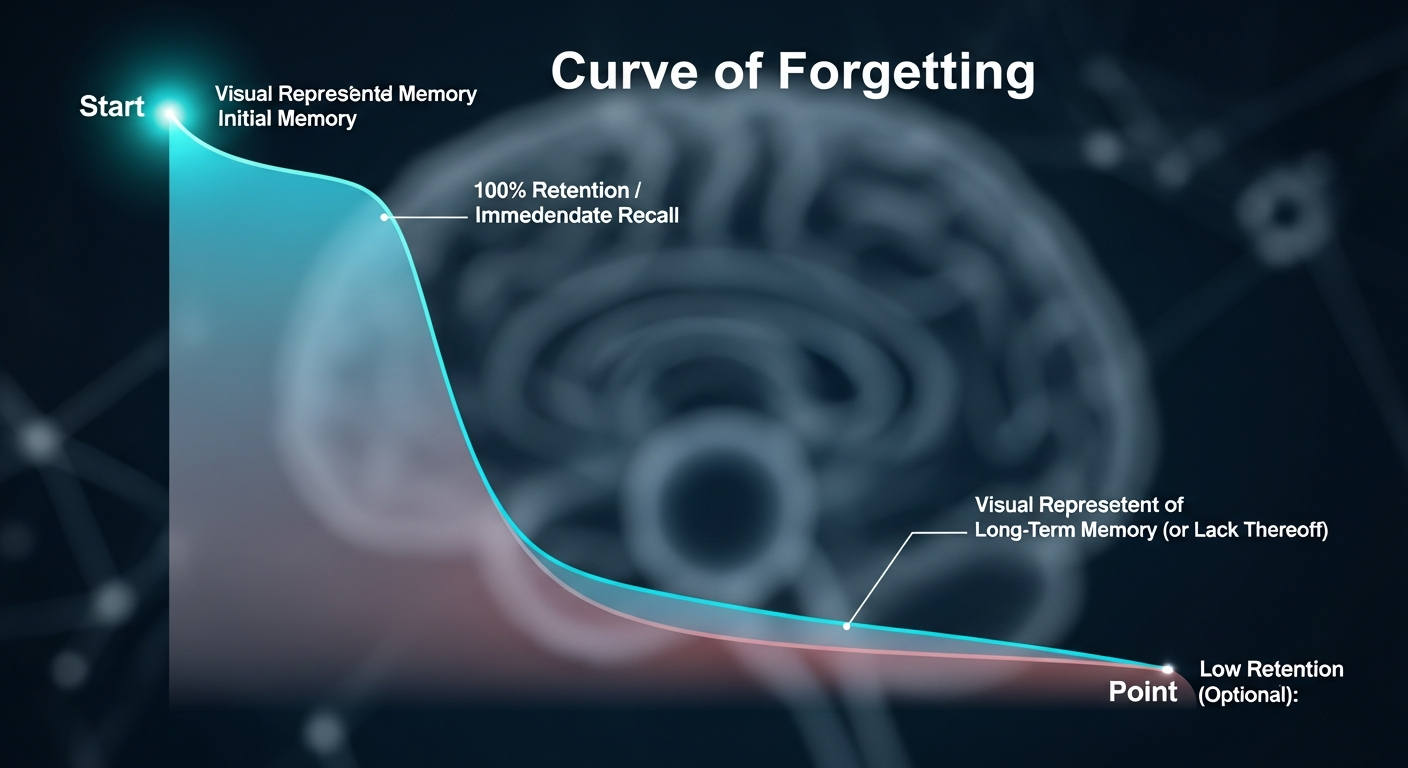
The concept of the "curve of forgetting" was first articulated by German psychologist Hermann Ebbinghaus in the late 19th century. Through his groundbreaking self-experiments, Ebbinghaus discovered that the human brain rapidly loses much of the information it acquires soon after learning, with the rate of forgetting slowing down over time. Specifically, he found that within hours, a significant portion of new information can be forgotten, and within days, retention drops dramatically if there's no active recall or reinforcement.
Imagine your employees completing a vital compliance training module, a new software tutorial, or a complex product knowledge session. Ebbinghaus's research suggests that without timely intervention, much of that hard-earned knowledge will dissipate, rendering the initial training less effective and the investment potentially wasted. For organizations in high-stakes sectors like finance, insurance, and healthcare, where regulations constantly evolve, this immediate decay can lead to critical errors, non-compliance, and substantial financial or reputational penalties.
The Tangible Cost of Forgetting in the Enterprise
The impact of the curve of forgetting extends far beyond mere academic interest. In the corporate world, it translates into real, measurable costs and risks:
Eroding Compliance and Risk Mitigation
In industries such as banking, finance, insurance, pharma, and healthcare, outdated or forgotten knowledge of regulations, protocols, and safety measures can have catastrophic consequences. A misstep due to lapsed memory can lead to hefty fines, legal battles, and severe damage to public trust. Ensuring that critical information around ethical conduct, data privacy, and operational safety remains top-of-mind is paramount. This highlights the urgent need for a Risk-focused Training approach that proactively combats forgetting.
Diminished Sales Performance and Customer Experience
For sales, retail, and hospitality teams, product knowledge, sales methodologies, and customer service standards are their bread and butter. If sales reps forget key features of a new product, or hospitality staff forget service protocols, it directly impacts revenue, customer satisfaction, and brand loyalty. Continuous reinforcement is key to keeping these teams sharp and effective. Streamlining the creation and delivery of this content often benefits from an AI Powered Authoring Tool, which can keep pace with fast-changing market needs.
Operational Inefficiencies and Talent Drain
Across all sectors, from manufacturing to oil and gas, and even in daily office operations, forgotten procedures lead to errors, rework, and slower processes. This not only wastes time and resources but can also frustrate employees, contributing to disengagement and turnover. The cycle of repeated training to compensate for forgotten information is inefficient and unsustainable.
Strategies to Bend the Curve: Modern Learning Solutions
The good news is that we are not passive victims of the curve of forgetting. Advances in learning psychology and technology offer powerful tools to counter its effects. The goal is to move beyond one-off training events to create a continuous, adaptive learning ecosystem.
Spaced Repetition and Microlearning: The Power Duo
Ebbinghaus himself noted that revisiting information at increasing intervals significantly boosts retention. This principle, known as spaced repetition, is a cornerstone of effective learning. When combined with microlearning – delivering content in short, focused bursts – it becomes incredibly potent. "How can organizations ensure critical information sticks, especially for complex topics?" By breaking down complex subjects into digestible, 5-10 minute modules and scheduling their review over time, organizations can dramatically improve long-term retention. A robust MaxLearn Microlearning Platform is designed to facilitate this exact methodology, making knowledge stick without overwhelming learners.
Gamification and Active Engagement
Passive learning is quickly forgotten. Active engagement is essential for memory consolidation. "What innovative approaches can make learning more engaging and effective for a diverse workforce?" Incorporating gamification elements like points, badges, leaderboards, and interactive challenges transforms learning from a chore into an engaging experience. This not only motivates learners but also encourages them to actively recall information, strengthening memory traces. A Gamified LMS can seamlessly integrate these elements, fostering healthy competition and a desire for mastery.
Adaptive Learning Paths: Personalization at Scale
Every learner is unique. Some grasp concepts quickly, others need more reinforcement. "How can learning systems tailor content delivery to individual employee needs and learning speeds?" Adaptive learning systems leverage data to personalize the learning journey. By analyzing a learner's performance, existing knowledge, and learning style, these systems can deliver custom content, recommend specific modules for review, or skip already mastered topics. This ensures that reinforcement is delivered precisely when and where it's needed most, maximizing efficiency and effectiveness. Explore how Adaptive Learning can revolutionize your retention strategy.
The Role of Artificial Intelligence in Reinforcing Memory
Artificial Intelligence is rapidly transforming the battle against the forgetting curve. "Beyond traditional methods, how can advanced technology enhance long-term knowledge retention across global teams?" AI can analyze vast amounts of learner data to predict when an individual is likely to forget specific information. It can then trigger intelligent nudges, personalized quizzes, or recommend relevant microlearning modules at the optimal moment for reinforcement. This proactive, data-driven approach minimizes knowledge decay and ensures critical skills remain sharp, whether for a global sales force or a specialized technical team.
Implementing a Resilient Learning Ecosystem
To truly conquer the curve of forgetting, L&D leaders must think beyond individual solutions and envision a holistic, resilient learning ecosystem. This involves:
- Embracing Continuous Learning: Shifting from event-based training to an ongoing culture of learning and development.
- Integrating Learning into Workflow: Making learning accessible and relevant at the point of need, rather than as a separate activity.
- Measuring and Iterating: Continuously tracking learning effectiveness and retention rates to refine strategies and content.
- Leveraging Technology: Deploying platforms that natively support spaced repetition, microlearning, gamification, and AI-driven personalization. A sophisticated MaxLearn Microlearning Platform provides the comprehensive tools necessary to build such an ecosystem, ensuring knowledge sticks across your organization.
The curve of forgetting is an inherent aspect of human cognition, but it doesn't have to be a barrier to organizational success. By strategically applying modern learning principles and leveraging cutting-edge technologies, L&D leaders can transform how their organizations learn, retain, and apply critical knowledge. This proactive approach not only mitigates risks and enhances compliance but also drives superior performance, innovation, and a truly knowledgeable workforce ready to meet the demands of any industry.
.jpg)


