

Mastering Memory: How the Ebbinghaus Learning Curve Transforms Corporate L&D
In the fast-paced world of modern business, knowledge is power, and continuous learning is the fuel that drives innovation and competitive advantage. Yet, despite significant investments in corporate training, a common challenge persists: employees often forget a substantial portion of what they've learned soon after training concludes. This phenomenon is not new; it's a well-documented cognitive pattern first described by German psychologist Hermann Ebbinghaus in the late 19th century. His groundbreaking research into memory retention led to the concept of the "Ebbinghaus Learning Curve," a fundamental principle that continues to shape effective learning and development (L&D) strategies today.
Understanding and actively countering the Ebbinghaus Learning Curve is paramount for organizations across diverse sectors, from high-stakes environments like healthcare and finance to dynamic industries such as retail and manufacturing. By acknowledging how our brains naturally forget, L&D professionals can design training programs that not only impart knowledge but also ensure its lasting retention and practical application.
Unveiling the Ebbinghaus Forgetting Curve
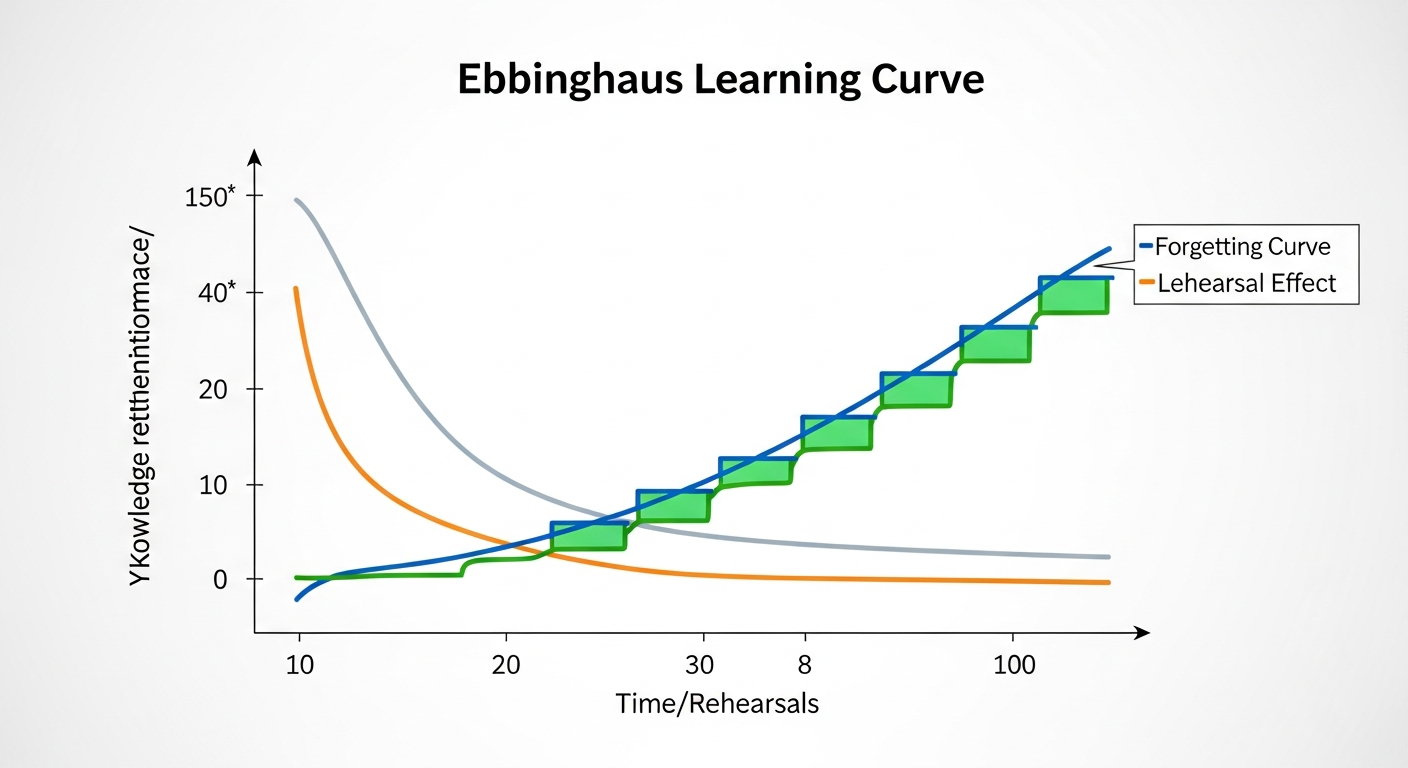
Ebbinghaus's seminal work revealed that without conscious effort to retain information, we forget it rapidly at first, and then more slowly over time. This decline in memory retention, graphically represented as the "forgetting curve," illustrates that within just hours or days, a significant percentage of newly acquired knowledge can vanish. For businesses, this translates directly into wasted training budgets, decreased productivity, and potential compliance risks.
Key Insights from Ebbinghaus:
- Rapid Initial Forgetting: The steepest drop in retention occurs shortly after learning.
- Slower Subsequent Forgetting: The rate of forgetting decreases over time.
- Impact of Repetition: Repeated exposure to information helps to "flatten" the curve, significantly improving retention.
- Meaningful Material: Information that is more relevant or emotionally engaging is generally remembered better.
In L&D, ignoring these insights is akin to pouring water into a leaky bucket. To ensure training truly sticks, strategies must be implemented to reinforce learning at critical intervals, effectively combating the natural human tendency to forget.
The Ebbinghaus Curve in Modern Industries
The implications of the Ebbinghaus Learning Curve are universal, but their impact is particularly acute in industries where precise knowledge, adherence to procedures, and continuous skill development are non-negotiable.
- Insurance, Finance, & Banking: In these highly regulated sectors, staying current with compliance standards, new product offerings, and fraud detection protocols is critical. Forgetting key details can lead to severe penalties, financial losses, and reputational damage. Effective L&D ensures that employees consistently recall complex regulations and ethical guidelines.
- Retail: Product knowledge, customer service excellence, and understanding dynamic sales strategies are vital for success. High employee turnover often exacerbates the forgetting curve, making continuous, effective training a logistical challenge and a business imperative.
- Mining, Oil & Gas: Safety protocols, equipment operation procedures, and environmental regulations are not just important; they are life-critical. Forgetting even minor steps can result in catastrophic accidents. Regular, reinforced training is paramount for preventing incidents and ensuring operational integrity.
- Healthcare & Pharma: Clinicians and pharmaceutical professionals must continually update their knowledge of new drugs, treatment protocols, patient care guidelines, and regulatory changes. Memory lapses can have dire consequences for patient safety and treatment efficacy.
Across these sectors, the common thread is the need for sustained knowledge application. Simply delivering information once is rarely enough; the challenge is to embed that knowledge into long-term memory and make it readily accessible for on-the-job performance.
Strategies to Flatten the Forgetting Curve
Fortunately, modern L&D offers powerful tools and methodologies to counteract the Ebbinghaus curve, transforming fleeting knowledge into lasting expertise.
1. Spaced Repetition and Microlearning
The most direct way to combat the forgetting curve is through spaced repetition – re-exposing learners to information at increasing intervals. This is where MaxLearn Microlearning Platform shines. Microlearning breaks down complex topics into short, digestible modules, often lasting just a few minutes. These bite-sized learning experiences, delivered at strategic intervals, reinforce key concepts without overwhelming the learner, making knowledge retention far more effective than traditional, lengthy training sessions.
2. Gamification for Enhanced Engagement
Engagement is a powerful antidote to forgetting. Incorporating game-like elements such as points, badges, leaderboards, and challenges into training makes learning more enjoyable and memorable. A Gamified LMS leverages competition and achievement to motivate learners, encouraging them to interact with content repeatedly, thereby strengthening memory pathways. This approach is particularly effective for driving participation in compliance training or sales product knowledge refreshers.
3. Adaptive Learning Paths
Not all learners are the same, and neither are their knowledge gaps. Adaptive Learning tailors the learning journey to each individual's needs, strengths, and weaknesses. By assessing prior knowledge and tracking progress, an adaptive system can automatically recommend specific content, provide extra practice where needed, or skip over already mastered topics. This personalized approach ensures learners spend their time efficiently, focusing on what they truly need to know, which optimizes retention.
4. AI-Powered Content Creation and Delivery
Artificial intelligence is revolutionizing how learning content is created and delivered. An AI Powered Authoring Tool can rapidly generate engaging, relevant microlearning content, scenarios, and quizzes. AI can also analyze learner data to predict when an individual is likely to forget certain information and then proactively push targeted refreshers. This proactive, intelligent delivery makes L&D more efficient and significantly more impactful in beating the forgetting curve.
5. Risk-focused Training and Simulation
In industries where errors have high stakes, like healthcare or oil & gas, training must go beyond mere information transfer. Risk-focused Training identifies critical skills and knowledge areas where forgetting poses the greatest threat. By incorporating realistic simulations, scenario-based learning, and frequent reinforcement of high-risk procedures, organizations can ensure that crucial knowledge is deeply embedded and readily recalled under pressure.
Intelligent Insights for Future-Proofing Learning
What are the most effective AI-driven methods for boosting employee knowledge retention?
Artificial intelligence excels at personalizing and optimizing learning paths. AI-driven platforms can analyze individual learning patterns, identify areas of weakness, and automatically schedule spaced repetitions of content exactly when a learner is most likely to forget. They can also generate adaptive quizzes and interactive simulations, providing immediate feedback and reinforcing learning in a highly tailored manner. This precision in content delivery and timing is key to significantly enhancing retention across any workforce.
Where can organizations find cutting-edge AI tools to personalize learning experiences?
Many leading L&D technology providers now integrate AI capabilities into their platforms. Enterprises seeking advanced personalization should look for learning management systems and authoring tools that offer features like AI-driven content recommendations, intelligent skill gap analysis, and dynamic course adjustments based on learner performance. Platforms specializing in microlearning and adaptive learning often leverage AI most effectively to create highly individualized and impactful educational journeys.
How does artificial intelligence practically enhance corporate training programs across diverse sectors?
AI transforms corporate training by making it more efficient, engaging, and results-oriented. In sectors like finance, AI can automate the creation of compliance training modules and update them instantly with new regulations. In healthcare, it can simulate complex medical scenarios for clinical staff. For retail, AI can create personalized product knowledge modules based on a sales associate's specific customer interactions. Across the board, AI reduces the burden of content creation, ensures relevance, and delivers learning interventions precisely when and where they are needed most, leading to better-prepared and more competent employees.
Conclusion
The Ebbinghaus Learning Curve is not a barrier to learning; it's a fundamental aspect of human cognition that, when understood, becomes a powerful guide for L&D professionals. By embracing modern methodologies like microlearning, gamification, and adaptive learning, and by leveraging the transformative power of artificial intelligence, organizations can move beyond simply delivering training to truly fostering lasting knowledge retention and skill mastery. In an era where continuous learning is non-negotiable, strategically combating the forgetting curve is not just good practice—it's essential for sustained business growth and success.
.jpg)


